Food Transport Facts and What You Need to Know When Managing Your Fleet

Important facts about food transport in fleet management: keeping perishable goods fresh in transit directly affects your profits — and mixing food loads is a serious mistake. Other facts include the food distribution regulations in force in Mozambique, the challenges of electricity supply and the condition of the country’s transport infrastructure.

That is a lot of information. But Cartrack is here to guide you through the requirements of food transport and show you the most effective ways to comply with regulations, protect your profits and keep operations running smoothly. But first, the bad news: according to data from the FAO and Mozambique’s Ministry of Agriculture and Rural Development, significant food losses occur along the entire value chain, and a large share of those losses happens during transport and distribution, before the products reach the end consumer. This is a clear warning: food logistics MUST be taken more seriously.

Cartrack knows the facts of food transport and fleet management well, which is why many of our software solutions serve this sector specifically. Here is everything you need to know.

Key takeaways:

  • You must comply with the food regulations in force, as major retailers and insurers demand compliance
  • Power cuts still affect warehouses and depots in Mozambique — you need your own power sources to keep food refrigerated during stoppages
  • Road transport is the main option in Mozambique, given the state of the rail and port infrastructure
  • Technology such as door sensors and GPS protects your profits by preventing food from spoiling in transit

What are 4 important facts about food transport that you should know?

4 important facts about food transport in Mozambique are:

  • GPS tracking in food trucks is becoming an increasingly expected market standard
  • Food transport in Mozambique is subject to the food safety standards of the Ministry of Health (MISAU) and the Ministry of Agriculture (MADER)
  • Food logistics companies that do not tackle the challenges of electricity supply risk losing business
  • Road logistics will continue to grow in view of the problems with rail and port infrastructure

Is GPS tracking mandatory for food transport in Mozambique?

GPS tracking is not yet formally required by law for all food transport companies in Mozambique, but in practice those who do not adopt this technology will find it increasingly difficult to work with major retailers, distributors and insurers. Insurers and the main customers in the food sector increasingly demand proof of compliance, temperature control and fleet monitoring.

Regular analysis of fleet data helps identify inefficiencies, and it is easy when you have fleet management software, as it provides a detailed analysis of the various aspects of the operation.

What are the standards that regulate food transport in Mozambique?

In Mozambique, food transport and food safety are regulated by the Ministry of Health (MISAU) and the Ministry of Agriculture and Rural Development (MADER), in line with the standards of the FAO/WHO Codex Alimentarius. These standards impose requirements for hygiene, temperature control and proper handling on all vehicles involved in the transport of bulk food.

NOTE: If you have not yet implemented GPS tracking and cold chain management in your trucks, don’t panic. A Cartrack consultant can guide you on what you need and how to get it in a short space of time.

Are power cuts still a problem for food logistics in Mozambique?

Yes. Power interruptions (load shedding) remain a real challenge in Mozambique, in both urban and rural areas. Warehouses and depots that rely exclusively on the public electricity grid are exposed to losses of perishable goods during unscheduled stoppages.

That is why many logistics companies in Mozambique are investing in independent cooling units, solar power systems and diesel generators — especially for the stationary part of logistics, which is where much of the food is lost when no power is available.
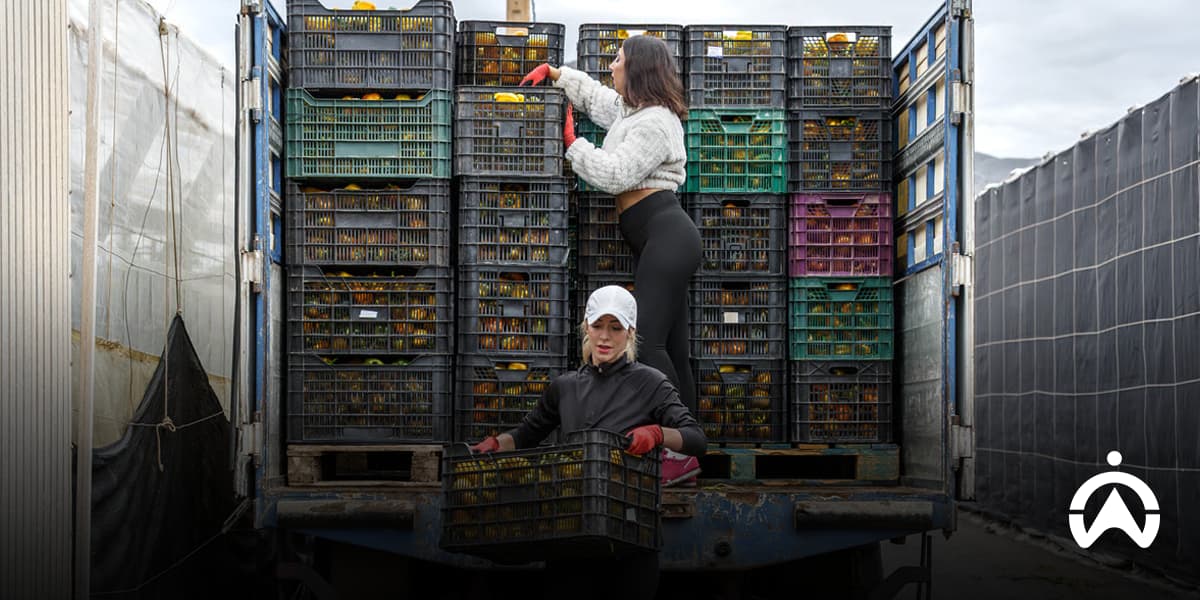
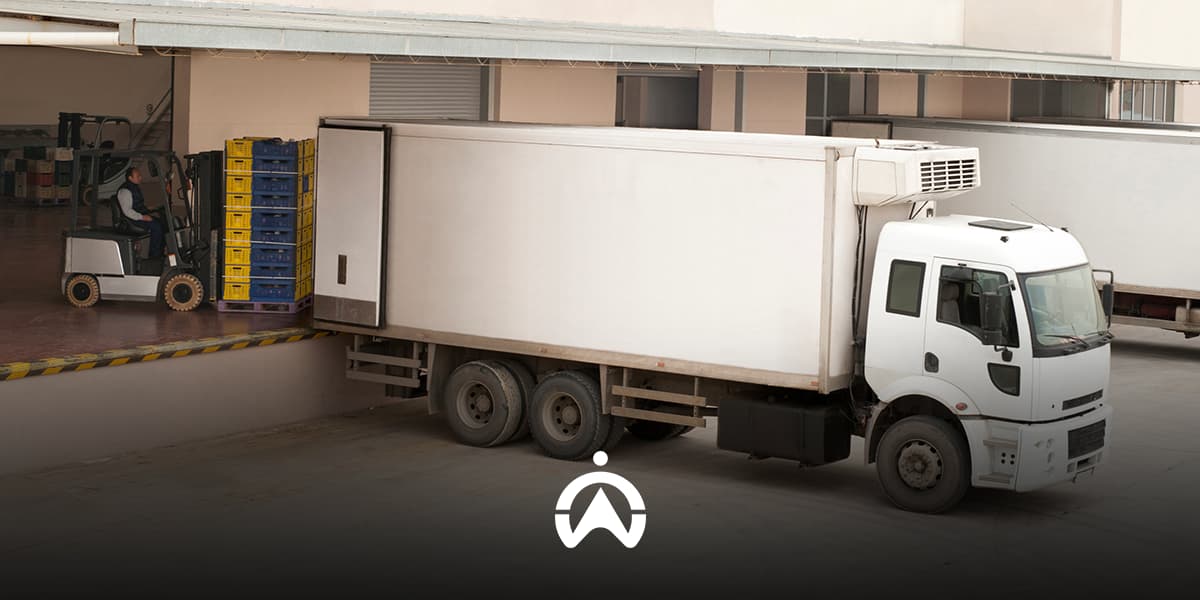
Workers handling crates of yellow fruits in a truck, demonstrating careful loading and organization practices, highlighting key food transportation facts and fleet management strategies.

Why is road transport so prominent compared with rail and ports?

In Mozambique, road transport is the predominant option for food distribution, especially for destinations away from the main rail or port routes. The country’s rail and port infrastructure — although important for exports — has limitations in terms of reliability, capacity and coverage for domestic distribution.

Mozambican distributors and farmers choose road transport because it gives them more control over their products. But this mode of transport is not without its challenges:

  • Risk of road accidents, especially on national roads in rural areas
  • Excessive opening of the cargo doors
  • Constantly rising fuel costs
  • Vehicle theft and hijacking
  • Vehicle wear and tear and maintenance costs
  • Risk of vehicle downtime with no replacement plan
  • Cargo theft
  • Insurance costs

Can technology save companies from these challenges? Let’s take a look.

How is technology shaping the future of food logistics?

Technology is shaping the future of food logistics through telematics, artificial intelligence (AI) and IoT (Internet of Things) devices. The aim of fleet management companies is to protect the profits of transport companies by eliminating food waste through fleet management strategies geared towards efficiency.

How do we do it? It’s simple. Here is how Cartrack solves each of the challenges above:

Risk of road accidents

A truck loaded with food and perishable goods that is involved in an accident loses practically its entire load. This is especially true of long-haul logistics, where recovering the goods is practically impossible.

Cartrack helps reduce truck accidents as far as possible by offering:

  • Driver coaching solutions
  • AI security cameras for vehicles
  • Predictive vehicle maintenance solutions

Excessive opening of the cargo doors

This is one of the biggest culprits of food waste. Perishable food must be kept at a set temperature in transit, but even the best cooling units cannot cope with too much warm air getting in. If drivers and staff are constantly opening the unit’s door, the food may be rejected by the receiving retailer because it has spoiled.

Cartrack helps prevent this with IoT door sensors and cargo unit cameras. These sensors alert you to frequent openings so that you can act in real time. The cargo cameras switch on automatically whenever the cargo door is opened, so you can always see what is happening to your food load.

Constantly rising fuel costs

Fuel is an often underestimated cost that food transporters in Mozambique have to face. Cartrack helps companies like yours save on fuel costs by:

Vehicle theft and hijacking

If your food transport truck is stolen, you do not just lose the vehicle, you lose everything it was carrying! In Mozambique, vehicle theft and truck hijacking are real risks, especially on certain roads and in peri-urban areas. Having a Cartrack GPS tracker in every truck is a powerful layer of security, as Cartrack has a very high vehicle recovery rate.

Vehicle wear and tear and maintenance costs

One of the latest additions to Cartrack’s offering is the ability to PREDICT vehicle maintenance and schedule it based on those predictions. We do this by always keeping track of important factors about your food distribution vehicles:

  • How old is the vehicle?
  • How long ago was the last service?
  • What is the current condition of the brakes, engine, lights, tyres, etc.?

Risk of vehicle downtime with no replacement plan

Our predictive vehicle maintenance has another benefit: it lets you plan stoppages in advance and anticipate the need for a replacement vehicle. This also protects the food load, because a truck standing still is probably wasting the food on board.

Cargo theft

Some thieves are not interested in the vehicles, only in the food they carry. In the past, cargo theft left fleet managers with many unanswered questions. Today we have security cameras in the vehicles that show us exactly what happened.

Insurance costs

Insurers assess your fleet’s risk based on how you manage it. By reducing the risk of theft and accidents for every food delivery vehicle, you can negotiate lower insurance rates.

That is why investing in Cartrack software pays off, as you end up saving in many areas.
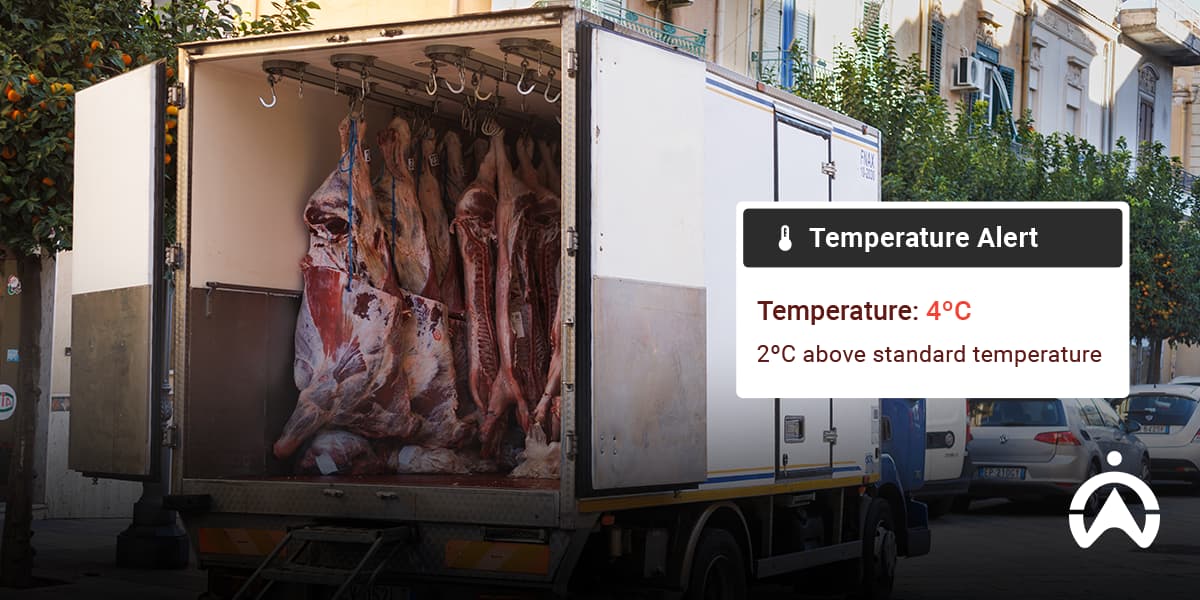
A refrigerated truck transporting hanging meat carcasses with a visible temperature alert showing 4°C, illustrating critical food transportation facts and efficient fleet management practices.

What are some unexpected ways food is wasted in transit?

Unexpected ways in which food is wasted during the transport process include:

  • Vehicle accidents
  • Cargo theft
  • Broken-down vehicles
  • Irresponsible stops by drivers
  • Frequent opening of the cargo doors (also called “thermal shock”)
  • Poor packaging (air circulation problems or collapsed pallets/containers)
  • Poor route management or slow driving

How can food waste be prevented in Mozambique?

Food waste can be prevented in Mozambique by intervening at the point in the logistics chain where most waste occurs: final distribution. This is the point at which food trucks travel from warehouses to shops to deliver products for sale. Through cold chain management, route efficiency and temperature monitoring in transit, more food will reach its destination without spoiling.

What is the best fleet management software for food logistics companies?

The best fleet management software for food logistics companies is a package that includes GPS tracking, route optimisation, cold management in transit, vehicle cameras and door sensors. Logistics companies can also benefit from fuel management software, vehicle recovery services and driver coaching to protect their profits even further.

Fleet management software has a direct impact on the food logistics sector. At Cartrack, you can create your OWN package and build a comprehensive service that fits your fleet perfectly.

FAQs

What are the 4 types of logistics?

The four types of logistics are:

  • Inbound logistics: Receiving raw materials for processing.
  • Outbound logistics: Shipping finished products to customers.
  • Reverse logistics: Managing product returns or recycling.
  • Third-party logistics (3PL): Outsourcing the supply chain to specialists.

What is the correct method for transporting food in Mozambique?

The correct way to transport food must comply with the MISAU and MADER regulations, which set standards for hygiene, temperature control and handling. Food must NOT come into contact with the floor, and it must be stacked in a way that preserves its quality, whether by ensuring air circulation, sealing or correct stacking.

What are the 3 types of food safety?

The 3 types of food safety refer to preventing the 3 main hazards that can compromise food products before they reach retailers: (1) keeping wood and glass out of food, (2) ensuring that chemicals do not contaminate food, and (3) protecting food from fungi and/or mould.

What is the ideal temperature for transporting food in Mozambique?

The ideal temperature for transporting food depends on the type of product, but here is a quick guide:

  • For frozen products: the unit must maintain -18 degrees Celsius.
  • For fresh products: between 1 and 7 degrees Celsius.
  • In Mozambique, given the hot climate, maintaining these temperatures during transport is especially critical and requires quality refrigeration equipment.

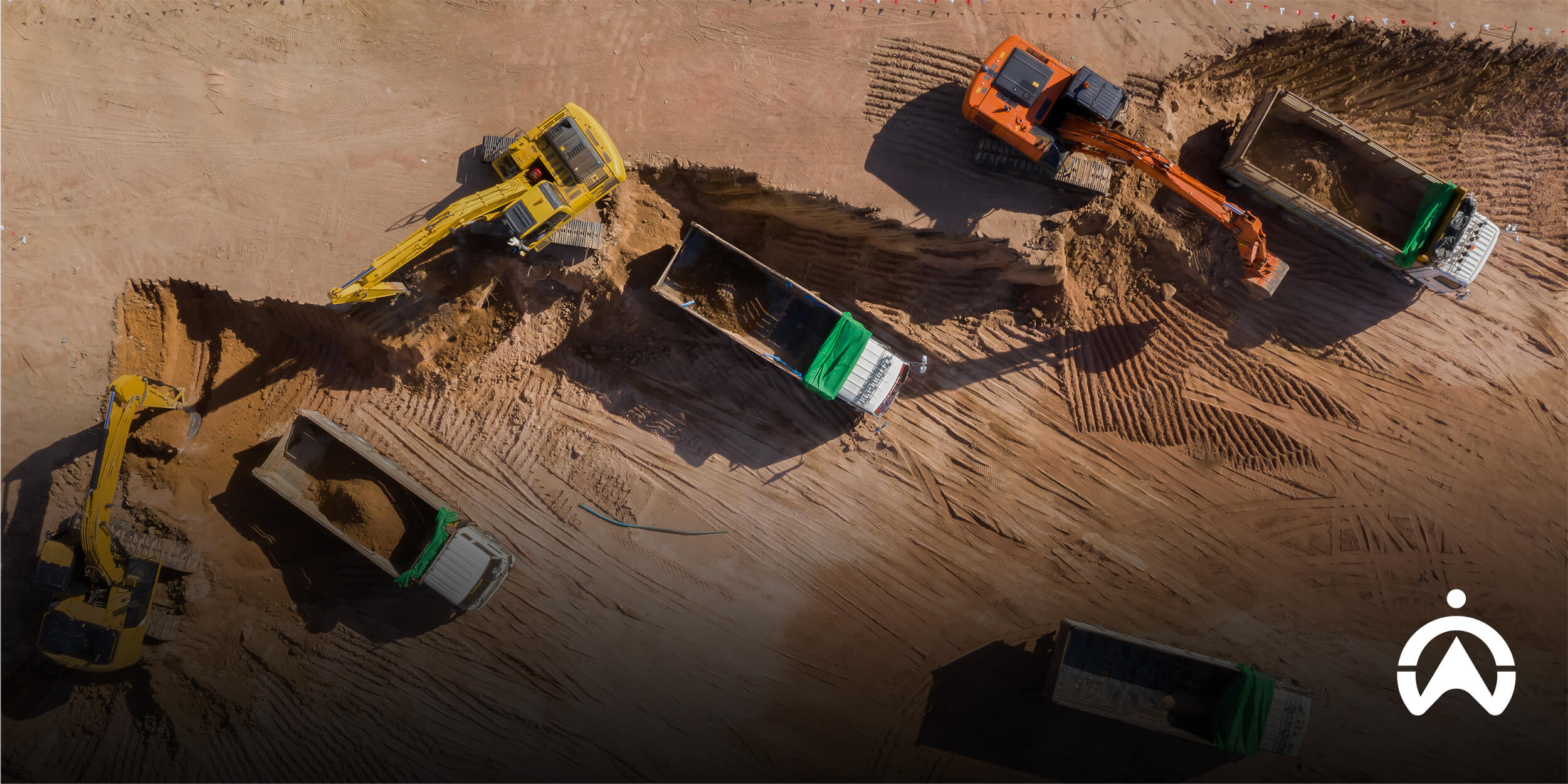
7 Ways to Increase the Efficiency of Your Construction Fleet

The seven main ways to increase the efficiency of your construction fleet are:

  1. Use telematics and GPS tracking to keep everything under control.
  2. Keep vehicle maintenance up to date..
  3. Implement a fuel monitoring solution.
  4. Offer your drivers ongoing training.
  5. Plan better routes between sites.
  6. Match the size of the fleet to your real needs.
  7. Regularly analyse key performance indicators.

Fleet efficiency is essential for construction companies in Mozambique, as it directly affects project deadlines, safety and operating costs. Without a solid strategy and the right technology, your business faces challenges such as high fuel costs, unexpected downtime and poor driving behaviour, which compromise the health of your vehicles and equipment.

With the growth of the construction sector in Mozambique, driven by infrastructure, housing and energy projects, companies are increasingly investing in telematics, IoT sensors and mobile platforms to improve fleet monitoring. To stay ahead of the competition, you need an effective approach — which is why we present the seven ways to improve your construction fleet operations.

Key takeaways:

  • Telematics and GPS tracking let you know where your vehicles and equipment are, improving productivity
  • Regular maintenance and fleet system alerts prevent breakdowns and extend the life of your vehicles
  • Fuel management and driver training save money, reduce waste and improve safety
  • Route planning, right-sizing the fleet and performance analysis keep the fleet running efficiently

7 Key strategies to improve construction fleet efficiency

The 7 key strategies to improve the efficiency of your construction fleet are:

  1. Invest in telematics and GPS tracking
  2. Regular maintenance
  3. Implement a fuel management system
  4. Driver training
  5. Route planning
  6. Fleet size optimisation
  7. KPI analysis

Together, these strategies help to reduce costs, minimise downtime and ensure your construction fleet performs at its best.

Below is a summary of each point:

‍1. Implement telematics and GPS tracking

Telematics features have become essential in construction fleet management, as most companies already make data-driven decisions to increase operational efficiency. To keep pace with or stay ahead of the competition in Mozambique, you also need to invest in telematics technology.

With telematics, you can monitor the location of your vehicles, equipment, machinery and other tools. This helps to prevent theft, a real problem on sites in Maputo, Matola and other cities… and makes it easier to locate your resources. You will also be able to see how productive your employees are, such as whether equipment is actually working or just idling.

2. Schedule regular maintenance

Your fleet is only as good as its maintenance, and with telematics technology, you can digitise maintenance-related tasks. To reduce unexpected downtime and increase efficiency, use the maintenance features of your fleet management platform. Set up reminders with the service intervals recommended by the manufacturer, so that you can schedule services in advance and plan operations better.

Through telematics, you will also receive early alerts of maintenance needs and identify potential mechanical failures before they occur. Fix problems before they cause breakdowns: this reduces downtime, increases safety and extends the life of your vehicles.

3. Implement a fuel management system

Make sure you add a fuel management system to your fleet software package, to monitor consumption per vehicle and piece of equipment. A fuel management system is made up of hardware and software tools that help you use fuel more efficiently and reduce costs. In Mozambique, where fuel prices are regulated but fuel diversion and siphoning are frequent problems on sites, this system is especially important.

With fuel level sensors, you can quickly detect sudden drops in tanks, a sign of theft or a leak. The system also makes it easier to monitor fuel cards and can flag fraud.

4. Train drivers for greater efficiency

Drivers perform better when they receive regular training. Hold regular training sessions to educate drivers about behaviours that affect fuel costs and vehicle health. Fleet operators should be trained in defensive driving, vehicle safety checks, equipment handling, the rules of the road and the use of fleet management software. Better driver behaviour improves safety and compliance, reduces operating costs and lowers the number of accidents.

Construction fleet productivity improvements using smarter vehicle and equipment management

5. Improve job and route planning between sites

Poor planning between depots, suppliers and construction sites can result in wasted time and fuel. In Mozambique, where road conditions vary significantly, route planning is even more critical.
Use route optimisation software to plan stops better, so that your vehicles arrive on time and complete the job as quickly as possible without compromising service quality. Better route planning also reduces last-minute changes, which can disrupt other jobs, increase fuel consumption and put drivers under stress.

6. Optimise fleet size and equipment allocation

Right-sizing the fleet means making sure the number of vehicles and pieces of equipment matches your real operational needs. It is important to assess the size of your fleet regularly. You may find that your vehicles/equipment are overworked and worn out because there are too few of them, or that you have more than you need and should downsize and reallocate assets to save costs.

7. Monitor and analyse key performance indicators

Measuring your fleet's performance requires you to regularly check important metrics such as:

  • Total Cost of Ownership (TCO)
  • Fuel cost per route
  • Vehicle utilisation rate
  • Maintenance costs
  • Downtime rate
  • Driver behaviour

Regular analysis helps to identify inefficiencies and is easy when you have fleet management software, as it provides a detailed analysis of the various aspects of the operation.

Explore our fleet management solutions to take your construction fleet to the next level

Our fleet management solutions take your construction fleet to the next level, providing detailed insights into your operations and protecting your assets. We offer solutions such as GPS trackers, preventive maintenance alerts and a fuel monitoring system. These solutions help to reduce expenses, improve productivity and, as a result, make you more efficient.

Real-time GPS tracking

Always know where your vehicles and machinery are with our GPS trackers. This makes it harder for your assets to go missing and ensures you can see what drivers are doing and whether they arrive on time. Our GPS trackers have telematics capabilities, which means you can also see when drivers are idling for too long or engaging in risky behaviour. You will receive reports on these behaviours so that you can act quickly.

Non-powered asset tracking

Some of your assets have no power source and are therefore not compatible with conventional GPS tracking devices. For these, we have non-powered asset trackers. They can be used to monitor trailers, storage containers and other site equipment. They help to protect your assets against possible theft and reduce the time your team spends looking for equipment on site.

We have three main types of non-powered asset trackers:

  1. Asset Tracker
  2. Track & Go
  3. TAG

How they work:

The Asset Tracker can be installed on non-powered assets, such as trailers, purely to locate them. It lasts up to four years without needing to be recharged. It provides up to two updates a day, ideal for assets that do not need constant monitoring.

The Track & Go is exactly what the name suggests: a portable magnetic tracking device that can easily be moved from one asset to another. It provides not only location data, but also detailed telematics data on how operators use it. It gives real-time updates and needs occasional recharging. Ideal for tracking rented assets — you can remove it once the project is over.

The TAG is another permanently installed device that provides location data by radius. You can set a circle (radius) at any point on the map and see where the asset is within that area, ideal for tracking industrial equipment on large sites. It is portable, does not need recharging and provides frequent updates, mainly in urban areas.

Geofencing (Virtual Fences)

Our geofencing feature lets you create virtual boundaries and receive alerts when drivers enter or leave those areas. You can use this to make sure your vehicles or equipment do not leave the site without authorisation. This feature can also be used to check whether vehicles arrive at the various sites on time and how long they take to get there.

Power Take-Off (PTO) sensors

The Power Take-Off sensors from Cartrack are IoT devices that monitor engine activity to help you see when your machinery is being used efficiently. With this, you can tell productive idling from unproductive idling, helping to save on fuel costs and improve operations.

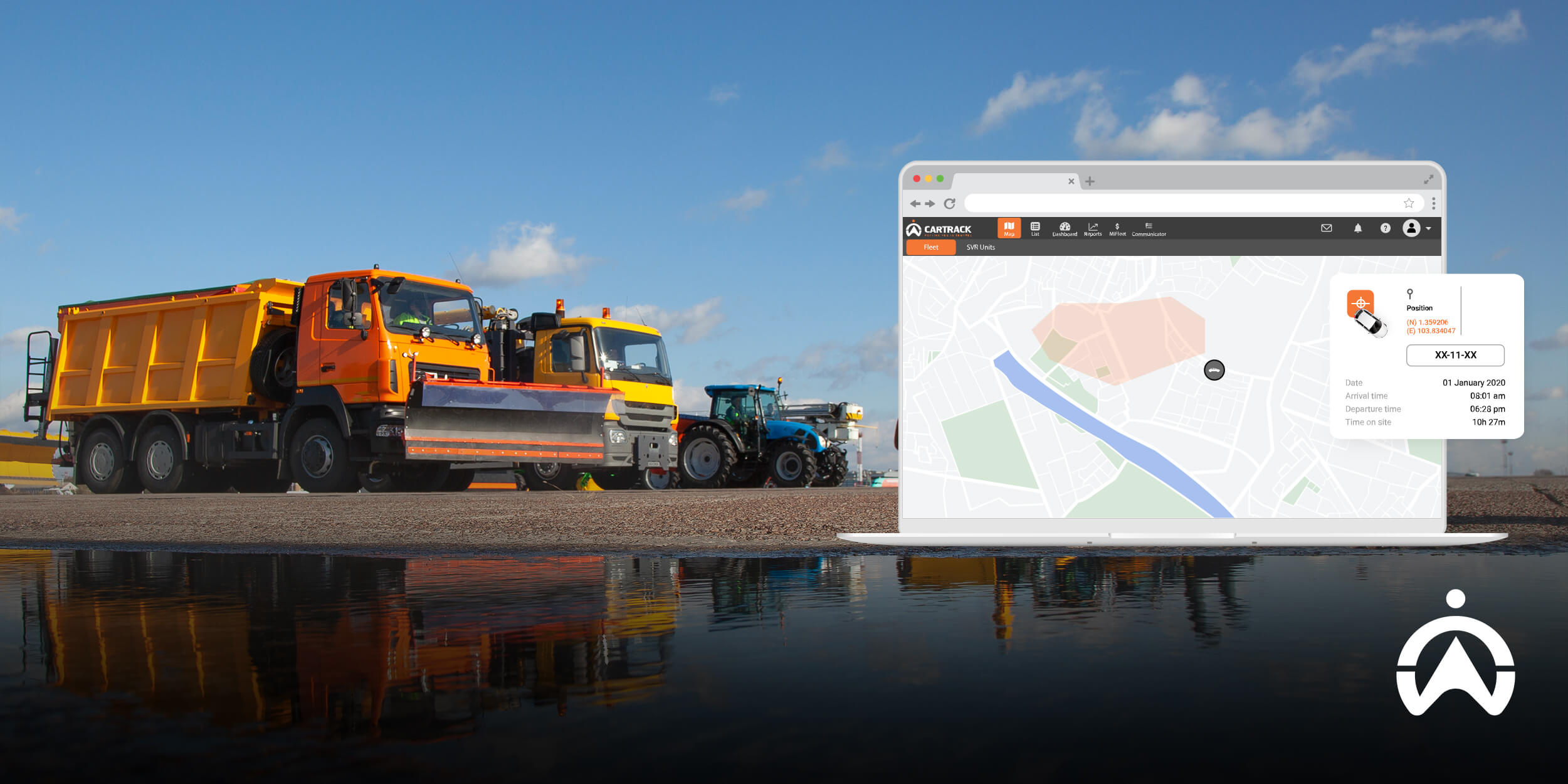
Optimized construction equipment fleet supporting faster project delivery and reduced downtime

Preventive maintenance

Our preventive maintenance solution provides features that help you maintain your vehicles and machinery better. You can add the recommended service dates to our platform and receive reminders as the date approaches. That way, you won't skip any maintenance, which improves the life of your vehicles and lets you plan operations with fewer unexpected interruptions.

Through our maintenance platform, you can also create digital vehicle inspection checklists for drivers to use before and after trips. The feedback from these checklists will help you identify which vehicles have worn parts that need repairing or replacing, reducing the chances of disruption from unexpected breakdowns.

Another great benefit of our preventive maintenance software is that it can provide early alerts of engine faults, worn brakes and the need for an oil change. The system analyses certain components, allowing mechanical failures to be detected in advance.

Fuel management

Fuel is one of the biggest contributors to high operating costs, and with our fuel management system, you will make significant savings. We have several solutions that ensure close monitoring of fuel consumption, such as MiFleet and Fuel Probes.

MiFleet is a cost management platform that helps you manage the expenses of various aspects of your fleet, including fuel. This feature monitors distances travelled, fuel receipts, litres and location — and flags suspicious activity that may indicate theft or fraud.

The fuel probes are sensors installed in vehicle tanks or in site tanks to measure fuel levels in real time. You will receive alerts of sudden drops, which may indicate fuel siphoning or a leak. These tools help to monitor fuel use closely and detect theft quickly.

Driver management

The way your drivers treat vehicles and equipment directly affects the health and efficiency of your fleet. For this, we have driver management solutions such as DID tags and fleet cameras.

Our Driver Identification (DID) tags help to maintain compliance and to know who is driving. You can assign each tag to a specific vehicle or machine that the driver is qualified for. If someone tries to operate a vehicle or machine they are not qualified for, the vehicle will not start.

Our AI Multi Vision camera solution ensures you see everything that happens with your fleet in real time. You can install up to eight cameras in and around your vehicles to monitor operations and live-stream from anywhere at any time. Our on-board cameras (dashcam) also identify distracted driving such as drowsiness, mobile phone use and smoking, and sound audible alerts so that drivers can correct their behaviour immediately.

Your trusted solution for construction fleet efficiency | Cartrack Mozambique

At Cartrack, we offer our services to fleets of different types, including those in the construction sector in Mozambique. Over the years, we have helped many companies transform their fleet operations through our sector-specific features. With us, you are guaranteed smooth operations and optimum efficiency. Contact us and start seeing the difference!

FAQs

What factors contribute to successful fleet operations?

The factors that contribute to successful fleet operations are safety and compliance, driver management and proper cost analysis. This is done effectively through fleet management software, which provides smart solutions to better manage the various aspects of your fleet's operation.

What skills are needed to be a fleet manager?

To become a fleet manager, you need a combination of leadership skills, financial skills, effective communication, technical knowledge and problem-solving ability. You need to lead, communicate effectively with your drivers and motivate them around a shared vision, all while managing costs and identifying inefficiencies.

What is the biggest challenge in fleet management in Mozambique?

The biggest challenge in fleet management in Mozambique is managing rising operating costs caused by factors such as fuel, maintenance and asset theft. You can overcome this challenge by investing in a fleet management system such as Cartrack's, which gives you more visibility over your fleet's operations and helps to identify what needs to be improved to reduce costs.

Defensive driving techniques

Driving defensively on Mozambique's roads starts with something simple: staying focused on the road, keeping a safe following distance and anticipating hazards. By obeying the rules of the road and treating other drivers with respect, you protect yourself and those travelling with you.

In this article, we will present 12 defensive driving techniques that are easy to memorise, explain why they work and show how you can turn them into habits. Keep the word F.U.N.D.A.M.E.N.T.A.L in your head as you read — it is the way to remember everything once you have finished this article.

Key Takeaways:

  • Defensive driving in Mozambique means staying focused, respecting the rules and anticipating what other drivers might do wrong
  • You need to take extra care near trucks, chapas, intersections, pedestrians, animals and roads in poor condition
  • Keeping your distance, staying calm and being alert when stopped helps to avoid accidents and risky situations
  • Technology such as GPS, cameras and driver coaching helps to identify risky behaviour before it causes harm

F.U.N.D.A.M.E.N.T.A.L tips for defensive driving in Mozambique:

  • Full focus on the road
  • Obey the rules of the road
  • Never react to aggression
  • Safe following distance at all times
  • Watch out for trucks
  • Poor road conditions — slow down
  • Mirrors checked frequently
  • Night-time calls for extra care
  • Taxis and chapas are unpredictable
  • Stay alert when stopped
  • Width — take up more space

These are not generic tips you have heard a thousand times. They are techniques backed by accident data, crash reconstruction specialists, professional drivers and law enforcement. Throughout the article, think about how YOU can be a defensive driver in Mozambique — even when others are not driving well.

1. Full focus on the road

The foundation of safer driving is eliminating distractions. When you are behind the wheel, all your attention should be on the road. People who have been driving for many years tend to slip into “autopilot”, and that is when distractions creep in and hazards go unnoticed.

How to stay focused:

  • Eyes on the road at all times
  • Be aware of your gear changes
  • Check your rear-view mirror frequently
  • Watch the road signs around you
  • Be aware of other drivers
  • Ignore your mobile phone
  • Prioritise driving over chatting to passengers

The main cause of road accidents in Mozambique is distraction, especially using a mobile phone at the wheel. Make a habit of putting your phone away before you set off.

2. Obey the rules of the road

The rules of the road exist for a reason. Obeying them is the most direct way to stay safe. Even if other drivers do not respect them, those rules are there to give you the time and space to spot dangerous situations before it is too late.

The most common offences that cause accidents in Mozambique:

  • Ignoring stop signs and traffic lights
  • Driving under the influence of alcohol or substances
  • Speeding
  • Drifting out of lane
  • Not indicating

Did you know?: Fleet companies invest in regular driver training and monitoring via fleet management software precisely to ensure the rules of the road are obeyed.

3. Use your mirrors frequently

Your vehicle's three mirrors are there to give you the greatest possible view of what is around you. Checking them regularly is a habit we learn when getting our driving licence — and with good reason. Knowing what is going on around you at all times makes you more aware and able to move more safely.


4. Never react to aggression on the road

If you have been driving in Mozambique for a few years, you will already have come across aggression on the road. The most important rule: do not react. Someone in an aggressive state can lose the ability to think straight and go as far as damaging your vehicle to provoke a reaction.

What to do in an aggressive situation:

  • Lock the doors and keep the windows closed
  • Stay calm
  • Record the incident if possible
  • Call someone you trust

5. Drive defensively near trucks

Trucks take up more space on the road and cannot react as quickly as a car or pick-up. Even if truck fleets take every possible precaution, drivers can suffer from fatigue, distraction or mechanical failure.

When you are near a truck, whether in front, alongside or behind, always be on maximum alert. Watch its lights, follow its movements and overtake as quickly as possible when it is safe to do so.

6. Adjust your speed to the road conditions

In Mozambique, drivers are well acquainted with potholes, roadworks and obstacles on the roads, especially on the outskirts of Maputo and Matola and on the national roads. Many accidents happen because drivers keep to their normal speed despite these hazards.

How to protect yourself:

  • Slow down to give yourself time to spot obstacles
  • Keep a safe following distance to see potholes in time
  • Slow down in the rain to keep control of the vehicle
  • Make a habit of constantly checking the road ahead

Invest in a dashboard camera (dashcam) to record what happens in the event of an accident or unexpected obstacle.

7. Chapas and taxis are unpredictable

Chapa and taxi drivers in Mozambique are under enormous pressure to carry as many passengers as possible throughout the day. That does not justify dangerous driving — but the reality is that they have a reputation for unpredictable behaviour on the road.

They may stop suddenly, turn without indicating or change lanes without warning. Be aware of this unpredictability, keep your distance where possible, avoid confrontations, be patient and take extra care when you are near them.

8. Scan intersections carefully

Defensive driving includes the ability to spot hazards early. Many accidents happen at intersections. This is where collisions are most likely, because several vehicles are crossing paths at the same time.

This is where you should be most cautious, especially when the traffic lights are out of order or the intersection is very busy.

Remember: every traffic light has its own cycle. Do not move off until you have the green light that shows it is your turn.

9. Take up more space

An important part of defensive driving is always having a way out if something goes wrong. It is a habit worth developing: always stop with enough space between you and the car in front and the vehicles alongside.

Vehicle theft and hijacking are a reality in Mozambique, especially in Maputo. Having room to manoeuvre can be decisive if someone approaches your vehicle. It also avoids scrapes and scratches when the traffic starts moving again.

10. Night driving calls for extra care

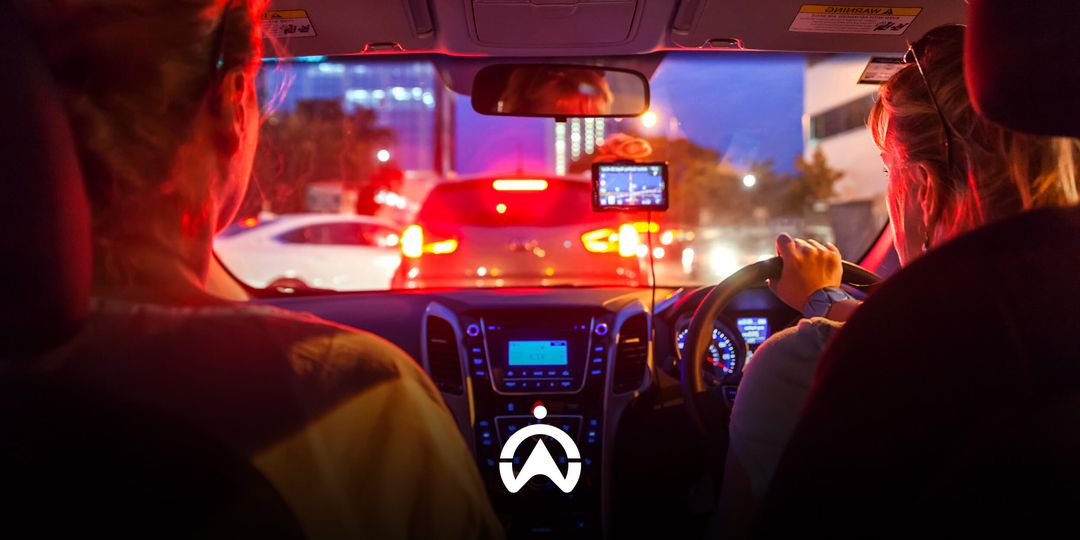
At night, visibility is limited. Not only of the road, but also of signs and markings. In Mozambique, power failures (power cuts) make the situation even worse, leaving certain areas in complete darkness. Take extra care when driving at night or in poorly lit areas.


11. Maximum alert when stopped

Hijacking remains a real problem in Mozambique — especially in Maputo and the surrounding areas. Defensive driving includes being aware of this risk and being extra vigilant whenever you stop. Prevention is always better than cure.

It is better to avoid a hijacking situation than to try to get out of one. If you do find yourself in that situation, see the frequently asked questions section at the end of this article.

12. Watch out for pedestrians and animals

In Mozambique, a large part of the population gets around on foot — to work, to the market, to school. There are millions of pedestrians on the roads every day. That is why it is essential for Mozambican drivers to always watch out for pedestrians, especially in suburban areas, in the city centre and on rural roads. On national roads and in rural areas, animals on the road are also a real danger, especially at night. Slow down and stay alert at all times.

BONUS TIP: Blind spots at the wheel

There are always two small areas you cannot see while driving: behind you to the left and behind you to the right. These are known as blind spots. The mirrors do not show them unless you lean forward. When changing lanes, turning or joining a road, always lean forward to check these blind spots before moving.

How is technology making driving safer in Mozambique?

Technology is transforming road safety through telemetry, the collection of data on the vehicle and driver behaviour. With GPS tracking, fleet management software, driver coaching and vehicle cameras, bad driving habits are identified, corrected and eliminated over time, and vehicle crime is reduced.

What this means in practice:

  • Real-time GPS tracking: You know where every vehicle is at any moment.
  • AI cameras: They detect risky behaviour and record incidents automatically.
  • Driver training: Identifies dangerous driving patterns and allows targeted training.
  • Behaviour alerts: Real-time notifications for speeding, harsh braking and other risks.
  • Remote immobilisation: In the event of theft, the vehicle can be immobilised remotelywill make your life easier and save you money.

At Cartrack, we are constantly thinking about how our technology can make driving safer for private drivers and business fleets. Whether you are a private driver commuting to work every day or a logistics driver, we have a solution that makes your life easier and saves you money.

Talk to us today and find the right solution for you.

Frequently Asked Questions about Defensive Driving

What are the main distractions at the wheel in Mozambique?

The most common distractions are using a mobile phone at the wheel, conversations with passengers, and eating or drinking while driving. Using mobile devices at the wheel is prohibited by law. As it is the main cause of accidents, the best thing is to make a habit of putting your phone away before you set off.

What should you do if your vehicle is hijacked?

6 ways to protect yourself in a hijacking:

  • Always check that you are not being followed
  • Be MORE vigilant in your driveway or garage
  • Scan your surroundings as you approach home or a stop
  • Park in safe areas with visible cameras
  • Be alert when getting back into the vehicle
  • Keep your eyes on the mirrors while driving

How to Manage Your Light Commercial Vehicles (LCVs) Effectively with Fleet Management Software

To manage your light commercial vehicles effectively with fleet software, you should invest in a platform that directly addresses the biggest challenges LCVs face. LCV fleets deal with unique vulnerabilities because of their frequent trips. Wear and tear, wasted fuel, unexpected downtime and more are some of the main concerns.

LCVs are some of the most widely used vehicles in Mozambique, typically used for deliveries, service work and other activities. In Mozambique, road transport is the main means of moving goods and people, with most freight travelling by road — which underlines the need for effective fleet management to ensure better control of vehicles and greater safety.

In this article, we will discuss how using fleet software can completely change the way you manage your LCV fleet. Get more clarity, efficiency and cost control for your business — all with the help of Cartrack Mozambique.

Key Takeaways:

  • LCV fleets face more intense daily demands, so they need software that helps to reduce costs, cut wear and tear and improve safety
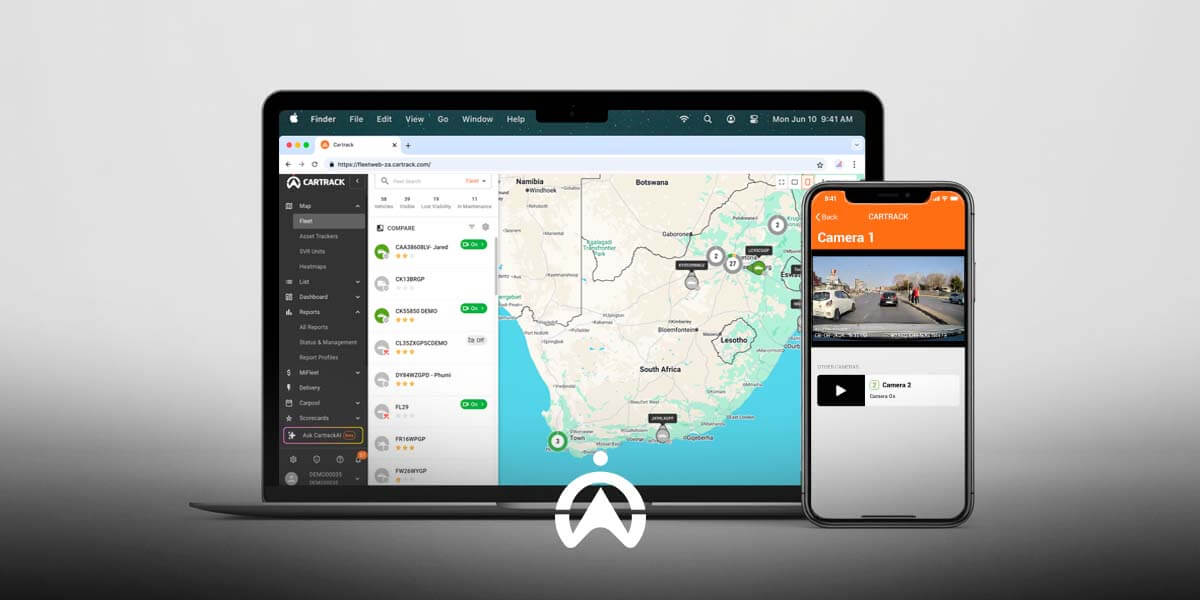
  • Fleet software offers real-time tracking, smart maintenance alerts and fuel insights to manage your vehicles with ease
  • Cartrack helps you save money, coach drivers, prevent downtime and improve delivery times with a single, intuitive platform
  • Using clear data and real-time updates lets you run a safer, more reliable LCV fleet every day

Why do LCV fleets need a different management approach?

LCV fleets need a different management approach because they generally deal with different conditions compared with larger fleets, which points to the need for a new and unique perspective. Fleet management software allows LCV operators to monitor and tackle these specific challenges, ensuring trouble-free operations.

These are some of the key points to consider:

  • Higher daily mileage: Because of their urban nature, LCVs tend to cover more distance per day with all the deliveries and quick trips, which can lead to additional wear and tear.
  • Stop-start driving: Multi-stop trips are common, which means a lot of pulling away and braking. This puts more strain on the engine and on fuel consumption.
  • Higher driver turnover: Most of the time, drivers rotate between LCVs, which can be confusing when driver behaviour monitoring is a consideration.
  • Accelerated wear and tear: Daily trips with frequent pulling away and braking increase wear and tear, affecting the life of the vehicle.
  • Greater exposure to urban traffic: Heavy traffic and traffic jams in the cities of Maputo and Matola can put a lot of pressure on vehicles and their drivers.
  • Pressure of delivery deadlines: High customer expectations and tight delivery windows add extra pressure to deliver and provide good service.

What is a light commercial vehicle (LCV)?

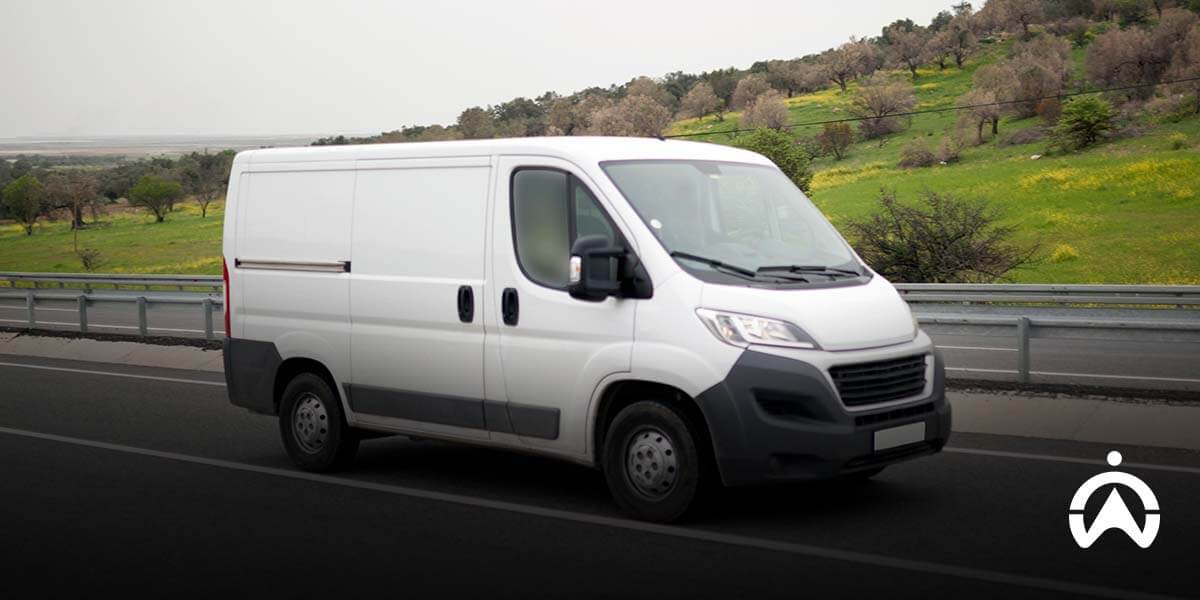
A light commercial vehicle is a vehicle that normally includes vans, pick-ups, small trucks and other vehicles weighing less than 3.500 kg. They are used for jobs such as deliveries, repairs and similar services.

These are the industries in which LCVs are normally used:

  • Deliveries (courier services, retail and e-commerce)
  • Repairs and field services
  • Transport (of people/passengers)

What does fleet management software help to manage in an LCV fleet?

Fleet management software helps to manage aspects such as compliance, safety and overall operational efficiency.

These are the main benefits of fleet management software:

  • Tracking: See where your vehicles are at any time and how they are being driven.
  • Maintenance: Plan regular services to avoid costly downtime.
  • Fuel management: Analyse fuel consumption and reduce waste.
  • Driver management: Encourage better driver behaviour, accountability and safety.
  • Safety and compliance: Make sure vehicles comply with the rules and regulations in force.
  • Productivity and cost control: Plan the best routes, minimise delays and improve business performance.

How much does fleet management software for LCVs cost?

The cost of fleet management software depends on several factors, such as the service provider, the features chosen, the needs of the business, the hardware and more. In Mozambique, prices vary according to the package and the number of vehicles. The return on investment (ROI) generally outweighs the initial costs, whatever the amount.

Cartrack can offer you a package that best suits the specific needs of your business, with no surprise fees or unclear pricing.


Main challenges for LCV fleet managers (and how software solves them)

The main challenges for LCV fleet managers include wear and tear and high fuel costs. Software solves these problems by providing the tools needed to tackle them. Features such as GPS tracking, driver monitoring and fuel consumption reports are just some of the tools that can transform the management of your LCV fleet.

Here is a breakdown:

‍LCV challenge: Rising fuel costs

How fleet software helps: LCVs generally have many routes with frequent stops, idle often and travel mainly in urban areas — all of which contributes to higher fuel consumption. The fleet software helps by tracking fuel consumption, analysing usage and issuing idling alerts. That way, you can identify where fuel is being wasted, avoid inefficient routes and much more.

LCV challenge: Above-normal wear and tear

How fleet software helps: On top of the multiple stops, frequent trips contribute to the vehicle's deterioration. Fleet software helps by offering notifications for predictive maintenance, which can help to prevent costly, unexpected downtime.

LCV challenge: Route delays

How fleet software helps: Working in urban areas such as Maputo and Matola means there will inevitably be congestion during trips, which affects delivery times. Fleet software helps not only to optimise routes for the fastest, most efficient trips, but also to share real-time route updates to keep drivers on the fastest routes.

LCV challenge: Dangerous driving

How fleet software helps: On top of the multiple stops and possible route delays, the pressure to deliver on time can lead to reckless behaviour on the road. Fleet software helps by monitoring drivers' habits, scoring behaviour and providing feedback for training. This can help you improve safety among your drivers.

LCV challenge: Unauthorised use or theft

How fleet software helps: With LCVs, there are generally many people using or sharing a vehicle. But beyond that, after-hours use and theft can seriously harm your business through increased liability. Fleet software helps by bringing together real-time GPS tracking, movement alerts and remote vehicle immobilisation to prevent misuse and help recover stolen vehicles quickly.

LCV challenge: Lack of visibility

How fleet software helps: LCVs are constantly on the move between sites, customers and depots, so it can be hard to keep track of them without solid management control. Fleet software helps by presenting vehicle locations, fuel data, driving habits and other features on a single dashboard, giving managers the complete overview they need.

How to manage your LCV fleet more efficiently with Cartrack's fleet software

You can manage your LCV fleet more efficiently with Cartrack's fleet software, which has the tools that directly address your business's challenges. Some of these tools include smart insights into fuel use, proactive maintenance alerts and in-depth driver analytics that help to reduce operating costs:

These are some practical, actionable steps:

Monitor fuel consumption and cut unnecessary costs

Fuel tends to be the biggest daily expense for most fleets, especially LCV fleets with intensive city trips. Our real-time fuel tracking gives you a clear view of how much fuel each trip and vehicle uses, and alerts you when a vehicle has been idling for too long.

Our fuel card integration can also help you detect irregular spending, allowing you to take specific steps to reduce fuel waste.

Improve driver behaviour and safety

Drivers' habits on the road have a significant impact on fuel consumption and the risk of accidents. Our artificial intelligence camera systems and driver scorecards assess behaviour and highlight aggressive driving.

Analytics and insights can also highlight recurring patterns, so that you can train drivers to help them drive better. All of this contributes to a safer, more economical fleet.

Keep every LCV in good condition with predictive maintenance

LCVs work hard every day, and our predictive maintenance features track mileage, engine diagnostics and service history to predict when they may need attention. Our software will send automatic service reminders to catch problems early, preventing breakdowns and saving you further worry.

Increase delivery and service efficiency with route optimisation

For delivery companies, technicians and other businesses that depend on LCVs, fast, efficient trips are vital. Our system uses real-time traffic data and trip patterns to suggest the best routes. This helps drivers to reach their destinations faster, spend less time in traffic and improve customer service.

Protect your vehicles with real-time GPS tracking

Between theft and unauthorised use, our GPS tracking keeps you informed about your LCVs in real time. You will receive alerts for vehicles that leave defined zones or are parked suspiciously. In high-risk cases, you can even immobilise the vehicle remotely, keeping your assets safe.

Consolidate all your LCV data on a single dashboard

Our system combines all your data on a single dashboard, so that you can quickly see driver behaviour, vehicle locations, fuel consumption and other features. This clarity helps you compare performance, make informed decisions quickly and streamline your operations overall.


Which KPIs should LCV fleet managers track?

The KPIs managers need to track fall into five main categories: financial, maintenance, operational efficiency, compliance and customer satisfaction. Measuring KPIs is the best way to reduce costs and easily identify gaps in performance.

These are measurable indicators relevant to light commercial operations:

  • Fuel consumption per trip or vehicle
  • Idling time
  • Driver behaviour score
  • Delivery and service completion times
  • Vehicle utilisation
  • Maintenance and services
  • Frequency of downtime and breakdowns
  • Cost per kilometre

Final Conclusion

Light commercial vehicles work hard and they are not cheap! Keeping everything under control is a priority. With smart software, getting your LCV fleet to peak performance is simple, making the roads a safer place and keeping maintenance costs under control. This keeps your bottom line healthy.

Cartrack brings all this functionality together in a single package, so that you can spend your time managing a fleet that performs at its best for your business and your customers, instead of wasting time trying to solve the latest problem.

Cartrack's GPS tracking and telematics system can help your fleet reduce costs and downtime, while increasing safety, compliance and daily productivity.

Manage your vans and light commercial vehicles with confidence. Talk to a Cartrack specialist and start optimising your fleet today.

FAQs

Do LCV drivers need special training to use fleet systems?

No, LCV drivers do not need special training to use fleet systems, but some basic onboarding training from your provider can really help to speed up the process. Fleet systems should be easy enough to use comfortably, but a little training helps everyone get familiar with the features that increase safety and performance.

Does fleet software help to improve delivery times or customer service?

Yes, fleet software helps to improve delivery times or customer service, as it provides all the necessary features that support real-time GPS tracking and direct communication. Having these tools means you can handle any unexpected, urgent changes quickly, which keeps that relationship with your customers solid and reliable.

How quickly can an LCV fleet be onboarded onto Cartrack's platform?

An LCV fleet can be onboarded onto Cartrack's platform very quickly, but it depends on the size of your fleet and on when you ask our technicians to come and carry out the installations. Once everything is complete, the system starts working immediately and the information starts coming in.