How to Move from Reactive to Proactive Fleet Management
Published
Reading time
11 minutes
Blogs
To move from reactive to proactive safety in your fleet, you need to invest in an advanced telematics system with artificial intelligence cameras. An advanced telematics system uses predictive maintenance to keep you informed about the mechanical condition of your vehicles, while AI cameras show you how your drivers behave behind the wheel.
It is Monday morning and, before you have even taken the first sip of your coffee, your phone rings: one of your trucks carrying high-value cargo has just had an accident because the brakes failed. And that is where the nightmare begins: the customer waiting for the goods, making sure the driver is all right, calling the insurer and dealing with the police.
Now the real nightmare begins: your customer is waiting for the delivery, you need to make sure your driver is all right, you contact the insurer and you deal with the police. If this sounds familiar or is something that causes you constant anxiety, it is time for you to move from a reactive approach to a proactive approach to your fleet’s safety.
If this sounds familiar or is something that constantly worries you, it is time to switch from reactive to proactive management of your fleet.
In Mozambique, road accidents have a devastating economic and human impact. According to the Instituto Nacional de Estatística (INE) and reports from the Ministry of Transport and Communications, traffic accidents represent an enormous cost for businesses and for the country, between cargo losses, vehicle downtime, legal proceedings and higher insurance premiums. For transport and logistics companies, this translates directly into losses.
So, if you are interested in transforming your fleet from a reactive mindset to a proactive one, you need to focus on three things:
Real-time visibility
Predictive technology
A coaching culture
This article explains exactly how to move from the “wait and see what happens” method to making sure problems are solved before they cause damage.
Key takeaways:
You can stop worrying about accidents by switching from a reactive mindset to a proactive one
Smart technology such as AI cameras and sensors lets you get ahead of problems
Don’t use the data to punish your team, but to coach them towards safer habits
Investing in proactive safety not only saves lives but also increases your profits in the long term
The reactive cycle
Companies without proactive safety measures are often stuck in this reactive cycle. The cycle starts with an incident, the team tries to work out what happened, managers reprimand the drivers and, at the end of the day, the root of the problem has not been solved and the cycle starts again.
What fleet managers and business owners need to understand is that the main risk to the business is not higher insurance premiums, unexpected maintenance costs or downtime. The biggest risk of having only reactive safety is the damage it does to your brand’s image and to your drivers’ well-being.
What is the proactive safety approach?
The proactive safety approach means having technology such as cameras and advanced telematics installed in your fleet, which helps prevent accidents or unexpected breakdowns. This approach is the best way to keep your business profitable, your drivers safe and your customers satisfied.
Imagine you are at work on a Friday afternoon, already counting the minutes until the end of the day, when your phone rings. You hope it is your family calling. But it is the police, informing you that your 18-wheeler has just been in a serious accident and your driver, who has worked with you for 6 years, has lost his life.
The brakes failed. The truck lost control on a downhill stretch and crashed into other vehicles, with several fatalities. The worst that could happen has happened, and it could have been avoided, but your fleet was not equipped with proactive safety technology. Now you are dealing with the insurer, the police, a court case, a grieving family and a devastated team.
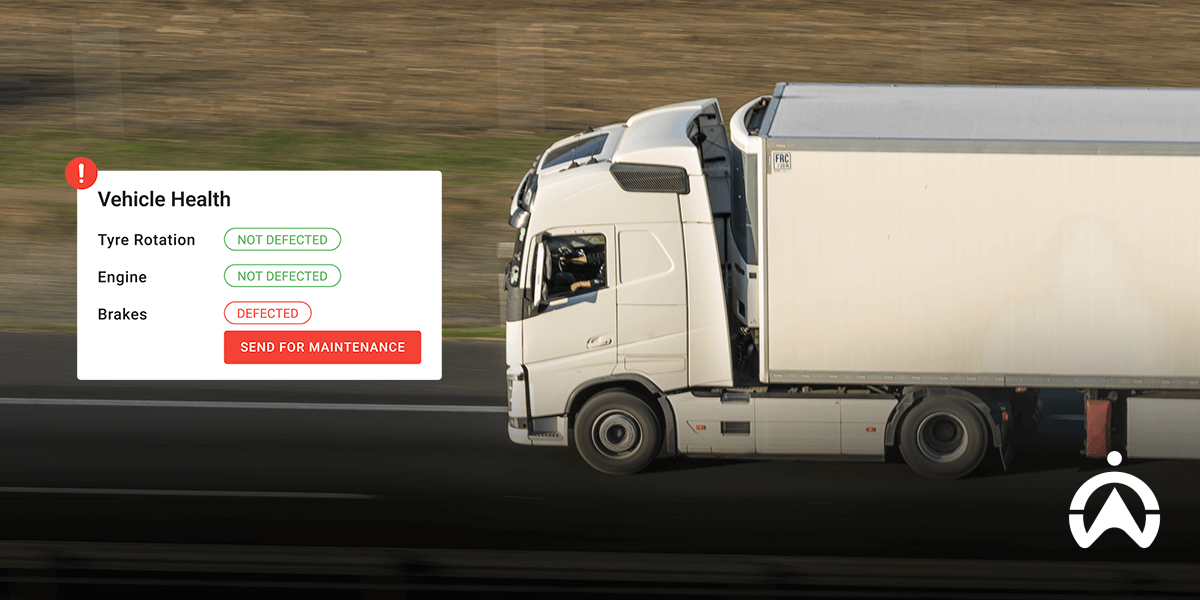
Having a telematics device installed could have alerted you two weeks earlier that the truck’s brakes needed replacing and that your driver was constantly speeding. You would have had time to replace the brakes and coach the driver on the habit of speeding, avoiding everything that followed.
The 3 characteristics of a proactive fleet
There are three main characteristics of a proactive fleet: predictive intelligence, condition-based maintenance and a coaching culture. When you implement these three things in your fleet, you improve vehicle and driver safety and, overall, you improve your ROI.
1. Predictive intelligence (anticipation)
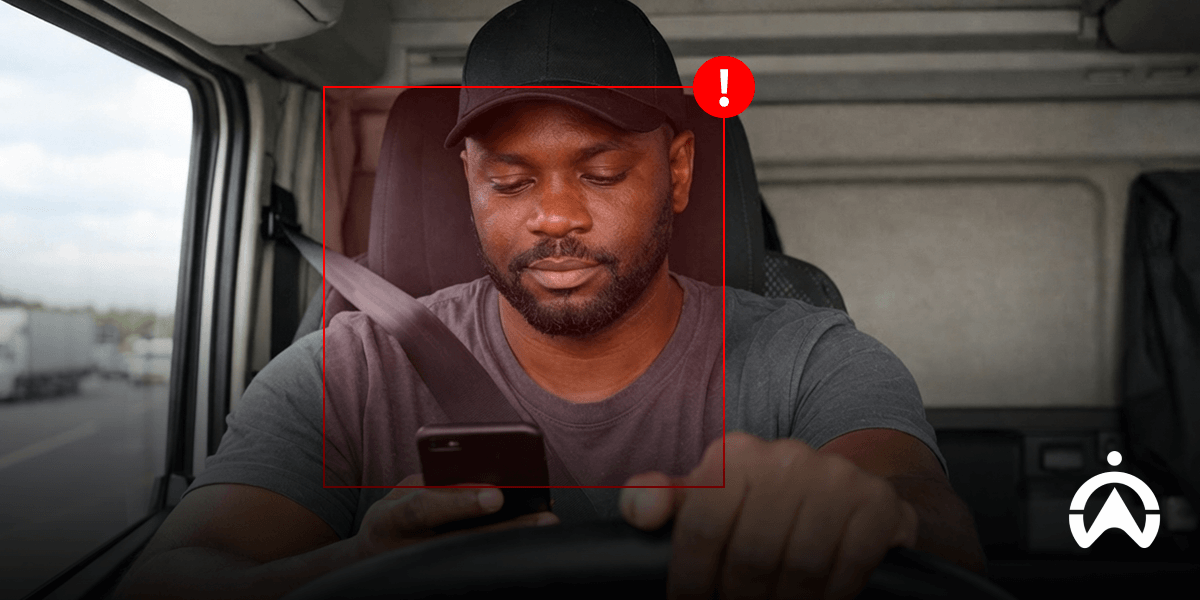
Instead of analysing the GPS history to see where the driver was when they accelerated harshly, a proactive fleet uses AI to monitor micro-behaviours.
Goal: To detect a yawn (fatigue) or a downward glance (distraction) seconds before it results in a lane departure.
A proactive fleet does not wait for the warning light to come on or for the driver to report a “strange noise”.
Goal: To eliminate unplanned breakdowns that cause delivery delays and safety risks.
Technology: Integration with CAN-bus that monitors engine health, tyre pressure and brake wear in real time, generating a maintenance alert the moment a part starts to deviate from normal performance.
3. A coaching-first culture
Instead of handing out warnings left, right and centre to drivers who make mistakes, use the data to proactively coach them to develop better driving habits.
Goal: To reduce insurance premiums and boost employee motivation.
Technology: Driver scorecards and gamification that motivate your drivers to adopt safer driving habits.
Overcoming resistance to change: “big brother”
The biggest obstacle you are likely to face when introducing proactive safety measures is resistance from drivers. They may feel that you do not trust them or feel uncomfortable about being constantly “watched”. The solution to this is transparency.
Proof of innocence: Show drivers footage in which the AI cameras proved that the driver was not at fault in a dispute.
Privacy: Make it clear that AI fatigue monitoring is not spying — it is a life-saving tool that only records high-risk events.
How can Cartrack Mozambique help you with proactive fleet safety?
Cartrack Mozambique can help you 100% with proactive fleet safety, thanks to years of experience and world-class technology. Features such as AI visibility, real-time coaching, predictive maintenance and driver scorecards help transform your fleet from reactive to proactive.
Real-time visibility and coaching
At Cartrack we have high-tech AI cameras that will be the backbone of your shift to a proactive approach to safety. Our cameras process information extremely quickly and can not only alert fleet managers to risky events, but also alert the driver immediately so that they can correct their behaviour.
Why is this proactive?
If you do not receive real-time alerts about risky driving behaviour and the system only gives you that information when you pull a report, you can only coach the driver after they have already put their own life and the lives of others at risk. Having a system that immediately alerts both the manager and the driver gives both of them the chance to solve the problem while it is happening.
For example: when reviewing footage and reports, you notice that every Wednesday for the last three weeks your driver David has been constantly yawning and showing signs of exhaustion (which is a safety risk). You can talk to him about this pattern and work out together a solution that suits you both.
The result? An employee who feels valued and cared for, and the peace of mind of knowing that no accidents will happen because David fell asleep at the wheel.
Driver scorecards and gamification
One of the biggest challenges of a reactive strategy is getting drivers to develop safer habits on the road. A proactive approach helps with exactly that. At Cartrack we will give you a practical tool called “driver scorecards”, which lets you see where your drivers are going wrong and lets the drivers themselves see how often they make the same mistakes.
How do scorecards work?
Every driver starts with a score of 100, and points are deducted based on the offence committed. A driver with a low score is your highest-risk driver and poses a danger to your operations.
As a fleet manager, you have the power to create your own scoring system: if you consider distracted driving (such as using a mobile phone or eating at the wheel) to be a very high-risk event, you can give it a rating of 35, while harsh acceleration gets just 1 point.
What is the benefit?
These scorecards should not be used to pressure or punish; they should work as a tool that raises awareness of bad driving habits and encourages the team to want to be safer on the road.
In Mozambique, where a culture of recognition and belonging at work is highly valued, using the data to recognise those who are improving can be a powerful motivator.
How does gamification work?
People love rewards. When you incentivise good driving, you will have more good drivers. Think of an incentive that works for your team and let the healthy competition begin.
Some examples of incentives:
Cash bonuses
Half a day off
A meal paid for by the company
Public recognition within the company (highly valued in Mozambican culture)
Fun fact: the scorecard is free with all our fleet management systems!
How does being proactive improve your business’s ROI?
Being proactive can improve your business’s ROI by reducing the likelihood of accidents and breakdowns that drain profits. According to industry data, reactive fleets are 65% more likely to have an accident compared with those that have proactive safety systems installed.
To picture this better, think of Heinrich’s Pyramid. This pyramid is based on the law of probability: “In a workplace, for every accident that causes a major injury, there are 29 accidents that cause minor injuries and 300 that cause no injuries.” Applied to your fleet: for every serious accident that happened, there were 300 near misses.
The competitive advantage of certainty
Having a proactive safety system in your fleet is a sure way to gain a competitive advantage. If your fleet is waiting to react to problems as they arise, there will be an endless list of problems every day.
But when you manage your fleet’s safety proactively, that list practically disappears — because you can see the problem before it happens and stop it in time.
So don’t wait for the next incident call. Contact Cartrack and let us help your fleet see around the corner.
Frequently asked questions
Will proactive safety technology increase driver turnover?
No. Proactive safety technology should not increase driver turnover, in fact it should help you retain them. But this depends on you as the fleet manager or owner. If you use the information to coach your team positively and not to punish them, drivers should feel safer and better cared for.
Is proactive safety only for large enterprise fleets?
No. In fact, small and medium-sized businesses benefit the most, as they do not have the financial margin to absorb the costs of a serious accident or unexpected downtime caused by a mechanical breakdown. In Mozambique, where access to credit and replacing vehicles can be slow and expensive, prevention is even more critical.
How do we make sure fleet data does not become a cybersecurity risk?
To make sure your fleet’s data does not become a cybersecurity risk, choose a provider (such as Cartrack) that uses end-to-end encryption and stores data on secure, high-grade servers. Proactive systems let you restrict access to sensitive driver footage or vehicle locations to authorised personnel only, keeping your operational intelligence protected.
Other articles for you
What Are the 5 Cameras Cartrack Offers for Business and Personal Use?
Blogs
11 minute read •
The 5 cameras (dashcams) that Cartrack Mozambique offers for business and personal use are Road Vision, Dual Vision, MultiVision, AI Dash Pro and AI MultiVision. These solutions meet a wide range of needs and keep you protected on the road at all times. Whether you run a complex fleet or simply want to protect your personal vehicle, Cartrack has the […]
Short-haul trucking is the transport of goods by truck over comparatively shorter distances than long-haul transport. It generally refers to road transport over distances of between 100 km and 250 km, normally within a single province or between neighbouring provinces of Mozambique. Data from Mozambique’s road […]
Food Transport Facts and What You Need to Know When Managing Your Fleet
Blogs
11 minute read •
Important facts about food transport in fleet management: keeping perishable goods fresh in transit directly affects your profits — and mixing food loads is a serious mistake. Other facts include the food distribution regulations in force in Mozambique, the challenges of electricity supply and the […]
 South Africa
 Botswana
 Kenya
 Malawi
 Namibia
 Nigeria
 Swaziland
 Tanzania
 Zimbabwe
 Hong Kong
 Indonesia
 Singapore
 Malaysia
 Philippines
 Thailand
 New Zealand
 Vietnam
 Poland
 Portugal
 Spain
 United Arab Emirates

 PT