Why seat belt safety matters

From a young age, our parents and teachers warn us that seat belts are vital to our safety. Our mum or dad reminds us to buckle up whenever we get in the car.

But as we grow up and get behind the wheel, we relax. Those warnings we heard as children start to fade. We forget that those few seconds it takes to buckle up can make a big difference.

Read on to relearn the importance of seat belts.

In this article, you will:

  • Discover how seat belts save lives and reduce injuries
  • Investigate how you can find yourself in trouble with the law if you are not buckled up
  • Understand how not buckling up can increase insurance and healthcare costs
  • Discover how seat belt safety can improve a company's safety culture
  • Discover many Cartrack solutions that can increase driver safety

Why you need to buckle your seat belt

You should always wear a seat belt to avoid bad consequences. These include loss of life, legal issues, high insurance costs and more.

We will expand on these unfortunate outcomes below, but don't let them discourage you. Eventually, we will provide information on Cartrack's solutions for improving driver safety.

Seat belts save lives and reduce injuries

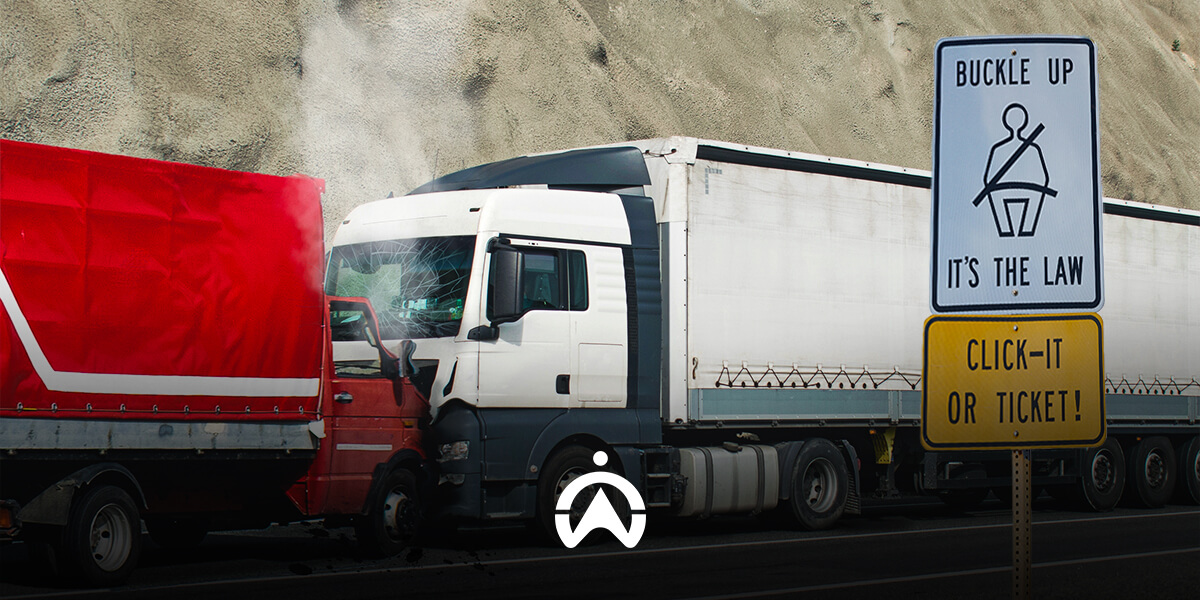
Seat belts are the number one way to help prevent fatalities and serious injuries. They practically cut the chances in half! These seat belts prevent people from being ejected or thrown around inside the vehicle. When flung about inside cars, drivers or passengers can hit one another. This impact can cause significant physical harm. Buckling up will also ensure that people don't hit their heads and lose consciousness. This is especially true for those behind the wheel, who can easily hit their head on the dashboard.

Effectiveness of seat belts

  • Reduction in fatalities: the World Health Organization reports that wearing a seat belt can reduce the risk of fatal injury by 40-50% for drivers and front-seat passengers, and by up to 75% for rear-seat occupants. 
  • Overall impact: Road traffic injuries are one of the leading causes of death in the world, with an estimated 1,24 million deaths annually. South Africa faces a significant burden of these injuries, highlighting the importance of effective safety measures such as seat belt use.

Current seat belt usage rates

  • Overall use: A study indicated that the overall seat belt usage rate in Mozambique is approximately 60%, which is among the lowest in the world.
    –In urban areas, seat belt usage rates can be as low as 25%, while rural areas show higher compliance rates, reaching 80% in some regions such as Maputo.

Enforcement and compliance challenges

  • Despite mandatory laws requiring seat belt use for all vehicle occupants, enforcement remains weak, with Mozambique rating its own enforcement at just 2 out of 10. This lack of strict adherence contributes to high injury rates among passengers who don't wear seat belts.

That said, many people choose to believe otherwise, while some are even quite wary of seat belts.

For example, many think airbags can replace belts. But they are only effective when combined with seat belts. If used on their own, they cannot protect drivers from serious consequences. There are also valid concerns about rare injuries caused by the seat belt, such as shoulder, abdominal and vascular injuries. However, this is a significant minority of cases. It is not worth compromising the safety of you and your passengers.

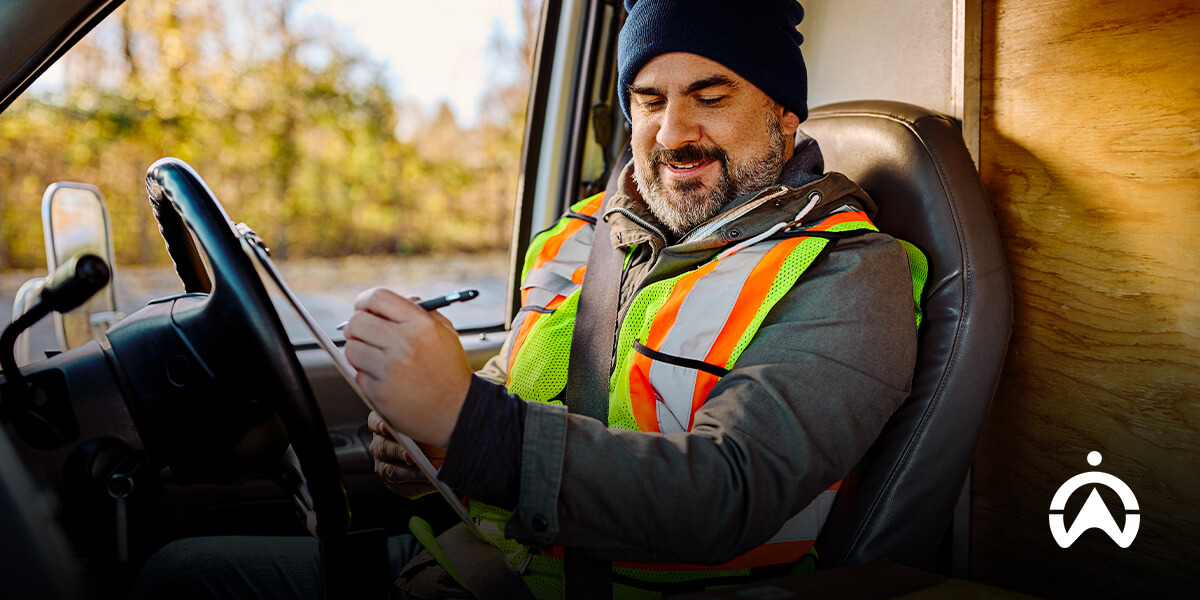
Person in high visibility vest sitting in a vehicle's driver's seat, holding a pen and notebook.

Mozambican roads present unique risks

The streets of Mozambique  have tricky features that make wearing a seat belt vital. From reckless driving to potholes and hijackings, Africa's wild roads present many challenges, three of which you can explore below.

  • Drinking and driving: you may travel carefully on the road. But the uncomfortable truth is that not everyone shares that sentiment. In Mozambique, drinking and driving is a serious problem, leading drivers to throw caution to the wind. 
  • Potholes and rough terrain: potholes are a major cause of irritation for many South Africans, and who can blame them? These potholes can damage vehicles. In addition, Arrive Alive says that some can cause accidents, sometimes even fatal ones. 
  • Hijackings: The Mozambicans  live in a country where hijacking poses a genuine threat. A standard hijacking method is to pull in front of the driver quickly. This approach makes them swerve off the road. Buckling up helps those behind the wheel avoid hitting their head in that moment. They then remain conscious, alert and capable and can take action, such as calling the police.

You could find yourself in trouble with the law

Nobody likes being in trouble with the law and, as everyone knows, not wearing a seat belt is illegal. Learn more about seat belt laws and why you should always comply with them.

  • Seat belt laws in Mozambique a Mozambique has many laws on buckling up. The most important ones for everyday driving include:
    –No one may drive on a public road without a seat belt.
    -No one may drive on a public road in a car whose seat belts are not in working order or correctly fitted.
    –Seat belt-related fines range from 2.000,00mts 
  • Where the responsibility lies:
    -The law states that those in control of the wheel are solely responsible for ensuring everyone wears a seat belt.-If a fleet driver gets into legal trouble, the company must pay the relevant fines. This responsibility is imposed by the common law, “Vicarious liability”. This means that employers are liable for their employees' offences. That said, the company can hold them accountable internally.

It increases healthcare and insurance costs

As we know, neglecting seat belt safety increases the risk of severe injuries. The greater the severity, the higher the insurance and healthcare costs. If you choose not to wear a seat belt and are injured in a car accident, you may not receive the best compensation from your insurer. They may even deny your cover, citing negligence.

Insurance also provides private healthcare and, in South Africa, the quality of care between the public and private sectors is very different. You could end up paying out of your own pocket for substandard services.

It improves companies' safety culture

Safety culture is more than a company promoting a safety-focused policy. It is also a workplace culture with an enthusiastic attitude towards compliance and safety. This cheerful, active approach to safety brings many benefits, which you can learn more about below.

  • Retaining and attracting new employees: focusing on drivers' safety makes them feel that their company cares. That feeling can boost morale and retention and even attract new employees. 
  • Reputation: if potential or current customers hear about fleets having unsafe experiences during business hours, they may choose not to buy from them. These companies may also lose partners or investors who don't want to look bad by association.

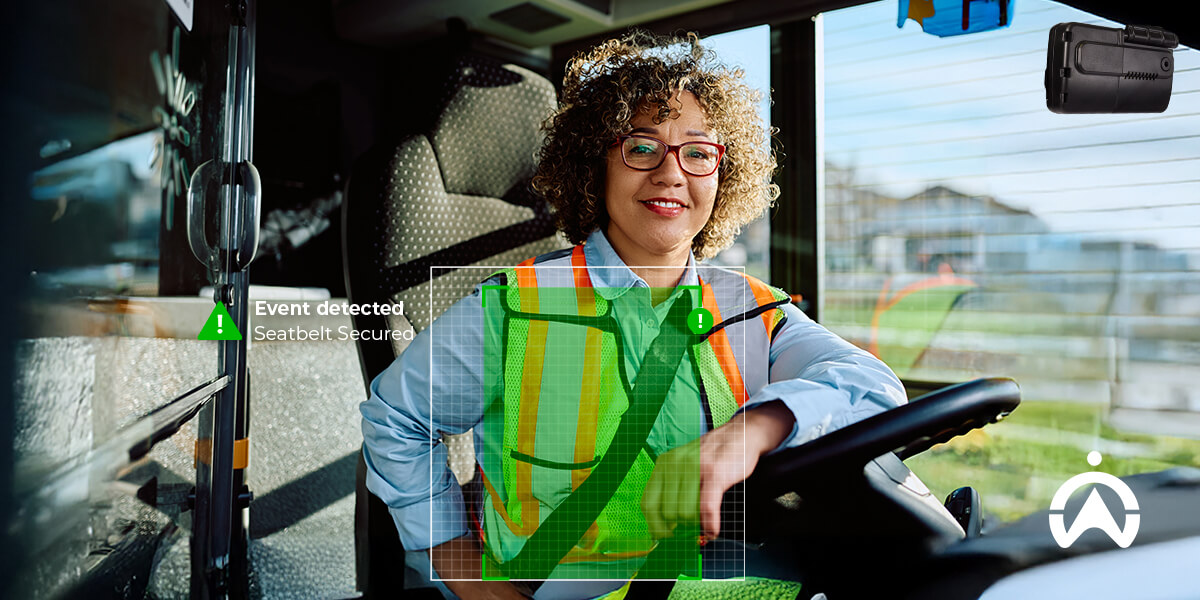
Person in high-visibility vest driving a vehicle with seatbelt-secured notification on the screen.

Strengthen driver safety with Cartrack's trip history

Whether it's wearing a seat belt or not, investing in anything that improves driver safety is always a great idea. At Cartrack, everyone can do exactly that with our trip history feature. With the help of telematics, trip history offers the following:

  • Trip logging and reports: from duration, distance, routes, stops and departure and arrival times, this feature records every trip in detail. The system records data on those aggressive driving behaviours that can be used to understand drivers' bad habits. These habits include:
    –Speeding
    -Aggressive cornering
    -Harsh acceleration
    -Harsh braking
  • Benefits for everyday drivers: trip history can help you and your loved ones analyse and improve each other's driving patterns. 
  • Benefits for fleet managers: trip history reports can empower fleet managers to monitor poor driving conduct and coach drivers when necessary. These reports can stop drivers from repeating poor driving patterns and improve a company's safety culture. 
  • Cartrack's driver scorecards: driver scorecards are perfect for fleet managers' training needs. They draw data from the trip history feature to inform their points system. Fleet drivers lose points on their scorecards if they engage in harsh behaviour. These scores motivate commercial hauliers to drive more cautiously. Giving fleet managers insights into their hauliers' specific weak points is also a valuable training tool. These specifics include speeding, harsh acceleration, harsh braking, harsh cornering and excessive RPM (revolutions per minute). These reports range from one to seven days and a full month.

Find out more about these features by getting in touch with Cartrack today.

Make sure your fleet is prepared with Cartrack's AI Multi-Vision

With our AI (Artificial Intelligence) Multi-Vision solution, fleet managers can ensure their drivers' wellbeing. They can, for example, know in real time whether drivers are wearing a seat belt. That said, let's explore many of AI Multi-Vision's features.

AI Multi Vision is an AI-enabled solution. It allows fleet controllers to protect fleet safety and improve training methods. This solution includes up to eight cameras in each vehicle, such as interior, exterior and road-facing in-cab cameras. They come with live audio streaming and direct in-cab calls and alerts, sent to Cartrack's web platform and our mobile app for the fleet manager and other relevant individuals to follow. These real-time alerts are for high-risk safety events detected through AI camera detection.

As for seat belt detection, the process is much the same as for all other events, as the AI camera picks up an event through its specific “trigger”. In this case, the alert is triggered when there is no visible sign that they are wearing a seat belt.

Fleet controllers can remotely request footage for evidence, and AI Multi-Vision comes with 13 to 27 days of recording space. It also comes with free, convenient installation and training.

The next time you get into a car, remember to wear your seat belt. It's not just a law, it's a lifesaver. By prioritising seat belt safety, you are not only protecting yourself, but also contributing to a safer road for everyone.

Want to take your fleet's safety to the next level? Cartrack's innovative solutions, such as AI Multi-Vision, can help you monitor driver behaviour, including seat belt use, in real time. Contact us today to learn more about how we can help you build a safer, more efficient fleet.

GPS tracking device: the best solution for vehicles and fleets

Just as we can't go anywhere these days without our smartphones, it is almost impossible for a fleet manager to imagine doing their job without the help of a GPS tracking device. And the way GPS vehicle tracking can transform fleet management doesn't end with the tracking device; the best solutions offer a range of features designed to take this visibility even further, improve every aspect of fleet operations and vehicle security and put you in control of your personal vehicle or fleet.

Curious to know how? Let's find out more.

In this article, you will:

  • Find out when a GPS tracking device is the best solution for your vehicle and fleet
  • Consider the key factors that go into finding the best GPS tracking device brand
  • Discover the importance of GPS tracking devices in different industries
  • Look at these industries in more detail
  • See how Cartrack's range of tracking and telematics capabilities can transform industries

When is a GPS tracking device the best solution for your vehicle and fleet?

Wondering what the advantages of a GPS tracker are in fleet management? To understand how valuable the right tracking solution can be for your business and personal use, consider some of the following important factors.

Consider these important key factors

  1. Reducing operating costs
    The more you can reduce this unavoidable cost in your business, the more financial and budgetary freedom you will have to spend your money where you need it most. A tracking system can help you cut costs by optimising and pre-planning the most efficient routes and ensuring your drivers stick to them to reduce vehicle wear and tear and fuel usage.
  2. Prioritising safety
    Driver and cargo safety is fundamental to a fleet's success. For personal use, you want to know whether the tracking device increases your safety and your car's security. Your drivers must be safe to deliver your cargo safely to its intended destination. Some GPS tracking devices offer features such as stolen vehicle recovery and panic buttons, which can help your drivers get the help they need in the event of theft or hijacking.
  3. Increasing productivity
    The aim of every business is to increase productivity because it directly affects profit growth. With the visibility GPS tracking devices offer, it is easy to keep track of drivers' location and movements and ensure your fleet completes its tasks in the most efficient and productive way.
  4. Reducing fuel costs
    The more fuel you save, the more room for manoeuvre you will have in your budget and the more environmentally sustainable you will be making your fleet. There is simply no downside to reducing your fleet's fuel consumption.

If you had several “aha” moments while reading these points, read on to learn more about the benefits a GPS tracking device can offer your fleet or vehicle and how to choose a brand that works for you.
Consider these points to choose the best solution for your vehicle and fleet

When you have the chance to look at several options and make an informed decision that will truly benefit your fleet and your business, take it! The secret to choosing the best GPS tracking device for your operations is knowing what to look for and, with our seven-point plan, you can't go wrong.

1. Brand reputation

Choosing a company with a solid reputation seems obvious, but how do you know whether a brand is as reliable as it seems? When making an important decision, such as buying a product essential to your fleet operations, you definitely need to do some research to make sure you are choosing a brand that delivers on its promises. Our top tips can help you take a deeper look at the big (or up-and-coming) brands and make a smart move.

  • Consistency of reputation: do the brands you are looking at show ups and downs in their reputations, or do they offer a solid track record of quality and public trust? Nobody wants to invest in a brand with a shaky reputation, so take a closer look.
  • Customer reviews: platforms such as Hello Peter are more likely to contain negative reviews because dissatisfied customers are more likely to leave reviews than satisfied ones. That said, positive and negative customer reviews can provide valuable insights into where companies need to improve and whether you consider these problems major or minor. After all, no company is perfect.
  • Hands-on opinion: Even with all the digital tools available today, many are still convinced that word of mouth, or WOM, is still a powerful way to get your brand's name out there. It is also another excellent way to gauge public opinion on GPS tracking brands. 

2. Available features of a GPS tracking device

The more features a tracker offers, the better, but it is also important that all these features are fully functional and serve an important purpose in your day-to-day fleet management tasks. There is no point in buying a highly complex GPS tracking device with features you will never use. Here are some of the most important features you should look out for:

  • Real-time tracking: this is a basic requirement that every GPS tracking device should offer; however, some may be more efficient than others. For example, the way a tracker receives location data can affect its speed and accuracy, so if the location is only sent at set intervals, the data received may not be as “real-time” as expected.
  • Durability: Devices designed for installation in vehicles must be water-resistant and robust to ensure they are not affected by exposure to extreme temperatures. Vehicles are usually outdoors overnight or parked under the scorching sun. If it's built to last, you can tick this box with a smile and move on to the next.
  • Notifications and alerts: It isn't realistic to expect you to check your vehicles' movements 24 hours a day, 7 days a week, so the basic features every GPS tracking device should offer are notifications and alerts for important location changes or emergencies. Customisable options are an even bigger plus, as you can create alerts and notifications specific to your fleet's needs.
  • An easy-to-use monitoring platform: if monitoring vehicle locations is difficult, then why would you buy the product? Convenience is the key word here, so look for an easy-to-use online platform and app that let you check in at any time, wherever you are.

3. Your fleet's unique needs

You know your fleet best, which is an advantage when looking for a GPS device that meets your business's unique needs. Here are three points to think about and use to identify a tracking device that meets these requirements.

  • Areas that need improvement:
    You certainly know which areas of your fleet need work or improvement, but which ones can be improved using a GPS tracking device or a fleet management system? For example, if you need more visibility of when your drivers are entering or leaving specific zones because of productivity problems, looking for a product that offers geofencing can help you manage this issue.
  • Areas that need automation:
    One area of fleet management every manager wants to automate is fleet- and cost-related administration and reporting. If this sounds like a dream come true to you, keeping an eye out for a solution that offers cost tracking, reporting and administrative automation can help you save time and money.
  • Areas that need streamlining:
    Although automation and streamlining may sound similar, there is a big difference when they are applied to fleet management practices. For example, it would be ideal to automate administrative processes, but it would be ideal to streamline your fleet's workflow to optimise the number of tasks completed per shift and improve overall productivity. If your current operations need workflow optimisation, you need to take that into account when weighing up your GPS tracking device options and the features they offer.

4. Customer support

Choosing the right GPS device provider means you expect minimal problems, but it is still important to be prepared for possible issues. That is why looking at the quality of customer support is a crucial point to consider before choosing your GPS and fleet management provider. Customer support needs to be fast, friendly, helpful and capable, and the best way to get a feel for a company's customer support is by looking at customer reviews. Consider the type of problem faced, how quickly help was provided and whether the results satisfied the customers.

5. Reliability

If you are investing in a new GPS tracking device for your commercial or personal vehicle, it needs to deliver consistent reliability so that you know you can count on its technology when the unexpected happens. Tracking devices exist not only to provide day-to-day visibility, but also to help you assist your fleet's drivers in emergencies, getting help to their exact location as quickly as possible.

So reliability is directly linked to the device's accuracy and consistency in providing location data and to the reliability of any other features it offers.

If the GPS product you have your eye on comes with telematics features, such as vehicle diagnostics and related data, you need to know you can count on these numbers being accurate for smart decision-making that will truly drive your business forward and improve your operations, as well as bringing peace of mind about your safety if you are buying a tracker for personal use.

6. Affordability

One way or another, however impressive the product is, you will end up asking yourself: “how much does it cost?” A GPS may offer a seemingly endless range of features designed to help you cut costs and increase your ROI, but if it is too expensive, will there really be a noticeable increase in profit? To approach affordability intelligently, break the concept down into different components and look at each one separately:

  • The upfront cost refers to any initial cost or purchase price you have to pay for the device.
  • Ongoing costs can be subscription fees, monthly data plans or any other recurring costs.
  • If your package doesn't include a device warranty, you may have to factor in replacement and maintenance costs as part of your overall expenses.

Add all of this up to determine your total cost of ownership, the most accurate figure you can use to determine whether a GPS tracking device is an affordable option for you, whether for commercial or personal use.

7. Product range

As well as looking at your fleet's unique needs, you will want to look at the whole range, as you are more than likely planning to use this solution in the long term and may not need every feature today, but perhaps tomorrow or even next year. Here is what you need to look for:

The range of different features offered by a GPS tracking product

  • Different brands offer different levels of technology, and it is important to make sure you choose a brand with technology advanced enough for what you want to achieve. This includes thinking ahead, so consider a brand that lets you future-proof your fleet operations without having to incur extra costs, drastic changes or expensive add-ons.

The importance of GPS tracking technology in different fleet-based industries and personal use

Beyond the use of GPS trackers in personal vehicles, the technology and related features, such as fleet management tools, are valuable assets for running a successful fleet business in various sectors. Let's take a look at different sectors and how GPS trackers help optimise operations in each of them.

Logistics and transport

Logistics and transport are the broadest sectors for most fleet-based businesses and have specific needs that include telematics-based fleet tracking and management.

In the logistics and transport sectors, visibility and optimised workflows are crucial to successfully managing how resources are collected, stored and moved to their set locations. Other more common fleet-related problems, such as resource management and fuel efficiency, are closely tied to managing driver behaviour and preventing profit drain.

A GPS tracking device solution that offers telematics capabilities and a comprehensive fleet management platform is ideal for simplifying the demanding and complex task of managing large fleets in these sectors. But what about sectors such as security, cold chain and mining? Let's explore the fleet-based sectors that make a solid contribution to South Africa's economy and how they benefit from GPS tracking technology.

Security

Fleet managers in the security sector face two main problems: low visibility and the need for live tracking so that they can stay on top of their patrol officers' location and ensure they are where they should be, and have visual access to what they are doing to ensure they are alert and ready to act if necessary.

The best solution GPS tracking device technology can offer the security sector is accurate location tracking, which provides real-time visibility with little or no delay. In-vehicle camera technology can also help managers monitor their patrol officers' behaviour and ensure that those on the night shift are alert, by carrying out spot checks.

Courier services

Keeping demanding customers happy can keep fleet managers in the delivery sector awake at night, and on-time delivery calls for smart route planning, clear communication and an optimised workflow for timely deliveries.

GPS tracking and telematics help courier companies' fleet managers plan and optimise routes to complete deliveries as quickly and efficiently as possible. Digitised proof of delivery helps keep customers happy and managers informed about the progress of their drivers' tasks during each shift.

Mining

The mining sector in the South African landscape is tough, with many safety challenges, both on site and while transporting cargo. Proactive safety and measures to increase the vehicle's internal and external visibility are crucial to ensuring the safe transport and handling of mining loads and driver safety.

Fleet management in mining needs robust solutions that combine GPS tracking with advanced technology to monitor driver location and cargo safety, proactively alert drivers to possible accidents or hazards and connect to vehicle recovery services or emergency assistance in the event of an accident.

Personal use

If you are buying a GPS tracking device for your car, you are making a wise choice, especially considering the high rates of vehicle theft and hijacking in South Africa. A reliable GPS tracker helps increase your vehicle's visibility so that you can follow its movements, whether you or someone close to you is driving. In the event of theft or hijacking, vehicle recovery services are an added bonus offered by the leading GPS tracking brands, ensuring you have expert support to help you get it back in such an unfortunate event.

Discover Cartrack's complete GPS tracking device and features for your vehicle and fleet

What is the best software for fleet tracking?

Real-time GPS tracking and risk management

  • Whatever your sector, live GPS tracking on our Fleetweb platform and the dedicated Cartrack app let you always know where your vehicles, equipment and other mobile assets are.
  • Cartrack's advanced GPS tracking and telematics technology lets you manage your risk proactively in several ways, covering your bases and staying prepared for unexpected events.
  • Geofencing lets you create digital parameters that automatically send alerts when your drivers enter or leave these zones. This helps you monitor your drivers' whereabouts and determine whether they are in their assigned areas or using company vehicles outside authorised locations.
  • In the event of theft or hijacking, our 24-hour Control Room dispatches a trained and experienced recovery team to search for your vehicle. Equipped with our anti-jamming technology, our team can track your vehicle even when criminals try to use signal-jamming devices. With a recovery rate above 90%, Cartrack offers superior risk management features and services in South Africa and even international recovery if stolen vehicles are taken to neighbouring countries.

Real-time diagnostics and preventive maintenance

  • You need advanced vehicle diagnostics, proactive maintenance alerts and simplified, digitised service and maintenance records to keep your vehicles moving and on the road where they belong.
  • Cartrack helps you avoid vehicle downtime and optimise maintenance scheduling and vehicle availability by providing CANBus-powered vehicle diagnostics that send real-time alerts for problems such as engine faults, so you can make smart decisions before vehicle problems start to escalate.
  • Our preventive maintenance alerts and scheduling feature let you know exactly when vehicles need brake pads replaced or new tyres to ensure they don't start to affect your fleet budget.
  • While ensuring your vehicles are always in top condition, simplify and digitise your service and maintenance records so that you always have them to hand for reporting and reference purposes.

Smart camera solutions

  • In the fleet business, your drivers are not always visible to you, even if the vehicles' movements are. So you need an extra pair of eyes and ears to make sure they stay compliant, drive responsibly and follow your rules.
  • Cartrack Vision offers a range of solutions designed to extend your view of the cab, the road and the cargo to limit accidents, improve compliance and productivity and have footage for incident reconstruction and insurance claims.
  • Our Vision solutions are equipped with smart, AI-powered technology, offering HD live-streaming capabilities with audio, providing real-time visibility of your drivers during their shifts.
  • AI-powered behaviour detection alerts drivers to any risky behaviour, such as yawning, smoking, fatigue, speeding or distraction, notifying them audibly of their behaviour to proactively help improve behaviour, prevent accidents and protect cargo.
  • Weatherproof exterior cameras and in-cab monitors allow drivers to eliminate blind spots by increasing visibility of their surroundings.

Cartrack Delivery

If you often feel alone and somewhat helpless in your delivery operations, Cartrack Delivery is the partner you have been looking for. Here are some of the smart features that help you optimise the process, improving communication, increasing productivity and keeping customers happy:

  • Real-time visibility of job progress and driver location
  • Automatic task allocation and optimisation
  • Seamless communication between managers, drivers and customers
  • Convenient schedule pre-creation with easy ad-hoc changes as needed
  • Electronic proof of delivery and digital time stamps and job histories

No matter how unpredictable your day turns out to be, our delivery app helps you manage the unexpected while planning efficiently and in the quickest and most convenient way possible.

Specialised sensors

Different sectors have different needs and risks. Our specialised sensors are built as smart solutions that help manage these risks competently, help you reach your goals and strive for success every day.

  • Temperature sensors
    Detect temperature fluctuations in real time with alerts sent straight to you, ensuring you can act to make sure temperatures stay within the compliance range. Download detailed reports to support compliance and to help prove that your equipment or machinery was not the cause in the event of cargo spoilage.”
  • Power take-off sensors
    Some industries, such as construction, require the use of cranes and similar machinery, so productivity cannot be measured by checking whether the machine's ignition is on and the engine is running. Cartrack's PTO sensor technology measures the movement of working parts, helping you ensure the equipment is being used the way it should be, increasing productivity on site.
  • Cargo door sensors
    Should cargo doors be opening and closing if the maps show the vehicle is in transit? Instantly detect suspicious activity with real-time alerts whenever cargo doors open and close, as well as reports showing the exact time and place of these events. Monitoring how long your drivers keep cargo doors open when loading or unloading can help you keep your cargo safe and fresh.
  • Driver identification tags
    This smart sensor is an invaluable tool in various sectors. It uses advanced identification sensor technology to ensure that only authorised drivers operate designated vehicles or machinery. Drivers need to tap a sensor in the designated vehicle to start and operate it. They cannot use the vehicle if they are not assigned to it, increasing workplace safety and reducing possible accidents.

Choose the best GPS tracking device. Choose Cartrack.

With a solid, feature-rich GPS tracking solution, you can take control of the security of your fleet and your vehicles and drive your business forward. Contact Cartrack today and start doing exactly that.

Benefits of fuel management and fuel consumption techniques for fleet businesses

Managing vehicle fuel consumption doesn’t have to be a time-consuming task. For reliable fuel tracking, use fleet management systems to their full potential through fuel management and see the difference.

One of the biggest responsibilities managers take on is finding ways to minimise the costs associated with running a fleet. Fuel management makes this process much easier.

See how fuel management can help you calculate the average fuel consumption rate across your fleet.

Fleet management and your company’s fuel economy

Fleet management fully monitors vehicles and gathers data on each vehicle as it operates. With every trip made, the system automatically tracks fuel consumption levels and notes the rate at which fuel is burned.

With this information, telematics gathers all the vehicle data, translates it into easy-to-understand information and compiles it on the manager’s fleet platform.

The type of information collected for core fuel efficiency includes:

  • Speed
  • Full vehicle usage history
  • Vehicle routes
  • Maintenance issues
  • Idle time
  • Driving behaviour

Managers will now have full access to fleet diagnostics and valuable insights that allow them to make informed decisions on how to improve their fleet for a bigger, greener business.

How to boost vehicle performance

Managers are constantly looking for new and creative ways to keep track of their fleet and get the most out of their work operations. With fuel being one of the most valuable resources in use, managers need to take the necessary steps to make sure it is not being wasted.

Fuel management is a subdivision of a fleet management system that uses fleet telematics to:

  • Read fuel levels in real time
  • Track and improve fuel efficiency
  • Reduce fuel consumption
  • Instantly notify managers of a change in fuel

Fuel management systems can provide detailed information about your fleet’s fuel economy. You can determine whether fuel use has increased as a result of incorrect tyre pressure, misaligned tyres or vehicle weight.

All of this helps managers get a better handle on their fleets’ fuel consumption performance automatically, making fuel monitoring a crucial component of fleet management.

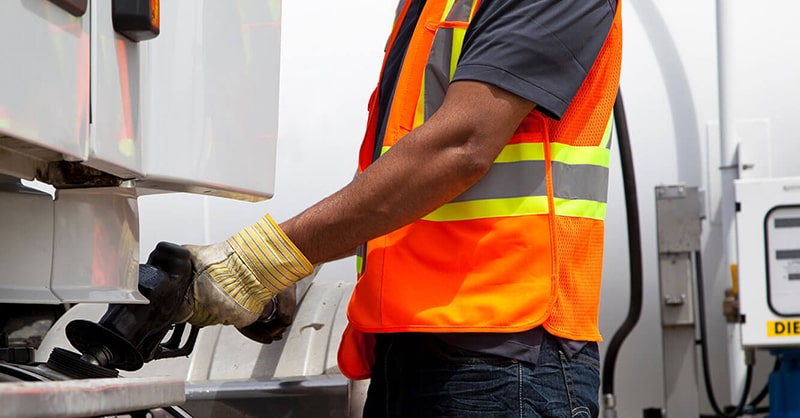
Um trabalhador com colete de segurança refletivo abastece um caminhão em um posto de gasolina, usando luvas para proteção durante a tarefa.

Definition of fuel economy

Fuel economy is the distance vehicles travel on a given amount of fuel, which means it is a form of vehicle thermal management that measures how much energy a vehicle takes in as fuel and turns into kinetic energy to travel.

Fuel economy technologies show that vehicles with reduced fuel consumption burn less fuel than other vehicles and produce lower levels of carbon emissions.

So how does a fuel management system work to conserve energy?

With GPS technology, fuel management systems automatically create different graphs comparing fuel use based on previous trips. These graphs give business owners operational insights that help identify a variety of technical and usage-related problems.

Fuel consumption management is extremely beneficial for fleet managers for the simple reason that it can reduce operating costs. Fleet management also provides a complete overview of transport, so you can manage your fleet operations and business logistics in today’s economy with ease.

A fuel management system provides accurate data on:

  • Cost per mile
  • Fuel theft
  • Driver behaviour (risky driving, speeding, idling)

How to reduce fuel consumption with fuel monitoring

Fuel expenses seem to rise with every passing year, so when it comes to planning, budgeting and managing fuel costs, fleet managers use a few tips to give their tanks a rest.

  1. Driving behaviour
    They look into how their team of drivers operate their vehicles and, through training, can change their driving behaviour for the better. Poorly driven vehicles use more fuel than expected and contribute to maintenance problems down the line.
  1. Vehicle inspections
    Bad driving habits result in damaged vehicles, so frequent vehicle inspections are recommended for any maintenance issues that could contribute to excessive fuel use and higher maintenance costs.
  1. Route management
    Finding the most fuel-efficient route prevents excessive fuel consumption and reduces overall delivery time.

For more fuel-saving tips, click here.

Vista aérea de uma clareira em forma de caminhão cercada por árvores verdes exuberantes, simbolizando a natureza e o transporte sustentável.

The cost impact of fluctuating fuel prices

Because fuel prices fluctuate, fleet managers may find it difficult to plan a fuel budget and manage costs, especially if they don’t have a strong tracking tool to help keep up with changes in the fuel price.

Benefits of fuel management

A great fleet manager can divide their focus between all the factors that affect their fleet. If you manage a fleet efficiently, you will notice that fuel economy is just one of the many obstacles you need to tackle.

There is also:

  • Fuel consumption management
  • Internal and external fuel fraud
  • Unnoticed fuel leaks
  • Complex and time-consuming fuel reports

How do fuel management tools help tackle these problems?

  1. Improve accuracy – Get the data on the distance travelled by your fleet and calculate the amount of fuel consumed with fuel monitoring systems. You can also save the data for later analysis with the help of an automated fuel control system.
  2. Improve fuel efficiency – With this, you can track your vehicle’s maintenance and your driver’s routes. Implementing efficient driving routes is necessary for making cost-effective decisions so that wasteful, excessive fuel consumption can be eliminated.
  3. Reduce fuel theft – Fuel theft is considered a major problem in the fleet industry. Using a fuel monitoring system can reduce fuel theft attempts by recording fuel consumption and fuel-related expenses, and by identifying security problems in your fleet so that solutions can be implemented.
  4. Automated reports – You can receive reports on real-time events such as fuel levels, unauthorised vehicle use and frequent engine idling, so you can look into your mileage as well as any irregular fuel economy.
  5. Stay compliant – Fuel consumption software will make sure your fleet meets emission standards. There are many places where CO2 emissions are heavily regulated.

Managers can access information from their laptops or phones, as the software allows remote use. With this and an Internet connection, you don’t have to deal with outdated inventory or tank management from the office. You can do it all from practically anywhere.

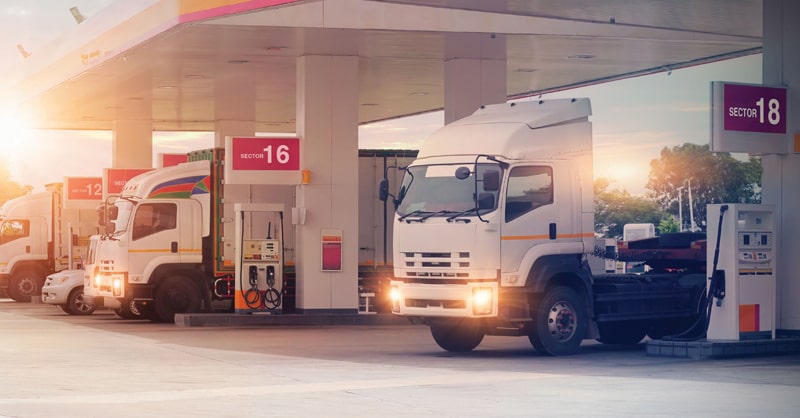
Dois caminhões reabastecem em um posto de gasolina moderno durante o pôr do sol, exibindo diversas bombas de combustível e sinalização iluminada.

Reduce fleet costs with a reliable fleet management company

Cartrack’s smart dashboard provides fast fleet monitoring for your entire fleet and many other benefits for other managers.

Learn more about fuel consumption and use the fleet management solutions from Cartrack to fix it.

Visit us today to start saving fuel.

Changing commercial vehicles? Transfer tracking devices to keep your contract

Changing commercial vehicles? Transfer tracking devices to keep your contract

Are you thinking of transferring your tracking device from one vehicle to another?

Cartrack offers a “De-installation and Re-installation”, or “De– and Re–” for short”.

This process lets you keep your reliable contract and retain your device instead of buying a new one.

In this article, you will:

  • Understand why businesses choose the Catrack tracking device
  • Find out how to transfer tracking devices and keep your current contract
  • Think about the essential factors to bear in mind when considering de-installation and re-installation
  • Answer the question: “Why should you transfer your Cartrack tracking devices?”
  • Learn why our tracking device features and fleet management platform are the best choice for your business

Why businesses are investing in Cartrack’s tracking device

Whether you are transporting goods or passengers, or managing a fleet of vans, trucks or semi-trailers, business owners and fleet managers must invest in the right resources to improve the company’s performance, output and profit gains.

A Cartrack GPS tracking device is an investment with a competitive edge and has many vital benefits, listed below:

Greater safety and asset protection

With a tracking device, you improve the safety of your drivers, fleet, passengers or goods. Based on real-time location data, these tracking devices strengthen security against cargo theft and hijacking, increasing the chances of recovery.

In the best-case scenario, commercial vehicles will be returned, avoiding the cost of investing in new ones.

Make “best-case scenarios” the norm with Cartrack’s Stolen Vehicle Recovery (SVR)

Cartrack’s tracking device packages, including the Stolen Vehicle Recovery (SVR) feature, make “best-case scenarios” more possible.

This feature includes a stolen vehicle recovery team on the ground and in the air. We pride ourselves on the highest audited stolen vehicle recovery rate in Mozambique

Lower insurance premiums

In a country where hijackings and cargo theft are common, it makes sense to invest in a device that will protect you if an incident occurs and shield you from high insurance costs.

The ability to track and monitor fleets

Businesses may want to track and monitor their fleets for various reasons, especially when they combine or integrate these devices with advanced fleet management tracking solutions that can monitor essential information, such as fuel monitoring, driver management and real-time tracking.

They can also improve communication between managers and their fleets.

Cartrack’s 36-month minimum term contract option can give you these safety, security and benefit features of our tracking devices.

Why businesses choose de-installation and re-installation

You may need or want to transfer your tracking device to new vehicles for several reasons, including accidents, growth and costs, or contract continuity, which we explain here.

  • Accidents: Preserving historical data when buying a new fleet: You may want to get a new fleet with the same tracking devices to preserve your historical data — data that can help optimise fleet operations in the future. Accidents and wear and tear are two of the many reasons why business owners or fleet managers may opt for this purchase.
  • Growth and costs: you may want to expand the size of your fleet to drive growth or keep up with growing demand. Alternatively, some businesses may want to downsize to cut costs.
    In “Reducing labour costs in fleet management”, we suggest that businesses “eliminate unnecessary vehicles” and that “Reducing the size of your fleet can save thousands over the life of the vehicles. If you have underused trucks, consider removing them from your fleet to lower fleet spending. If you can’t eliminate any vehicles from the fleet, see whether some routes can be doubled up, where drivers can share a vehicle. You can expect to reduce total ownership costs by at least five per cent.”
  • Contract continuity: With Cartrack, this transfer process means you can keep your contract instead of cancelling it. As with any agreement with any company, contract continuity has the potential to bring lower insurance premiums and possible discounts, fostering a reliable, long-term professional relationship and reducing service disruption amid the noise of renewals and cancellations.
    It is important to note that if you want to opt for this process, your contract must have a minimum term of 36 months. After 36 months, the contract becomes month-to-month.

Um trabalhador com camisa xadrez segura um ícone de escudo azul simbolizando segurança, com caminhões amarelos desfocados ao fundo.

How do you transfer tracking devices to keep your contract during de-installation/re-installation?

Standard de-installation and re-installation fee

You can transfer the tracking device to a new car, replacing the commercial vehicle and keeping the contract. We need to retrieve the old device for a standard, affordable fee.

When you may have to pay extra for a De- and Re-

If Cartrack is unable to retrieve the tracking device, you will have to pay a reasonable replacement fee. We will supply a new unit and block the old one.

De-installation and re-installation at no cost

If your contract is 30 months or longer, Cartrack will do it for you at no cost. However, your account must be in good standing.

Important factors to bear in mind when considering a De- and Re-

  • Contract reset: de-installation and re-installation lets you continue your 36-month contract, but it does not work as a contract reset.
  • Proof of purchase: your booking will only be official once Cartrack has the payment receipt.
  • Five working days’ notice for scheduling: you must give Cartrack five working days’ notice for scheduling. Otherwise, you will be liable for a reasonably priced hard lock fee. This notice period should be extended if several tracking devices have to be transferred for fleets or businesses with multiple vehicles. This is essential, as the process will take longer to carry out and it will be easier to schedule the installation/re-installation process during periods of low demand to suit your business needs and reduce downtime.
  • Vehicle availability: If you do not present the vehicle within the stipulated time, you will also be liable for a hard lock fee.
  • Overview of de-installation and re-installation: access our de-installation and re-installation form here. Once you have completed this form, Cartrack will arrange for a technician to carry out the de-installation and re-installation at a time that suits your business. They will then run tests to make sure it is fully functional.

The tracking device in action

For businesses, the main job of tracking devices is to protect their drivers, vehicles, goods or passengers. Expanding your knowledge below is essential to learning more about a device that plays a key role in your business.

How do you know when your devices are working?

You can check on the Cartrack app and see whether the car’s position is correct. Otherwise, if you have invested in our fleet management platform, which monitors several vehicles at once, you can do the same with your fleet or commercial vehicles.

However, contacting the Cartracks Control Room is the best option for a professional and comprehensive check of your tracking device or devices.

What happens if someone tries to tamper with your device?

After an alert, our Control Room will contact you immediately so that you can take the necessary action.

What happens if a private or commercial vehicle is stolen or hijacked?

The SVR feature, which comes with every tracking device package, will kick in once the customer realises their vehicle has been stolen and, ideally, contacts Cartrack immediately. From there, Cartrack tracks down the culprits through the tracking device’s GPS using our recovery teams mentioned earlier.

Why should you transfer your Cartrack tracking device?

Overall, Cartrack’s re-installation process is the most financially viable option and does not involve losing critical information or resources.

Let’s learn more about this below.

  1. Service continuity: especially if you or your business have integrated it with fleet management solutions, opting out of the transfer process means you will not be able to access historical data that can inform efficient fleet management operations and give a better understanding of aspects such as driver behaviour and vehicle performance.
  2. Take advantage of our advanced solutions: Cartrack’s advanced tracking solutions, such as real-time alerts or fuel monitoring, can work in any vehicle. This means that all the advanced tracking features will remain functional wherever the device is installed, now and in the future.
  3. Cartrack’s tracking devices are unique. Among the many offerings, our tracking devices stand out for their ease of use. They can collect comprehensive data through telemetry technology, improve security through real-time alerts and have a stolen vehicle recovery success rate above 90%.

Dois agentes de recuperação da Cartrack armados e vestindo coletes táticos estão em frente a um SUV branco, contra um fundo verde natural.

Make the most of our tracking devices to protect your company’s fleet

We offer customised fleet tracking solutions for businesses, providing tracking devices for everyday vehicles. The following features are included in our three standard packages, giving you an idea of the advanced, integrated technology you can work with.

The first three features in the list below, SVR, Vehicle Location via Call Centre and the Mobile App, are part of every Cartrack package. Meanwhile, the rest are features that are included only in some of the other packages.

  • SVR: As mentioned earlier, SVR is an instant recovery service in which Cartrack sends a recovery team to track and recover your stolen vehicle or vehicles using the device’s GPS signal. If Cartrack is unable to recover your car, we offer a guarantee of up to 500.000,00MT [Terms and conditions apply]
  • Vehicle location via the Call Centre: Cartrack customers can find out where their vehicle is by contacting our call centre. This is especially useful if you can’t access the app or the device itself.
  • Mobile app: in addition to real-time vehicle tracking, Cartrack’s mobile app includes the features below. It can also be used extensively for fleet management solutions, with trip history reports and driver behaviour monitoring features.

Other additional features:

  • Logbook: The logbook, which can also be used through the app, automatically keeps track of important information for individuals or businesses. This information can include expenses, trips, mileage and fuel consumption. It can help you comply with regulations and easily create and submit reports that comply with the South African Revenue Service (SARS).
  • CarWatch: CarWatch is a virtual car guard that sends push notifications through the Cartrack app if it recognises unauthorised movement.
  • Collision detection: using telematics, Crash Detection detects collisions, notifying the vehicle owner through the app and Cartrack’s 24-hour control room, which then alerts the pre-designated individuals.
  • Protector: Available 24 hours a day, 7 days a week, this emergency service offers help with medical support, breakdowns and legal assistance.

Make the most of our fleet management solution platform and take a step forward

Protecting prosperity; you should consider investing in our tracking devices and fleet management platform — an integrative online software platform that provides tools to monitor, manage and optimise your business.

Cartrack’s scalable solution grows and expands along with your business. It can be integrated with other business systems or software, such as CRM and other APIs, for operational efficiency.

Contact us today to learn more about our efficient fleet management solutions.

Frequently Asked Questions (FAQ’s)

Q: What factors influence how long the de-installation and re-installation process takes?

A: Although transferring any tracking device usually takes only a few hours, many factors influence how long the de-installation and re-installation process takes, such as:

  • Vehicle location: The closer the vehicle or vehicles are to the technician or professional carrying out the process, the sooner it will be completed.
  • Scheduling: You should schedule the De- and Re- process as early as possible, as outside circumstances can always bring the unexpected.
  • As stated, you must give Cartrack five working days’ notice for scheduling and, if there are several vehicles or a fleet, you should choose to give even more notice.

In addition, the paperwork, any extra services, traffic conditions and the length of the testing phase can significantly affect how long the transfer process takes.

Q: How long do vehicle trackers last?

A: On average, tracking devices can last between two and ten years, depending on several factors, such as how often they are used, battery life, the environment, warranties and levels of maintenance.

To extend the life of your tracking device or devices, you can carry out regular maintenance or inspections and protect them from harsh environments.

Keep your device, contract and historical data safe with Cartrack

Here at Cartrack, we give our all to our customers. We make sure we provide the highest-quality tracking devices with affordable contracts and that your historical data is kept active and protected for your operational needs.

Get in touch with us now to learn more about our trackers.

Tyre pressure and tread: the big impact they have on fuel economy

Whether it’s your fleet or your personal vehicle, tyre pressure and tread play a silent but huge role in fuel economy, which is directly linked to fuel consumption and, as a result, to fuel costs.

Tyre pressure is often overlooked — that is, until you find yourself lost and stranded in the middle of nowhere, wondering why your fleet or car used a ridiculous amount of fuel over a relatively short distance, without realising that it may have something to do with the tyre pressure, the tread or both.

In this article, you will:

  • Explore the definitions of fuel economy, tyre pressure and tread
  • Find out why Mozambicans should care about fuel economy
  • Understand the effects of overinflated and underinflated tyres on fuel economy
  • Discover the impact of tyre tread and pressure on fuel economy
  • Learn how to boost your fuel economy with Cartrack’s innovative solutions

Navigating fuel economy, tyre pressure and tread

According to Forbes, tyre tread contributes to almost a third of a vehicle’s fuel economy.

Learn how to save on fuel costs by educating yourself about fuel economy, tyre pressure and tread below:

Navigating fuel economy

  • Defining fuel economy: Fuel economy is the distance a vehicle can cover while running on a fixed amount of fuel. You calculate it by dividing the distance travelled in kilometres by the number of litres in the vehicle. In other words, kilometres per litre (km/l). Many descriptions of this concept rely on the US measure, which translates to mpg or miles per gallon
  • Exploring the calculation: The calculation can become more complex. The distance your vehicle or fleet can travel may be influenced by many factors, including:
    –Car size
    -Driving style
    -Use of cruise control
    -Load weight
    -Terrain

The difference between fuel economy and fuel efficiency

It is essential to define fuel efficiency, as many people assume that fuel efficiency and fuel economy are the same thing.

Fuel economy is specific to distance and, although fuel efficiency is calculated in the same way, that concept is used simply to describe how to use fuel, in general, to make sure as little as possible is used.

Lori Baker’s article for the MIT School of Engineering, “What is the difference between fuel efficiency and fuel economy” clarifies this difference by explaining that fuel economy means miles per gallon. Fuel efficiency, on the other hand, is used to describe how efficiently fuel is used.

Navigating tyre pressure and tread

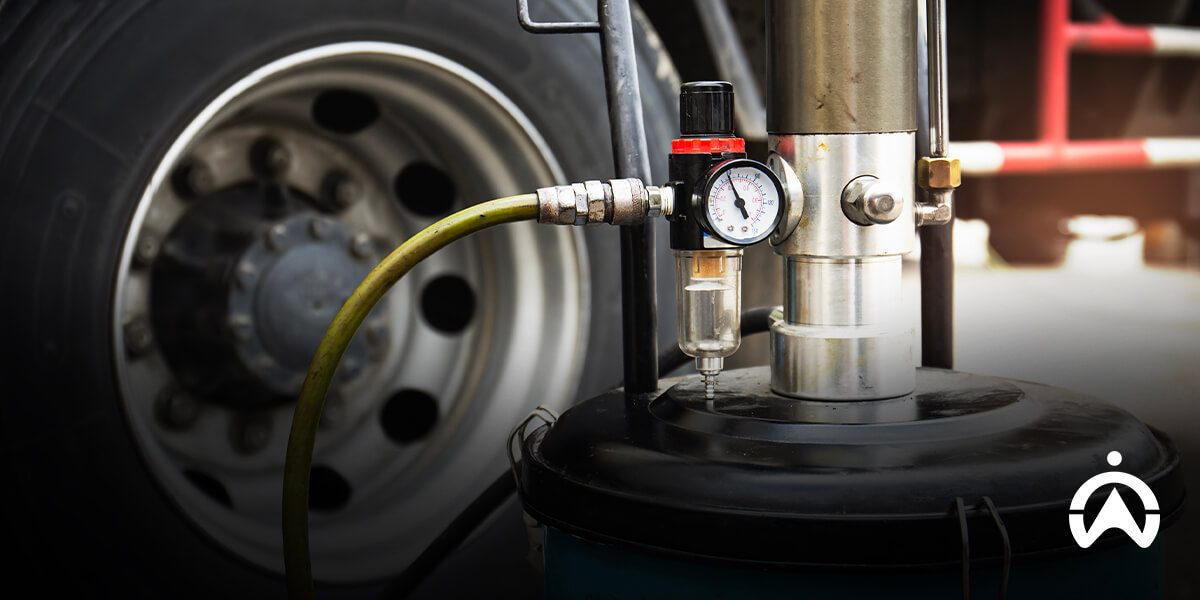
  • Defining tyre pressure: Tyre pressure is the volume of air pumped into a tyre. It helps stabilise vehicles by making sure each tyre has the correct pressure.
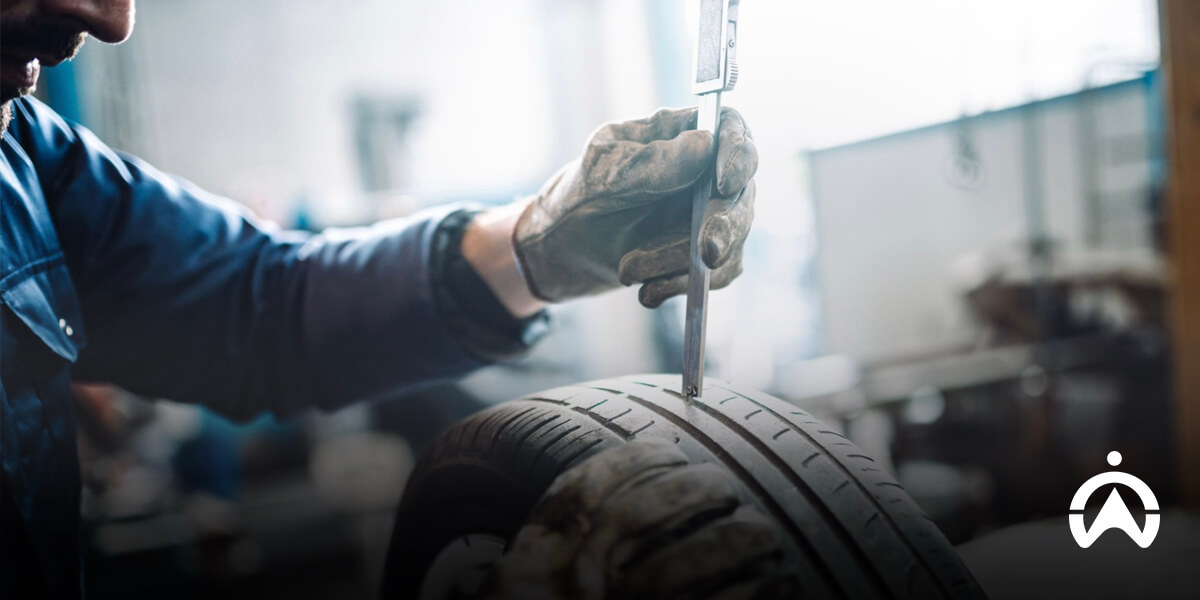
  • Defining tyre tread: Tyre treads are the grooves or patterns on the outside of tyres. These treads are designed to make sure vehicles have a solid grip on the road surface.

Why ordinary South Africans and businesses should pay attention to fuel economy

Petrol prices have left ordinary South Africans and companies’ fleet management departments drained, demanding innovative ways to deal with fuel consumption. Drawing on the Volvo figures above, it is clear that improving fuel economy is an effective way to cut fuel costs, whether you are a fleet manager or an ordinary car owner.

Find out more about the cost benefits and other advantages of improving your fuel economy below:

Cost benefits expanded

  • Fuel costs: as mentioned, improving your fuel economy will reduce fuel costs, as less fuel will be used over certain distances. It also means you can budget to drive longer distances on the same amount of fuel you were using before you improved your fuel economy.
  • Maintenance costs: if you cover the same distance on less fuel, there will probably be less wear and tear. This avoids engine maintenance and the associated costs, as well as unnecessary downtime.
  • Geographical expansion: When it comes to business, if fleet managers choose to use the extra fuel that would have been used over a previously set distance, the fleet’s delivery reach can be expanded geographically to reach a wider customer base. This expansion means fleet managers can gain more customers and sell more products, improving overall business growth.
  • Net profit and disposable income: fleet controllers can also simply increase their net profit, and individuals can use the extra money to pay for basic resources or generate disposable income.

Make and save money while saving the environment

Less fuel consumption means less smoke will be released from the exhaust — this smoke contains harmful gases that have a negative impact on the environment, such as carbon dioxide, nitrogen oxide and carbon monoxide.

Beyond the positive environmental impact, this can lead to a good reputation with current or new customers, partners or other businesses.

Increase fleet productivity

Using less fuel over a given distance lets fleet drivers stop less often to refuel. Fewer stops save time, make deliveries more efficient and improve fleet productivity.

Tyre pressure and grooves and their impact on fuel economy

Tyre pressure affects many parts of your driving experience, from smooth journeys to flat tyres. It affects the safety of the driver and of all the passengers or goods in the vehicle. Overall, vehicle performance gets worse if the tyres are overinflated or underinflated, and high fuel economy is just one of the negative consequences.

Higher fuel use

Increased fuel consumption means a vehicle will cover less distance than it could if there were less fuel consumption, directly influencing fuel economy. Overinflated and underinflated tyres can lead to an increase in fuel consumption.

Underinflated tyres

  • Expanding the tyre’s contact with the road increases rolling resistance, raising fuel consumption as the engine works harder. According to Forbes, “rolling resistance accounts for about 9% of a truck’s fuel consumption”.
  • Impact on fleet management: Three researchers applied this fact to fleets in a 2019 journal article that investigated the influence of tyre pressure on fuel consumption in trucks. According to their research, tyre pressure is an essential factor affecting vehicle efficiency, rolling resistance and fuel consumption.
  • Tyre warping: Lower tyre pressure will also increase rolling resistance, leading to tyre warping.

Overinflated tyres

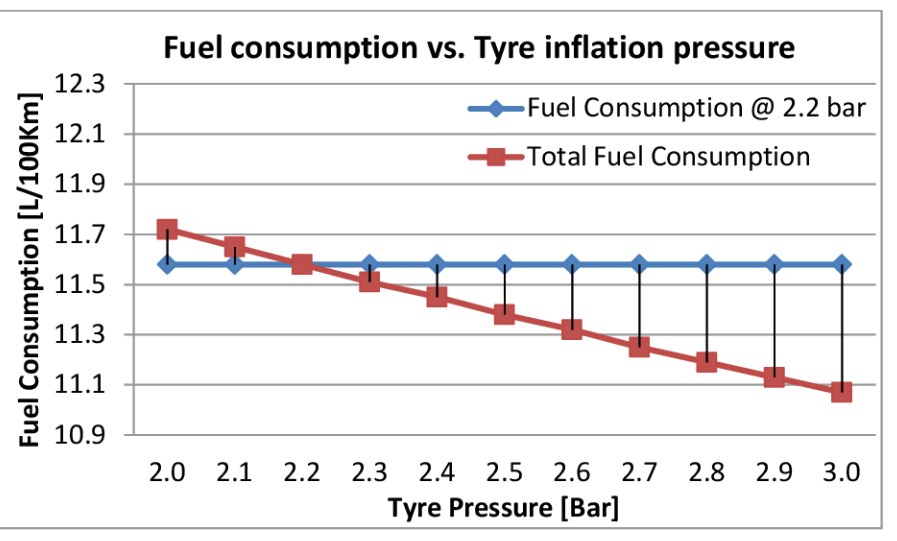
There is a misconception that overinflated tyres can improve fuel economy. While this may be true up to a point, the more overinflated the tyre and the longer the overinflation continues, the more the opposite results can occur. The relationship between overinflated tyres and fuel consumption is more complex.

The graph below shows the assumption that fuel consumption falls with more inflation. As the tyre inflates to 3,0 bar of tyre pressure (represented by the red line), fuel consumption decreases to 10,9 at 1/100 or 1 litre per kilometre (represented by the blue line). All these figures are accurate, but there is more.

Although overinflating tyres may not be directly related to high fuel consumption, it causes wear over time, which increases rolling resistance. This results in an increase in fuel consumption, causing an increase in fuel economy.

Tyre tread and its impact on fuel economy

Tyre tread and patterns also affect fuel economy, sometimes overlapping with tyre pressure. For example, when overinflated tyres wear, the tyre tread wears down, especially in the centre, and so, once again, rolling resistance increases.

Find out more about tyre tread, patterns and their relationship with fuel economy:

  • Greater tyre grip: the greater the tread depth, the more grip the vehicle has, leading to better fuel economy and vice versa. This increase in fuel economy happens because the car will not need as much fuel to move.
  • Warped tyres: tread patterns, which help with vehicle traction, significantly influence fuel consumption, negatively or positively, based on the type of vehicle and the context of where and in what conditions the vehicle or fleet is driving. Some of these examples include:

    –

    Rib patterns: rib patterns are widely recommended because they have lower resistance and run parallel to the tyres on the road.

    –

    Standard energy tyres: standard energy tyres are not recommended for low fuel economy in private vehicles, as their patterns are not designed to improve fuel efficiency but create more rolling resistance. However, these tyres are still used on most vehicles. According to an article by Tyre World Medium, they are made for the general population to provide durability and comfort.

    –

    Aggressive tread patterns: using aggressive tread patterns on motorways is not recommended, as they can increase rolling resistance. These tread patterns are built for off-road use.

Accelerate your fuel economy with Cartrack’s innovative solutions

Cartrack’s innovative solutions will help you prevent and detect a possible increase in fuel economy. Explore more below:

  • Automated Preventive Maintenance: With our automated preventive maintenance solution, fleet managers can easily track any maintenance needs and take care of them before they become a bigger, more expensive and more time-consuming problem, with more in-depth repairs and longer downtime. These solutions include real-time alerts so you know precisely when it is time to add more air or replace the tyres, making sure there are no delays in keeping your fuel economy at a healthy level.
  • Fuel monitoring: Cartrack’s fuel consumption monitoring can help you track your fleet’s fuel use and spot any spikes in usage. Although this does not necessarily mean the tyres are the problem, it can point to other issues affecting your fuel economy, including your tyres, and so can help you resolve them early.
  • Driver behaviour: using our driver behaviour solutions, such as scorecards and driver behaviour reports, fleet managers can monitor whether drivers engage in behaviour that could potentially damage their tyres.
  • Driver scorecards: driver scorecards let you watch your drivers for harsh behaviour and reward them with high ratings if they behave well. Some of these harsh behaviours, such as speeding or harsh acceleration, can damage tyres. In other words, encouraging drivers to drive safely, whether through high ratings or by motivating them in other ways, such as bonuses or raises, can help you avoid damage to your fleet’s tyres and a negative impact on your fuel economy.
  • Driver behaviour reports: driver behaviour reports provide deep insights into your driver’s habits, such as keeping track of each driver’s aggressive behaviours over time. Once again, this can help you identify behaviour that damages your fleet’s tyres. You can also request instant trip reports to help tackle aggressive behaviour in real time.
  • Car tyre deals: if you don’t run a fleet and are looking to improve your fuel economy as a personal-use driver, Cartrack’s experts can negotiate car tyre deals for you, making sure you get excellent tyres for fuel economy.

Answering your questions about fuel economy (FAQs)

Q: How do tyres reduce fuel consumption?

A: As mentioned, tread patterns can reduce fuel consumption depending on several factors, such as tyre pressure, whether the pressure is set correctly and whether the tyre is overinflated or underinflated.

In addition, wheel alignment, size and weight can reduce fuel consumption, among many other factors.

Wheel alignment can reduce or increase fuel consumption depending on whether the wheels are misaligned. Misaligned wheels drag, so they use more fuel, making the engine work harder.

Properly aligned wheels, however, have the opposite effect. There will not be as much drag, the engine will be under less stress and fuel consumption will be lower.

Tyre weight affects rolling resistance, as the lighter the tyre, the lower the rolling resistance, and vice versa, subsequently decreasing and increasing fuel consumption.

Q: What is the best tyre pressure?

A: Tyre pressure is measured in bar or PSI (pounds per square inch). Although every vehicle has its own required tyre pressure, the generally recommended and accepted pressure reading is between 28 and 36 PSI, which converts to approximately 1,9 to 2,5 bar.

Q: How can I choose the right tyres for better fuel economy?

A: Investing in energy-efficient tyres, also known as “eco tyres” or “green tyres”, is a great way to choose the right tyres for better fuel economy. These tyres are low-resistance. Although they can be expensive, the costs you will save in the long run will outweigh the initial outlay.

Q: How can I improve my fuel economy?

A: There are many ways to improve fuel economy; making sure the tyre pressure is at the correct PSI or bar and pumping the tyres up when needed is one way to do it. Another is looking after and choosing the right tyres and making sure the wheel alignment is in order.

Regular maintenance and no speeding, rapid acceleration or deceleration are also recommended. Try to keep a consistent speed or switch to cruise control when appropriate. Remove any extra weight or unnecessary load from your vehicle or fleet.

Take control of your fleet by investing in Cartrack’s fleet management solutions

At Cartrack, our aim is to simplify and automate your fleet management experience with various solutions, such as real-time tracking, improved delivery efficiency and route optimisation.

Contact us today to increase your fleet’s grip on the road and your profits.