Keyless car theft – Which keyless cars are the most stolen right now?

Keyless cars make for an easy, carefree lifestyle. Gone are the days when you had to insert keys or press remotes to access and drive vehicles. While this sounds appealing, unfortunately, the keyless system can be, and is being, easily hacked by car thieves.

But don't worry, there is technology designed to outsmart criminals and protect your vehicle.

Let's get straight to it.

In this article, you will:

  • Explore keyless entry systems and the vulnerabilities that lead to theft
  • Identify common hacking tactics used by criminals for keyless car theft
  • Understand the most targeted keyless cars and the factors that influence risk
  • Discover prevention measures to protect your keyless entry car
  • Explore the tools and technologies Cartrack offers to combat keyless car theft

Keyless entry cars? Let me explain

Imagine walking up to your car without the jingle of keys in your hand, touching the door handle and that's it – your door magically unlocks.

Welcome to the world of keyless cars, where all you need is to have the car key in your pocket or use an app to get seamless access to your vehicle.

Most of us still remember the days when you had to insert and turn a real metal key in a vehicle's door to unlock it. It sounds very old-fashioned when you put it that way, but those days are over. Today, you can open and start most cars with a key fob, a card or even an app.

Modern vehicles have moved from the conventional, bulky key to a compact, advanced remote. This remote emits a unique signal that the car identifies when it's nearby and unlocks or locks the doors, giving you hassle-free access to the vehicle and letting you start the engine with the simple push of a button and be on your way.

It's convenient, futuristic and can sometimes feel like magic.

What is keyless car theft?

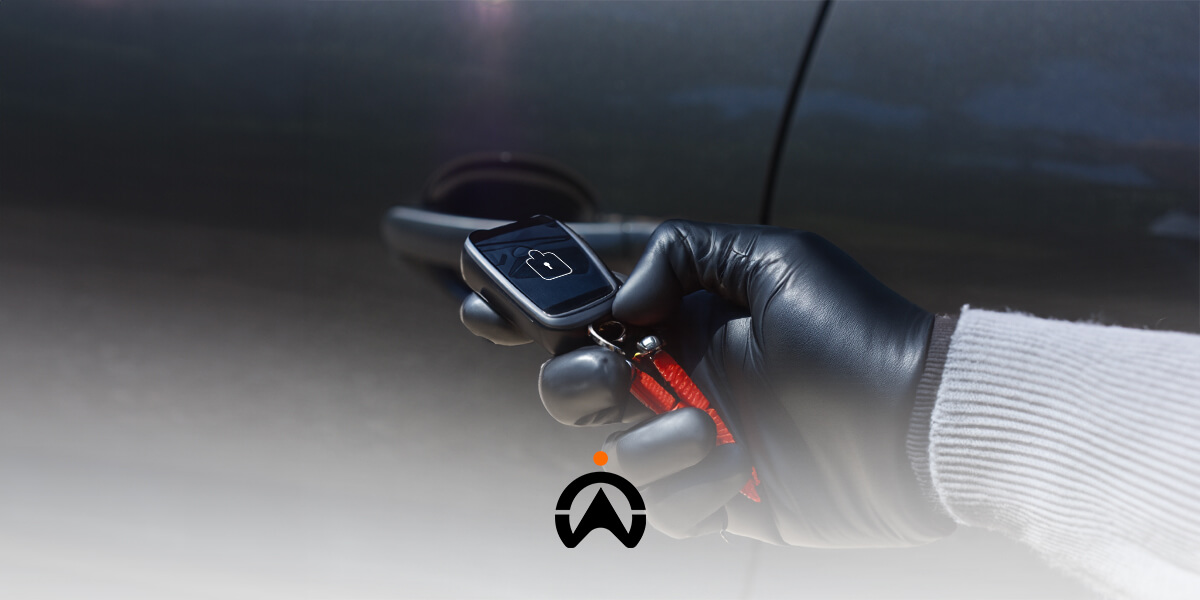
Sometimes magic comes at a cost. While car theft may conjure up images of smashed windows and hot-wiring, a modern method has emerged: keyless car theft. This sophisticated technique exploits vulnerabilities in keyless entry systems, allowing thieves to steal vehicles without breaking a sweat.

Common hacking tactics used on keyless cars

While keyless cars offer convenience, their advanced technology can also make them vulnerable to sophisticated criminals.

Understanding common hacking tactics is crucial to protecting your vehicle and outsmarting the criminals looking to exploit its vulnerabilities.

  1. Relay/replay theft:
    Criminals use relay devices to amplify and capture the key fob's signal, even from inside the owner's home.

    Steps:
    – One thief holds a device near the car, mimicking its signal.
    – The other thief holds a device near the key fob (usually close to your home), relaying the signal to the car.
    – The car is tricked into thinking the key is nearby, allowing the thieves to unlock and start it.

  2. Signal jamming:
    Imagine a radio tuned to static, not music. That's what jamming does. Thieves use signal jammers to block communication between the key fob and the car, preventing it from locking and leaving the car vulnerable to theft.

The big question: which keyless cars are the most targeted?

While any car with a keyless entry system can be of interest, some are targeted more than others. Factors such as the specific system's security protocols, the complexity of the signal encryption and the availability of aftermarket equipment for specific manufacturers can influence the risk.

In recent years, car thefts in South Africa have risen, showing an increase of almost 2,000 incidents on the previous year and peaking at almost 23,000 in 2023, according to Statista. That translates to approximately 63 car thefts a day.

While the reported hijackings prove that drivers should be afraid of having their keyless vehicles stolen, the figures don't specifically show how many of the cars were keyless entry vehicles.
While the reported hijackings prove that drivers should be afraid of having their keyless vehicles stolen, the figures don't specifically show how many of the cars were keyless entry vehicles.

A_grande_questão

Are keyless cars stolen more often?

There has been a rise in keyless car theft since 2022 and, slowly but surely, there are more modern keyless cars on the roads than conventional keyed cars. But beyond the vehicle being a keyless car, there are other factors criminals consider before hijacking vehicles.

Other types of vehicles at greater risk are:

High-value vehicle targets:

  • Luxury SUVs: These luxurious vehicles usually come equipped with the latest technology, including state-of-the-art keyless entry systems. Their value and popularity make them tempting targets for professional thieves.
  • Premium hatchbacks: Combining sporty performance with modern technology, popular hot hatches appeal to a wider range of criminals, from joyriders to professional thieves.
  • Large sedans: Spacious and luxurious, these vehicles, often suited to families, can be attractive targets for organised crime gangs, especially models with advanced keyless access features.

Additional vulnerability factors:

  • Push-button ignition: Vehicles with push-button start systems are generally more vulnerable than those that need a key, since simply unlocking the car gives access to the ignition.
  • Car model/era: Generally, newer models with more advanced keyless systems are less vulnerable, and some older models still on the road may have known security flaws that thieves exploit. However, the most advanced vehicles are the most sought after, despite having stronger security protocols, such as alarms and car trackers.
  • Popularity: Cars that are in high demand among thieves because of their resale value or how easily they can be stripped for parts are more likely to be targeted.

Hijacking can be a dangerous and traumatic experience for victims. If your vehicle fits the factors listed above, there are a few things you can do to make yourself less of a target, according to the SA Police Service (SAPS):

  • Install an alarm system and tracking device
  • Avoid driving in high-crime areas
  • Be aware of your surroundings and take precautions to avoid being targeted

Why get a keyless vehicle?

Like any vehicle, keyless cars can't guarantee 100% security against car thieves, but they are still gaining popularity among drivers. Why? Well, there are some great reasons:

Convenience

No more standing next to your vehicle while you rummage through your pockets and bags for the keys. Keyless cars offer a seamless, secure experience with effortless entry, push-button start and remote boot access. This not only makes life smoother, but also provides added safety by sparing you that vulnerability, especially for those juggling groceries and children.

Security

With automatic locking and possible alerts if your car moves without the remote, keyless cars provide an additional layer of security. All keyless cars have advanced technology that makes them resistant to traditional theft methods, such as manually hooking a wire through the window to lift the door lock knob, or breaking in through the door and hot-wiring the car to start it.

Modernity

Owning a keyless car is like stepping into the future, with features such as remote boot access and automatic locking adding a touch of modern ease to everyday driving.

Apart from criminals copying your remote and making off with your car, other things can leave your car vulnerable, such as a lost or dead remote. This can leave you stranded, unable to lock your vehicle after parking, and leave it unprotected if you can't lock it. Always have a backup plan or a spare remote to hand.

Prevention measures to protect your keyless entry car

Before we dive into the list of security measures you can take to protect your car, let's take a quick look at one vital measure you can practise before you even leave your car.

When you walk away, don't rely only on your vehicle locking automatically behind you; always check manually that your vehicle has locked. If it hasn't, lock it manually and check the immediate area for anyone nearby.

Here are other protection methods you can use to protect your vehicles against theft:

Steering wheel locks: Physical deterrents can prevent theft, even if the keyless system is compromised.

Car alarms and tracking devices: Install aftermarket security systems for additional protection.

Keep your car keys away: When you are at home, keep your car key (and the spare) away from the car, doors and windows. Another option is to switch off your key fob's signal. If you don't know whether your key's signal can be switched off, look for the answer in your vehicle's manual

Steering wheel locks: Physical deterrents can prevent theft, even if the keyless system is compromised.

Car alarms and tracking devices: Install aftermarket security systems for additional protection.

Keep your car keys away: When you are at home, keep your car key (and the spare) away from the car, doors and windows. Another option is to switch off your key fob's signal. If you don't know whether your key's signal can be switched off, look for the answer in your vehicle's manual.

Faraday pouches/signal blockers: Invest in signal-blocking pouches or Faraday cages to stop your key fob from transmitting a signal when it is not in use.

Physical barriers: Keep your car keys in a metal tin or aluminium foil to create a barrier that blocks electronic signals.

Consider additional security measures: Install aftermarket alarms, immobilisers or GPS tracking devices for extra protection.

How Cartrack Mozambique helps businesses and everyday drivers fight keyless car theft

While traditional methods such as alarms and steering wheel locks still have their place in preventing vehicle theft, when it comes to fleets, fleet management solutions and trusted vehicle tracking companies such as Cartrack Mozambique offer a more powerful counter-attack against modern vehicle theft techniques.
Medidas_de_prevenção_para_proteger_seu_carro_com_entrada_sem_chave

Cartrack Mozambique's anti-theft solutions for fleets

  1. Real-time tracking: imagine your car disappears. Panic sets in, only to be replaced by immediate action as you access Cartrack's fleet management platform. A map lights up, pinpointing your stolen vehicle in real time, with every twist and turn clear to see. This is the power of real-time tracking, guiding our 24-hour recovery team straight to your stolen vehicle.
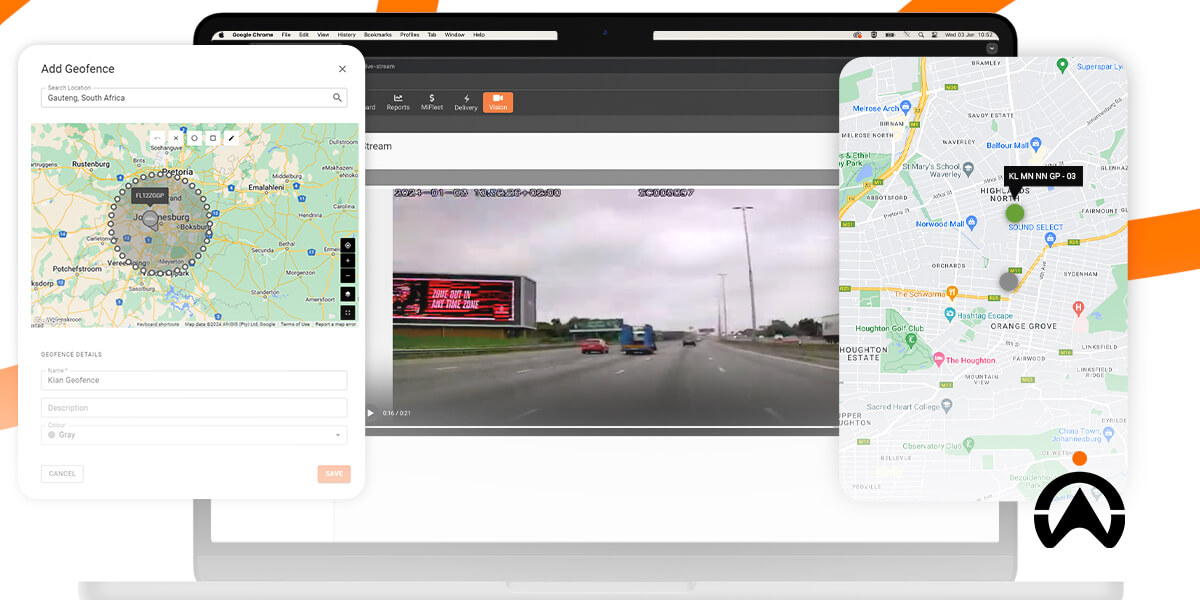
  2. Geofencing: Build a virtual fortress around any area, such as high-risk zones, to help fight vehicle theft. Every time your vehicles enter or leave these geofenced areas, an alarm is triggered, alerting you to inform the authorities quickly about a possible theft before the thieves disappear with your vehicle.
  3. Driver identification tag: equip each authorised driver with a unique tag that requires them to tap a sensor to start the vehicle. This quickly tells the manager which driver is behind the wheel of their vehicles, ensuring vehicle safety, accountability and transparency.
  4. Start Prevent: Be able to disable and enable a vehicle through the fleet management interface. The vehicle is only immobilised once the ignition is off, ensuring safety for both the vehicle and the driver, as there are no sudden stops. This feature provides a safe security measure whenever vehicle theft or unauthorised driving occurs.
  5. Smart camera software with live streaming: experience complete visibility, with full access to interior and exterior views in real time. This gives fleet managers and the authorities enhanced tracking capabilities in cases of vehicle theft.

Cartrack Mozambique features that protect everyday drivers' cars against hijacking

At Cartrack, we offer more than automotive safety solutions for businesses; we also provide reliable technology that can help everyday drivers in hijacking events.

When you call us for assistance, here is what to expect:

With keyless car theft incidents on the rise, Cartrack offers robust solutions to protect your vehicle:

  • Maximum protection for vehicles
    Use our stolen vehicle recovery (SVR) services in the unfortunate event of theft or hijacking. As soon as a vehicle is reported, our control room and recovery teams, on duty 24 hours a day, 7 days a week, use GPS tracking technology to locate and recover your vehicle quickly. With a remarkable recovery rate of over 90%, giving you complete peace of mind.
  • CarWatch
    It is like your personal digital car guard, an early warning system that customers can activate at the touch of a button through our mobile app. It notifies Cartrack early if your parked vehicle is moved without your knowledge.
  • Protector
    Cartrack Protector offers professional roadside assistance 24 hours a day, 7 days a week, at the press of a button in the Cartrack mobile app. It provides help with battery jump-starts, tyre changes, car towing and even emergency and accident services whenever needed, such as in the unfortunate event of being hijacked and injured as a result.

Outsmart car thieves with Cartrack Mozambique's advanced vehicle tracking solutions

Whether you own a sleek new vehicle with keyless entry or a trusty classic, Cartrack has you covered! Our vehicle monitoring and tracking solutions are tailored to protect your investment, providing a network of safety for every journey. Protect your vehicle today, contact Cartrack Mozambique.
Smart mobility and connected vehicles – discover the powerful benefits of a thriving fleet

You may know the power of a smartphone, but what about the power of a smart fleet?

Say goodbye to tedious manual work and welcome automated fleet operations. How? With smart mobility and connected vehicles. No, these are not vehicles that are physically connected; they are simply smart vehicles.

But what exactly makes them smart, and how can your fleet unlock this? Let's find out.

In this article, you will:

  • Discover what smart mobility is
  • Find out what role it plays in effective fleet management
  • Learn how connected vehicles are the key to fleet success
  •  Explore how Cartrack's solutions help achieve smart mobility through connected vehicles

What is smart mobility?

Smart mobility focuses on creating efficient, eco-friendly and convenient urban transit systems by integrating various advanced technologies and modes of transport. This revolutionary approach to transport goes beyond moving people and goods from point A to point B; it is about optimising the transport ecosystem for greater accessibility, safety and environmental responsibility. It works to secure a smarter, cleaner and fairer transport future for everyone.

What is smart mobility for fleets?

In a fleet context, smart mobility uses advanced technologies to optimise fleet transport systems and services. It involves using connected devices to collect real-time data on vehicle location, condition and behaviour. This data empowers fleet managers with actionable insights, helping them make informed decisions to optimise fleet operations.

What are the key aspects of smart mobility for fleets?

Smart mobility in fleet management is made up of a whole ecosystem of technologies and approaches that aim to revolutionise the way we get around.

Here are some key aspects of smart mobility:

  • Telematics:
    Telematics refers to the integration of telecommunications and computing technologies designed to collect, transmit and analyse data. It is an essential part of smart mobility in a fleet context, as it provides a comprehensive solution for in-depth fleet monitoring. Fleet management systems use telematics to track and monitor multiple vehicles, which provides valuable data on key fleet metrics such as driver behaviour and vehicle performance.
  • Internet of Things (IoT):
    IoT refers to the interconnected network of devices and vehicles equipped with sensors, software and connectivity. These interconnected devices and sensors work to collect and transmit data from vehicles, drivers and other fleet assets seamlessly. IoT technology in fleet management is important for real-time data monitoring. This data can then be analysed and used to optimise fleet operations, improve fleet safety, reduce operating costs and increase customer satisfaction.
  • Artificial Intelligence (AI):
    AI refers to the use of machine learning algorithms and predictive analytics to analyse the large volumes of data generated by telematics devices and sensors installed in vehicles. By collecting data from connected vehicles, AI technology helps fleet managers identify problem areas before they become an issue, create real-time coaching, optimise maintenance operations and increase driver safety and accountability.
  • Data analysis:
    Data analytics refers to the collection, processing and analysis of large, complex data sets to generate insights, patterns and predictions. This data can help improve many aspects of fleet management in several ways, including route optimisation, preventive maintenance, fuel efficiency and driver behaviour monitoring.

The main goal of smart mobility is to optimise fleet operations by integrating advanced technologies and innovative solutions. An important key to doing this is the integration of connected cars.

What are connected vehicles?

Connected vehicles, also known as “smart cars”, are vehicles integrated with advanced data and communication technologies. This allows them to collect and transmit real-time data on various aspects of their operations. advanced algorithms and artificial intelligence, fleet managers can optimise and improve the safety and efficiency of their operations. By making use of sensors and communication systems, connected vehicles can communicate with other devices and systems outside the vehicle, sharing data with other vehicles.

O_que_são_veículos_conectados

Why do fleets need connected vehicles?

The purpose of connected vehicles is not only to collect and transmit their data to the cloud, but also to record data from their surroundings. By using built-in sensors and communication technologies that allow continuous interaction between vehicles, infrastructure and systems for fleet management, these vehicles can help fleets achieve:

  • Driving optimisation and efficiency:
    By using real-time data, fleet managers can optimise operations in real time, avoid traffic congestion and identify the most efficient routes for deliveries or services. This real-time data also helps make predictive maintenance possible through continuous monitoring of vehicle health, allowing proactive maintenance or repairs before breakdowns occur.
  • Increase your safety and compliance:
    Connected vehicles make for better driver management by monitoring behaviours such as harsh braking, speeding or idling, which allows coaching and training interventions to improve overall fleet safety.
  • Improving customer service:
    Connected vehicles give customers visibility of the precise location and estimated time of arrival of their goods or services, promoting transparency and reliability.
  • Improving fleet visibility and control:

    Fleet managers get an up-to-date, comprehensive view of all their fleet's activities. This enhanced visibility allows precise tracking of their vehicles, real-time monitoring of schedule adherence and optimised routes for greater efficiency.

Is there a link between connected vehicles and electric vehicles?

The fleet industry is seeing the rise of electric vehicles and, yes, there is a link between connected and electric vehicles. These two technologies are intertwined and reinforce each other. Connected vehicles, which are always connected to the internet, enable features such as cloud updates, remote operation of vehicle functions and real-time data sharing.

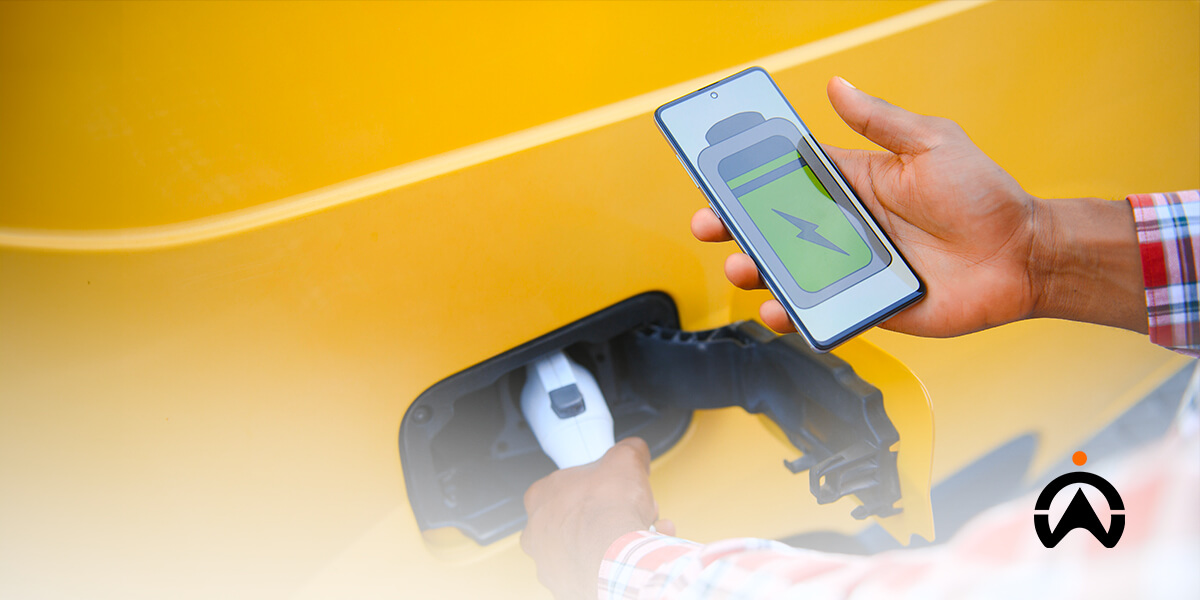
This connectivity is not only beneficial for traditional vehicles, but also plays a crucial role in the advance of electric vehicles, which are starting to dominate the fleet industry. For example, connected vehicles can give electric vehicle drivers essential information, such as the charging status, which helps them conveniently check the vehicle's battery level from their phones and create a charging schedule that suits their delivery schedules.

In addition, the emergence of autonomous vehicles and driver-assistance technologies, which are also closely linked to connected vehicle capabilities, could further improve the safety and performance of electric vehicles. This convergence of electric vehicles and connectivity gives rise to smart mobility solutions, which work to reshape the traditional concept of transport.

Existe_uma_ligação_entre_veículos_conectados_e_veículos_elétricos

What role does smart mobility play in connected vehicles?

Smart mobility plays a crucial role in connected vehicles, using connectivity and advanced technologies to optimise transport systems, reduce congestion, increase safety and create a more sustainable future. Some of the main functions of smart mobility in connected vehicles include:

  • Improving cooperative driving: V2V (vehicle-to-vehicle) and V2I (vehicle-to-infrastructure) communication is a technology we see in connected vehicles. It allows them to communicate with each other through short-frequency radio waves, which helps them exchange information about their speed, position and route planning. This plays a crucial role in preventing costly collisions. The result is a reduction in collision risks and the prevention of potential accidents, allowing for a more aware and responsive driving environment.
  • Greater fleet safety: With connected vehicles, smart mobility fosters an environment of greater safety. The real-time communication capabilities between these vehicles significantly reduce the risk of accidents. The use of technologies to prevent accidents through real-time communication and the potential of driver-assistance technologies to reduce human error is one of the main causes of road accidents.
  • Helps with accurate route planning: smart mobility solutions analyse data from various sources, such as GPS, traffic cameras and weather forecasts. This data-driven approach allows connected vehicles to optimise routes, minimise travel time, cut fuel consumption and ease traffic congestion, which directly affects the efficiency of connected vehicle operations.
  • Seamless integration of electric vehicles (EV): The rise of electric vehicles calls for specialised integration strategies within connected vehicle fleets. Smart mobility platforms can help by conveniently guiding electric vehicles to charging stations and simplifying charging processes, scheduling them around the fleet's daily operations.

How does smart mobility optimise fleet operations?

Smart mobility has established itself as a transformative force that can be very useful in revolutionising the way operations are optimised and managed. Here is how it can help optimise fleet operations:

  • Optimising travel routes based on real-time road conditions:
    By using advanced technologies to plan efficient routes, taking into account factors such as traffic, road conditions and vehicle characteristics, smart mobility allows fast route planning and optimisation, which significantly reduces travel time and fuel consumption.
  • Driver behaviour monitoring:
    Smart mobility assists with driver monitoring and training by integrating telematics systems. These systems track and analyse driver behaviour, looking at aspects such as speed, braking patterns and driver behaviour. Insights into these behaviours help drivers improve their habits, promote safer practices and reduce the likelihood of accidents.
  • Providing access to real-time GPS tracking:
    By using real-time GPS tracking capabilities, smart mobility gives fleet managers precise visibility of the location and movement of their fleet vehicles at any time. This allows continuous monitoring, which increases the fleet's operational efficiency by optimising routes, improving scheduling, promoting safety and ensuring on-time deliveries.
  • Encouraging data-driven decision-making:
    Smart mobility uses data analytics to empower fleet managers with actionable insights. By analysing large volumes of data collected from connected vehicles, traffic patterns and performance metrics, informed decisions can be made about maintenance schedules, vehicle utilisation and resource allocation, leading to optimised fleet operations.
  • Improving overall fleet safety:
    Smart mobility prioritises fleet safety by incorporating advanced safety features and real-time monitoring. Through the integration of driver alerts, collision-avoidance systems and automated emergency braking, smart mobility plays a proactive role in reducing accidents and ensuring the safety of both drivers and vehicles.
  • Keeping fleet vehicles healthy and functional:
    Smart mobility makes preventive maintenance easier by monitoring the vehicle's condition in real time. Through predictive analytics and real-time monitoring, these systems can detect vehicle problems before they become serious. This minimises vehicle downtime, reduces repair costs and extends the life of fleet assets.

5 ways Cartrack Mozambique's solutions help you achieve smart mobility through connected vehicles

Make your fleet smarter with solutions from Cartrack Mozambique. Here's how:
  1. Preventive maintenance:
    Keep your fleet healthy with preventive maintenance. As an integral part of its platform for fleet management, Cartrack Mozambique's preventive maintenance uses telematics and real-time vehicle diagnostics to enable proactive maintenance. The technology provides real-time alerts on engine faults, worn brake pads and oil and water fluctuations, allowing fleet managers to schedule vehicle maintenance pre-emptively. By automating maintenance schedules and providing instant alerts, the platform helps you maintain the health of your vehicles and minimises unplanned downtime. This proactive approach to maintenance aligns with the principles of smart mobility, as it uses real-time data and advanced telematics to optimise vehicle health, increase safety and avoid disruptions, leading to a more efficient and sustainable fleet.
  2. AI-powered cameras:
    Make sure your drivers are operating at their best with Live Vision AI cameras from Cartrack Mozambique. This is a cloud-connected video management solution that increases driver safety and provides real-time monitoring and alerts for drivers and fleet managers. Powered by IoT (Internet of Things), this AI-powered live-streaming technology offers 24-hour interior and exterior visual access to your vehicles. Equipped with preventive in-cab voice alerts, these cameras immediately notify your drivers of distracted or dangerous driving behaviours (such as speeding, mobile phone use, smoking and frequent yawning, which may indicate fatigue). These real-time alerts help your drivers correct their behaviour immediately, preventing accidents and injuries. You can remotely access event-based footage on demand, helping you assess individual driver behaviour and identify specific areas for improvement.
  1. Advanced driver assistance system:
    Ensure your drivers are always aware of their surroundings with Cartrack Mozambique's Advanced Driver Assistance System. By using sensors and cameras strategically placed around a vehicle, ADAS can record data about a vehicle's surroundings, including obstacles and other vehicles. The data collected is processed in real time and used to identify potential risks or hazards on the road, using safety features in real time. These include forward collision warning, which alerts drivers when they are approaching an obstacle or another vehicle too quickly, helping them avoid rear-end collisions. Other safety features include adaptive cruise control, which automatically adjusts the vehicle's speed to keep a safe distance from the vehicle in front; blind spot detection, which alerts drivers to vehicles in blind spots, helping to reduce the risk of lane-change accidents.
  2. Live, real-time GPS tracking:
    Get full visibility and control of your fleet with real-time GPS tracking from Cartrack Mozambique. This technology is essential for your fleet's smart mobility, as it helps you monitor it in real time, providing maximum security for your vehicles and goods. Our solutions use GPS (Global Positioning System) technology, which helps you know exactly where your vehicles and drivers are in real time. This unrivalled insight provides information on important metrics such as distance travelled, break durations and idle times, which can be used to encourage data-driven decision-making.
  1. Route optimisation:
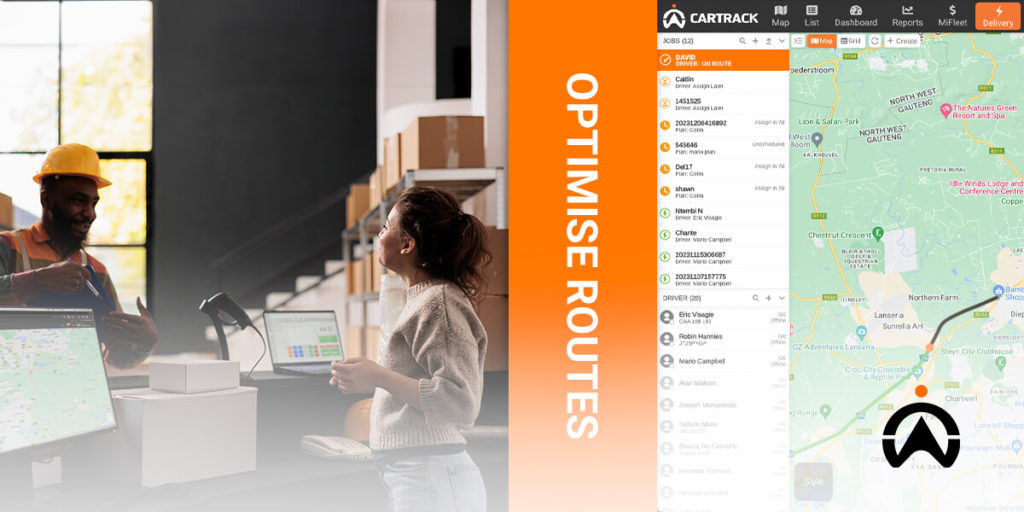
    Avoid travel delays with Cartrack Mozambique's route optimisation feature. Available through our Delivery app, route optimisation helps reduce travel delays, cut fuel consumption and maximise fleet productivity. By analysing distance, travel time and real-time traffic and road conditions, this feature helps you find shorter routes without detours for your drivers, so they can complete tasks/deliveries in good time.

Turn all your vehicles into connected vehicles with Cartrack Mozambique's fleet management solutions

Harnessing the power of smart mobility may seem a little complicated and technical, but with Cartrack Mozambique it has never been easier.

Contact us today and let's turn your fleet into a connected fleet.

G-force – The remarkable science of monitoring harsh driver behaviour

Aggressive driving behaviour is one of the biggest challenges fleets face, but do you know how it is measured?

The short answer? G-force. No, we are not talking about the film with cute guinea pigs who work as secret agents; we are talking about gravitational force. But how exactly does it work, and why does your fleet need to be aware of it? Let's find out.

In this article, you will:

  • Learn exactly what G-force is
  • Discover the crucial role G-force plays in measuring harsh driving behaviour
  • Find out what damage aggressive driving can do to your fleet
  • Understand the importance of a driver monitoring system
  • Get unrivalled safety for your whole fleet with our driver monitoring system

What is g-force?

A g-force, often called gravitational force, is defined as a measure of acceleration. In simpler terms, it is how much you are pushed or pulled when accelerating, braking or turning. When we are standing on the ground, the weight and force that stop us from floating are equal to one “g”. This measure serves as a metric for quantifying any form of acceleration, making it important in several fields, including aviation, the military and the fleet industry.

What is harsh driving?

Harsh driving can be defined as any sudden change in the direction or speed of a vehicle or truck travelling at a steady pace. It is often noticed as sudden changes in G-forces that can be monitored by an accelerometer, a device that measures changes in the speed or direction of a moving body (in this case, a vehicle).

When an accelerometer is at rest, it measures one g-force, which is the force of gravity acting on it. When the accelerometer is moving, it measures the difference between the force of gravity and the force of acceleration acting on it. The accelerometer measures acceleration in metres per second squared (m/s²), and this can be converted into g-force by dividing the acceleration by the acceleration of gravity (approximately 9,81 m/s²).

Accelerometers are widely used in transport, including in airbags, where they detect sudden changes in a car's speed, signalling an imminent collision, and trigger an electrical circuit that makes the airbags inflate.

How does G-force relate to harsh driving?

Harsh driver behaviour is usually expressed in terms of G-force because of its role in monitoring behaviour. This is done by measuring the magnitude of the acceleration and deceleration a vehicle experiences. Because harsh driving subjects the vehicle to abrupt changes in speed, direction or both, a sudden increase in the G-force experienced by the driver, the passengers and the vehicle itself is a key indicator of harsh driving.

Harsh driving is expressed in terms of G-force because it plays a crucial role in measuring the magnitude of the acceleration or deceleration a vehicle experiences.

What are the different forms of aggressive driving?

Aggressive driving is a broad term used to describe a range of behaviours behind the wheel. Here are the four most common forms of harsh driving:

  1. Harsh braking: Harsh braking happens when the driver uses more force than necessary to stop a vehicle. Although there are some understandable cases where harsh braking cannot be avoided (such as stopping to avoid an accident), unnecessary harsh braking can suggest distracted driving, as it is a common effect when drivers fail to keep a safe following distance. This increases the chances of a rear-end collision, as there is not enough following distance to allow a sudden but safe deceleration.
  2. Harsh acceleration: Harsh acceleration happens when drivers use more power than necessary to move the vehicle after stopping. Often seen when drivers are waiting at a traffic light and step on the accelerator to move off as fast as possible, when drivers accelerate quickly in an attempt to beat a red light or when drivers are not paying attention to the flow of traffic and need to accelerate from a stop line, harsh acceleration can be a sign of distracted driving. It often suggests a lack of focus, impatience or an attempt to make up for lost time without paying attention to traffic signals or the surroundings.
  3. Sharp cornering: Also known as sharp cornering, harsh cornering is defined as a driver accelerating into a bend, which makes them take the corner too fast. This is quite dangerous, as it puts more force on the vehicle's tyres. It means the driver can lose control of the vehicle completely, causing accidents with other vehicles. It also puts heavier vehicles at risk of rolling over. And it leads to limited visibility of the road beyond the bend, which puts drivers at risk of meeting obstacles.
  4. Lane departure: Lane departure is defined as a driver unintentionally leaving their lane and crossing into another lane or onto the hard shoulder. When a driver takes their attention off the road, even for a moment, the likelihood of drifting out of the lane rises sharply. This is dangerous, as it increases the likelihood of collisions with adjacent vehicles and poses a risk to oncoming traffic. It can indicate distracted driving, as taking your eyes off the road can cause you to drift. It can also indicate a lack of adequate following distance, increasing the risk of rear-end collisions.

Quais_são_as_diferentes_formas_de_condução_agressiva

How does aggressive driving affect fleets?

Aggressive driving can have significant negative impacts on fleet vehicles, affecting not only safety but also the fleet's overall efficiency. Here is how:

  1. Shortens the life of fleet vehicles:
    Aggressive driving significantly affects the longevity of fleet vehicles in the following ways:

    – Increases tyre wear: Harsh acceleration forces the tyres to grip the road intensely, leading to more friction and heat generation. This excessive stress leads to premature tyre wear, which shortens the life of the tread and compromises the tyre's structural integrity. Harsh braking can also cause uneven wear patterns on the tyres, shortening their life and requiring more frequent replacements.

    – Increases strain on the brake system: Frequent harsh braking leads to increased wear of the brake pads, and this intense friction results in a shorter brake pad life, which compromises the vehicle's safety.

    – Increases strain on the suspension system: Harsh driving puts pressure on the vehicle's suspension parts, such as shock absorbers, struts and bushings, which reduces their effectiveness. These components are important for maintaining the vehicle's stability and the proper working of the steering system, which makes your vehicles more susceptible to mechanical failures.

  2. Increases your fleet's fuel consumption:
    Aggressive driving has been shown to increase the amount of fuel your vehicle burns in the following ways:

    –

    Increases fuel consumption through downshifting: Harsh braking has been shown to increase your vehicle's fuel consumption dramatically, thereby reducing its fuel economy. When a driver brakes harshly, the vehicle's transmission shifts down to the lowest gear. Although this downshift is necessary to compensate for the sudden drop in speed, lower gears require more engine revolutions to keep moving, which means more fuel is burned. Tests have indicated that aggressive driving can increase fuel consumption by approximately 40%.

    – Reduces fuel economy: The increased fuel consumption that results from harsh driving negatively affects your fleet's fuel economy. A study by the Oak Ridge National Laboratory indicated that aggressive driving can reduce fuel economy by 15% to 30%.

  3. Reduces tyre performance:
    Harsh driving can have the following negative impact on the performance of your vehicle's tyres:

    – Causing uneven wear: Harsh driving contributes to uneven tyre wear. Harsh acceleration makes the tyres fight against intense friction, wearing the tread unevenly. Harsh braking also forces the tyres to work against the road surface, resulting in uneven wear patterns that shorten the tyre's life.

    – Causing flat spots: Harsh braking can cause flat spots, which occur when the tyres skid or lock up, making them slide across the road surface. This wears specific parts of the tyre tread faster than others, creating uneven wear patterns and reducing the tyre's effectiveness and life.

    – Increased heat build-up: Harsh driving generates excessive friction, which leads to greater heat build-up in the tyres. Overheated tyres speed up the deterioration of the tyres' rubber compounds and make them more susceptible to blowouts and structural damage.

  4. Increases the risk of collisions:
    Harsh driving increases the risk of vehicle collisions in the following ways:

    – Increased risk of rear-end collision: Aggressive driving reduces the safe distance between vehicles, lowering the driver's ability to respond to sudden changes in the flow of traffic and increasing the risk of collisions

    – Reducing response times to potential hazards: Aggressive driving compromises the driver's ability to respond promptly to unforeseen situations, such as a vehicle suddenly changing lanes, pedestrians crossing unexpectedly or obstacles on the road. This reduction in response times increases the likelihood of accidents, as the driver does not have enough time to avoid potential hazards on the road.

    – Compromising vehicle stability and control: Harsh driving destabilises the vehicle, which affects its handling. This makes it harder to manoeuvre safely, especially in emergencies where drivers need to adjust their driving quickly and take sudden action. This compromised control significantly increases the risk of accidents.

  5. Increases fleet maintenance costs:
    Aggressive driving increases your fleet's maintenance costs by:

    – Increasing wear and tear on vehicle components: Harsh driving behaviour puts pressure on critical vehicle parts such as brakes, tyres, suspension systems, transmission and engine components. This subjects these components to premature strain, causing them to wear out sooner than planned. It means fleet managers need to allocate more time and resources to frequent maintenance, part replacements and repairs, which leads to unplanned vehicle downtime and higher maintenance costs.

  6. Harms driver performance:

    Aggressive driving affects your driver's performance in the following ways:

    – Reduces response time: Harsh driving behaviour lowers the driver's ability to react quickly to unexpected situations, leading to delayed reactions that increase the likelihood of accidents.

    – Increases stress levels: Aggressive driving has been shown to induce physiological stress responses, which increase the driver's anxiety and tension. This added stress not only affects the driver's mental well-being, but also impairs their cognitive function, which affects decision-making abilities and reaction times.

    – Increases fatigue: The physical effort caused by harsh driving, such as harsh acceleration, braking and steering, can increase driver fatigue. Over time, this constant effort contributes to greater exhaustion and reduced focus, especially on long-distance trips. This lowers the driver's situational awareness and impairs their judgement, increasing the potential for accidents.

To spot harsh driving, you need to keep an eye on your fleet's driver behaviour. Although this may seem like a challenge, a driver monitoring system is the key to simplifying the whole process.

What is a driver monitoring system?

A driver monitoring system is an advanced vehicle safety technology that combines hardware and software to consistently monitor and assess the driver's behaviour, attention and general condition while they are behind the wheel. This cutting-edge technology combines sensors, cameras and advanced data processing mechanisms that work to give you convenient, unrivalled access to the behaviour of your fleet's drivers. The main aims of this safety-focused system are to increase safety, prevent accidents caused by driver distraction or fatigue, improve overall driver performance and increase the fleet's overall efficiency.

How does driver monitoring work?

Driver monitoring systems are very complex, using a wide range of components that work together to monitor driver behaviour effectively. These components include:

  1. Cameras: Cameras are the foundation of driver monitoring systems. By using driver-facing cameras equipped with infrared light-emitting diodes, the systems can track the driver's head position, eye movements and facial expressions. These cameras are also equipped with advanced AI algorithms that work to continuously analyse driver behaviour and detect signs of distraction, drowsiness or impairment.
  2. GPS tracking: GPS tracking is another crucial component of driver monitoring systems. By using GPS tracking, fleet managers gain access to data on driver routes, stop locations and the real-time location of their vehicles. This comprehensive view of a vehicle's movements provides valuable information about driver behaviour, such as speeding, idling or unauthorised detours.
  3. Driver scorecards: Driver scorecards are comprehensive performance assessment tools that can evaluate the behaviour of a
    driver within a fleet. They give fleet managers detailed information about individual driver behaviour, covering factors such as speed compliance, harsh braking and adherence to assigned routes.
  4. Data processing and analysis: Data processing and analysis are essential for effective driver behaviour monitoring. By collecting and presenting a wide range of data on driving patterns, vehicle movements and location, this system helps fleet managers detect patterns and easily identify cases of aggressive driving.

What are the benefits of a driver monitoring system?

Although the main reason for implementing a driver monitoring system may be to eliminate harsh driving, this system produces a wide range of benefits that have a positive impact on your whole fleet operation. These benefits include:

  1. Improving the safety of fleet drivers: Driver monitoring systems provide a combination of hardware and software that monitors driver behaviour 24 hours a day. This advanced software works to detect signs of distraction, drowsiness and fatigue, which makes it key to preventing accidents, as these behaviours can significantly increase the risk of accidents.
  2. Reducing the risk of accidents: A driver monitoring system helps prevent potential accidents by identifying distracted or tired behaviour behind the wheel and alerting drivers to it. These behaviours significantly increase the risk of collisions and loss of vehicle control. When these signs are detected, the system can issue alerts to the driver, prompting them to refocus their attention.
  3. Reducing fleet maintenance costs: By promoting smoother, safer driving habits, driver monitoring systems help reduce wear and tear on vehicle components. Extending the life of brake components, suspension systems and tyres translates directly into lower maintenance and repair costs.
  4. Improving the fleet's fuel efficiency: Driver monitoring systems work to detect various driving behaviours that waste fuel, such as excessive idling, harsh acceleration and speeding, and alert drivers to them. This helps drivers correct their behaviour quickly, playing a significant role in improving your fleet's fuel efficiency. This contributes to cost savings by reducing fuel consumption across your whole fleet.
  5. Improving overall fleet efficiency: Driver monitoring systems significantly reduce accidents, which means less downtime. Less downtime due to accidents or breakdowns allows uninterrupted fleet operations, which ensures tasks, deliveries or services are completed on time. This leads to greater customer satisfaction and loyalty, improving the fleet's overall efficiency.

Quais_são_os_benefícios_de_um_sistema_de_monitoramento_de_motorista

Get unrivalled insight into driver behaviour with Cartrack Mozambique's driver monitoring system

Cartrack Mozambique is here to bring a world-class driver behaviour monitoring system straight to your fleet. Equipped with a wide range of technologies that help you take your driver behaviour to the next level, our system is exactly what you need to improve your fleet's driver behaviour and reap the benefits of a safely run fleet. These include:

  1. ADAS
    Keep your drivers aware of their surroundings with Cartrack Mozambique's Advanced Driver Assistance System (ADAS). This is a technology designed to increase fleet safety and efficiency. By alerting your drivers to potential hazards on the road, detecting and responding to obstacles and helping them keep a safe distance from other vehicles, ADAS works to increase your drivers' awareness of their surroundings.

    These features are made possible by the integration of camera-based sensors, artificial intelligence and smart algorithms, which work together to provide driver-assistance features that improve the safety of the driver. These include:

    – Data processing

    – Driver-assistance features, including:

    Automatic emergency braking: This feature quickly identifies potential collisions and automatically applies the vehicle's brakes. This helps minimise the impact or avoid the collision altogether.

    Forward collision warning: This feature quickly alerts your drivers when the vehicle is approaching an obstacle or vehicle too quickly, which can help them avoid rear-end collisions.

    Blind spot detection: this feature quickly alerts your drivers to vehicles that are in blind spots, helping them reduce the risk of accidents when changing lanes.

  2. Live Vision AI cameras
    Get 24-hour visual access to your fleets with Cartrack Mozambique's Live Vision AI cameras, an AI-powered live-streaming technology. This cloud-connected video management solution uses AI analytics to provide access to driver behaviour monitoring and real-time alerts. This technology can also detect various forms of distracted or dangerous driving, including:

    – Speeding

    – Smoking

    – Fatigue

    – Mobile phone use

    When any of the behaviours above is detected, audible in-cab alerts are triggered, immediately notifying your drivers. This helps them correct their actions in real time, preventing possible accidents. In addition, fleet managers can also receive these alerts in real time and access the footage through a live stream, which helps them ensure preventive action is taken immediately.

  3. Driver scorecards
    Get an overview of each of your drivers and their behaviour with Cartrack Mozambique's driver scorecards, helping you determine how safely they drive. This is done by tracking any high-risk behaviours, such as

    – Harsh acceleration

    – Harsh braking

    – Excessive idling

    – Speeding

    These scorecards help identify the specific areas in which drivers need training. They help you give them targeted training to improve their behaviour behind the wheel. This is a crucial part of an effective driver monitoring system, as it helps identify specific indicators of harsh driving, along with the drivers who display these behaviours.

  4. Fuel monitoring
    Keep track of your vehicle's fuel levels and quickly identify harsh driving with Cartrack Mozambique's fuel monitoring system. Our real-time fuel level monitoring uses advanced sensors installed inside the fuel tanks, which allow live monitoring of fuel consumption through our fleet management platform. By helping you conveniently monitor fuel levels as changes happen, it lets you quickly identify sudden spikes in fuel consumption, which can be a sign of harsh driving, with behaviours such as excessive idling, speeding and harsh braking contributing to higher fuel consumption.
  5. Crash detection.
    Ensure your drivers receive immediate assistance in the event of a collision or car accident with Cartrack Mozambique's crash detection. However much your drivers may apply safe driving strategies, that does not guarantee other drivers will show the same vigilance and safe driving habits on the road. By using our smart device, which detects a crash or accident through special G-force sensors and AI algorithms, we can detect and pinpoint the exact location of accidents in real time. This allows us to contact you quickly and send emergency services to your driver's live location if they are involved in a car crash or accident.

Let Cartrack Mozambique help you streamline

Are you ready to establish a driving culture that prioritises safety in your fleet? Start the journey to better driver safety with Cartrack and gain access to world-class technologies.

Contact us today and embrace greater driver safety for your fleet.

Sustainability in business – 5 new guaranteed ways to make your fleet greener

Implementing sustainable practices in your fleet is one of the best ways to increase cost savings and ensure your business reduces its environmental impact.

When it comes to sustainability in business, finding the simplest and most efficient ways to introduce green fleet practices takes priority over buying new vehicles.

We unpack all the ways you can make your fleet greener, right here.

In this article, you will:

  • Learn how to make the transition to a cleaner, greener business with fleet management systems
  • Get useful tips on how to reduce your fleet's carbon footprint
  • Find out how Cartrack's fleet management solution helps create a cleaner fleet and cuts costs

What is fleet sustainability in business?

Before we reveal all the ways you can make your business green, let's just get a good understanding of what fleet sustainability is in a company.

Fleet sustainability refers to the process of reducing the environmental impact of running a fleet by introducing eco-friendly/green practices and advanced technology.

In 2024, more companies are interested in improving their fleet's sustainability to help the environment, but they are challenged by concerns about how to make their fleet greener and the costs associated with introducing greener solutions.

However, thanks to technology, companies can adopt various management strategies to boost their sustainability efforts. Before we get to those strategies.

With all that said, what are the current actions that make a company's fleet operations unsustainable?

Fleet sustainability challenges in business

Companies have a responsibility to ensure their fleet operations have a more positive impact on the environment. Today, fleet sustainability is one of the main challenges for companies, as more and more policies and regulations require them to work towards a green fleet. It is simply no longer an ethical question, but an ethical requirement for companies.

A fleet sustainability strategy is valuable for companies facing challenges with:

  1. High carbon emission rates
  2. Inefficient fuel consumption practices
  3. Reckless driver behaviour and low productivity
  4. Compliance with regulations
  5. Eliminating paper-based processes

With these challenges, it would be a mistake to think that new electric vehicles are the only solution for your fleet. Although fleet electrification is an excellent opportunity for companies to go green, there are more immediate ways for companies to improve their sustainability practices.

Fleet managers are the starting point for your business's sustainable fleet operations, and here is why.

The manager's role in sustainable fleet management

Fleet managers oversee all the movements and activities of the fleet's vehicles and drivers, to ensure deliveries are made and jobs are completed on time. They also make sure drivers are kept safe, practise good driving behaviour and comply with regulations.

Overseeing all fleet operations is sometimes a stressful and tiring task. To keep control of everything efficiently, fleet managers use fleet management systems to increase visibility and manage their assets better.

With fleet management systems, fleet managers can achieve:

  • Lower overall fleet costs
  • Better fuel efficiency and lower fuel costs
  • Monitoring of vehicle movements
  • Streamlined deliveries
  • Improved safety for the fleet
  • Higher driver retention
  • Scheduled vehicle maintenance
  • Compliance with driver and vehicle regulations

Imagine juggling delivery deadlines, driver safety and regulatory compliance activities for a fleet operation of 10 or 20. With so much going on, fleet managers feel daunted by adding sustainable strategies to their already full plate.

There are some guaranteed ways for companies to become greener. Here are five:

O_papel_do_gestor_na_gestão_sustentável_da_frota

Five guaranteed ways to make your fleet greener

The best way to make your fleet greener is to create a sustainable fleet management strategy, which involves a few things.

First, reducing your carbon emissions. Second, improving your fleet's fuel use. Third, keeping up with vehicle maintenance. Fourth, improving driver behaviour on the road also helps increase sustainability in business.

And lastly, upgrade your fleet with electric vehicles and advanced telematics solutions.

Here are all the ways to make your fleet greener:

  1. Reducing carbon emissions
    According to Our World in Data, transport is responsible for around 20% of global carbon dioxide (CO2) emissions. 15% of this comes from road travel, through cars and buses carrying passengers, as well as trucks carrying goods. Statistics like this show why the transport industry needs to adapt to greener ways of working.Businesses in every industry and sector should understand what the carbon emissions of their operations are and how to calculate their carbon footprint. And, in turn, understand how those emissions contribute to global warming.

    High carbon emissions mean that a business has unsustainable practices, and these have a negative effect on the environment and contribute to worsening climate change globally.

    Here are some simple ways to quickly reduce your fleet's carbon emissions:

    – Introducing low or zero-emission vehicles
    – Making sure the size of your fleet matches your fleet's needs
    – Tracking fuel use
    – More efficient route planning

    Reducing your fleet's carbon emissions isn't as technical as it sounds, but it is one of the best starting points if you want to make your fleet greener.

  2. Improve fuel management
    Reducing carbon emissions goes hand in hand with your fleet's fuel efficiency. Without efficient fuel management strategies, businesses will face high fuel consumption, high fuel costs, fuel theft, fuel card fraud and other costly fuel-related losses.On top of that, certain driver behaviours and maintenance problems also contribute to your fleet's high fuel consumption, such as:

    – Unnecessary idling
    – Speeding
    – Poor tyre condition
    – Neglected maintenance
    – Shorter travel distances
    – Faulty engines
    – Poor driving habits (gears, clutch use)
    – Overloading cargo

    By improving fleet management with fuel management, your business will benefit from lower fuel costs and consumption. More importantly, you will adopt sustainable green practices, cutting fuel consumption and reducing unnecessary fuel emissions.

  3. Keep track of vehicle maintenance
    A fleet's environmental sustainability can be improved with good vehicle maintenance. Through routine maintenance, businesses can extend the life of their vehicles and, as a result, make sure their fleet's carbon footprint doesn't grow.As vehicles will inevitably wear out over time, vehicle maintenance can help businesses deal with the wear and tear on their fleet.

    Did you know that vehicle problems such as faulty engines and worn brakes, gears and clutches also add to the harm your fleet does to the environment? One of the benefits of vehicle maintenance is how it improves the fleet's environmental sustainability.

    Well-maintained vehicles:

    – Extend your fleet's life cycle
    – Help your fleet burn less fuel
    – Reduce overall fleet costs

    Your business would not only benefit from greater savings and a seamless fleet operation, it would also be greener.

  4. Telematics Solutions
    Telematics is a technology that uses telecommunications and informatics to collect GPS fleet tracking data and a range of other vehicle-specific information. The information you get from your fleet management system or telematics solutions can be used to help your business implement green solutions.Your telematics system already gathers and compiles all the data needed to understand your fleet. You get detailed data on vehicle speed, braking and the areas the vehicle has travelled through. This offers actionable insights into how to increase your fleet's sustainability.

    To create a green fleet system, you need to keep track of everything that happens in your fleet. Use fleet technology to monitor emissions, idling and other metrics as part of your green fleet operations

  5. Improve driver behaviour
    Did you know that speeding, idling and poor driving technique and behaviour can waste your fleet's fuel? What's more, these bad driving habits create pollution. According to the Department of Energy, idling for more than 10 seconds uses more fuel and produces more emissions than stopping and restarting the engine.Idling and speeding can use more fuel than you think, increasing your business's fuel consumption and harming the environment. Simple as it sounds, improving driver behaviour helps make your fleet greener.

    Fleet managers can improve driver behaviour by training drivers in fuel-efficient driving techniques, including techniques for reducing idling. Instilling good driving techniques can reduce your business's carbon footprint, so stamp out these bad habits from the start so that good ones become part of your driving culture.

    There are other ways for businesses to make their fleet greener. One of them is fleet electrification. Although fleet electrification isn't easy to implement, it is worth considering, and here is why.

Are electric vehicles a guaranteed way to reduce your fleet's CO2 emissions?

The future of transport is electric. Electric vehicles (EVs) are revolutionising the way businesses move, offering sustainability, cost savings and a competitive edge. But what exactly are EVs, and are they a guaranteed way to reduce your fleet's CO2 emissions?

Electric vehicles, commonly known as EVs, are vehicles designed to run fully or partly on electricity as their primary energy source. Unlike conventional vehicles, which rely on petrol or fossil fuels, electric vehicles use an electric motor that draws power from rechargeable batteries or fuel cells.

There are battery electric vehicles (BEVs): these are powered entirely by electricity stored in batteries.

Plug-in hybrid electric vehicles (PHEVs): these have an electric motor and a regular petrol or diesel engine.

Adopting low or zero-emission vehicles brings numerous benefits for businesses:

  • Positive impact on the environment
  • Sustainable energy source
  • Lower fleet fuel costs
  • Reduce maintenance costs

But this is often the hardest solution to implement for sustainability in business. Here are some factors that make it difficult:

  • The high upfront price of electric vehicles
  • Availability of charging stations for your vehicles
  • Battery degradation and replacement costs for vehicles

Although buying electric vehicles may seem like the only impactful solution for improving sustainability in business.

There is another solution that businesses often overlook and can easily adopt: a fleet management system.

Four ways Cartrack Mozambique's fleet management software helps businesses go green

Effective fleet management software can help your business improve its efforts to go green and successfully implement a sustainable strategy for your fleet.

Here are some ways Cartrack's fleet management system can help you achieve this:

  1. Preventive maintenance
    The fleet management system Cartrack Mozambique helps you keep track of all your fleet's maintenance needs. Fleet managers can set up maintenance plans, track service intervals and receive reminders about service and repair dates. In addition, fleet managers can receive real-time alerts about the condition of their vehicles, such as engine faults, brake pads, oil and water fluctuations, as well as other vehicle diagnostics. Preventive maintenance is an excellent way to make sure your fleet is in the best condition for operations, which helps ensure your fleet has a smaller carbon footprint and reduces its greenhouse gas emissions. A well-maintained fleet also reduces your vehicle's negative impact on the environment.
  2. Route planning
    Businesses that use the route optimisation feature of Cartrack Delivery report driving fewer kilometres and saving more fuel. That's because Cartrack Delivery calculates the best routes for your drivers to follow, so they can avoid traffic or covering unnecessary distances to reach their destination. Route planning helps businesses make sure their fleet reduces its carbon footprint and cuts fuel consumption and costs. These two features can help businesses instil sustainable driving practices to reduce their harm to the environment.
  3. Driver behaviour insights
    Reduce your carbon footprint with driver behaviour insights. These driver behaviour reports are sent straight to fleet managers, letting them know when drivers speed, brake harshly, idle for long periods or drive recklessly. This information can help fleet managers identify the training their drivers need, but also hold them accountable to make sure safer, greener driving practices are applied in your business
  4. Fuel management
    The Cartrack Mozambique fuel monitoring system helps businesses easily keep track of their fuel consumption, fuel costs and fuel wastage. Fuel monitoring accurately tracks your fuel consumption with per-kilometre reports. This lets fleet managers easily identify and resolve problems with fuel wastage and uneconomical driving, helping them in their efforts to run a greener, more sustainable fleet.

Gestão_de_combustível

What are the benefits of implementing sustainable practices?

Implementing sustainable practices is not just an ethical obligation for businesses, or a box they can tick to say they have done their bit. Sustainable practices benefit not only the environment, but businesses too.

Here are some of the benefits of opting for a green fleet:

Greater fuel savings

As fuel is one of the most significant costs for your fleet, adopting sustainable practices such as fuel management, route optimisation and eco-driving practices will reduce your fuel costs and so increase your fleet's fuel savings.

Less fleet maintenance

Through preventive maintenance and keeping track of the needs of your fleet's vehicles, businesses can make sure their fleet runs smoothly. In the long run, your fleet will benefit from less maintenance and fewer unexpected costs.

Improve your reputation

Making your fleet green signals that your business cares about the environmental impact of its operation. This improves your reputation with your partners, customers and other businesses.

Sold? Here are some quick tips on where you can start making your fleet greener.

Quick guide to starting your green fleet practices

Making your fleet greener doesn't have to cost your business a lot of money. So here are some quick tips on where your business can start:

Tip no. 1: Understand your fleet

Start by understanding your fleet, from the number of vehicles your business owns to the different activities your vehicles are used for and your business's current carbon footprint.

Tip no. 2: Understand your drivers

Gather information about your drivers' skills and behaviours. This will help you identify areas for improvement for each of your drivers.

Tip no. 3: Set sustainable goals for your business

Depending on the size of your fleet, the current cost of your fleet's operations and your current carbon footprint, fleet managers can set sustainable goals for the business to achieve.

Tip #4 Implement sustainable strategies for your fleet

Goals should be accompanied by strategies for achieving them, and fleet management systems can help fleet managers devise strategies to make their fleets greener.

Tip no. 5: Track your performance

By using a fleet management system and measuring your goals and strategies, fleet managers can track their fleet's performance and calculate the benefits of these sustainable practices.

Drive green with Cartrack Mozambique

A greener fleet means your fleet operations are more environmentally friendly, and what business doesn't want to improve its sustainability practices, especially if doing so helps you attract new business opportunities, saves money and is great for the environment?

Ready to let Cartrack Mozambique help you drive greener? Talk to us here.

Fleet visibility: how much do you really know?

In the world of fleet management, seeing is believing, but when fleet visibility is compromised, businesses can face challenges that affect efficiency, customer satisfaction and overall fleet costs.

Let's explore fleet visibility and see its transformative potential for your business.

In this article, you will:

  • Discover the importance of fleet visibility
  • Explore the key components that are crucial to achieving optimal fleet visibility
  • Identify clear signs that you need a fleet management system to improve visibility
  • Understand how fleet management can significantly improve your team's visibility
  • Learn how Cartrack has improved, and can improve, fleet visibility for any business

What is fleet visibility?

It's not just about knowing where your trucks are, although that's a great start.

Fleet visibility means staying informed about your fleet in real time. It lets you track and understand every move your fleet makes – from where your vehicles are to the routes they take, how much fuel they are using and even keeping on top of maintenance needs. It's not just about pinpointing your drivers and vehicles; it also tracks the progress of tasks during deliveries or on-site services.

This crucial element of fleet management provides valuable information to decision-makers, fleet managers and dispatchers, helping them fine-tune operations, make sure vehicles are used efficiently and allocate time to tasks intelligently.

Fleet visibility is the trump card every fleet manager needs to keep their fleet operations running smoothly and optimally.

Key components of fleet visibility

Fleet visibility can strongly influence operational efficiency, fleet costs and customer satisfaction, and even safeguard the overall health and productivity of a fleet of vehicles. It is a cornerstone of modern fleet management practices, allowing businesses to optimise their transport and logistics processes, but how does this method work?

Here are the essential technologies needed to achieve optimal fleet visibility.

Vehicle tracking: GPS devices or on-board computers transmit location data, plotting your vehicles' movements on a map in real time

Telematics: Sensors monitor engine condition, fuel use, driver behaviour and other vital metrics, providing information on vehicle performance and driver habits.

Fleet management software: This central platform brings all the data together, displays it on visual dashboards, generates reports and enables communication with drivers.

Mobile apps: drivers can access essential information such as routes, schedules and job updates through dedicated mobile apps, improving communication and efficiency.

Each of them plays its part in providing real-time location data, tracking vital metrics, centralising data and improving communication and efficiency.

Componentes_principais_da_visibilidade_da_frota

How do you increase fleet visibility and measure fleet performance?

If you're a fleet manager eager to improve your fleet's game plan but not quite sure where to start, fear not! Increasing fleet visibility and measuring performance may feel like navigating uncharted territory, but it's not as daunting as it seems.

Split your focus between your drivers and vehicles and their tasks and responsibilities:

  1. Fleet assets
    To increase fleet visibility, organisations can dive into proactive monitoring and real-time tracking solutions. Think of it as a bird's-eye view of your fleet's daily activities. By adopting these high-tech tools, organisations can quickly increase the visibility of their fleet, making the whole operation smoother than ever.
  2. Task visibility
    Keeping watch over your fleet isn't just about knowing where it is; it's about understanding what your vehicles and drivers are doing. To measure fleet performance accurately, you can turn to Key Performance Indicators (KPIs), which will tell you how effective your fleet management strategy is.

    The following are some of the most important KPIs for measuring fleet performance:

    Boosting efficiency: This KPI zooms in on overall efficiency, covering fuel use, maintenance costs and vehicle utilisation rates.

    Increased productivity: Measures your fleet's productivity through jobs completed, delivery times and task completion levels.

    Cost control: keeps an eye on the bottom line by monitoring fuel costs, maintenance expenses and total expenses per asset.

    Driver behaviour and performance: monitors driver performance, from keeping to schedules to fuel-saving habits and safety skills.

    To monitor these metrics properly, fleet managers use fleet management software to collect and analyse the data. After that, fleet managers can identify areas for improvement, set goals and make smart decisions to turbocharge their fleet operations.

Signs that your fleet needs a fleet management system for greater visibility

Imagine managing your team as usual, with the same methods you have used since you opened your business. Everything seems fine until one day a series of unexpected events unfolds.

You get a call from a driver stuck in traffic, another reporting vehicle trouble and, to top it all, a missed delivery deadline that leaves a valued customer far from impressed. As you face these challenges, it dawns on you: your fleet needs modern fleet management so that you can be aware of the details of your fleet.

It is crucial to recognise the signs that your fleet urgently needs a fleet management system to increase visibility.

Here is a summary of what to look out for:

Poor use of resources

  • Challenge: When visibility is lacking, your fleet can become inefficient. Resources are underused or overstretched, leading to lower productivity and higher operating costs.
  • Solution: fleet visibility tools show how vehicles are used, driver availability and how the workload is distributed. This insight helps manage resources effectively and improves overall efficiency.Rising operating costs
  • Challenge: Insufficient visibility results in higher operating costs. Fuel expenses rise and vehicle wear and tear increases, affecting profitability.
  • Solution: fleet visibility solutions with advanced analytics identify areas for improvement, leading to cost savings on fuel consumption and maintenance. This helps control operating expenses and increases profitability.

Rising operating costs

  • Challenge: Insufficient visibility results in higher operating costs. Fuel expenses rise and vehicle wear and tear increases, affecting profitability.
  • Solution: fleet visibility solutions with advanced analytics identify areas for improvement, leading to cost savings on fuel consumption and maintenance. This helps control operating expenses and increases profitability.

Communication breakdowns

  • Challenge: Without real-time visibility, communication between dispatchers and drivers suffers, causing misunderstandings, errors and delays in carrying out tasks.
  • Solution: Fleet visibility tools generally come with communication features, enabling seamless, instant communication between dispatchers and drivers.

Inaccurate tracking

  • Challenge: The absence of accurate real-time tracking hampers monitoring and responsiveness, making it hard to adapt quickly to changes or unexpected events.
  • Solution: GPS-enabled tracking systems provide accurate, real-time location data for every vehicle, allowing precise monitoring and timely decision-making.

How can fleet management improve your team's visibility?

While basic tracking and monitoring are crucial, advanced fleet visibility solutions take this to the next level, providing a comprehensive, real-time understanding of a fleet's operations.

The solutions offered in the previous section would take longer to put into practice, and to benefit from, if carried out with early fleet management methods such as paper records and spreadsheets.

Now, fleet managers can see an immediate change with the latest advanced fleet management software, which offers a rich layer of information that improves overall operational efficiency and generates savings.

Some essential features for a fleet management solution to increase visibility are:

Predictive maintenance: use data analytics to predict potential vehicle problems, avoid breakdowns and ensure seamless operations. Through proactive monitoring and real-time tracking, organisations can efficiently improve fleet visibility and overall operational efficiency.

Geofencing and alerts: create virtual boundaries around specific areas where your drivers should or should not operate. Unauthorised entry to or exit from these areas triggers alerts, promotes safety and monitors movement.

Route optimisation: real-time traffic updates and historical data analysis constantly adjust routes for optimal efficiency, saving time and fuel.

Integrations: seamlessly connect a fleet management system to your business platforms, such as accounting or warehouse management systems. This integration provides a comprehensive view of your operations, ensuring a holistic approach to management

Como_a_gestão_de_frotas_pode_melhorar_a_visibilidade_da_sua_equipe

Turn to Cartrack Mozambique for complete, real-time fleet visibility

As a global leader in data-driven offerings tailored to various business sectors, Cartrack Mozambique stands out for its seamless integration with any fleet system, providing instant access to fleet data without unnecessary complexity.

Cartrack's Fleet Management Software stands out for offering complete visibility of vehicles, drivers and cargo. Here are some industry-leading features that will help you track your fleet's every move:

  1. Driver ID tags for greater control of asset use
    Ensure secure, controlled driver and vehicle use with Cartrack's ID tags. Each driver is given a unique tag, and the system requires them to tap it on a sensor inside the vehicle to operate it. This makes sure only authorised drivers use their assigned vehicles, extending fleet visibility and security.
  2. Geofencing for fleet location monitoring
    Cartrack Mozambique's geofencing feature lets fleet managers set virtual boundaries around any specific area, such as project sites, company buildings and more. Managers receive SMS or email notifications when a vehicle enters or leaves these boundaries, contributing to better location monitoring and fleet visibility.
  3. Cartrack Mozambique's Delivery tool for live task updates

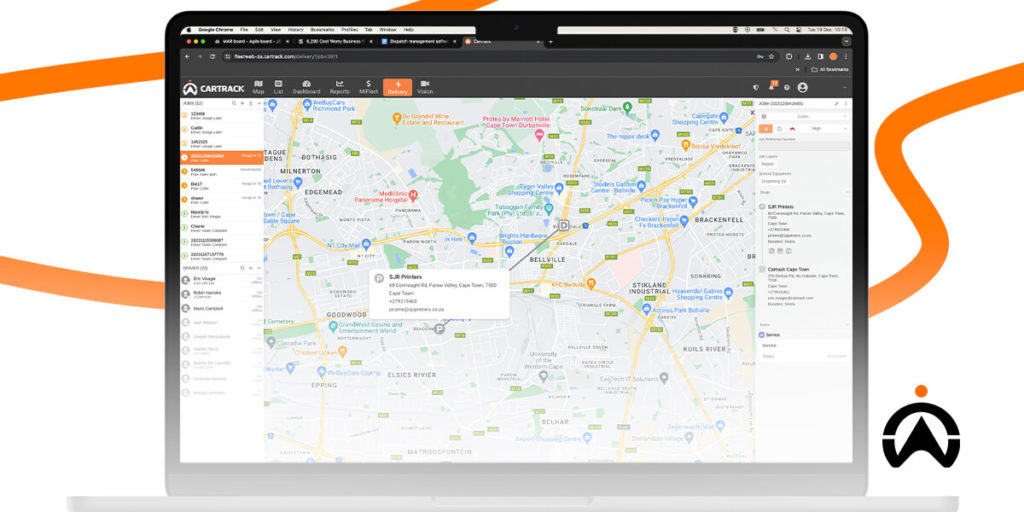
    It streamlines processes, offering full visibility of task progress beyond just tracking vehicle locations. This feature allows tasks to be allocated to drivers efficiently and can optimise routes based on distance for faster response times.

    Let's put all this theory into practice and dive into a success story that shows how Cartrack Mozambique's comprehensive solutions made a significant impact for a well-known South African courier company.

The Courier Guy's success story

The Courier Guy is South Africa's leading courier service provider, with more than 2.200 vehicles in its arsenal. With a growing number of drivers, customers and vehicles to manage, the company needed a system that would give fleet managers full visibility of the entire fleet operation, simplify business operations, improve task management and increase customer satisfaction.

Cartrack offered its Delivery software as a solution for tracking the live location of vehicles and setting requirements for drivers to digitally submit a photo or electronic signature as electronic proof of delivery, improving driver accountability and keeping customers updated throughout the delivery process by sending them automated emails and SMSs.

The Courier Guy also used Cartrack's AI-powered live-streaming camera technology to improve safety and accountability across its fleet. These digital eyes monitor driver behaviour in real time and alert drivers audibly, in real time, when dangerous driving occurs, allowing drivers to correct their behaviour quickly and resulting in fewer damaged goods, fewer speeding fines and a stronger brand reputation.

“Cartrack's technology allows us to focus on our drivers, customers, cargo and fleet, all from one platform. It puts us in control from dispatch to delivery.” — Jeffrey Wheeler, Assistant Fleet Manager – Courier Guy.

Get full visibility of every part of your business with Cartrack Mozambique

Don't face the challenges of fleet management in the dark: use Cartrack's advanced fleet management software to understand your fleet's every move and see every opportunity for improvement.

Talk to us and see what we can do for you and your business today.

Dispatch management software – Get the most reliable fleet technology solution

An uninterrupted flow of goods, services and personnel is not just a goal for many sectors, but a necessity, especially in the modern world of fleet business. Without proper dispatch, challenges, delays, inefficiencies and missed opportunities often arise.

That's where implementing the right dispatch management software can turn your fleet into a well-oiled machine. A machine that gives you the power to optimise routes, monitor driver performance and gain valuable insights into your operations.

Let's explore how this tool can turn your fleet's trials into triumphs.

In this article, you will:

  • Understand the ins and outs of asset dispatch management
  • Learn the benefits of using dispatch fleet management for asset allocation
  • Dig deeper into the responsibilities and role of dispatchers
  • Master manual dispatch methods and dispatch fleet management software
  • Revolutionise your fleet's asset operations with solutions Cartrack Mozambique

You came here with a purpose.

Perhaps you are a dispatch controller keen to sharpen your task management skills. Perhaps you are intrigued by the idea of entering the world of dispatch control, or you are simply after plenty of information on the subject because you like to keep up with the latest fleet trends.

Whatever the reason, you are in the perfect place. This blog was created to satisfy your curiosity and provide insights into dispatch and the system needed for efficient task management.

Let's start with the job title: Dispatchers

You might picture dispatchers glued to several screens, drinking coffee and giving instructions into a microphone. While this image captures the fast-paced and sometimes stressful environment, the reality is far more nuanced.

Dispatchers are skilled people with a special talent for keeping the wheels turning from dispatch to delivery. They are strategic planners who assign tasks to drivers, optimise drivers' routes, track vehicle locations, work with drivers and communicate with customers.

In a nutshell, a dispatcher's responsibilities are:

  • Scheduling drivers for collections or deliveries
  • Keeping records, monitoring driver logs and tracking vehicle locations
  • Managing logistics, including supply chains, workflows and task progress
  • Communicating with drivers, providing updates and instructions and resolving any problems that arise

Depending on the sector, there are many types of dispatcher:

  • Delivery dispatch: Optimising routes for couriers, truck drivers or delivery personnel.
  • Emergency dispatch: Managing emergency calls and coordinating responses for police, fire or ambulance services.
  • Field service dispatch: Assigning technicians or repair teams to service appointments and ensuring efficient completion.
  • Transport dispatch: Overseeing the movement of public-use vehicles such as buses or trains.

What is a fleet dispatch system?

So, let's say you run a delivery service for an e-commerce company. Your dispatch fleet management system drives the whole delivery process, ensuring efficient work, on-time deliveries and savings.

A fleet dispatch system comes packed with tools and features for easily assigning, tracking and managing your vehicles and drivers. Thanks to this system, both fleet managers and dispatchers can stay informed with real-time updates on job status, driver availability and vehicle status.

With this, dispatchers can make smart, efficient vehicle assignments based on location, vehicle type and availability, rather than on a whim.

O_que_é_um_sistema de_despacho_de_frota

What happens when assets are needed? Dispatch happens

In any business that deals with the continuous processing of orders, schedules and deliveries, dispatch plays a crucial role in keeping various systems running smoothly.

Before the widespread adoption of dispatch fleet management software, businesses relied on a variety of manual methods to manage their fleets. These methods were often inefficient, time-consuming and prone to error.

Here is a comparison of the old and new approaches:

Old methods:

  • Paper-based systems: dispatchers relied on handwritten notes, maps and spreadsheets to track vehicle locations, assign tasks and communicate with drivers. This was a tedious, error-prone process that made it hard to optimise routes and respond to changes in real time.
  • Two-way radios: Communication between dispatchers and drivers relied mainly on two-way radios. This method was limited in its range and capabilities, making it hard to communicate complex instructions or receive detailed updates.
  • Manual route planning: dispatchers planned routes manually using paper maps and calculators, a very time-consuming process that often resulted in less-than-ideal routes.
  • Limited data and analytics: Data on driver performance, fuel use and other important metrics was limited and difficult to analyse. This made it hard to identify areas for improvement and make data-driven decisions.

Innovative new method – Dispatch fleet management software

The introduction of dispatch fleet management software brought a significant change in the way businesses run their fleets. This software offers a unified platform for overseeing various aspects of fleet operations.

  • Stay informed with real-time tracking: thanks to GPS-equipped vehicles, fleet managers can track their every move in real time, allowing dispatchers to distribute tasks optimally on the go.
  • Task assignment made easy: With the dispatch fleet management system, tasks are assigned to drivers automatically, taking into account where they are, when they are available and their specific skills.
  • Two-way communication: stay connected with your drivers through secure text messaging and voice communication, increasing efficiency and reducing dispatch time. Give clear instructions and receive instant updates in return.
  • Comprehensive data and analytics: The software generates detailed reports on driver performance, fuel use, maintenance schedules and other important metrics. This data helps identify areas for improvement and make informed decisions.

Don't forget smart route planning. To get assets or drivers quickly to where they are needed, route optimisation can help by providing the most efficient routes to take based on the distance to be travelled, traffic conditions or delivery priorities. With route optimisation in use, you can save on fuel consumption and travel time and improve overall efficiency.

How does a dispatch fleet management system work?

For fleet dispatch software to improve the distribution of assets, it needs to be integrated with GPS and telematics systems so that they can properly monitor dispatched vehicles and accurately track the use of your vehicles.

The key components start with the dispatch software. This platform is where all the magic happens: it tracks vehicles, drivers and tasks and lets managers:

  • Assign tasks: match driver skills, driver location and vehicle type for accurate task assignment
  • Plan and optimise routes: consider traffic, road closures, weather, distance travelled and fuel use to provide optimised, fuel-efficient routes.
  • Monitor dispatched drivers/vehicles: Track task progress through to completion. If there are delays, managers can quickly provide support and inform customers to manage their expectations.
  • Communicate with teams: communicate instructions clearly to field teams and let drivers inform dispatchers of any updates that come up on the job.
  • Analyse the data collected: access driver reports, fuel consumption reports and vehicle/equipment usage reports and use the information to improve future dis

Essential features for your dispatch fleet management system:

Before you find the right dispatch software for your business, there are some key elements every business would benefit from having when it comes to dispatch software.

  1. Driver and vehicle profiles
    You should be able to keep all the essential information about your drivers, vehicles and assets in one place.
  2. Easy availability tracking and scheduling

    Simplify availability tracking, scheduling and assigning drivers to specific vehicles effortlessly.

  3. Real-time tracking for better control
    Monitor your fleet's location, status and progress in real time for effective management. By knowing your asset's location and status, proper dispatch can be achieved.
  4. Simplified process automation
    Automate routine processes to increase operational efficiency and save time, so that dispatchers can turn their attention to other things, such as job progress or any problems they have to resolve.
  5. Effective communication tools
    Enable clear, timely communication between dispatchers and drivers for a smooth workflow.
  6. Smart route planning and optimisation
    Plan routes intelligently, considering factors such as traffic, distance and delivery priorities for cost-effective operations.
  7. Data-driven analytics and reporting
    Take advantage of analytics to generate detailed reports and gain insights into your fleet's performance.
  8. Seamless integration with other systems
    Integrate seamlessly with other essential systems to avoid data entry complications and ensure consistency.

In the realm of dispatch, these features aren't just tick boxes; they are the essentials that can propel your fleet towards dispatch efficiency

What is the difference between dispatch systems and fleet management?

Doesn't this system sound like the capabilities of another smart fleet system? Dispatch fleet management falls under the same umbrella as fleet management systems, but their differences lie in focus and functionality.

Here are the main differences:

  1. Fleet management system
    Fleet management is a powerful toolkit designed to improve the efficiency and performance of your fleet of vehicles. From keeping track of vehicle locations to managing fuel use and scheduling maintenance, it covers a range of tasks that are crucial for seamless operations and dispatch.

    Key features:

    – Dispatch excellence: enjoy all the benefits of a dispatch system, ensuring your operations run seamlessly.

    – Proactive maintenance: schedule and monitor vehicle maintenance to avoid breakdowns and keep your fleet performing at its best.

    – Fuel efficiency: Keep an eye on fuel use, identify areas for improvement and enjoy cost savings along with environmental benefits.

    – Compliance made easy: navigate regulations effortlessly, ensuring your fleet operates legally and mitigating risks.

    – Insightful analytics: dive into detailed reports on fleet performance, fuel efficiency, driver behaviour and much more, guiding your strategic decisions.

    – Smooth integration: connect seamlessly with accounting, vehicle diagnostics and fuel management systems for streamlined operations and efficient data exchange.

    While fleet management focuses more on the internal management of the fleet, for example asset location, maintenance needs, utilisation rate, etc., dispatch fleet management systems deal more with planning, coordinating and optimising the delivery of goods, services or personnel.

  2. Dispatch fleet management system
    Dispatch management is a complex system made up of several interconnected elements that work together to achieve seamless resource allocation. These essential components include:

    – Dispatch planning: this marks the start of the dispatch process, where planners prioritise tasks based on factors such as customer orders, delivery deadlines and available resources. It involves assessing the workload, deciding the order of tasks and allocating resources accordingly.

    – Routing and scheduling: routing selects the most efficient path for each task while scheduling assigns specific time slots. This minimises travel time and optimises the use of resources.

    – Vehicle and driver management: Dispatchers assign the appropriate vehicle and driver to each task, considering factors such as capacity, skills and availability. This also includes managing vehicle maintenance and inspection schedules.

    – Communication and tracking: Effective communication is vital. Dispatchers relay task assignments, updates and instructions to drivers. Real-time tracking allows quick responses to changing conditions.

    – Resource allocation and optimisation: Efficient resource allocation involves assigning the right vehicle, driver and equipment to each task. Optimisation considers factors such as route efficiency, fuel consumption and workload balance.

    – Data analysis and reporting: Data analysis is crucial for identifying trends, areas for improvement and opportunities to cut costs. Reporting tools offer valuable information for decision-making.

How do you know when your business needs dispatch management?

Starting to see the inefficiencies of navigating the operational landscape without a robust dispatch fleet management system?

From losing track of dispatched assets to underusing fleet resources, the challenges are mounting. Brace yourself – things can get even worse without investment in this innovative solution:

Delivery delays:

Ineffective dispatch systems often result in late deliveries, compromising customer satisfaction and triggering financial penalties for missed deadlines. This causes negative experiences for customers, the potential loss of customers and higher operating costs.

Implementing a dynamic dispatch system with real-time tracking and route optimisation features will ensure timely, efficient deliveries.

Underuse of resources:

Poor optimisation leads to resources such as vehicles and personnel being underused or overstretched. Reduced productivity, inefficient asset allocation and higher operating expenses.

Dispatch software would effectively consider factors such as vehicle capacity, driver skills and workload balance and assign tasks accordingly, leaving room for assets that are neither overused nor underused in your fleet.

Rising operating costs:

Ineffective routing and scheduling contribute to higher fuel costs and greater vehicle wear and tear, increased operating expenses, financial pressure on the business and reduced profitability.

Using dispatch systems that incorporate advanced algorithms for optimal route planning, minimising fuel consumption and maintenance costs.

Communication breakdowns:

A lack of real-time communication between dispatchers and drivers creates misunderstandings, errors and delays in carrying out tasks, affecting overall operational efficiency.

Implementing two-way communication features in dispatch software for seamless, instant communication between dispatchers and drivers.

Inaccurate tracking:

The absence of accurate real-time tracking hampers monitoring and responsiveness. Inefficient monitoring of task progress makes it hard to adapt quickly to changes or unexpected events.

The solution is to deploy GPS-enabled tracking systems to provide accurate, real-time location data for all vehicles and equipment, allowing precise monitoring.

Customer dissatisfaction:

Delays, missed appointments or incorrect deliveries result in unhappy customers, damaging the business's reputation and costing it future opportunities.

Implementing customer notification features and providing real-time delivery updates will increase transparency and manage customer expectations.

Limited scalability:

Inefficient systems struggle to cope with the demands of business growth, hurting performance and making it harder to accommodate expansion.

Choose a scalable dispatch solution that can adapt to the growing needs of a growing business.

Lack of adaptability:

If your business doesn't adopt new technologies or make the effort to move into an evolving business environment, it may struggle to meet emerging challenges and adapt to market trends.

Opt for dispatch solutions that are agile and easily adaptable to change, future-proofing you against evolving business scenarios.

Now that you know the common signs of needing a dispatch system and what your business is missing, let's move on to the benefits your business can start to enjoy if modern dispatch methods are used.

Benefits of proper asset dispatch

Complete dispatch and fleet management software isn't just a game changer for transport logistics providers. Sectors such as delivery, food and beverage, oil and gas, construction and many more can also reap the benefits of fleet dispatch software, which are:

  • Greater efficiency: reduced travel time, optimised routes and lighter workloads for drivers result in faster deliveries, more tasks completed and lower costs.
  • Better customer service: On-time deliveries, real-time tracking and effective communication help increase customer satisfaction and loyalty.
  • Improved compliance: automated monitoring and alerts help mitigate risks and ensure regulations are followed.
  • Cost reduction: Lower fuel consumption, reduced maintenance needs and improved operational efficiency can lead to substantial cost savings.
  • Data-driven decision-making: insights from data reports allow managers to make informed decisions about fleet size, resource allocation and overall strategy.

As these benefits can have a positive influence on any business's fleet dispatch, it is essential to understand how choosing the right fleet dispatch system can have a significant impact on how effective these benefits are.

Benefícios_do_despacho_adequado_de_ativos

How do I choose the right fleet dispatch system?

When looking for a system to upgrade the way you organise your assets, it is best to look at your business first and assess what it needs.

Identify your business's needs and set goals; then ask yourself the following questions:

  1. Is your fleet large or small?
  2. Which sector do you operate in?
  3. What types of vehicles does your business use?

Once you have looked closely at the fundamentals of your business, consider these factors, which can make it much easier to decide which dispatch software to choose and to narrow down your options.

  • Scalability and customisation:
    Choose software that can grow along with your fleet and adapt to changing business needs. Customisation options make sure the software is precisely aligned with your fleet's unique requirements, promoting flexibility and efficiency.
  • Integration with:
    Opt for software that works seamlessly with other fleet management systems to ensure a smooth transition and avoid disruption. This cohesion, whether with telematics, fuel tracking or maintenance software, streamlines operations, making decision-making more efficient.
  • Easy to use:
    Look for a user-friendly interface that is easy to navigate and understand. This increases adoption rates and minimises training requirements, ensuring a smoother roll-out of the software solution.
  • Mobility:
    Adopt cloud-based dispatch software for its mobility advantages. This lets dispatchers and drivers stay connected and access vital information anywhere, increasing operational flexibility.

Why is dispatch management important?

Dispatch management is essential for businesses, as it makes sure resources such as vehicles and drivers are used efficiently. By planning tasks and assigning them based on factors such as location and availability, dispatch management helps get jobs done on time, saving fuel costs and avoiding unnecessary wear and tear on vehicles.

Clear communication between dispatchers and drivers is crucial for a smooth process, and efficient routing algorithms contribute to optimal travel routes, reducing time and expense.

The key factors that lead many businesses to invest in a dispatch fleet management system are many; some of them are:

Cost efficiency: By optimising routes, reducing fuel consumption and minimising driver overtime, dispatch can lead to significant savings. This not only benefits the business's bottom line, but also promotes sustainability.

Customer satisfaction: Providing timely, accurate deliveries or services is essential for customer loyalty.

Resource optimisation: It ensures resources are optimised by managing vehicles and drivers efficiently, reducing idle time and maximising overall productivity.

Real-time decision-making: Dispatchers play a key role in making real-time decisions to adapt to changing conditions, such as traffic, weather and unexpected delays.

Compliance and safety: Dispatch management helps organisations adhere to regulations on safety, manage driver hours and maintain compliance with industry standards, ensuring a safe, reliable operation.

This not only satisfies customers by ensuring on-time deliveries, but also provides valuable data for decision-making and continuous improvement. In a dynamic environment, dispatch management lets businesses adapt quickly to change, ensuring an agile, effective operation.

How do dispatch management systems add value to fleet operations?

Legacy dispatch programs (not to mention spreadsheets) don't come close to the location-aware, analytics-driven dispatch and scheduling software available today.

A digital dispatch system is more than a convenient interface for carrying out fleet tasks the old way. Modern systems rely on vehicle telematics data to give dispatchers real-time information on:

  • Vehicle locations and cruising speeds
  • Average travel speeds on the route
  • Current road conditions
  • Estimated vehicle ETAs
  • Driver behaviours
  • Cargo transport conditions

Using this data, fleet managers can develop dynamic schedules to maximise asset use and adjust schedules in real time.

In addition, dispatch tools can automate repetitive tasks. For example, they can automatically generate regular routes and schedules based on historical records, coded rules or real-time information. This degree of automation reduces the amount of human error and increases the overall productivity of the workforce, among managers and drivers alike.

An hour of idling equals 40 kilometres of driving. By putting together better schedules and adjusting for cancellations in real time, you can plan drivers' shifts better and avoid overwork.

As we wrap up on dispatch management software, only one driver and vehicle management software solution stands out: Cartrack Mozambique.

Dispatch with ease using a smart fleet management system

Cartrack Mozambique is a leading provider of extensive fleet management solutions that can help CEOs, business owners, fleet managers and dispatchers with their fleets. Cartrack equips dispatchers with solutions to turn dispatch from a reactive method into a proactive, efficient process from dispatch to delivery.

Here are some of the ways Cartrack Mozambique can be a valuable asset to dispatchers:

  1. GPS tracking for real-time visibility
    Cartrack’s GPS tracking provides real-time information on vehicle location. This allows dispatchers to increase operational efficiency and reduce costs per job, helping you intelligently dispatch the nearest driver with the right vehicle and skills for each task.
  2. Delivery tool for simplified task management
    The Delivery tool from Cartrack Mozambique simplifies task assignment and real-time tracking from dispatch to delivery. This tool automates processes, offering full visibility of task progress and making it easy to allocate tasks to drivers. Through route optimisation, Delivery also offers faster route options so that dispatched drivers cut down on long trips, save fuel and improve delivery times.
  3. Geofencing for greater insight into fleet movement
    Set virtual boundaries around any location to gain greater visibility of your vehicle activity with our geofencing feature. You can zone warehouses, dispatch sites, delivery locations or any area you want to monitor, and receive alerts when your vehicle enters or leaves these zones. This is a great way to see whether your drivers are on schedule and to keep your customers updated on delivery progress.

Cartrack Mozambique’s dispatch success story

Diag is a Vietnamese medical laboratory committed to providing fast, affordable health packages, samples and kits for human blood tests. When it came to delivering their samples, they faced challenges in tracking drivers and vehicles.

Through Delivery, Cartrack helped with smart dispatching, simplifying task assignment and increasing fleet productivity.

“Delivery has enabled Diag to grow its business by more than 1,200%, while halving logistics administration costs.”

said Diag.

With the Cartrack Mozambique, dispatchers can count on a trusted partner for better communication, route optimisation and overall fleet efficiency.

Elevate your dispatch and delivery operations with Cartrack Mozambique

From monitoring your drivers and vehicles to accurately dispatching your assets to customers, Cartrack provides the ultimate fleet management solution that does it all. Use Cartrack to get your assets efficiently to where they need to be, without hassle or confusion. Simplify dispatch management in your business today. Visit Cartrack — your industry leader in solutions for fleet management.

Diesel management system – real-time management 24 hours a day, 7 days a week for all fleet vehicles

Drive towards excellence today. Learn how an effective diesel management system can provide real-time information on your fleet’s diesel consumption.

Step into unrivalled diesel management with a world-class fleet management system solution!

In this article, you will:

  • Discover what diesel fleet management is
  • Discover how a vehicle management system powers diesel fleet management
  • Learn why vehicle management is important for fleets
  • Understand the power of a fuel management system
  • Explore how Cartrack’s solutions can help streamline your diesel fleet

What is diesel management?

Diesel management refers to the process of overseeing and controlling a fleet’s diesel consumption. This is particularly important, as most businesses and organisations rely heavily on diesel-powered equipment and vehicles. Diesel fuel, which is heavier than petrol, takes longer to evaporate. It also has a higher energy density than petrol, which means it produces 20% more energy from the same amount of fuel. So, in the long run, it is more affordable for fleets than petrol, which is why most fleets choose diesel for their businesses.

Which tasks are usually involved in diesel management?

Diesel management involves covering the following tasks based on diesel consumption:

  • Fuel level monitoring: Tracking the amount of diesel in storage tanks and vehicles, which helps fleet managers easily identify and resolve possible fuel leaks or spills
  • Fuel efficiency optimisation: Diesel management focuses on improving fuel efficiency by eliminating fuel-wasting activities. This is done through proper vehicle maintenance, route optimisation and regular training.
  • Data analysis and reporting: Diesel management systems collect data on fuel usage. By analysing this data, fleet managers can make informed decisions to help improve fuel efficiency.

Why is diesel management important?

Diesel management is made up of various strategies and practices that aim to maximise the performance and economy of diesel vehicles while minimising diesel consumption and the associated costs. Here are 5 reasons why it is crucial for fleets:

  • Helps reduce fuel costs: By optimising diesel use and preventing waste, diesel management can help businesses save money on their fuel bills and get the most out of their diesel refills.
  • Helps improve fleet efficiency: By identifying and addressing inefficiencies in diesel use, diesel management can improve businesses’ fuel efficiency.
  • Helps improve vehicle maintenance: Diesel management monitors vehicle maintenance schedules, which helps fleet managers ensure their diesel-powered vehicles are well maintained, reducing wear and tear, cutting breakdowns and extending vehicle lifespan.
  • Enables real-time insight: By making use of advanced technologies such as GPS tracking and telematics, diesel management enables real-time monitoring of fuel consumption and vehicle performance.
  • Helps improve driver behaviour: Diesel management helps you learn which driving habits make your vehicles burn more diesel than usual. With this information, you can give drivers targeted training and help eliminate these habits.

Before we get into the details of a diesel management system, let’s look at the vehicle management software that powers it.

The is vehicle management software?

Vehicle management software, also known as fleet management software, is automated software designed for any organisation that uses fleet vehicles. Playing a crucial role in diesel management, it is designed to streamline and optimise the various aspects of managing a fleet of diesel vehicles, offering a comprehensive set of tools that help with fleet-related tasks that can affect overall efficiency. This system allows data relating to fleet vehicles to be recorded, stored, processed, reported and exported. This is done using advanced technology and software.

Why is vehicle management so important for diesel-powered fleets?

Vehicle management plays a vital role in a fleet’s overall efficiency. Here are 5 reasons:

  • Increases fleet efficiency: Vehicle management systems play an important role in optimising diesel-powered fleet operations. This system works to provide comprehensive, real-time insights into important aspects of the fleet, such as vehicle location, performance metrics and maintenance. As well as providing this data to fleet managers, the system’s automation features help streamline routine fleet tasks, such as planning maintenance schedules.
  • Helps improve fleet safety: Vehicle management systems help fleet managers proactively implement measures and practices aimed at minimising the risks of safety. By keeping track of vehicle maintenance schedules, you can ensure your diesel fleet stays well maintained and in top working condition. This helps significantly mitigate the risk of breakdowns and potential accidents caused by mechanical problems. This proactive approach to maintaining your diesel fleet not only increases the safety of the fleet overall, but also builds your drivers’ confidence in the vehicle’s reliability.
  • Helps minimise fleet operating costs: a vehicle management system optimises routes, maintenance and scheduling systems. Optimising your diesel fleet’s maintenance schedules translates into lower repair costs; monitoring fuel use translates into lower diesel expenses; and monitoring driver behaviour translates into safer driving habits that reduce the risk of costly accidents. Taken together, this multifaceted approach to cost management not only secures financial savings, but also promotes an effective and sustainable fleet operation.
  • Helps monitor driver behaviour and performance: With human error being one of the biggest causes of road accidents, driver behaviour needs to be monitored at all times. Vehicle management software can monitor risky driving behaviours, including harsh braking, cornering, harsh acceleration and speeding. By identifying these behaviours, fleet managers gain valuable insight into areas for improvement and can provide targeted training to improve driver behaviour and boost the overall performance of their diesel fleet.
  • Assists in monitoring fuel consumption: Vehicle management plays an important role in effectively monitoring and controlling the fleet’s diesel consumption. The software provides comprehensive insights into diesel fuel use, accurately recording crucial data points such as fuel levels, fuel consumption rates and refuelling events. This gives fleet managers detailed information to help them analyse diesel consumption patterns and trends across their fleet. This information helps them implement strategies to regulate and optimise diesel use, contributing to cost savings and fuel efficiency.

What are the different components of a fleet management system?

An effective fleet management system is made up of the following components:

  • Vehicle tracking: Vehicle tracking is a fundamental component of a vehicle management system. It uses GPS (Global Positioning System) technology and telematics to help businesses monitor the location, movement and status of their diesel vehicles in real time. This unrivalled visibility allows fleet managers to gain valuable information to optimise fleet operation, improve efficiency and increase safety overall.
  • Driver management: Driver management is another crucial component of a comprehensive vehicle management system, helping fleet managers oversee and optimise the performance, safety and compliance of the drivers in their diesel fleets. A fleet management system helps keep track of each driver’s habits, performance and efficiency. By doing this in real time, both fleet managers and drivers are alerted the moment dangerous behaviour is detected, which helps mitigate risks and improve the safety of the fleet overall.
  • Vehicle maintenance management: Vehicle maintenance within a vehicle management system involves all the processes, tools and practices aimed at ensuring the upkeep, servicing and optimal performance of diesel vehicles. A vehicle management system helps fleet managers reduce mechanical problems that lead to unplanned stoppages, track individual vehicle movements and locations during maintenance and deliveries, and identify harsh driving events and possible engine problems. By prioritising maintenance, businesses can minimise unscheduled repairs, extend the lifespan of their diesel vehicles and manage maintenance costs effectively, contributing to efficient asset management.
  • Fuel management: Fuel is a significant expense for any fleet operation, making fuel management one of the most important components of a vehicle management system. Let’s explore this in detail and find out how it can help businesses achieve real-time management of their fuel consumption, 24 hours a day, 7 days a week.

What is a fuel management system?

A fuel management system is a comprehensive set of technologies, processes and tools designed to manage and improve your fleet's fuel usage and costs. This system gives businesses valuable insights into their petrol or diesel usage, helping them identify areas for improvement and reduce fuel costs. The system facilitates effective fuel budgeting, cost control, preventive maintenance planning and the implementation of strategies to eliminate fuel wastage.

The main components of a fuel management system

Fuel management systems involve implementing two main components to track fuel consumption and analyse all forms of data related to fuel usage patterns. These are:

The hardware:

These components are responsible for monitoring and controlling fuel consumption.

  • Fuel sensors: These are installed in fuel tanks and measure the level of fuel remaining in vehicle tanks, as well as how it was used.
  • GPS trackers: these track the location of vehicles and equipment, helping fleet managers effectively monitor fuel use by location
  • CANBus Integration: This wireless integration allows accurate vehicle diagnostics, such as odometer readings, water temperature, oil temperature and so on, to be downloaded in real time, helping fleet managers prepare for the maintenance and servicing of their vehicles.

The software:

These components are responsible for monitoring and controlling fuel consumption.

  • Data management platform: this platform collects and stores data from the hardware sensors and trackers
  • Fuel management apps: these apps allow users to access data and manage their fuel inventory remotely

Os_principais_componentes_de_um_sistema_de_gerenciamento_de_combustível

How does a fuel management system work?

The main purpose of a fuel management system is to determine a fleet’s petrol or diesel efficiency and help fleet managers work out how to improve it. The system does this through the following 3 steps:

  • Data collection: The hardware sensors, integrated into the vehicles, collect real-time data on diesel or petrol levels, engine performance and flow rates. This data is transmitted to the central data management platform over wireless connections.
  • Data analysis: The software analyses the data collected to identify trends and patterns in diesel use. This data can be used to calculate a fleet’s fuel efficiency, identify areas for improvement and generate reports that fleet managers can use to identify solutions.
  • Actionable insights: the system provides fleet managers with actionable insights. This information can be used to implement measures that improve fleet efficiency with solutions based on diesel or petrol consumption, such as route optimisation, reducing idle time and implementing preventive maintenance programmes.

What are the benefits of using a fuel management system for your diesel fleet?

A fuel management system brings several benefits to your fleet, including:

  • Reducing fuel costs: A fuel management system provides information on fuel consumption patterns. By providing accurate monitoring of fuel use and consumption patterns, it lets fleet managers identify the source of fuel waste and mitigate it, reducing fuel costs. One example of this is the use of route optimisation. It is reported that optimised routes can increase a fleet’s fuel economy by 20% to 40%.
  • Improving accuracy in fuel usage reporting: recording vehicle and driver data manually leads to data inaccuracies that negatively affect your fleet’s efficiency. With a fuel management system, your fleet’s fuel consumption data is recorded automatically with telematics, which ensures accuracy in fuel usage reports. This automation of data collection ensures that human input errors are eliminated and that all recorded data is accurate.
  • Reducing fuel theft: Fuel theft is a huge challenge for fleets, whether through siphoning, false transactions or fuel card fraud. If you have no insight into your fleet’s fuel consumption, you won’t be able to tell when fuel theft is happening. A fuel management system works to combat this by giving you a complete view of your fleet’s fuel consumption and recording all fuel-related expenses to determine accuracy.
  • Improving data-driven decision-making: Fuel management software provides fleet managers with detailed reports on fuel use, costs, efficiency and fuel trends. By following these reports over time, you can determine fuel patterns in your fleet and use this information to make informed decisions about optimising fuel management.

Elevate your fleet’s diesel management with 4 Cartrack Mozambique solutions

Take your fleet's diesel management to the next level with our world-class solutions. Here's how:

  • Fuel management: The fuel cost monitoring system meticulously cross-checks fuel receipts against vehicle telemetry data, effectively detecting possible fuel theft and preventing fuel fraud. With real-time monitoring and customisable reports, irregularities are quickly identified. Real-time fuel level monitoring uses advanced sensors installed inside the fuel tanks, enabling live monitoring of diesel consumption. This helps you identify the reasons for sudden spikes in fuel consumption, whether it is siphoning or fuel-wasting driver behaviour. Fuel trend monitoring provides detailed fuel metrics per kilometre travelled and per job completed for each driver and vehicle, giving you an accurate overview of how much diesel your fleet consumes.
  • Driver behaviour monitoring: Eliminate fuel-wasting driver behaviour with the driver monitoring system from Cartrack Mozambique. By making use of the driver scorecard data reports, you can quickly detect aggressive driving and idling. An idling diesel truck burns about 4 litres of fuel per hour, and speeding has the same negative impact on fuel efficiency. In fact, it has been shown that a truck travelling at about 120 km/h consumes 27% more fuel than a truck travelling at 104 km/h. Our solution provides detailed reports on each driver’s behaviour and shows exactly what caused the sudden increase in fuel consumption, helping you mitigate these problems and reduce fuel consumption. Use this to provide driver training or coaching to improve behaviour and put an end to fuel-wasting habits.
  • Preventive maintenance: Stay ahead of vehicle maintenance with Cartrack Mozambique’s preventive maintenance. This system works by providing real-time alerts and diagnostics for various aspects of a vehicle’s maintenance, such as engine damage, worn brake pads and worn tyres, all vehicle problems that lead to increased fuel consumption. By receiving real-time diagnostics of mechanical vehicle problems, you can quickly detect and resolve these issues before they become expensive, helping to minimise fuel consumption and maximise fleet productivity.
  • Route optimisation: Keep your routes short and free of detours with Cartrack Mozambique’s route optimisation. This innovative tool helps optimise your driver’s routes by analysing various factors, such as real-time traffic, road conditions and route history. Traffic conditions not only cause delivery delays, but also lead to more idling, making efficient route planning crucial. An idling diesel truck burns about four litres of fuel per hour, which can be a very expensive addition to your fleet’s fuel expenses.

Maximise savings and minimise waste with Cartrack Mozambique’s real-time diesel management

Keeping an eye on your fleet’s diesel consumption can be quite stressful, but with the solution for fleet management solutions from Cartrack Mozambique, it doesn’t have to be that way.

Get in touch with us today and let’s simplify your fuel monitoring together.

Vehicle inspection – digitise your daily fleet inspection with a powerful app

Vehicle inspections can be daunting without a fleet monitoring system in place. Why wait for scheduled, time-consuming inspections to know the health of your fleet when there is an easier way to keep track of it daily?

Ignorance is bliss, but not when it comes to the health of your fleet vehicles. Poorly maintained vehicles lead to unplanned downtime, increased fleet costs and, worse, risks to safety of your drivers.

See how you can get a 360º view of your fleet’s health with a digitised vehicle inspection system.

In this article, you will:

  • Learn what vehicle downtime is
  • Discover the risk of not carrying out vehicle inspections
  • Discover why digital inspections are the future of fleet management
  • Discover how you can elevate your fleet’s vehicle inspections with Cartrack Mozambique

What is vehicle inspection?

Vehicle inspection is a procedure required by the government to ensure that vehicles comply with established safety and emission standards. It involves a thorough examination of a vehicle’s components, functions and adherence to those standards, ensuring the safety and reliability of your vehicles.

This comprehensive assessment covers a range of components and systems within the vehicle, from brakes and tyres to the exhaust system and the engine. Each of these elements needs to undergo a thorough examination to ensure it is working at its optimal level. Vehicle inspection ensures that fleet managers are always aware of the condition their vehicles are in.

Why is vehicle inspection so important for fleets?

As a fleet manager, you know that regular vehicle inspections are essential to keep your fleet vehicles running effectively and safely. Vehicle inspections are a traceable indicator of the condition of your fleet vehicles. Regular inspections help you proactively identify problems in your vehicles, allowing you to fix any existing or potential mechanical issues.

Here are some of the reasons why vehicle inspection is so important:

  • Promotes safety on the road: Vehicle inspection helps identify possible vehicle problems that could cause accidents and other risks to safety. One example of this is brake failure. According to INATER, brake failure is the second most significant mechanical cause of road accidents on South African roads, accounting for 11.4% of all road accidents.
  • Prevents unplanned downtime: maintenance concerns left unattended can lead to unplanned downtime. By quickly identifying maintenance needs, vehicle inspection helps pinpoint possible problems before they become serious and lead to temporary or permanent stoppages.
  • Increases driver productivity: Regular inspections translate into less downtime, which means drivers can keep to schedule and complete all their tasks with little or no delay. In addition, vehicles that are well maintained, thanks to regular inspections, operate more efficiently, which allows tasks to be completed faster.
  • Maximises the lifespan of fleet vehicles: Regular inspections help extend the lifespan of a fleet, as potential problems are identified quickly before they turn into something more serious. This reduces the need for premature replacements, allowing you to get the most out of each vehicle.
  • Increases cost savings: Regular inspections can reduce maintenance costs by identifying and resolving problems before they become significant and costly.

Por_que_a_inspeção_veicular_é_tão_importante_para_as_frotas

What is at risk if you don’t inspect vehicles?

Failing to carry out vehicle inspections can pose significant risks, affecting both safety and legal compliance. Here are some risks that any fleet manager would desperately want to avoid:

  • Increased accident risks: When vehicles are not properly inspected, the risk of accidents increases. This brings financial repercussions that can negatively impact the running of the fleet.
  • Unplanned downtime: when you don’t inspect vehicles often, it leads to unplanned downtime, which not only disrupts schedules but also affects your fleet’s productivity.
  • Poor maintenance and safety: A lack of effective inspection leads to poor vehicle maintenance, which increases the risk of mechanical failures and risks to safety on the road.
  • Non-compliance and fines: when vehicles are not inspected, a fleet may fail to meet regulatory standards, leading to fines and penalties for non-compliance. This has a negative impact on the fleet’s finances and reputation.

What is the difference between fleet inspections and preventive maintenance?

You may be thinking that fleet vehicle inspections and preventive maintenance sound quite similar. Well, you would be right. Although they may fall into the same bracket, there are some important differences that set them apart:

  Fleet vehicle inspection Preventive maintenance
Definition Procedures designed to ensure that vehicles meet safety standards and regulations Procedures designed for the proactive, periodic maintenance of vehicles to prevent breakdowns
Focus Safety and technical inspection of a vehicle Preventing unexpected vehicle failures and unplanned downtime
Frequency Inspection can be frequent (for example, daily or weekly) Maintenance is normally scheduled based on vehicle use and the fleet’s schedule

One thing that unites these two aspects of fleet vehicles is the technological advances that simplify them. This has led to the introduction of digital vehicle inspection.

What is digital vehicle inspection?

Digital vehicle inspection (DVI) is a process that uses digital technologies to inspect vehicles and maintenance processes in the fleet sector. This digital version of vehicle inspections uses digital tools and software to carry out accurate and efficient vehicle inspections.

By replacing traditional paper-based inspection methods, such as paper checklists and manual vehicle inspections, digital vehicle inspections allow technicians to carry out, document and communicate vehicle inspection results more efficiently and accurately.

What are the main components of an effective digital vehicle inspection system?

  • Compatible mobile device or tablet: Digital vehicle inspection software should be available for use on mobile devices or tablets. This eliminates the need for paper checklists and allows real-time data entry and reporting.
  • Checklists: Digital vehicle inspection software should provide standardised, customisable inspection checklists and templates that cover various aspects of vehicle health, including the engine, brakes, tyres and vehicle fluids. These checklists are tailored to the different vehicles used, along with the inspection objectives.
  • Communication tools: Digital vehicle inspection systems should be able to generate comprehensive reports that are easily shareable between managers and drivers.

8 reasons why you should consider digitising your fleet’s vehicle inspection process

In a world where everything is going digital, making your fleet’s vehicle inspections as simple and paperless as possible is well worth considering. Here are 8 reasons:

  1. Saves time and frees up resources: Digital vehicle inspection speeds up the inspection process by digitising it. This allows inspection data to be captured in real time and transmitted instantly to a centralised database. This means faster reporting, faster decision-making and reduced administrative time, freeing up resources for more urgent tasks within the business
  2. Improves data quality and accuracy: By using standardised checklists and real-time data capture, digital vehicle inspection ensures that all essential components of the vehicle inspection are checked systematically, reducing the chances of oversight and human error associated with manual data entry.
  3. Improves security and accessibility: Digital vehicle inspection minimises the need for physical document storage, a process that can result in forms being lost or damaged. By facilitating real-time information transfer, it ensures seamless access to essential inspection documents and data from any location.
  4. Improves communication: Digital vehicle inspection systems provide real-time access to inspection results and reports, which allows findings to be communicated immediately to fleet managers and drivers. This open communication streamlines collaboration and ensures timely action on potential issues.
  5. Reduces fleet expenses: By simplifying inspections, reducing errors and improving communication, digital vehicle inspections lead to greater cost savings, cutting labour and maintenance costs and improving asset utilisation.
  6. Improves preventive maintenance: Digital vehicle inspection can analyse historical inspection data to identify vehicle patterns and trends, enabling preventive maintenance practices. This proactive approach can help avoid unexpected breakdowns, reduce repair costs and extend the lifespan of your fleet.
  7. Improves driver safety: This data-driven approach gathers daily information on the fleet’s drivers and vehicles, making it easier to identify and resolve potential vehicle problems as quickly as possible. This translates into fast, proactive intervention, which helps increase the safety of the driver, reducing the risk of accidents.
  8. Encourages data-driven decision-making: Digital vehicle inspection allows inspection data to be stored centrally in digital systems. This lets fleet managers gain valuable insight into vehicle performance, maintenance trends and potential areas for improvement. This ensures they can make data-driven decisions to optimise their fleet operations.

Unlock the benefits of digital vehicle inspection with Cartrack Mozambique

Cartrack Mozambique helps businesses access digital vehicle inspections through its automated maintenance scheduling plan, also known as preventive maintenance.

Desbloqueie_os_benefícios_da_inspeção_digital_de_veículos_com_Cartrack_Moçambique

How does Cartrack Mozambique’s preventive maintenance work?

Our preventive maintenance plan uses engine diagnostics, vehicle usage hours and the time of the last service to predict when your vehicles will need maintenance. This helps businesses extend the lifespan of their vehicles and reduce maintenance costs.

The platform integrates with a range of systems, working not only to automate processes but also to customise operations. This integration reduces repetitive administrative tasks, allowing every member of the team (drivers and fleet managers) to easily access or upload information from one easy-to-use platform.

4 benefits of having a preventive maintenance plan in your business

Cartrack Mozambique’s preventive maintenance plan is designed to help businesses manage their fleets more effectively, avoid unexpected stoppages, reduce maintenance costs and increase the longevity of their vehicles. It can do this by helping you:

  1. Get access to real-time alerts: Cartrack Mozambique can provide businesses with real-time alerts on any vehicle problems, including engine faults, worn brake pads, oil and water fluctuations and other diagnostics. This is a crucial part of helping fleet managers quickly identify which vehicles need maintenance. This not only prevents unplanned downtime, but also helps you see which of your vehicles will be out of service and when they will be available again, ensuring you don’t overbook and under-deliver.
  2. Create an automated, ongoing maintenance plan: the Cartrack Mozambique platform can automate the maintenance schedules for each of your fleet vehicles using usage hours and the time of the last service. You can use this to give your drivers advance notice of scheduled maintenance on the equipment they use, helping to keep workflows uninterrupted. By enabling a hassle-free maintenance and servicing routine, you avoid driver frustration, ensuring they are never left without the equipment to complete jobs. If the equipment is not available, you can assign new tasks or vehicles to the drivers who may be affected.
  3. Get customisable reports: businesses have the option of choosing from hundreds of powerful reports or getting customisable reports, tailored to their specific needs and sent to their inbox. This ensures fleet managers have all the information they need at their fingertips. These reports allow businesses to analyse various aspects of their fleet operations (including engine performance, fuel consumption, vehicle utilisation and vehicle location) to optimise their fleet management and make sure they don’t run into unplanned, unexpected downtime.
  4. Receive automated maintenance reminders: Never miss a maintenance appointment with Cartrack’s automated maintenance reminders, helping fleet managers stay on top of their vehicle maintenance game. By using real-time vehicle diagnostics to set up effective maintenance plans, our software sends automated reminders telling fleet managers that vehicles are due for maintenance checks. This helps fleet managers plan maintenance effectively, which minimises unplanned downtime and allows direct communication with drivers.

What’s so great about these benefits is that they are all easily accessible through our app. Talk about convenience, right?

Step into a digital era of vehicle inspections with Cartrack Mozambique

The world of fleet management is constantly evolving and, with the digitisation of vehicle inspection, you don’t want to be left behind. Save time, improve driver safety and reduce your fleet’s expenses in a few simple steps.

Contact us today and say goodbye to paperwork, admin and human error in your vehicle inspection process.

Fleet asset management – Learn why it matters for making your fleet operations soar

Late deliveries, time-wasting hunts for equipment, underused assets, maintenance downtime delays and endless paperwork – the cost-draining world without a fleet asset management system.

Uncover the importance of fleet asset management software and how it will transform your fleet operations like never before.

In this article, you will:

  • Understand the critical role of fleet asset management in your operations
  • Explore the definition and significance of fleet asset management
  • Learn the benefits of using fleet asset management software
  • Gain insights into how to create a comprehensive asset management plan
  • Revolutionise your fleet’s asset operations with Cartrack Mozambique solutions

What is fleet asset management?

Whereas “asset management” generally refers to the wealth and acquired property belonging to a person or organisation, fleet asset management is a method fleet managers use to properly oversee all of their business’s assets, ensuring they are all accounted for, in good working order and all equally utilised, so that they keep delivering a positive return and don’t cost the business more than they should.

This involves monitoring, maintaining and strategically using every vehicle in the fleet. All of this is necessary to increase operational efficiency, reduce costs and extend the lifespan of assets.

What is classed as a business asset?

The assets referred to here can be divided into tangible assets, such as physical tools, vehicles and so on, and intangible assets, such as the software used.

Tangible assets consist of various objects; here are some types:

Vehicles

  • Cars, trucks, vans, buses, motorcycles, etc.
  • Trailers, semi-trailers and other towed equipment
  • Construction equipment, such as tractors, excavators and cranes
  • Material handling equipment, such as forklifts and pallet jacks

Equipment

  • Tools used for maintenance, repairs and various tasks
  • Mobile technology devices, such as tablets and scanners
  • Communication tools, including radios and GPS trackers
  • Office equipment, such as computers and printers

Infrastructure

  • Garages, workshops and other facilities, such as work sites
  • Own storage and fuelling stations
  • Car parks and loading docks
  • Offices and administrative building

Intangible assets are those that have no physical form but still hold significant value for the business:

  • Software and technology such as the fleet management software used
  • Data and analytics acquired from vehicle telematics, fuel card transactions, etc
  • Intellectual property (IP), such as trademarks and patents

How important is fleet asset management?

It all starts with your vehicles, equipment and machinery, the essential assets that keep your business moving forward. Fleet asset management ensures that every vehicle in your fleet operates perfectly, that your equipment is in excellent condition and that your machinery runs continuously without problems.

Managing these assets properly is not just a task, it is an important part of steering your fleet to success. Without it, the rhythm of your operations could become chaotic, with breakdowns, delays, rising costs and many other factors that hit profits.

The benefits of using fleet asset management software

  • Oversight of all assets
  • Asset management from any location
  • Offers insights for strategic planning for fleet risks
  • Improved time management
  • Fleet performance monitoring
  • Tracking of the fleet asset life cycle and the costs incurred

O_que_é_gestão_de_ativos_de_frota

How does fleet asset management differ from general fleet management?

Let’s think of fleet asset management as the guardian that oversees all your valuable resources, and fleet management as the skilled specialist that deals with the specific challenges of your vehicles and machines.

Asset management takes a broader view, looking after everything from vehicles to machines and even office tools. It ensures that everything is in the right place, performing optimally and contributing to your overall success.

On the other hand, fleet management focuses on the unique challenges of your vehicles and machines. It ensures that your fleet operates smoothly, dealing with matters such as maintenance, fuel efficiency and driver behaviour.

Together, they create a powerful duo for your fleet, where one guides the other.

How do you put together an asset management plan?

To manage your assets better, you first need to create an asset management plan. Drawing up a carefully considered plan to manage your fleet’s assets can increase productivity and extend the lifespan of your resources. This strategy allows you to create a more sustainable and effective business model and unlock the full potential of your assets.

Here is a simple six-step guide to optimising asset performance:

  1. First, clearly define your fleet’s objectives and make sure they are specific, measurable, achievable and time-bound. This lays the foundation for your plan.
  2. Next, take a good look at your current fleet, considering things like vehicle types, age, condition and how they are used. This assessment helps you find areas for improvement and chances to save money.
  3. It is essential to track your vehicles, equipment, machines and so on, and to make a detailed inventory of them all. To do this, use technologies such as GPS, telematics and the Internet of Things (IoT) to monitor them in real time.
  4. Plan regular fleet maintenance to keep your vehicles in good condition and avoid unexpected breakdowns with preventive maintenance. Train your drivers in safe, economical driving and make sure they follow the rules of the road.
  5. Control your operating costs by monitoring fuel use, maintenance and fleet costs, such as speeding fines and insurance expenses.
  6. Be prepared for emergencies with contingency plans. Regularly review and update your fleet’s asset management plan to adapt to changes and improve it over time to suit the current state of your fleet.

Define the types of fleet asset management

To put this into better perspective, there are several types of fleet asset management, including physical asset management, financial asset management, human asset management and contractual asset management.

Let’s break them down in more detail:

  1. Physical asset management:
    Focuses on overseeing tangible assets, such as vehicles and equipment, to ensure longevity and efficiency.
  2. Financial asset management:
    Involves managing financial instruments such as shares, bonds and cash to optimise investment portfolios.
  3. Human asset management:

    Covers the administration of human resources, including employees or contractors, and skills within an organisation to improve workforce performance and development

What factors contribute to effective fleet asset management?

Effective asset management is the foundation of a successful business, covering the strategic oversight of your vehicles, equipment and machinery. This comprehensive approach ensures that these assets are not just operational tools, but vital components that contribute to your company’s overall success and sustainability.

  1. Operational efficiency: Skilfully organising and overseeing your vehicles and machines ensures seamless daily activities. Whether it is delivery trucks or heavy equipment, a well-structured system minimises downtime and maximises productivity.
  2. Cost savings: By implementing preventive maintenance schedules, monitoring fuel consumption and proactively addressing possible problems such as risky driver behaviour, you can significantly reduce operating expenses.
  3. Asset longevity: Regular maintenance and timely repairs help extend the lifespan of your assets. This not only safeguards your initial investment, but also reduces the need for frequent replacements, resulting in long-term savings.
  4. Safety compliance: Asset management involves ensuring compliance with regulations on safety. From regular inspections to implementing features for safety, adherence to standards protects your assets, employees and your company’s reputation.
  5. Data-driven decision-making: Using technology for asset management produces valuable data insights. Real-time tracking, performance analysis and predictive maintenance allow you to make informed decisions, enriching your overall business strategy.
  6. Resource optimisation: Allocate resources effectively by understanding your assets’ usage patterns. Whether it is deploying vehicles on optimal routes or scheduling maintenance outside peak hours, resource optimisation increases operational efficiency.

Qual_é_o_gerenciamento_definitivo_de_ativos_de_frota_para_suas_operações_de_frota

What is the ultimate fleet asset management for your fleet operations?

The software for fleet management from industry leader Cartrack Mozambique is the perfect solution for any type of business that wants to manage its assets seamlessly.

Our comprehensive solution is tailored to meet all your needs and take your fleet management to new heights.

Here are five ways Cartrack Mozambique will help you gain full visibility and control of all your assets:

  1. Proactive maintenance: say goodbye to unexpected breakdowns and unnecessary downtime. Cartrack Mozambique’s predictive maintenance anticipates potential problems before they become critical. Through advanced analytics, all equipment data is analysed to predict when maintenance will be needed and let you know quickly. For example, predictive maintenance can identify a worn part on a forklift and immediately tell you to arrange a replacement. This prevents costly, unexpected breakdowns, minimises downtime and maximises asset lifespan.
  2. Fleet management platform: See asset usage patterns with the platform for fleet management from Cartrack Mozambique and ensure assets are used evenly by remotely scheduling your assets at the project site. With this, you can see which crane or any other asset is being underused and promptly reallocate it to a more active project.
  3. ID tags: Our driver ID tags help restrict machine use to authorised operators only. This gadget uniquely identifies drivers to fleet managers, letting them know which of their drivers is operating their vehicles/machines, to ensure that only trained, authorised personnel operate the equipment and to increase the safety and security of assets.
  4. Asset tracking: Cartrack Mozambique uses GPS and IoT sensors to obtain real-time location data and information on equipment condition. This improves inventory management, increases safety against theft and assists with preventive maintenance.
  5. Geofences: Create virtual perimeters around your work sites, no-go zones or any other area of interest with our geofencing technology. Alerts are sent to you whenever assets enter or leave the digitally defined boundaries. This prevents possible theft and helps monitor vehicle activity.

Turn your assets into profit-boosting machines with Cartrack Mozambique

Get complete control and visibility over all the vehicles, equipment and machines in your fleet. Choose Cartrack Mozambique for fleet asset management and experience a new era of efficiency, cost savings and peace of mind.

Get started today with Cartrack Mozambique.

Fleet Fuel Card Integration – Empower your fleet with efficiency and security

When it comes to managing fuel efficiently and reducing costs for your fleet business, fuel credit cards stand out as one of the leading solutions.

Explore the ins and outs of these cards and discover how they can ease all your headaches over fuel expense control.

Is it time to invest in some fuel cards? All your answers are here.

In this article, you will:

  • Discover the key insights into fleet fuel card integration
  • Understand the steps to integrate fuel cards into your fleet
  • Learn how to tackle fuel cost management challenges with fuel cards
  • Explore the advantages of using fuel cards in your business
  • Discover how Cartrack’s MiFleet system improves fuel card monitoring 

Fleet fuel cards — your answer to efficient fuel cost management

These nifty cards are used by drivers to refuel company vehicles quickly, sparing fleet managers headaches and confusion. Fuel cards help managers keep track of all their fuel expenses with ease. You will know instantly which driver filled up, which vehicle they used, how much they spent and where they filled up.

Say goodbye to endless fuel-related paperwork. Now drivers can enjoy the convenience and safety of fuel cards and not worry about handling cash and receipts.

How to get started: Fleet fuel card integration

Empower your fleet with fuel cards, the game changer for managing your fuel expenses. Equipping your business with this feature brings a list of benefits, but before we dive into them, here is a quick step-by-step guide on how to get a fuel card:

  1. Explore fuel card providers:
    Look into reputable fuel card providers in your area, such as oil brands like Shell and BP, or specialist fuel card companies. Take into account factors such as coverage, acceptance at various fuel stations, fees and additional features.
  2. Compare the offers:
    Assess the offers from different fuel card providers. Examine features such as spending controls, reporting capabilities and any extra services they may offer.
  3. Select a provider:
    Choose the fuel card provider that best suits your business needs and offers the most suitable features for effective fleet management.
  4. Complete the application:
    Most fuel card providers make it easy to apply online. Fill in the required information, which typically includes details about your business and fleet.
  5. Receive approval:
    Once your application has been approved and you have received the cards, it is time to activate them by following the provider’s instructions.
  6. Assign cards:
    There are two methods of assigning fleet cards: assigning them to individual drivers or to each vehicle.

    – Vehicle – If your drivers regularly use different vehicles, assign a card to each vehicle, instructing drivers to leave the card in the vehicle for the next driver to use when needed.

    – Driver – If they mostly stick to one vehicle, give each driver a unique PIN that works with all the cards. That way, you can track which driver refuelled which vehicle.

  7. Implement restrictions:
    Fuel cards give drivers easy refuelling, but it is not without limits. Managers can control fuel card use by setting some of these limits:- Litre or cash limit per transactionLitre or cash limit per transactionLitre or cash limit per transaction
    – Number of transactions made per day for each card
    – Time of day limit
    – Fuel type

This prevents overspending, empowering managers to decide the fuel spend of each driver or vehicle.

Now that you have your provider and your cards, it is time to integrate them into your fleet; this is done by linking the cards to your fleet management system.

Here are three approaches to making that happen:

  1. . API integration:
    Several systems for fleet management come with Application Programming Interfaces (APIs) that allow seamless communication and data exchange with various systems; in this case, that would be between your fleet management system and the fuel card provider.With API integration, you can automatically bring fuel card data into your fleet management system so that, whenever a fuel transaction takes place, the data flows seamlessly from the fuel card provider’s system to your FMS, providing real-time updates on all fuel purchases.
  2. Data integration platform:
    If your fleet management system or fuel card provider does not offer direct API integration, you can opt for a data integration platform. These platforms act as intermediaries, translating data between two systems. It will regularly check for new fuel transactions from the fuel card provider, translate the data into a format compatible with your FMS and import it into your fleet’s system, ensuring smooth communication.

    They offer similar benefits to APIs, such as automated data import and detailed reports, but may involve a subscription fee and a complex set-up.

  3. Manual data import:
    Although not ideal, some businesses may resort to importing fuel card data manually through spreadsheets or CSV files.Although this method is time-consuming and prone to errors, it can serve as a temporary solution for those who are not ready for advanced integration solutions like those listed above.

Importação manual de dados

Why use fuel cards?

Fuel cards offer a range of advantages for businesses. Imagine your drivers enjoying hassle-free refuelling at almost every petrol station in the country. Not only that, but many fuel cards also bring extra savings at the pump through fuel discounts and VAT savings, putting more money back in your pocket.

Think of the convenience of having an organised system that monitors fuel spending. Your fuel cost records will always be up to date, making control easier and minimising financial losses. When it comes to safety, fuel cards act as a shield against unauthorised purchases, safeguarding your budget and your drivers, because with no cash in hand the risk of them being robbed goes down.

Why should you integrate fuel cards into your fleet business?

Similar to credit or debit cards, fuel cards are designed exclusively for fuel-related transactions. Here is a breakdown of their advantages:

  1. Fuel purchasing: drivers use these cards to buy fuel at specific stations, linking the spend directly to the business.
  2. Expense tracking: Every time the card is used, it keeps a record, giving a detailed view of each vehicle's fuel costs.
  3. Cost control: Fleet managers can set spending limits on these cards, ensuring fuel purchases stay within budget.
  4. Data integration: These cards can communicate with fleet management software, giving a clear picture of fuel usage, efficiency and costs.
  5. Security: Fuel cards come with features for safety, such as PIN codes, ensuring that only authorised drivers can use them and, as drivers no longer carry cash, they are no longer at risk of being robbed on the job.
  6. Convenient reporting: Fleet managers can easily generate reports showing all fuel-related expenses, making money management easier and more accurate.
  7. Acceptance network: These cards work with specific fuel networks or stations, so it is essential to choose the one best suited to your fleet's convenience.

Reduced admin work: No more hassle with manually keeping records of fuel receipts and reimbursements. These cards save time for both drivers and fleet managers.

Common methods of fuel theft carried out with fuel cards

Fuel theft can have a significant impact on businesses, affecting several aspects of operations. There are countless ways criminals can steal fuel from fleet vehicles. One of the most popular fuel theft trends is siphoning (sucking fuel out of a vehicle into a container for personal use), but when it comes to your fuel card, the following methods are more commonly used:

  • False transactions: this type of fuel theft happens when petrol station staff conspire with thieves. The attendant swipes the fuel card several times for a single transaction, resulting in multiple charges on the cardholder's account. This method is hard to detect because the transactions come from a valid fuel card and the fuel sensors pick up no unusual activity, as the tank was empty and needed refilling, justifying the purchase.
  • Fuel card fraud: Fuel card fraud happens when unauthorised individuals obtain and use a company's fuel card to buy fuel for their own vehicles. This can be done by stealing a physical card, skimming card data at fuel stations or using stolen card information to create fraudulent transactions online. These cloned cards can then be used to buy fuel at any petrol station.

Easily manage your fuel cards and overall fuel costs with Cartrack Mozambique

Unlock a range of benefits and gain full control over your fleet's fuel expenses with Cartrack Mozambique. We provide reliable fleet management solutions that can help you manage your fuel costs and improve operational efficiency.
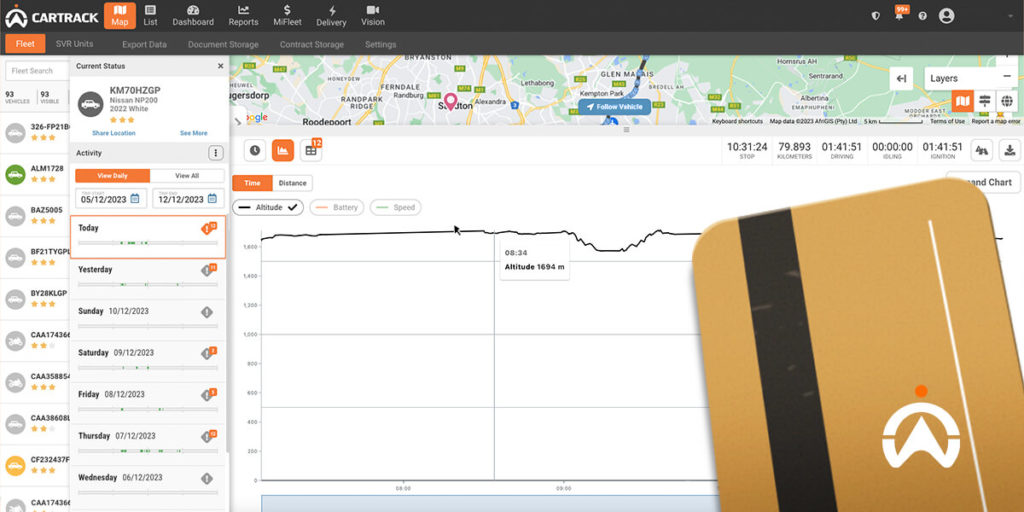
Here are some of the ways Cartrack's fleet management software and MiFleet can help you in your quest to take control of your fleet's fuel costs:

Easily monitor and manage your fuel card with Cartrack Mozambique's MiFleet system

MiFleet is a cost management system that monitors all your fleet's administration and running costs, including toll fees, maintenance costs and all fuel spending.

When it comes to fuel card monitoring, MiFleet can analyse fuel card transactions and automatically cross-check them against your vehicle's telemetry data to quickly identify which driver stopped to refuel, for which vehicle, and at what time and place.

Simply by importing your fuel card transactions into the MiFleet system, our MiFleet AI system automatically tracks all fuel card usage and presents the information in an easy-to-understand format on the MiFleet digital platform, making your fuel data easier to manage.

Easily manage your fuel cards and overall fuel costs with Cartrack Mozambique

with MiFleet you can:

Monitor fuel consumption:

Get insight into fuel consumption rates per km, current fuel levels and fuel-wasting events such as abnormal idling, speeding and more during a trip, allowing you to identify areas for better fuel efficiency.

Detect fuel theft:

In cases of possible fuel card fraud, MiFleet automatically identifies potential fuel-related risks by comparing fuel receipts with the vehicle's location and fuel status. If something is flagged, it notifies fleet managers so they can start investigating and put a stop to wasted fuel costs.

Generate informative reports:

Paired with our fleet management system, you get access to detailed reports such as fuel usage and risk analysis. These reports let you validate, verify and analyse fuel cost data, identify trends and make informed decisions to optimise your fleet's fuel card management.

Why you'll love MiFleet:

  • MiFleet automatically detects fuel theft, saving thousands every month
  • Less time spent on manual admin
  • Easily detects fuel cost leaks and prevents human error
  • Greater trust and accountability for drivers

Fuel your fleet with efficient cost management

If you are looking for a way to improve your fleet's fuel efficiency and save money on fuel costs, Cartrack Mozambique's fuel management solutions are a great option.

Join more than 110.000 businesses and trust Cartrack Mozambique with your fleet and your fuel. Get started today with Cartrack.