10 reasons why you are failing at fuel management in your fleet

Great fleet owners understand that fuel management goes beyond cutting fuel budgets or leaving fuel expenses to employees. Instead, they adopt advanced fuel management to future-proof their business and achieve long-term success.

Controlling your fleet's fuel costs requires fuel monitoring standards, the right fuel monitoring system, data-driven decisions and sustainable practices.

If you think you have done your best at fuel management, here are 10 reasons why you may not have mastered fuel management and efficiency yet.

In this article, you will:

  • Learn why companies care about fuel management
  • Discover the 10 reasons why companies are failing at fuel management
  • Get possible solutions to these fuel management challenges
  • Explore Cartrack's Fleet Management System and fuel monitoring solutions
  • Get answers to the most frequently asked questions about fuel and fleet management

10 reasons why you are failing at fuel management in your fleet

As your company grows, your fleet's operating expenses, such as fuel, are likely to increase with it, but that does not automatically result in growing profits.

If your fleet is still reporting excessively high fuel costs that choke profits, there may be other factors affecting your fleet's fuel management that you need to pay attention to.

1. Outdated vehicles

It is not so much old cars versus new cars, but ongoing vehicle price inflation has made it harder for ordinary South Africans and companies to buy new vehicles or replace their older, outdated ones. Unfortunately, your outdated vehicles may also be the weak point in your fuel management efforts.

  • Lower fuel efficiency: cars become less fuel-efficient as they age, which means you may not get as much mileage from your fill-up and therefore need to refuel more often.
  • Greater maintenance needs: wear and tear over the years also increases your vehicle's maintenance needs, sometimes including the frequency of fuel system problems.

Alternative solutions: transition your fleet

Older built-in technology can make it difficult to track fuel use. For example, not all vehicles have CANBus technology, which provides more accurate insights into fuel consumption.

However, the solution to this weakness is not as simple as replacing your fleet with the latest vehicle models. Fuel prices are still a major concern for companies, and fleets that are planning the transition to alternative fuels in the next 12 months need to be more strategic to future-proof their business. Consider joining the growing number of fleets accelerating their transition to EV and slowly replacing outdated vehicles with more economical ones.

2. Lack of driver training on fuel efficiency

Unnecessary speeding, harsh braking and excessive idling are fuel-inefficient practices that you may be overlooking in your fuel management efforts. An untrained driver is less likely to be aware of how these driving behaviours affect fuel efficiency, so while you try to reduce your fleet's fuel costs, these poor driving techniques and habits increase your fleet's fuel use, causing:

  • Increased fuel costs: inefficient driving leads to higher fuel consumption per kilometre, directly increasing the fleet's fuel expenses and making fuel costs harder to control.
  • Greater risk of fraud and misuse: drivers who are not properly trained, are poorly disciplined or are uninformed about your fleet's standard operating procedures (SOPs) can easily misuse your vehicles, causing an increase in fuel consumption and costs.

Cartrack solution: Fuel efficiency report

Do you know how many litres are consumed per kilometre in your vehicle? (This also changes as your vehicle ages). Abnormal fuel efficiency can indicate fuel theft, high idling or bad driving habits. Do you know how to calculate the efficiency of each of your vehicles?

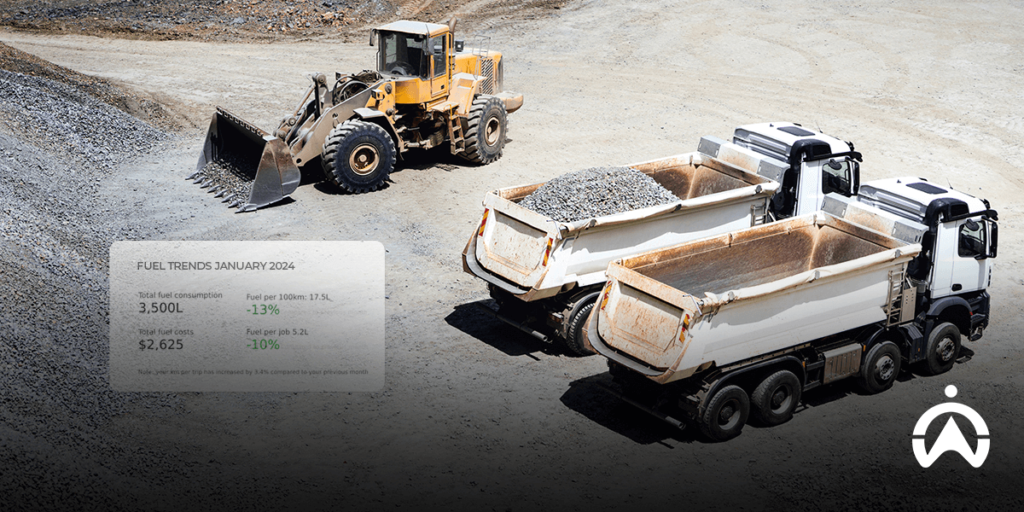
Our fuel efficiency report was created to help you detect fuel inefficiency in your fleet and introduce measures to reduce your fleet's fuel consumption, especially from untrained fleet drivers, who significantly impact your fleet's fuel management and undo all your efforts to reduce your fleet's fuel consumption and costs.
3. Short trips (stop-start)

Frequent stopping and starting on short trips causes poor fuel economy in your fleet. When you start your vehicle, it generally requires more fuel than when it runs at a constant speed. According to the AA, trips of two kilometres or less use more fuel than longer trips and, depending on the size of your vehicle, short trips can cost you more fuel unnecessarily.

As well as increasing fuel costs and reducing your fleet's fuel efficiency, short trips may be causing your fuel management problems because short trips are:

  • Difficult to monitor: Without telematics, fuel monitoring hardware or a fuel management system
  • More susceptible to fuel theft and fraud: as it is difficult to monitor or obtain detailed fuel use data for vehicles frequently used for short trips, the risk of fuel fraud and theft increases.

Telematics Cartrack solution: live GPS tracking and fleet visibility

GPS helps make a fuel management system more accurate. By tracking your vehicle’s location and movement activity, you can mitigate the risk of fuel theft on short trips by comparing your fleet’s fuel consumption with the vehicle’s mileage and activity.

Cartrack’s route optimisation generates the best order in which to complete tasks and deliveries, helping you get from point A to B and, finally, to point C more efficiently by generating your route sequence. This software feature is a smarter way to combine several planned short trips into one longer journey and reduce the number of damaging stop-start trips.

With route optimisation, you can order deliveries and service tasks instantly instead of manually planning your route and job order, which is usually less fuel-efficient.

4. Carrying unnecessary weight

There is a relationship between weight and fuel economy, and you will have to pay attention to it when managing your fleet. One extra kg of weight can make the engine work harder and use more fuel when accelerating and braking.

Besides lowering your fleet’s fuel efficiency and increasing your fuel costs, carrying unnecessary weight in your fleet can surprisingly cause:

  • Accelerated wear and tear: Excessive or frequent additional weight overloads your vehicle. Over time, this increases wear and tear on your vehicle and the risk of mechanical problems.
  • Safety risks: Additional weight makes your vehicle harder for your drivers to handle and compromises the vehicle’s safety.

Cartrack can lighten your load

Although the solution seems simple, the less your vehicle weighs, the less fuel it will use. Drivers can avoid carrying unnecessary items or extra people during trips. But the truth is that it is not only your driver’s additional items (or people) in the truck that may be slowing your vehicle down or causing fuel management problems. Have you assigned the right vehicle to the task?

Paying attention to the capacity of your fleet vehicle helps ensure that your fuel tank is not being drained by unnecessary weight. Cartrack’s Delivery makes sure you assign the right vehicle to your drivers for the job and tasks, automatically notifying you when the job may require a larger capacity.

5. Weather conditions

It may be hard to believe, but weather conditions affect your fleet’s fuel. This is mainly because of how the weather affects your vehicle and driver behaviour. For example, drivers may use the air conditioning often on hot summer days, which reduces fuel economy by 25%! If you think cutting out the air conditioning would work, think again! Driving with the windows open has also been shown to affect the vehicle’s aerodynamic drag and increase the need for more fuel.

Colder temperatures also cause higher fuel consumption and difficult driving conditions that force your vehicle’s engine to work harder. Weather conditions affect your fleet in two ways:

  • Hard to mitigate: the weather affects the performance of drivers and vehicles, and fleet managers may find it challenging to mitigate these effects. How weather conditions affect fuel consumption and activity is often overlooked.
  • Not just the temperature: wind conditions and rainy weather can also affect your fleet’s fuel efficiency.

Cartrack solution: Be strategic about the weather

The weather is not something you can avoid or dodge, so it is up to you to create fuel management strategies that take weather conditions into account. For example, encourage your drivers not to leave the vehicle idling to warm up and, instead, to drive gently for a few minutes to warm the engine. Alternatively, as mentioned earlier, you can avoid shorter trips on cold days because the vehicle’s engine may take longer to reach the right temperature.

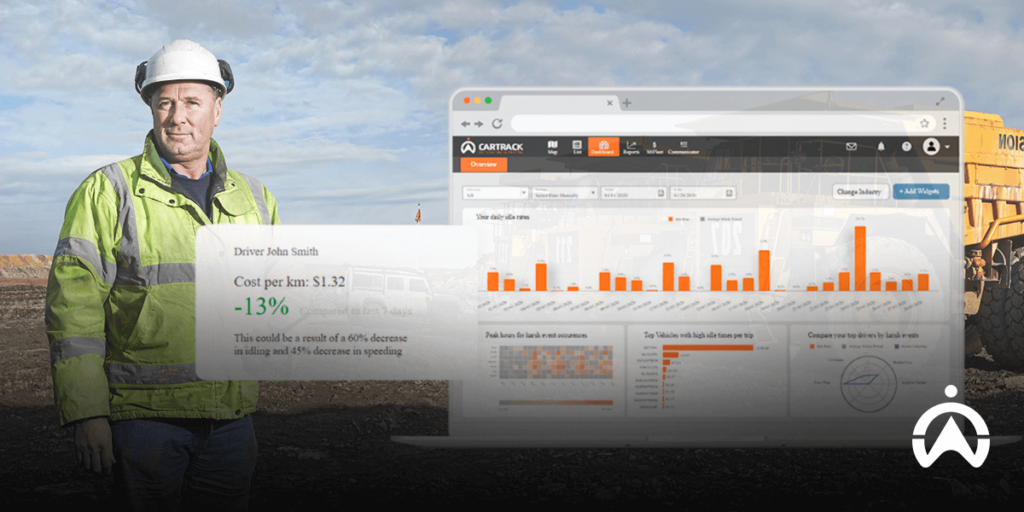
Track vehicle activity and idling through Cartrack FleetWeb. Here, you can customise alerts for idling vehicles or download an idling report for an overview of how often a vehicle idles. By knowing which of your vehicles and drivers are idling, you can quickly address this fuel-inefficient behaviour.

6. Bad driving habits

Some driving habits simply waste your fleet’s fuel, so if you want to save fuel, start by changing and training your drivers to avoid bad driving habits such as speeding, idling and aggressive driving, like harsh braking or acceleration.

Bad driving habits not only reduce your fleet’s fuel efficiency but also put your drivers and vehicles at risk. These common habits cause:

  • Higher total consumption: it is estimated that the cost of bad driving behaviour is a 15-30% drop in fuel efficiency on the highway and 10-40% in stop-and-go traffic.
  • Higher maintenance and repair costs: reckless driving accelerates wear and tear on your vehicles and can also result in accidents and damage that are expensive to replace or repair.

Cartrack solution: Driver monitoring

You can mitigate bad driving habits by monitoring your drivers, identifying these habits and training them to help them improve. Cartrack’s driver monitoring solutions provide insights into your driver’s performance on every trip, which helps you create driver-specific training and coaching.

With Cartrack’s driver scorecards, you can score how often drivers take high-risk actions such as speeding, harsh braking and sharp cornering, and create custom alerts for bad fuel-wasting habits so that you are notified if your drivers break the rules.

7. Fuel fraud/theft

Fuel fraud and theft have been a fast-growing problem in South Africa, and more companies are investing in identifying fuel fraud. Without the right fuel monitoring tools, your fuel management efforts can be quietly undone by internal fraud involving employees and fleet staff.

There are a few ways fleet staff may be defrauding your fleet, including claiming for fuel that was never put into your vehicles, siphoning fuel from your vehicle’s tank or engaging in other fuel card fraud. What methods are you using to identify fuel theft in your fleet? Even with fuel cards to monitor your fleet staff’s refuelling expenses, there may still be fuel fraud or theft in your company, causing:

  • Unnecessary cost to the company: failing to monitor and control fuel expenses results in excessive costs to the company that could be avoided.
  • Operational disruption: siphoning and incorrect fuelling can cause costly vehicle downtime and affect your fleet’s productivity.

Cartrack solution: advanced fuel monitoring

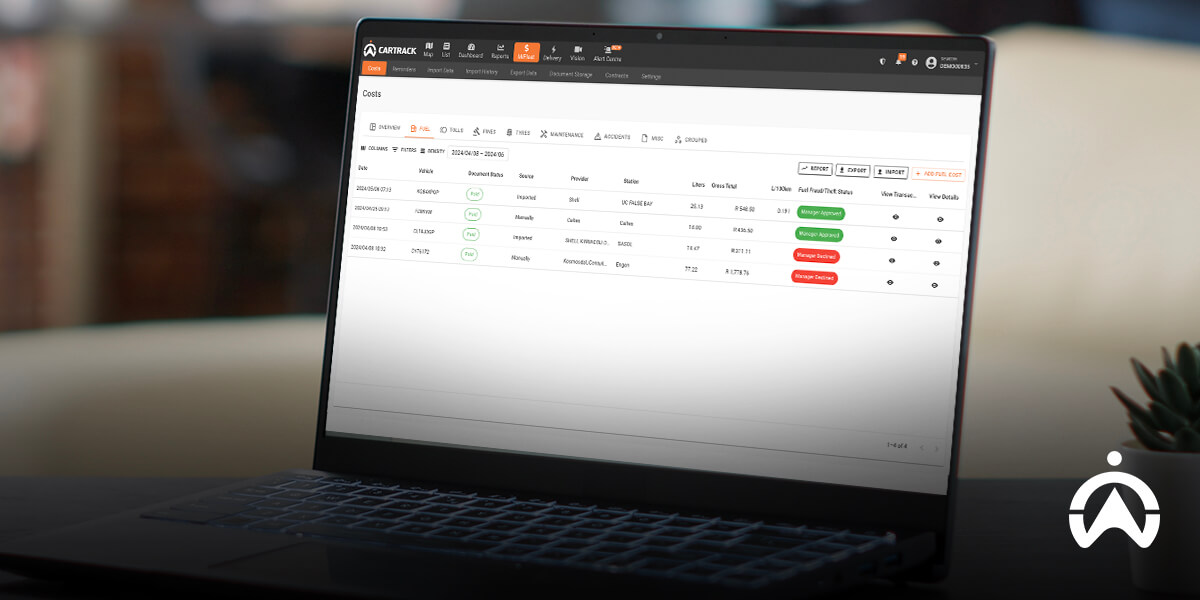
Fuel fraud and theft can cost your business a great deal, but without the right fuel monitoring system, it is very easy for you to miss suspicious activity. Cartrack’s FleetWeb with MiFleet makes it easier to monitor fuel theft by sending a notification when there is a spike in fuel consumption and fuel payments that do not line up with your vehicle’s mileage.

8. Misuse of fleet vehicles and machinery

Driver detours, unauthorised activities or the misuse of company vehicles and machinery can significantly impact your fleet’s fuel management in several ways, causing serious financial losses. For example, if one of your employees moves your construction equipment to complete personal projects at a different site but leaves the fuel costs to you, the misuse will be expensive for you.

Alternatively, your drivers and fleet staff can drain your fuel budget by using vehicles for personal purposes, which results in excessive fuel consumption and high costs. These kinds of unnecessary expenses are holding back your progress in fuel management.

Cartrack solution: Geofence and DID

Cartrack Live’s GPS tracking and driver identification tools improve your fleet’s fuel management by ensuring that your company’s vehicles and equipment are not used for personal projects at your expense. Now, you can verify fuel claims, machine and vehicle working hours and other factors by validating where transactions or activities took place and which of your fleet employees were responsible.

9. Poor vehicle/machinery maintenance

Every vehicle and machine requires specific attention to prolong your fleet’s fuel economy and efficiency. Neglecting maintenance and service tasks, such as oil changes, air filter replacements and other engine and tyre checks, lowers your fleet’s fuel efficiency.

When you manage several vehicles and machines of different ages, performance capabilities and locations, it is hard to keep track of and organise maintenance and service tasks for each of your fleets. Neglecting some important maintenance needs in your fleet sets back your fuel management efforts over time, causing:

  • Increased fuel consumption: Whether it is engine trouble or problems with the fuel system in general, faulty vehicles in your fleet lead to higher fuel use.
  • Lower fuel efficiency: Neglecting maintenance tasks will affect your fleet’s fuel efficiency, making it harder for your vehicles to perform over time.

Cartrack solution: Service reminders and preventative maintenance

Cartrack makes it easy to set up customisable reminders to help you keep track of your vehicle’s maintenance and service needs. This is one of the many useful tools for improving your fleet’s fuel management. Beyond reminders, Cartrack’s FleetWeb platform helps you be proactive about maintenance. Use historical vehicle maintenance and service information in Cartrack’s FleetWeb to predict and plan the maintenance activities your vehicle needs over time.

10. Lack of a modern fleet management system or fuel monitoring system

Your fleet and fuel management systems should be equipped with more modern technologies, such as GPS and telematics for real-time tracking and communication.

Even if you think your fuel management strategy is the best, any lack of real-time tracking capabilities makes it harder for you to identify the problems affecting your fleet’s fuel.

Using the right fuel monitoring tools and hardware for the problem you want to solve is also important. If you have invested in fuel sensors but continue to struggle with your fleet’s fuel consumption or with insights into the fleet’s fuel use, then it is possible that your fleet’s fuel problems are due to something else. Without the right fuel monitoring system, it is hard to:

  • Gain visibility of fuel use: Without the right system, managing and controlling the fuel consumption of your entire fleet becomes harder, making it easier for fuel theft or misuse to happen right under your nose.
  • Optimise your fleet’s fuel use: Fuel monitoring helps you identify your fleet’s fuel use and provides insights into how to adjust to delivery schedules and minimise fuel inefficiencies.

Cartrack solution: Advanced fuel management

Upgrading your fleet’s fuel management system is the most effective way to monitor your fuel consumption and expenses closely. Our fuel management system helps you identify and address every fleet behaviour that affects your fuel use and provides data-driven insights so that you can make decisions quickly.
Why care about your business’s fuel management?

Whether you have a small-scale fleet of 5 vehicles or a larger fleet with more than 500 vehicles and specialised machinery, neglecting your business’s fuel management can be costly for your business and its future.

If you have not yet introduced controls for better fuel management, here are five reasons why you should care about your business’s fuel management.

1. High fuel prices and fleet budgets

Fuel prices in South Africa are adjusted frequently and are affected by several factors. Not paying attention to your fleet’s fuel consumption also means inaccurate budgeting. Without a well-structured budget and accurate fuel management, it is hard for you to allocate costs properly and account for other expenses for your vehicles. A fuel tracking system is one of the most effective ways to track and manage your fuel costs.

2. Manual fuel cost accounting

When you are analysing and managing diverse vehicle fleets, including low-powered engine machinery, that may be located across the country and even beyond the border, using manual methods for fuel cost accounting is impractical. Besides, there are many automation tools, such as fuel cards and fuel monitoring systems, that provide more accurate fuel cost accounting.

3. Missing fuel fraud, theft and other risks

Without proper fuel management, you may be missing or overlooking fraudulent fuel activities that drain your fleet. Fraud risks such as fuel theft, misuse and fuel card fraud can be avoided with the right fuel monitoring measures.

4. Lack of visibility of vehicle use

Because of a lack of fleet visibility, vehicle misuse and abuse by drivers and other employees can easily go unnoticed. Fuel management helps detect this misuse and ensures that the costs of this kind of activity do not fall on you.

5. Environmental impact of running your fleet

Customers increasingly prefer more sustainable initiatives from companies. Sustainable fleet transformation usually requires companies to buy new low-emission vehicles or electric vehicles, but getting ahead with your fuel management is one of the most effective ways to improve your fleet’s environmental impact.

Master fuel management with Cartrack

Cartrack’s fleet management system is equipped with everything you need for effective fuel management and the success of your fleet. You have the complete guide to fleet management systems. Are you ready to start using Cartrack?

Get in touch with us for a demo.

Useful frequently asked questions about fuel management

  1. What are the difficulties in fleet management?
    Fuel management is often cited as one of the toughest challenges for fleets. This is because fuel prices fluctuate constantly and, with every fuel price increase, bad driving habit and other fleet inefficiency, there is a direct cost to the company.
  2. What is the biggest problem a fleet company faces?
    Managing high costs is a major challenge for fleet management because it affects your company’s ability to compete in the market. For example, if your delivery company is forced to raise the cost of its service to customers, this may push them to find a cheaper delivery company.
  3. How can I improve my fleet management?
    An advanced fleet management system with other integrated technologies, such as GPS tracking, cost management software, fuel management software, fleet reporting tools and task and delivery management tools, can help you improve your fleet management.
  4. How do you manage fuel for the fleet?
    This quick step-by-step guide is a starting point for fuel management, but here is a more detailed guide:
    Step 1: gain complete fleet visibility with GPS tracking.

    Step 2: Use fuel monitoring systems to monitor and analyse fuel use.

    Step 3: Use route planning and optimisation.

    Step 4: Use fleet cards to manage refuelling.

    Step 5: Maintain your fleet regularly.

Get a quick demo of our fuel management system here.
What you need to know about car insurance and tracking

As a Mozambican driver, you never know when your vehicle might be stolen, be involved in an accident or be damaged by changes in the weather. None of these events is under your control, but they can greatly affect the safety of your vehicle and your wallet.

Car insurance starts with your needs. What type of vehicle cover do you want, and which package can you afford?

There are two types of car insurance on the market: third-party, fire and theft insurance and comprehensive cover.

  • Third-party, fire and theft: This is the most affordable option, which ensures that any object you collide with in an accident will be repaired, but the downside is that your own vehicle will not be repaired or paid for. You will only be paid out if your vehicle is stolen or catches fire. 
  • Comprehensive cover: This is the cover most drivers opt for, as it covers third-party liability as well as damage from accidents, vandalism, theft, natural disasters and much more. Only a few things are not covered, such as if the insured driver was drunk or under the influence of drugs during the accident, if the driver did not have a driving licence or if the vehicle was not roadworthy.

To understand your insurance premiums better, let's first look at the factors that affect them.

Vehicle insurance premiums and the factors that influence your rates

Everything that happens in our country, from crime rates to potholes, seems to affect your premiums. Let's see which factors influence how much you pay for vehicle insurance.

  1.  InflationA country's inflation rate influences more than your monthly food budget. It also affects how much you pay for your vehicle insurance. It is considered one of the biggest contributors to rising premium rates because inflation has an impact on the cost of vehicle repairs and replacement parts, resulting in higher claim payouts. To make up for this, insurers respond by raising their monthly premiums.
  2. ReinsuranceReinsurance is supposed to reduce the net liability for risks and protect against catastrophes arising from large or multiple losses. However, frequent claims due to accidents, higher payouts due to inflation and high-risk events such as riots, power grid failures and the recent summer hailstorms have contributed to higher premiums.
  3. Repair and replacement costsA shortage of vehicle parts drives up demand, which results in higher prices and insurance premiums. If the global supply chain is disrupted, there may be a drop in replacement parts and motor vehicle repairs. As a result, the prices of parts, labour and equipment have risen all over the world, resulting in higher insurance rates.
  4. Road conditionsAs a driver, I'm sure you have seen plenty of potholes scattered across many of South Africa's roads. Poor road maintenance affects the health of your vehicles, from damaging tyres to leaving scratches on the car or even cutting important wires. This leads drivers to take out additional cover for rims or tyres, because poor road conditions cause an increase in insurance claims.
  5. Car theftThe more vehicles are stolen or damaged in attempted hijackings, the more drivers file claims for their lost or damaged vehicles, which results in higher insurance premiums. In 2023, a total of 22.742 car thefts were reported. Imagine how much insurers paid out that year!

    Although this paints a bleak picture of ever-rising premiums, insurance companies still try to look on the bright side and give their customers the chance to reduce their monthly car insurance costs by installing a vehicle tracking device.

Vehicle insurance premiums and the factors that influence your rates

The relationship between vehicle trackers and insurance rates

Although installing a tracking unit in your vehicle is not the answer to all your vehicle insurance problems, it definitely helps and can even lower your monthly premiums significantly.

Vehicle tracking involves installing a GPS vehicle tracking unit in your cars so that you always know your vehicles' location in real time. With the help of telematics, you can also receive vehicle information such as your driving behaviour, your vehicle's odometer reading, any maintenance problems and how much fuel your vehicle uses per trip.

This tool is essential for individuals who want to keep an eye on their vehicle and increase the chances of it being found if it is stolen, as well as for businesses that want to follow their vehicles' movements, monitor fuel consumption, keep track of fleet maintenance and improve driver behaviour habits such as speeding, harsh braking and harsh cornering.

How does having a vehicle tracker influence your insurance premium?

Having a vehicle tracking device is often advisable, as it has a positive influence on your insurance premiums. Insurers tend to offer drivers lower premiums if they have a tracking unit.

Why?

  • Tracking devices can reduce the chances of vehicle theft or, if a theft does occur, can increase the chances of your vehicle being found and recovered, making these vehicles less risky to insure. Insurers will be less likely to have to pay out the full claim in the event of theft. 
  • Installing a tracking unit tells your insurer that you have done your part to protect your vehicle and that your vehicle's security is a priority.

Although having a tracking unit will not magically grant you free vehicle insurance or massive discounts, it can lower your premium significantly and make it more affordable.

The backup unit trend

A new trend in town has drivers going back to vehicle tracking companies asking for seconds. That's right, insurance brokers have started asking their customers to install an additional vehicle tracking unit in their vehicles as an extra measure of safety. Here's why.

Once a vehicle is stolen, most criminals get to work straight away, looking for the installed vehicle tracking unit to remove it or block its signal with a jammer, so that the authorities or vehicle tracking companies have trouble tracking the vehicle. With two trackers installed, the vehicle is more likely to be found.

While the criminals look for the first unit and try to remove it, the second gives the authorities a little time to lock on to the vehicle's location and, hopefully, recover it in one piece, increasing stolen vehicle recovery and having a positive impact on vehicle security.

Cartrack offers drivers a two-in-one solution

Cartrack Mozambique is your trusted partner in fleet management, vehicle tracking and insurance. Our reliable vehicle security solutions include all the essential features any driver needs to protect their vehicle:

  • Real-time vehicle tracking
  • CarWatch
  • Geofence
  • Protector
  • 24/7 control room support
  • Skilled ground and air recovery agents
  • Limited recovery warranty (T&Cs apply)

On top of our list of premium safety features, our industry-leading solutions extend to providing drivers with premium, comprehensive cover that can be tailored to their needs.

Cartrack offers drivers a two-in-one solution

Our Cartrack Insurance Agency is our independent financial brokerage that does all the insurance assessment for you. From the many insurers we partner with, we can provide up to 15 insurance quotes, from comprehensive insurance for serious incidents to third-party cover.

Make vehicle peace of mind your new normal with Cartrack Mozambique

Let Cartrack help you find the right insurer for your vehicle and your budget. Contact Cartrack now and we will provide 15 free insurance quotes for you to choose from.

Invest in reliable vehicle tracking and partner with a trusted insurer to increase your vehicle's security.

Our quick FAQs on how premiums and vehicle tracking work hand in hand

Still need answers to more questions about insurance and Cartrack? Don't worry – here are some popular questions about the relationship between car insurance and vehicle tracking units.

Q1. Why should I choose Cartrack for vehicle tracking instead of going through my insurer?

Well, there are three good answers to this question:

  1. What Cartrack offers that many insurance companies do not is the Cartrack Mozambique Limited Recovery Warranty. If we cannot find your stolen vehicle, the warranty offers a refund of up to R150.000 (T&Cs apply).
  2. If you file a claim with your insurer, it will have full access to your private vehicle's tracking trip data, which includes speeding, trip duration and so on, and may reject your claim based on what it finds.

Q2. I already have a tracking unit with another company, so why should I switch to Cartrack Mozambique?

  1. Cartrack has a very high stolen vehicle recovery rate, above 90%. This, together with our skilled air and ground recovery team, gives you the peace of mind of knowing that Cartrack will strive to recover your vehicle should it be stolen.
  2. Cartrack is voted the most trusted vehicle tracking company in Mozambique, with a score of 9,4, and is highly rated for security according to HelloPeter users.
  3. We have many premium vehicle security features, such as CarWatch, Geofence and Protector, which work 24 hours a day, 7 days a week, to keep your vehicle safe when parked or on the road.

If that is not enough, consider the low price of the safety that we offer from R99 per month, making sure we protect not just your vehicle but your budget too.

Q3. Does Cartrack offer only the 1388,00 per month package?

No, our 1338,00 per month package is the lowest price for premium security that we offer; that makes it one of the popular options for you to choose from. Your package can change according to the features you want to include for your vehicle's security, for example CarWatch.

Q4. What benefits can I get from Cartrack that I cannot get from my insurer?

With Cartrack, you not only get many features to protect your vehicle day to day, but also keep control of and privacy over your vehicle's tracking data. Our advanced technology, 24-hour control room and dedicated recovery teams ensure a rapid response whenever you report your vehicle stolen. With our audited stolen vehicle recovery rate of over 90%, you will have peace of mind about your vehicle's security.

Q5. How much do Cartrack's insurance services cost?

Cartrack's insurance services are free for customers. Even if you do not subscribe to our vehicle tracking unit, you can still contact us for a free insurance quote that suits your needs and lifestyle.

Cartrack is dedicated to providing drivers with the services they need, from tracking solutions to insurance. Don't leave your vehicle's security to chance, get in touch today with Cartrack

Why aggressive and careless driving will slowly destroy your fuel economy

The ultimate survival skill in the South African economy is business know-how, especially in the fleet business with fuel prices rising. One of the hidden culprits of fuel wastage is aggressive and careless driving and, if you leave it unchecked, it will slowly destroy your business's fuel economy.

What if I told you that your driving “style” is crucial to how often you need to refuel? Let's look at what you can do to improve your fleet's fuel economy.

In this article, you will:

  • Learn about fuel economy
  • Dig into which driving habits increase fuel consumption
  • Get tips on how to improve your driving habits
  • Discover how careless driving affects the environment
  • Discover how the solutions from Cartrack Mozambique help combat declining fuel economy

What is fuel economy?

Fuel economy refers to the distance a vehicle can travel on a given volume of fuel and is measured in litres of fuel per 100 km. The more kilometres you can travel per litre, the better your vehicle's fuel economy. Some of the most important components to consider in terms of fuel consumption and economy are driver behaviour and whether the vehicle is well maintained. There is nothing like sudden acceleration and faulty or worn parts to kick off a bonanza of excessive fuel consumption that can cost you a fortune.

What can be classed as careless/aggressive driving?

Any driving behaviour will naturally affect your vehicle's longevity and result in expenses, but what makes careless driving different is the amount of fuel it wastes and the increased damage it can cause in a shorter space of time – not to mention the concerns about safety. To avoid careless or aggressive driving, you first need to know what these behaviours are, so let's take a look:

  • Sudden or harsh braking: Harsh braking can make vehicles use up to 30% more fuel. How? The vehicle's transmission shifts to a lower gear to regain the lost momentum, which uses more fuel.
  • Excessive idling: Leaving the engine running while the vehicle is stationary for just one minute can use up to 21,1g of fuel for a heavy vehicle; these are the results of a study carried out by the Transport Research Laboratory. Idling when it is not necessary can also cause greater wear and tear over time.
  • Rapid acceleration: Accelerating the vehicle from a lower speed to a higher speed in a short space of time requires more energy than steady acceleration, leading to rapid drops in fuel levels instead of your fuel being used economically.
  • Revving the engine: Drivers tend to warm up the car in colder weather by revving the engine. As the vehicle is not moving towards a destination, the fuel used to rev the engine is wasted and can add up to significant expense over time.
  • Driving with a heavy load: Sometimes we tend to put more things in our vehicles to limit our trips, whether it is cargo for dispatch or luggage when we are on our way to a well-earned holiday. Overloaded vehicles not only become notable fuel guzzlers, they also pose risks to safety on the road, as the driver will find it harder to apply the emergency brake and the load is more likely to fall off in transit.

In addition, overloading a vehicle reduces tyre pressure, making the tyres run hotter. This leads to higher fuel costs, as under-inflated tyres can reduce fuel economy.

  • Ignoring maintenance warning signs: Ignoring the vital signs on the dashboard, such as the oil light, will make the engine work harder for lack of lubrication. This will result in higher fuel consumption, which will require you to fork out more money for fuel costs.

Poor driver behaviour is bad for your business. It increases fuel costs, poses a danger to other drivers and potentially increases fleet downtime through more accidents, maintenance and repairs.

What can be classed as careless/aggressive driving?

How does careless driving damage your vehicle and shorten its lifespan?

As we all know, you get the most value from your fleet when vehicle longevity is increasing. Careless driving increases wear and tear on crucial vehicle components such as the engine, transmission, brakes and suspension. Regular maintenance alone is not enough to keep a vehicle running perfectly. Vehicles will need more replacements as aggressive driving continues.

Why do people drive aggressively?

We need to remember that fleet drivers are human. Every job has its pressure, and drivers face the pressure of making deliveries on time while driving in traffic. That is why fleet managers should plan less time-consuming routes so that delivery deadlines can be met easily.

The impact of aggressive driving on the environment

I'm sure you have said before that “the weather” never used to be like this. According to the International Energy Agency (IEA), road transport is responsible for 15% of global carbon emissions. Burning fossil fuels such as petrol and diesel releases carbon dioxide into the atmosphere. Carbon dioxide (CO2) and other greenhouse gases, such as methane, are warming the Earth's atmosphere, causing the climate change we have already begun to see.

Net zero emissions

Net zero means balancing the amount of greenhouse gases we emit with the amount we remove. According to United Nations Climate Action, the Earth is currently 1,1°C warmer than it was in 1800, and we need to keep it to no more than 1,5°C. To achieve this goal, global net CO2 emissions need to reach net zero by 2050, while emissions need to be cut by 45% by 2030.

As we now know, aggressive driving burns fuel faster and is one of the main contributors to harmful emissions. Bad driving habits will not only drain your fuel, they will also have a devastating effect on our climate.

Healthy driving for better fuel economy

As they say, “old habits die hard”, but it gets easier when you understand the benefits of these changes for your fleet's fuel economy. Here are the simple changes you can introduce into your daily trips:

  • Keep a safe distance in traffic A safe distance during traffic congestion helps avoid sudden braking and acceleration. You will also learn the flow of the traffic and improve your hazard anticipation.
  • Regular vehicle maintenance
    With a detailed vehicle maintenance plan, fleet managers can avoid possible breakdowns in the long term and save fuel. For example, by using the type of engine oil recommended by the manufacturer, your mileage can be improved by 1% – 2%.
  • Choose the most efficient route
    A well-planned trip means travelling effortlessly, possibly with less traffic, less idling and less time spent on the road. Many fleet managers use fleet software to avoid unnecessary kilometres, which also helps prevent road rage incidents that trigger aggressive driving.
  • Maintain a constant speed
    Driving above the legal speed limit can cause accidents, wear out tyres and waste fuel. Drivers should accelerate slowly and maintain a constant speed to help minimise fuel consumption.
  • Avoid excessive revvingAfter starting the vehicle, move off immediately rather than revving to “warm up” the engine. Even while driving, unnecessary revving wastes a lot of fuel and increases wear on the brake pads and the engine, which means more expenses in the long run.
  • Check your tyre pressure
    Low tyre pressure causes too much of the tyre to touch the ground, creating friction and increasing rolling resistance, which makes the engine work harder. Drivers should keep their tyres properly inflated and maintain the correct tyre pressure. Remember that nothing lasts forever, so you should know when to replace your tyres.
  • Manual drivers – use your gears wiselyDrivers should stay in the highest possible gear for most trips. Shifting up one gear at a time more quickly results in more fuel being wasted. Also, on descents, it is always advisable to shift to a lower gear.
  • Get a fleet management system to help you monitor driver behaviour and fuel consumption.
    Last but not least, get a fleet management system that will help you plan every route, see everything your drivers do, monitor the transactions on your fuel card and help you schedule maintenance for your vehicles. A solid fleet management system will give you insight into every aspect of your fleet so that you can make better-informed decisions and coach drivers where necessary.

Healthy driving for better fuel economy

The best fleet management platform for your fuel economy – Cartrack Mozambique

See how Cartrack Mozambique can help you save fuel, costs, lives and the planet. We have a fleet management system with features that let you keep track of fuel costs and driver behaviour.

  1. Advanced Driver Assistance Systems (ADAS)Using camera-based sensors, smart algorithms and artificial intelligence (AI), ADAS helps drivers keep a safe following distance by monitoring the distance between vehicles. This loud tone will be useful when the aim is to avoid harsh braking and accidents.
  2. Fuel MonitoringUsing Cartrack Mozambique's fuel monitoring tool, you can monitor your fleet's fuel levels and see when sudden changes in fuel consumption occur. By combining fuel monitoring with MiFleet's fuel validation, the fuel fraud/theft detection system and driver scorecards, you will be able to identify whether the cause is harsh driving, fuel theft or fraud.
  3. AI LiveVisionWith Cartrack Mozambique's AI LiveVision cameras, you get 24-hour access to your fleet. Drivers will also receive real-time audible alerts whenever distracted driving is detected, such as mobile phone use and fatigue. The cameras also detect speeding, harsh cornering and harsh braking. 
  4. Driver scorecardsGet an overview of each of your drivers' behaviour with Cartrack Mozambique's driver reports and scorecards. This will help you identify specific areas for improvement and offer training to sharpen their skills and build safer, more fuel-efficient driving habits.

Introduce a culture of conscious driving with Cartrack Mozambique solutions

The innovative solutions from Cartrack Mozambique help you put money back in your pocket to sustain your fleet and optimise your operations the way you need.

Contact us today and make bad driving habits a thing of the past.

This is how fleet management can ensure a successful agro-processing business

Did you know that the agro-processing industry is about more than just farming?

It is the entire life cycle of a final product, from sourcing raw materials to manufacturing and getting it onto the shelves.

Sounds complicated, right? But with the right solution in place, it doesn't have to be. That solution is a fleet management system, which helps you streamline every operation and achieve maximum efficiency.

In this article, you will:

  • Learn what agro-processing is
  • Discover the link between agro-processing and supply chain management
  • Dig into the challenges faced in agro-processing
  • Explore how fleet management can help you solve these challenges
  • Find out how Cartrack's solutions are the key to maximum efficiency in agricultural processing

Let's define agro-processing

Agro-processing covers all the activities carried out to turn a product made from raw materials sourced from agriculture, forestry or marine life into a usable final product.

With an abundance of raw materials, South Africa is fertile ground for a successful agro-processing business with global impact. In 2020, agro-processed products accounted for around 11% of South Africa's exports, with global demand and the industry's competitiveness making the country a globally competitive exporter. With output estimated at 240 billion rand a year, agro-processing is considered the country's second most important industrial sector based on its gross value added.

As fantastic as that sounds, it doesn't mean agro-processing is free of challenges. Let's find out what they are.

What are the challenges faced in agro-processing

South Africa's agricultural processing industry is designed to meet global needs, which means the challenges it faces are greater. Let's take a look at them:

  1. Storing raw materials

    As agro-processing is the entire production process, storing the raw materials used to make the final products is important to the success of the operation. Unfortunately, it can be a major challenge that affects efficiency, productivity and the quality of the products supplied.

  2. Keeping temperature-sensitive products fresh

    To keep your products fresh during the production process, cold storage facilities need to be used at every stage, including storage and transport. With the slightest change in temperature, the quality and freshness of these products can be compromised. These products include:

    – Medical products: From medicine components to insulin and medical devices, medical products need to be protected from heat or cold.

    – Meat: Meat is susceptible to bacterial growth, making it essential to keep it refrigerated at every stage of the production process, from the abattoir to processing and transport.

    – Fruit: From harvesting to the packaging process, fruit needs to be kept fresh, as this prevents it from losing its nutritional value and spoiling.

  3. High production costs:

    Because agro-processing is complex, it has many stages that drain costs. These include:

    – Storage of raw materials: Keeping raw materials stored according to their individual needs ensures freshness and quality. However, meeting this need at every stage of agro-processing can be both challenging and costly.

    – Manufacturing final goods from raw materials: Manufacturing processes are very complex, which makes it important to keep the processes efficient, safe and cost-effective.

    – Packaging of goods: Packaging goods can be quite expensive, as the process and the materials need to be specific to the product. For example, the containers used to keep ice cream frozen are not the same as the containers used to package cold drinks.

    – Delivering goods to wholesalers, retailers and restaurants: The final stage of processing is sending the goods to the places where they will be sold. These deliveries can be complex, as routes need to be optimised, drivers need to be trained and trailers need to be prepared for temperature-sensitive goods.

    All these challenges and duties sound rather familiar, right? That would be correct, because they are closely linked to your supply chain management.

What are the challenges faced in agro-processing

Unpacking the link between agro-processing and supply chain management

The supply chain management process is the handling of the entire flow of goods and services. This process starts with the raw components needed to manufacture a good, right through to delivering the final product to sellers. Let's explore these stages in more detail:

  • Planning:

    Knowledge is power and, when you are in supply chain management, it is important for ensuring product availability. At this stage, supply chains need to establish customer demand for the products they will supply, because this helps them know exactly how much of a given product they need to order.

    Take John, for example, who runs a frozen fruit business. Before he starts planning how he will package his products or where he will sell them, he needs to establish the demand for his product. With this information, he can budget effectively, keep his stock balanced and make sure customer needs are always met.

  • Sourcing:

    Also known as procurement, this stage involves finding and buying the materials or ingredients needed to meet customer demand. At this stage, companies must find suppliers, make sure the products purchased meet the company's standards, negotiate the price (who doesn't love a cost saving, right?) and obtain the right quantity of the product or material needed for production.

    Let's go back to John. At this stage of the supply chain, John needs to place orders for fresh fruit based on the customer demand he identified during the planning phase. With this information, he can make sure he orders the right amount of fruit, so that he won't lose money through overstocked products spoiling.

  • Production:

    At this stage, your raw materials are turned into finished products using specialised equipment. This stage involves using information on the total number of products that need to be produced to create finished products that meet customer needs.

    Let's look at John's frozen goods business. At this stage of the supply chain, John takes the fruit he bought and puts it through a quick-freezing process carried out in specialised machinery. His decision on how many packs he needs to produce is based on the numbers he recorded during the “planning” phase.

  • Distribution:

    Now that the products have been manufactured, it is time for them to move to where they will be sold. This can include supermarkets, workshops, convenience stores and even customers who want to buy directly from the company.

    For John, this stage involves using cold chain logistics solutions to transport his frozen fruit from the factory or warehouse to the various places where it will be sold.

Making agricultural processing easier with a fleet management system

Whether it's two hundred or two hundred vehicles, fleet management helps businesses stay safe, profitable and efficient, making it important to a fleet's overall success. A fleet management system simplifies the whole process, making it possible to keep your fleet running at its best from the comfort of your laptop, computer, tablet or mobile phone.

The top three benefits of a fleet management system for your agro-processing business

The beauty of a fleet management system is that it can be tailored to the individual needs of any sector. Let's look at the three big benefits a fleet management system can bring to your agro-processing business:

  1. Better vehicle and cargo visibility

    Whether you are in the business of supplying raw materials to different businesses or delivering your final products to shops, tracking your vehicles is crucial to the efficiency and safety of your agro-processing operation. With access to real-time location updates, you can locate goods quickly, determine their ETAs, spot delays instantly and improve the safety of your vehicle and cargo.

  2. Your products stay fresher for longer

    Whether it's fresh fruit or cold meats, your temperature-sensitive products need to be kept fresh during delivery. A fleet management system gives you access to real-time temperature monitoring that helps detect sudden spikes or drops in temperature. This ensures you can deal with these fluctuations quickly, before they damage your stock.

  3. Improving driver behaviour and cargo safety

    Everyone behind the wheel of a fleet vehicle needs to drive responsibly. A fleet management system makes it simple to monitor your drivers' behaviour, helping you quickly identify areas for improvement that could harm the way the business functions, and keeping your drivers safe at all times. When it comes to agro-processing, improving driver behaviour helps ensure cargo is transported safely so that your goods reach their destination intact.

    Do these benefits sound like something you'd like to unlock for your business? Then we have the key: it's the fleet management solutions from Cartrack Mozambique.

The top three benefits of a fleet management system for your agro-processing business

Trust Cartrack Mozambique's fleet management solutions to boost your agro-processing operations

Cartrack Mozambique is an industry leader when it comes to fleet management, so who better to trust to optimise your agro-processing operations. Let's look at some of our next-level solutions:

  1. GPS tracking:

    Receive real-time updates on the location of your vehicles and equipment with GPS tracking from Cartrack Mozambique. Powered by GPS technology, this solution helps you pinpoint exactly where a specific vehicle or piece of heavy machinery is at the simple touch of a button or screen. If your vehicle is hijacked or stolen, our highly skilled recovery team uses this device to pinpoint your vehicle's location for a fast recovery. With a stolen vehicle recovery rate above 90%, your vehicles are in the safest hands.

  2. Geofencing:

    Get detailed information on the use and location of your vehicles and equipment with Cartrack Mozambique's geofence feature. Create virtual boundaries for your vehicles and equipment and receive instant notifications by SMS or email when they enter or leave them. This helps create no-go areas for certain vehicles or equipment, preventing them from being used in dangerous areas that could lead to costly and potentially fatal accidents.

  3. Driver identification tags:

    Make sure only qualified workers operate vehicles or equipment with driver identification tags. Each of your drivers receives a tag linked to their personal information. To start a vehicle or piece of equipment, the tag needs to be tapped on an internal sensor. If a driver is not authorised to operate a vehicle, you will receive an instant alert and the vehicle will not start, reducing the risk of accidents caused by unqualified workers operating the equipment.

  4. Delivery:

    Simplify your delivery operations with Cartrack's Delivery feature, which gives you a complete view of your delivery operations. Simplify your drivers' tasks by leaving notes with special instructions on each assigned job. This feature also helps you keep your customers informed; from notifying them as soon as the driver starts the delivery to sending a link that lets them follow the delivery in real time, these steps boost customer satisfaction and your brand image. Add the app's offline functionality and your operations will run seamlessly, wherever you are.

  5. Refrigerated temperature monitoring software:

    Keep your temperature-sensitive products fresh and long-lasting with the refrigerated temperature monitoring software from Cartrack Mozambique. Receive real-time alerts about the slightest changes in temperature conditions in your refrigerated trailers. These alerts can prompt you to contact your drivers quickly, helping you know whether to send a replacement trailer to complete the delivery and limit lost profits. Identify and analyse trends in temperature fluctuations with our automatically generated reports, helping you identify possible bigger problems in your cold fleet.

  6. Fuel monitoring:

    Keep a close eye on how much fuel your vehicles are using with Cartrack Mozambique's fuel monitoring system. Agro-processing requires high fuel consumption and Cartrack understands that, which is why we bring you real-time fuel monitoring. With detailed insights like these, you can identify the reason for any sudden fuel spikes, detect fuel draining and prevent fuel theft.

  7. Preventive maintenance:

    In agro-processing, even a few minutes off schedule can be costly. So put the brakes on unplanned downtime with Cartrack Mozambique's preventative maintenance solution. Our technology, which uses advanced analytics, proactively monitors the health of various vehicle components, such as brake pads. It also creates maintenance plans suited to your fleet's needs, which avoids scheduling maintenance that interferes with normal day-to-day operations. This extends the lifespan of your fleet, reduces the risk of road accidents and keeps your vehicles in the best condition.

  8. Driver behaviour monitoring:

    Make sure your team is operating equipment or driving as safely as possible with Cartrack's Live Vision AI cameras. With real-time audible alerts the moment dangerous and distracted driving is detected, this cloud-connected video management software gives your drivers the opportunity to correct their behaviour in real time, helping you ensure safe and efficient transport of goods.

Keep goods fresh, drivers safe and processes efficient with Cartrack Mozambique

Agro-processing comes with a wide range of responsibilities, but meeting them shouldn't come at the expense of your productivity and efficiency.

Contact us today and make your agro-processing business the cream of the crop.

5 features every business needs in its fleet management software

Running a fleet sometimes means using technological assistance to respond quickly to the problems that crop up, whether that's waiting customers or looming deadlines.

With an advanced fleet management system, you can prevent breakdowns, optimise routes and stay on top of your fleet's every move in real time!

But wait, does your old system offer these features?

Dive in to find out how upgrading to a modern FMS with smart features can help your fleet operations.

In this article, you will:

  • Understand why fleet management software is essential for businesses
  • Learn about legacy fleet systems and their limitations
  • Explore how each feature can benefit your fleet operations
  • Discover how Cartrack Mozambique can positively affect your business operations

Why is fleet management software so popular?

Fleet management software (FMS) is seen as the right-hand man of many companies that run fleets. It gives managers greater visibility of all their fleet's activities, lets managers easily manage their vehicles and drivers, and brings together all the vehicle data for you to use as you see fit to improve your fleet.

The data collected is handed to you on a silver platter through a fleet management platform – the ultimate fleet management tool that gives you instant access to all your fleet's vital information. At the click of a button, you'll see your fleet's costs, how much fuel it uses, a complete list of your vehicle inventory, vehicle usage ratings, your drivers' driving behaviour and much more.

  • Documentation on purchased or leased vehicles
  • Vehicle specifications and their current condition
  • Maintenance schedules
  • Parts and service history
  • Insurance, licences and tax documents
  • Fuel transactions
  • Vehicle and operating expenses

As amazing as that is, some fleet management systems can't keep up with the pace of your business. Some legacy fleet systems may not be able to collect such a large amount of data from your fleet, or may not be updated to work as quickly or offer as many solutions as a modern FMS would.

The basics of legacy fleet systems

Legacy fleet systems are generally the classic or original fleet management systems that have been around since the early days of fleet management. These systems don't have the latest features or technologies, such as artificial intelligence (AI) or telematics, but they still help, to a certain extent, with fleet management.

Although these systems have served their purpose, they have limitations and challenges that can interfere with how the modern manager efficiently oversees their fleet.

  • Limited scalability:
    Legacy fleet systems often struggle to keep up with business growth. They don't have the flexibility to handle the things that come with a bigger, upgraded fleet, such as the amount of data and the new features or applications you may want to integrate.
  • Lack of real-time data:
    Legacy fleet systems often can't analyse your data as quickly as a modern FMS, which means they may not be able to provide managers with real-time data, making it somewhat challenging to monitor and manage your fleet, as you would have to wait to catch up on fleet operations or make decisions based on outdated information.
  • Security vulnerabilities:
    Most companies want to keep their confidential information as secure as possible. Legacy fleet systems are likely to have safetyvulnerabilities. They do not protect against cyberattacks, hacks or data breaches.
  • High maintenance costs:
    Because the hardware and systems are older than modern technologies, you may need to invest more time in maintaining your fleet's legacy system. Over time, hardware upgrades and software patches are often needed, which brings high costs.

Noções_básicas_de_sistemas_de_frota_legados

The five FMS features every business needs

If your goal is to run an effective, productive fleet that can be monitored and tracked easily, then using an FMS and its amazing features is exactly what your business needs.

Fleet management software offers features that can provide valuable insights into a fleet. Five of them can change the way you manage your fleet.

  1. Vehicle tracking
    With the help of GPS technology, cellular networks and tracking units, fleet management software can collect real-time vehicle location information, along with the vehicle's odometer reading and speed, giving managers greater visibility of the whereabouts and activity of their fleet and equipment. How does knowing where your vehicles are help your business?1. With advanced vehicle tracking, managers can plan their delivery routes more efficiently and use route optimisation practices to cut travel time and save fuel, resulting in lower costs for both the fleet and fuel.

    2. Alerts and geofences can be created to monitor your vehicle's routes even further. Geofences can be created around any area to make sure your vehicles operate only in certain areas, or to alert you whenever your vehicles enter danger zones. Whenever your vehicles enter a geofenced area, you will be alerted to their location.

    3. Real-time vehicle tracking is a benefit in itself. With it, managers can see not only where their vehicles are, but also how they are being driven. This is crucial for making informed decisions about driver behaviour, responding quickly to situations such as breakdowns and making sure our vehicles are always on schedule.

    4. If you work in the delivery sector, always transporting goods, products or gadgets, you may know the power of an accurate ETA. Giving your customers an ETA on where their shipped or ordered goods are is a sure-fire way to keep them happy. With vehicle tracking, you can provide this information and manage your customers' expectations.

    5. Keen to grow your business? Vehicle tracking technology Cartrack Mozambique ensures smooth scaling, helping you keep track of the location of every new vehicle added to your fleet. Our tracking unit also provides information to make vehicle allocation and resource distribution easier.

  2. Maintenance
    All smart fleet management software should be able to read your entire fleet, track usage and mileage, and tell you when your vehicles need touching up, whether through regular maintenance checks or a full vehicle service.Fleet management software tracks maintenance schedules and notifies businesses when it is time for essential tasks, such as oil changes or inspections. This proactive approach prevents costly breakdowns and repairs, ensuring reliable fleet operations.

    Cartrack Mozambique's proactive maintenance feature can schedule fleet maintenance, generating reminders for essential services based on mileage or the manufacturer's recommendations. This ensures your vehicles stay in great condition, reduces downtime and extends vehicle life, all while supporting a company's growth.

  3. Driver management
    This FMS feature focuses on your drivers and ensures their safety, whether they are driving on a site or on the open road. It does this by observing driver behaviour and monitoring factors such as speeding, harsh braking or cornering, idle time, fuel consumption and wear and tear.Managers can then use this information to identify areas for improvement in driver training, encourage drivers to drive more safely and implement driving safety protocols.

    Cartrack can help here through its driver reports, alerts and scorecards. These risk reports and driver scorecards monitor driver behaviour and detect risky actions such as speeding or harsh braking. These valuable insights into fleet performance and driver behaviour can enable informed decisions for optimised operations as the business expands, as well as helping you coach your drivers effectively to promote safer driving habits and reduce the chances of accidents, saving your business thousands in costs.

  4. Fuel management
    Fuel management is one of fleet managers' biggest responsibilities (and one of the most expensive). FMS provides fuel tracking and analysis tools to help businesses monitor fuel consumption, identify inefficiencies and implement strategies to reduce fuel costs.No matter the size of your fleet, Cartrack Mozambique helps keep track of fuel consumption through fuel level monitoring. This can detect fuel theft and also lets you monitor fuel costs through MiFleet, our cost management system that provides a complete list of all fleet transactions, including fuel.

    This not only shows how much you spend on fuel, but also helps validate transactions by showing where the transactions took place, your vehicle's location when the transactions took place, the litres dispensed and the vehicle's tank capacity. For growing businesses with ever-increasing fuel transaction receipts, a tool like this is extremely valuable.

  5. Reports and data analysis
    Take “gut feeling” out of the equation and rely on accurate fleet data and reports that show real-time information about your fleet. Through FMS telematics, data is automatically pulled from your vehicles, covering fuel consumption, engine performance and driver behaviour.For greater understanding, this data can be broken down into customisable reports so that you can easily analyse and identify areas for improvement and make smart, informed decisions about your fleet operations. As your business grows, it sometimes gets harder to keep track of and understand the data coming in. Cartrack's fleet platform has more than 40 reports that can compile all your information into easy-to-understand reports for your convenience.

    Having seen what smarter FMS systems like Cartrack Mozambique can do and how you can use these five amazing features to improve fleet operations, the question remains: ‘Do you want to stick with your legacy fleet system or upgrade to a system with more meat on its bones?

Os_cinco_recursos_do_FMS_que_todas_as_empresas_precisam

Why businesses use fleet management software

Fleet management software is one of the most popular types of software in the fleet industry.

Many companies gravitate towards modern fleet technology because of the efficiency it offers, the scale at which it can operate (taking in information from a business of any size), its ability to adapt and grow with your business, and its ability to help companies make the transition from manual fleet management to automated fleet management.

From the small bakery down the road with 2 vehicles that carry its baked goods to local supermarkets to the global vehicle tracking company that is Cartrack Mozambique with its large fleet, fleet management systems are used at every level to track vehicles, monitor drivers, scale operations, improve safety measures and so on.

If all that doesn't convince you of the global use of FMS, I'll leave it to the numbers.

It has been reported that the global fleet management market size will reach around US$ 34 billion by next year (2025), with a CAGR of around 11.3%.

The benefits fleet management software can bring to your business

If the persuasive words “fleet efficiency” or “streamlined operation” aren't enough to convince you to upgrade from a legacy fleet system to advanced fleet management software and experience the five essential FMS features, then perhaps these benefits will push you to take the first step towards investing in a smart fleet management system that can propel your business into the future

  • Greater fleet visibility
    No more sitting around waiting for manual updates on where your vehicles are or how long deliveries will take. FMS gives you an eagle-eyed level of visibility over your fleet in real time. It doesn't stop at the current location: you can see the vehicle's engine status, trip durations and vehicle usage. With full visibility comes the ability to improve dispatch and respond faster should problems arise.
  • Mitigating risks and increasing safety
    Our safety comes first, especially with your drivers. FMS promotes safer driving practices with features such as driver behaviour monitoring, alerts for risky driving habits and reports you can use to guide and improve driving habits and reduce accidents in the fleet.
  • Easy access to fleet data
    Say goodbye to mountains of paperwork or systems that are slow to update your fleet information. With FMS, you use a centralised platform where you can access all your important information at once. This level of ease simplifies data management and saves you a lot of time to focus on other aspects of your fleet.
  • Reducing fuel and fleet costs
    Quickly identify areas for financial improvement, monitor them and find solutions to cut costs. If there is excessive fuel consumption, for example, switching to shorter, more efficient routes, improving idle time and stopping fuel leaks or theft can deliver better results. These can contribute to an overall reduction in fleet management expenses.

How can Cartrack Mozambique future-proof your business?

Need a company that can help you track your fleet, manage your drivers and scale your operations with these five features and more? Look no further than Cartrack Mozambique.

When people think about the future of their business, they often think bigger, better and more efficient. Planning to expand your business and reach new heights takes years of dedication, a strong commitment to driving your business operations forward and smart tools that can handle your business's growth.

Cartracks fleet solutions are all built to handle your growing business and even encourage it.

Let me explain: Cartrack provides industry-leading products that offer proven fleet solutions with flexible packages that suit any business and industry. Even if you are planning to expand your business over the years, Cartrack solutions can accommodate the positive change and grow with you.

To keep up with changing times, Cartrack fleet software can be integrated with other systems, from dispatch management software to electric vehicle systems if you manage an EV fleet, opening up a world of scalability.

As can be seen in the video, Cartrack offers businesses everything they need to lead a thriving business in the 21st century and beyond. With new cutting-edge software being invented year after year, FMS needs to be able to keep up, adapt and add even more value to businesses.

Manage smarter with Cartrack Mozambique's fleet solutions

Ease your fleet management troubles and drive your business forward with Cartrack Mozambique as your preferred fleet management partner.

Contact us today for a free quote.

Fuel management system built for mining to maximise productivity and safety

If your mining company still relies on manual fuel monitoring, you need to know about fuel management systems for mining.

The lack of strict, accurate monitoring of fuel use in one of the most energy-intensive industries results in higher fuel spend and consumption at every plant, and in reduced profit margins due to fuel inefficiencies.

Fuel management system solutions from Cartrack Mozambique help large and small mining companies avoid downtime, prevent fuel theft and maximise productivity and safety.

Let us show you how it works.

In this article, you will:

  • Understand what fuel management systems are and how they work
  • Learn about the South African mining industry's need for fuel management
  • Discover the benefits of fuel monitoring systems in mining
  • Explore how fuel monitoring systems can help companies adopt greener mining practices
  • Unlock the power of fuel management solutions from Cartrack Mozambique

What is a fuel management system?

A fuel management system is a comprehensive fuel monitoring solution that electronically tracks fuel levels, fuel consumption and fuel spending. In the transport and logistics sector, fuel management systems have helped companies save on fuel costs and prevent fuel theft.

In the mining industry, fuel management systems use hardware and software to help companies:

  • Manage their fuel resources effectively by monitoring fuel tanks in remote locations
  • Track the fuel consumption of heavy mining machinery and vehicles on site
  • Eliminate manual processes, such as using logbooks to monitor fuel consumption
  • Get reliable, accurate reports to make data-driven decisions for productivity
  • Improve the environmental impact of their mining operations

How does a fuel management system work?

This is a hardware and software technology system that typically uses a series of fuel sensors, tags and other telemetry devices to protect your fuel, prevent losses from theft and waste, and automatically capture consumption data. A fuel management system is used to monitor, control and optimise fuel consumption in sectors such as transport, construction and energy.

In vehicles, fuel management systems can help ensure that fuel is being used efficiently by monitoring consumption, engine performance and fuel costs. There are three main components of a fuel management system:

  • Fuel sensors: These are installed in the vehicle and monitor fuel levels to provide accurate consumption information.
  • Fuel cards: To capture fuel card transactions and check them against other information for expense management.
  • Telemetry devices: collect and transmit fuel data wirelessly, eliminating the need for manual checks and data entry.

These components work together to provide a basic fuel management system. However, because of the various processes involved in mining, a basic system like this is ineffective at maximising productivity and safety.

Innovative fuel management solutions from Cartrack Mozambique go beyond simply monitoring the fuel levels in your vehicles. Our fuel monitoring system protects your resources at mining sites, such as remote fuel stations, fleet vehicles and heavy mining machinery.

Managing the safety of fuel at mining sites is more important than ever, because ignoring it is something companies cannot afford.

Como_funciona_um_sistema_de_gerenciamento_de_combustível

The benefits of fuel management systems for mining

Now that you know how fuel management systems work in mining, here are the benefits of integrating this system:

  1. Reduce downtime and maximise productivity 

    – Track fuel usage and prevent theft: monitoring the operation of your machinery and vehicles with telematics and fuel systems helps identify potential problems, such as fuel-inefficient operations, before they cause delays.- After-hours detection: identify and stop unauthorised use of vehicles and machinery outside designated working hours to prevent misuse and ensure your assets are not overworked. This reduces the frequency of repairs, maintenance and breakdowns in your fleet.

    – Ensure fuel availability: Monitoring fuel levels helps you anticipate refuelling needs and avoid downtime caused by empty tanks.

  2. Reduce fuel spending 

    – Consumption analysis: Monitoring fuel consumption allows an accurate analysis of fuel usage against operating hours, so you can identify inefficiencies and deal with excessive fuel spending.- Data-driven decisions: use the system's insights to make informed decisions about fuel allocation and purchasing strategies.

  3. Detect fuel theft 

    – Identify abnormalities: Our software compares fuel consumption data with vehicle and machinery usage data, highlighting discrepancies that may indicate possible theft.- Accurate monitoring: monitor fuel levels remotely and receive alerts about unusual or sudden drops, allowing you to take swift action against possible theft attempts.

    – Enhanced Security: The combined power of sensors, telematics and software creates a robust safety system for your fuel reserves.

Are you still wondering what a fuel management system can do for your mining operation? Well, consider how it can help you have a better impact on the environment.

Green mining: Using fuel management systems for the future of mining

The key to tackling climate change lies in understanding how energy-intensive industries such as mining can make the transition to cleaner energy sources. Many mining companies have now set “Environmental, Social and Governance (ESG)” targets for the coming years and aim to minimise the industry's environmental impact.

Fuel consumption contributes significantly to the mining industry's carbon footprint. Traditional methods of monitoring fuel consumption through logbooks lacked the data insights needed to monitor fuel usage properly. This resulted in inefficient practices and wasted resources in the past. Today, advanced fuel monitoring systems such as Cartrack Mozambique, collect data on vehicles and equipment, including location, performance and fuel consumption. These new insights can help improve mining operations and support the adoption of greener mining practices.

For example, Cartrack's fuel monitoring system helps managers monitor their fuel efficiency. A fuel efficiency report accessed through Fleet Pages can help companies make data-driven decisions about their fuel consumption. In addition, managers can monitor their fleet's carbon footprint to improve sustainability with reports such as the TOE/CO2 report.

Tackling fuel waste and high consumption is a crucial step towards a green future in mining. By optimising fuel usage, promoting environmentally conscious practices and preventing fuel theft, fuel systems empower mining companies to significantly reduce their carbon footprint.

Usando_sistemas_de_gerenciamento_de_combustível_para_o_futuro_da_mineração

Cartrack Mozambique's fuel monitoring solutions for the mining industry

See how Cartrack protects your resources, ensuring your mining operation can maximise output and minimise expenses:

Cartrack's CANBus integration: This advanced technology goes beyond fuel level monitoring, tapping into a vehicle's CANBus wires to extract a wealth of data such as engine performance and fuel information. By connecting to Cartrack Mozambique's telematics device, vehicle and fuel information is automatically stored on Cartrack's Fleet Pages platform and is just a few clicks away.

Cartrack's Fleet Pages platform: This is our user-friendly platform that lets you view collected and analysed vehicle and fuel information and helps you turn this information into actionable insights. Managers can access various reports and charts on their fleet's fuel consumption in remote locations, without needing access to the fleet vehicles or connected tracking devices.

Cartrack's MiFleet: Our vehicle cost validation and administration tool is known for helping managers monitor their fleet's operating costs and validate fuel claims. Managers can set fuel monitoring alerts that detect any discrepancies between fuel consumption and fuel cost statements.

Overall, Cartrack Mozambique's fuel monitoring tools provide a comprehensive solution for every stage of your mining operation. Let's unpack how Cartrack Mozambique's fuel monitoring solutions are applied to help you increase the efficiency of your mining operations:

Vehicle and machinery usage

Our fuel management systems monitor the fuel consumption of your vehicles and heavy mining machinery while they operate on site. With this system, managers can understand the refuelling that takes place at any time at their plant.

Our easy-to-use fleet management software uses fuel monitoring tools, MiFleet and Fleet Pages to help managers remotely validate the refuelling that takes place at their mines. This helps managers:

  • Fuel theft detection: easily detect whether theft is taking place at your mining facility.
  • Validate fuel claims remotely: check refuelling activity at your mine remotely through the Fleet Pages of Cartrack Mozambique
  • Improve productivity: avoid downtime through fuel efficiency at your mining facilities.

Ultimately, managers get an overview of the fuel consumption of their entire operation and can know the exact fuel consumption per vehicle.

Transport

Beyond fuel management, Cartrack's fleet tracking software gives you visibility of your fleet once the mining project is complete. Transporting materials or minerals across the plant after they have been processed requires safety and live monitoring. Cartrack's fleet tracking systems help you monitor your haul trucks, excavators and support vehicles in real time.

Managers can see the location, status and route progress of their fleet through GPS, telematics and our software. This helps ensure that processed materials and minerals leave the mine safely. Depending on the type of transport you need, Cartrack's specialised sensors and AI-powered cameras can also be installed to strengthen security. This helps managers:

  • Monitor trucks carrying valuables: protect valuable cargo with advanced tracking and monitoring.
  • Optimise logistics: minimise fuel waste by improving efficiency and optimising routes for on-time delivery
  • Increase security: Specialised sensors and AI-powered cameras will deter theft attempts and monitor your fleet while it is on the road.

Cartrack fleet management systems integrated with fuel monitoring can track your valuable cargo and deter theft attempts, or video evidence can be used if incidents occur in your mining operation.

Cartrack Mozambique's fuel management system helps you achieve excellence, productivity and safety in mining

By implementing the fuel management system from Cartrack Mozambique, mining companies can gain a powerful tool to streamline operations, maximise productivity, significantly reduce fuel consumption and expenses and, ultimately, improve their profitability and sustainability.

Contact us today for a demonstration of the fuel management system.

How to master vendor relationship management and ensure success in fleet procurement

There comes a time in a business owner's journey when they need a little help from other suppliers.

Whether it is an outsourced company that manages your fleet maintenance or your business needs to partner with a trucking company to transport your local products, dealing with vendors, suppliers or service providers is a relationship that can improve your business operations or harm them if it is not managed properly.

Let's dive into the delicate balance of relationship management in business.

In this article, you will:

  • Learn about vendor relationship management and its impact on fleet procurement success
  • Get insights into the basics of fleet procurement for businesses
  • Understand how vendor relationship management affects your fleet
  • Get tips and tricks for building solid relationships with your suppliers
  • Learn how solutions from fleet management solutions from Cartrack Mozambique can improve supplier management

Defining vendor relationship management and how it is used

Vendor relationship management (VRM) is the practice of managing the partnership between your company and those who offer their goods or services, also known as vendors or suppliers.

Communication is the best weapon in your arsenal for making vendor relationship management work in your favour, especially when it comes to fleet procurement.

To foster strong, lasting connections, nothing works without communication and a clear understanding between you and your suppliers. This builds and strengthens your relationship, resulting in a more successful and reliable partnership.

Fleet procurement basics for businesses

Fleet procurement refers to purchasing the vehicles and related items your fleet needs, such as tyres or spare parts. The vehicles must meet business standards while ensuring savings and compliance with regulations. To get there, managers need to follow the fleet procurement process.

Fleet procurement is like shopping for your business on a larger scale. First, you assess which vehicles you need and compare options such as prices, specifications and maintenance across dealerships. Once you have decided what type of vehicles you would like to buy and how many, it is time to negotiate – you negotiate with suppliers to get the best possible deal.

Once you have settled the details, it is time to close the deal by signing those contracts and bringing your newly acquired wheels to your depot. But the communication doesn't end there; you have to keep an eye on things to make sure everything runs smoothly, from delivery to ongoing maintenance.

And that is the process: find what you need, strike a deal and maintain the relationship through updates.

A guide to procuring vehicles for your fleet

To follow the fleet procurement process successfully, you need to involve stakeholders from sales, service, risk management and legal, as well as the business owner, to ensure everyone is held accountable and agrees with the deal. This collaboration helps identify the fleet's needs, assesses the condition of the existing fleet and makes effective procurement decisions to improve your fleet.

When it comes to bringing new vehicles into your fleet, it is important to remember the numbers. Consider all the financing options, such as leasing, buying and renting the vehicles you need. You should also take into account the sum of the vehicle's lifetime costs (maintenance, tyres, insurance, etc.), calculating the total of how much the procurement will cost the business.

How does vendor relationship management affect my fleet?

When it comes to fleet management, supplier management can positively impact fleet procurement in the following ways:

  1. Improved discussions:
    This ensures a clear understanding of the expectations and requirements of both the company and the supplier. It can lead to better collaboration, fewer problems and fewer misunderstandings.
  2. Risk management:
    VRM involves assessing and mitigating risks associated with suppliers, such as cybersecurity and vehicle safety , during the transport of materials. By addressing these risks, your company will be better prepared for any situation that arises, including delays and disruptions.
  3. Cost savings:
    With VRM, you can actively negotiate better contracts with suppliers and suggest a price range that can work for your business, leading to lower costs. The more you use these suppliers and nurture these relationships, the more your company can benefit from discounts, loyalty points/programmes and other incentives that can cut costs.
  4. Performance monitoring:
    This is simply following up on the terms you set out in the contract. Are they keeping to your delivery schedule? Are they offering high-quality materials? Have their prices fluctuated? This performance monitoring ensures that the terms of your contract stay in place and that you receive what you paid for and agreed to.
  5. Regulatory compliance:
    Inform your suppliers about the regulations they must follow when transporting materials. This can help both your company and your vendors/suppliers stay compliant and reduce the risk of legal or financial penalties.

    Once you have successfully managed the relationship with suppliers for your fleet procurement, the pot of gold at the end of the rainbow is the extra benefits your company can enjoy beyond access to the services the suppliers provide.

    – Reduce costs
    – Build resilience
    – Achieve revenue
    – Achieve organisational goals

Como_o_gerenciamento_de_relacionamento_com_fornecedores_afeta_minha_frota

Fleet management, procurement and supplier management: all connected

  • Fleet management: Looking after a company's vehicles, making sure they are in good condition and used efficiently.
  • Procurement: Purchasing goods and services for the business, including vehicles, parts and maintenance services.
  • Supplier management: Managing the relationship with the companies that supply goods and services to your business, including those related to your fleet.

Do you see the link?

You can use vendor relationship management tactics in your fleet, between drivers and employees, and also in the procurement process, making sure your company communicates the type of vehicle it needs and understands the terms and conditions set by the dealership, its prices, payment plans, service packages, etc

The same relationship-preserving practices, such as open communication and making sure you are on the same page as your suppliers, are used in carrying out successful procurement.

How does vendor relationship management lead to success in fleet procurement?

VRM is a fundamental aspect of supplier management, as it includes all the strategies and processes used to establish and maintain a mutually beneficial relationship, including onboarding, relationship management and, of course, fleet procurement.

This delicate balance between business and vendor/supplier starts with these key aspects

  • Supplier selection:
    Depending on your business and the sector you operate in, you should choose the right partners who will provide you with high-quality goods, materials, resources, etc., at fair prices, and who will benefit your business.
  • Contracts:
    Once you have chosen the businesses you will partner with, draw up a contract that sets out every detail clearly. Make sure you mention all the necessary information, including the length of the contract, material prices, delivery schedules, what is expected of both sides and what they need from you.
  • Communication within collaborations:
    Just as in any other relationship, transparency, frequent communication and honesty are needed to nurture the relationship. Unlike relationships between people, those between companies carry higher stakes, since a late delivery or a misunderstanding can affect your business, your profits and your business's reputation.

    Regular meetings and feedback update sessions, although sometimes tedious, can work in your favour.

Remember: you are not just managing suppliers, you are building partnerships that can benefit your company for years to come. This can be especially important for fleet management companies that rely on consistent deliveries of parts, maintenance services or fuel.

Successfully acquire suppliers for your business

If all of this sounds appealing to you and your company needs a few suppliers here and there, get your pen ready and start taking some notes.

Finding reliable, high-quality suppliers is crucial for any business, but it is particularly important in fleet management. To find the perfect supplier for your business, you first need to do some research and go from there.

  1. Do your research
    Search and look around for vendors or suppliers. Check online review platforms to get other companies' impressions of how potential suppliers perform.
  2. Define your needs
    Work out exactly what your company needs in terms of quality products, reasonable prices and services that match your company's standards. Your clearly defined needs set the tone for pricing.
  3. Start communicating and begin negotiating
    Once you have found the business that stands out most to you, get in touch, telling them about your business's needs and your interest in their services, and start talking about prices. With your needs already explained, choose the services and prices that won't hurt your budget.

    Let them know about any updates or changes whenever they occur in your plans. All that remains is to maintain the newly found relationship, moving it from passive to collaborative.

  4. Build a trusted partnership through vendor relationship management
    This is where all the golden nuggets you have collected come in handy. Flex your supplier management knowledge by fostering a strong relationship that revolves around trust, collaboration and mutual goals; don't focus only on price.

The importance of having a good relationship with suppliers and vendors

Now that you have seen the value of nurturing supplier relationships and how supplier management can strongly impact and affect your business relations and fleet operations, the only right decision for a company is to try to nurture that partnership even further.

A_importância_de_ter_um_bom_relacionamento_com_fornecedores_e_vendedores

Tips and tricks for building solid relationships with your suppliers

Maintaining strong connections with suppliers takes more than just creating a win-win scenario or letting transactions do all the heavy lifting and keep the relationship going.

Here are some tips you can use to break the ice and sharpen your relationship skills.

  • Prioritising communication
    Talk to your suppliers regularly, not only when you need something. Update them on your business's needs and ask for their opinion.
  • Setting and meeting expectations
    Set clear expectations for delivery times, product quality and communication.
  • Always pay on time
    Building trust between companies has a lot to do with being reliable when it comes to payments. Make sure your payments are always on time.
  • Respect the services
    Treat your suppliers as valued partners, not just as suppliers. Show appreciation for their services and be open to feedback.
  • Get Cartrack for better supplier management
    By partnering with vendors or suppliers that use fleet management software from Cartrack Mozambique, your company can benefit from streamlined communication, optimised delivery routes and accurate fuel tracking, among other great features.

    With access to real-time data and insights provided by Cartrack Mozambique, suppliers can make informed decisions that lead to lower costs and greater efficiency. By making sure your vendors or suppliers use Cartrack's solutions, you can minimise delays, increase the visibility of your fleet and, ultimately, strengthen your partnerships, resulting in greater satisfaction for your business and your other customers.

Improve supplier communication and relationships with Cartrack Mozambique

Cartrack Mozambique has more than all the features you need to ensure your customers and partners are happy and satisfied with your services.

But don't just take our word for it – here is what Supermarket Farms has to say about how they use our services.

Contact Cartrack today

What is fleet management in logistics? How to master your operations

Our fleet management and logistics have so many similarities that they can seem like siblings, but when you learn more about them, they are more like cousins.

Whether your fleet is on its way to long-distance destinations or precious cold chain cargo is bound for fresh delivery, it will probably need an extra pair of eyes on the road to arrive in safety at its destination.

Fleet managers must ensure that their fleets deliver goods efficiently, but how do they tackle the challenges of the logistics sector?

Let's find out how to master fleet management in logistics for optimal efficiency.

In this article, you will:

  • Discover the role of fleet management in logistics
  • Explore the differences between fleet management and logistics
  • Learn about fleet management systems
  • Learn how to improve your logistics through fleet management systems
  • Master your logistics operations through fleet management with Cartrack Mozambique

What is fleet management in logistics?

Effective fleet management means smooth sailing for a fleet. A fleet manager's role is to track and monitor their fleet while managing its efficiency and the effective completion of tasks. In logistics, this level of smooth sailing plays a vital role in maintaining a service that competitors have no choice but to envy.

The role of fleet managers in logistics

The differences between a fleet manager and a logistics manager are not very big.

A logistics manager oversees stock and negotiates fleet rates, while the fleet manager's job is to deliver the stock on time, within budget and without complications. This is done by tracking vehicle routes, checking driver behaviour during transport and analysing data that helps ensure goods are in the right place at the right time, while also protecting the fleet.

Having a fleet manager in logistics is crucial for taking the business to greater heights. The marriage between fleet management and logistics should be celebrated, as it forms the foundation of how goods are produced from start to finish and how consumers receive their products. Route planning and fleet tracking demand precision, which should be one of the main traits of a successful fleet manager.

O_papel_dos_gestores_de_frota_na_logística

There are different ways of bringing logistics and fleet management together.

For example, a logistics manager may calculate the quantity of goods packed into fleets, but the fleet manager must also control the fuel and time needed to deliver those goods. If a company that supplies uniforms to several schools suddenly struggles to meet these delivery requirements, the fleet management process can provide valuable information to help identify the problem. Let's dive into this by looking at fleet management versus logistics to better understand how both can encourage better business operations.

What is fleet management versus logistics?

I'm sure we all have a good idea of what fleet management is by now. However, fleet management in logistics is more specific and probably less familiar. But fear not; to put your mind at ease, we will discuss each one separately with clear definitions.

  1. What is fleet management?
    Most of us have heard the basic definition of fleet management a few times. So, without sounding like a broken record, it is how companies track their fleets and ensure that goods arrive in safety and on time. A fleet manager's job is essentially to gain insights and use data to improve driver behaviour, routes, vehicle maintenance and compliance.
  2. What is logistics?
    Transporting your goods from Johannesburg to Cape Town is perhaps the simplest way to explain logistics, but what is it really? Logistics is finding the best way to ensure your goods are delivered to the desired destination. It is essentially the movement of goods with a rhythm and flow that allows companies to provide excellent customer service.Logistics is almost like completing a puzzle: from loading goods onto trailers and trucks to managing the flow and controlling routes, every piece fits together perfectly to complete the picture.

Now that the two concepts have been explained separately, let's take a look at how they work together and affect the way you run a successful business.

How does logistics influence business operations?

Business operations depend mainly on the delivery of products and services, so it is likely that you already have logistics in place to run a successful operation. To be sure of this, though, it is important to understand the types of logistics and how they influence your business's overall operations, so let's look at an example.

In the clothing industry, the main thing is to have a garment that is complete and ready to wear. But that has to start somewhere:

  1. The process begins with inbound logistics, transporting raw materials such as fabrics and textiles. With the next step in mind, these fabrics have already been chosen to bring the design to life, and so they are being transported to their next home, which is production/sewing. We need fabric to make clothes, and that fabric has to get to where it can be made into the desired product, and this is where inbound logistics plays a key role.
  2. Once the clothes are sewn and ready to be sold, the outbound logistics process begins. This is when the finished product is transported to where it will be sold. That can be online or in physical shops where the consumer can feel and try on the clothes before buying.
  3. If a purchased garment cannot be magically resized to fit the buyer and needs to be returned, then we turn to reverse logistics. Returning products to the manufacturer is a necessary part of logistics that any company dreads. This can happen because of a lack of sales or a product malfunction, and the logistics department would then have to transport all the goods back to where they were made. What then happens to the products is entirely up to the company, whether they are recycled or destroyed.

To achieve and maintain success effectively, companies need to understand the flow set off by logistics-based processes. From the moment raw materials are transported through to the production stage itself, a sequence is formed. What's more, the overall operation depends on how each department plays its part and how efficiently it performs its duties.

How to optimise your operations: solutions for efficient logistics management.

Now that we know the different types of logistics, we can think of ways to enhance our business operations and optimise our logistics management. Every company wants to be the best in its sector, and the quickest way to do that is by providing excellent service.

  • It all starts with a concise packing routine. Having all goods packed, stored in safety and ready for transport requires a set routine. A solid packing routine also helps speed up the unloading and stocking process after delivery.
  • Effective communication is the foundation of every solution, and communicating while you apply your logistics strategies can increase your efficiency.
  • Fleet route planning and regular fuel monitoring help you map out how much time your fleet spends on the road. You can measure how much fuel your fleet's vehicles need, so that they reach their destinations successfully but also economically.

In a logistics company the top priority is delivery and, once you have a flow that suits your business, efficiency comes naturally. You can promote customer satisfaction by implementing a system aligned with your company's values and ensuring a sustainable workflow with stakeholders.

See how to improve logistics using a smart fleet management system

Turning your business into a well-oiled machine takes time and, during that time, a rhythm develops. Introducing a compatible system that covers all the bases and improves your operational rhythm is a winning recipe for flawless performance.

Veja_como_melhorar_a_logística_usando_um_sistema_inteligente_de_gerenciamento_de_frota

How fleet management systems work

Having covered enough about fleet management and logistics, we can look at how logistics can be improved through systems for fleet management. A telematics system such as the Fleet Pages from Cartrack Mozambique lets you monitor your company's fleet while recording every event that occurs along the procurement journey.

Logistics improves tremendously when fleet managers can establish the following:

  • Fleet location: locating your fleet increases the need for fast deliveries
  • Fuel consumption: Managing fuel consumption reduces the number of times drivers need to stop to refuel and lowers the risk of fuel theft.
  • Fleet speed and driver behaviour: The main goal of logistics is delivery, but safety comes first. Fleet telematics improves fleet speed and driver behaviour through live tracking.
  • Fleet maintenance: A good fleet management system with real-time alerts and timely reminders allows fleet managers to monitor the health and longevity of their vehicles.

How Cartrack Mozambique can help you master your logistics operations with superior fleet management

Cartrack Mozambique offers several customisable packages tailored to your business. Improving your operations has never been easier, whether you prefer to track your convoy to pinpoint where your fleet is or limit the number of stops by creating your own routes through geofencing; Cartrack Mozambique is here to help. Our features are the key to mastering your operations and can lead to a service that competitors cannot match.

  • Cartrack Delivery
    Cartrack Mozambique's Delivery tool simplifies task assignment and real-time tracking from dispatch to delivery. Digitised processes offer full visibility of task progress and make it easy to assign tasks to drivers. Through route optimisation, Delivery enables efficient task prioritisation, reducing travel time, fuel consumption and turnaround times.
  • Live location tracking
    Our live location tracking technology lets you track your fleet in real time via GPS for full visibility. The advantage of having a constant, real-time eye on your fleet is that you can check the location of vehicles for productivity purposes, or if there is an emergency and you need to send help or track a stolen vehicle.
  • Geofence
    Cartrack's geofencing feature lets you set virtual boundaries around specific locations. This allows logistics and fleet managers to detect vehicles entering or leaving zones with warehouses or delivery sites. This feature widens your view of vehicle activity and helps ensure your drivers complete their tasks.
  • Camera solutions
    Cartrack's SmartCabin camera solution comes with AI-based driver behaviour detection to help you get real-time visual and audio contact with drivers and have them receive audible alerts when the camera's AI technology detects distracted or unwanted driver behaviour, such as mobile phone use, smoking or yawning.Recording starts as soon as the vehicle's ignition is switched on. Drivers who are aware of their surroundings tend to drive responsibly, which minimises operating costs such as fuel and vehicle maintenance while improving productivity.

Grupo Diraro and Cartrack Mozambique

Instead of telling you how Cartrack changes lives and transforms operations, let us show you. Meet Grupo Diraro, a logistics company with a fleet of 120 high-capacity vehicles that specialises in transporting bulk supplies. See how Cartrack Mozambique helped them supercharge their operations.

Contact Cartrack  to find out how you can master your logistics through fleet management with pioneering fleet management technology.

Car tyres for sale: think before you buy – here is everything you need to know to stay safe

Have you invested in your vehicle's tyres yet?

You can't get away with quick fixes when it comes to buying tyres, as they can tire out both your wallet and your safety.

Read on to find out how you can quickly give your fleet the tyre upgrade it deserves with our tyre quotation solution.

In this article, you will:

  • Learn some quick facts about tyres
  • Discover what makes a good tyre
  • Dig into the different tyre price ranges and what they have to offer
  • Explore which factors damage your vehicle's tyres
  • Find out how Cartrack Mozambique can help you find and maintain the perfect tyres for your needs

Tyre facts 101

Tyres are the wind beneath your vehicle's wings, keeping it moving from point A to B. Let's take a crash course and clear the air on all things tyres:

Fact 1: Tyres have an expiry date

As much as we might wish otherwise, your tyres don't last forever. Tyres are made from different materials and, the more the tyres are used, the more those materials weaken. So, how long should you keep your tyres?

The AA says that tyres that have been in use for six or more years start to deteriorate from the inside. This is very dangerous, as it can cause tyre blowouts, a sudden loss of inflation pressure. However, there is a more general rule that tyres should be replaced 10 years after their date of manufacture. This is because the closer your tyres get to the 10-year mark, the more their rubber compounds start to deteriorate. This deterioration can be made worse by different environmental factors, including extreme heat or cold, humidity and exposure to UV light.

Fact 2: Tyre pressure affects fuel spending

Did you know that the amount of air you put in your tyres affects the amount of fuel your vehicle uses? When the tyres are filled with enough air, there is less strain on the engine, which translates into less fuel burned. Studies have shown that this can improve your mileage by 0,6% and up to 3%.

So, if having properly inflated wheels reduces fuel consumption, what impact do under-inflated tyres have on it? Under-inflated tyres have greater rolling resistance. This means your vehicle needs more effort to move, which shows up as the engine working overtime. This can cause average fuel consumption to rise by up to 0,5 litres per 100 km.

Fact 3: Not all tyre types are the same

They may look the same and serve the same main purpose, but car tyres are not all made the same way. There are different types of tyres that serve different purposes for different vehicles.

From all-season tyres, which are the most common tyres in Mozambique , to performance tyres that work to improve acceleration and boost fuel efficiency. If you don't know which tyre is the best fit for your needs, it can make buying tyres as difficult as choosing a shade of navy blue for your dress or tie, affecting your safety.

Fact 4: The amount of air your tyres need is just an open door away

Do you know exactly how much air your tyres need when you pump them up? Playing the guessing game here can lead you to over- or under-inflate your tyres, which can reduce braking performance and put strain on the vehicle's suspension.

So, where can you find this information? Just open the driver's door and look at the pillar. You need to have this information exactly right, because under- or over-inflated tyres can lead to premature tyre wear, which reduces their overall longevity.

Fact 5: Your tyre's information is on your tyre

Finding your tyre's details is almost impossible, right? It shouldn't be, because all the information you need when buying new tyres (such as measurements and ratings) is on the tyre itself. So all those numbers are not random; they give you the following information:

  • Tyre width
  • Tyre profile
  • Radial
  • Load index
  • Wheel diameter
  • Speed rating

Fatos_sobre_pneus_101

What is a good tyre?

A good tyre is more than just a shoe shine; it is determined by its actual construction and its ability to stay functional. Let's explore the aspects of a good tyre below:

  1. Good tyres have good traction and grip:
    The first thing you need to look for is a tyre with good traction, which is how well the tyre can grip the road. You can determine the quality of a tyre's traction by looking at the tread pattern and depth, all visible on the outside of the tyre. When buying a good tyre, make sure it has a tread pattern that pushes water and debris away, as this is important for maintaining good grip when driving on wet roads.
  2. Good tyres are durable:
    Good-quality tyres can be expensive at first, but they really are an investment. So don't let the steep price scare you off, because you will get durability and longevity out of them.
  3. Good tyres are suitable for all weather conditions:
    You need tyres that keep you moving, come rain or shine. South Africa has a subtropical climate, which means we experience a wide variety of weather conditions. Remember that not all tyres serve the same purpose or are ideal for all weather conditions. One example is winter tyres, which offer incredible grip on rainy roads but wear out much faster in hot summer conditions.

Comparing the different tyre qualities

There are three main categories of tyres, namely:

  • Budget tyres
  • Mid-range tyres
  • Premium tyres

What makes them different from one another, and which should you choose? Let's find out with a quick comparison:

  Budget tyres Mid-range tyres Premium tyres
Price Most affordable option with the lowest upfront cost Moderate price The highest cost
Material Low-quality rubber with a simple tread design A balance between quality rubber and tread design High-quality rubber with an advanced tread design
Fuel efficiency Lower fuel efficiency due to increased rolling resistance Moderate fuel efficiency Higher fuel efficiency due to lower rolling resistance
Durability More prone to wear and punctures More durable than budget tyres The most durable tyre, with high resistance to wear and punctures
Ideal for Budget-conscious drivers with low mileage who drive in cold weather Average drivers with moderate mileage and varied weather conditions Ideal for high-mileage drivers who drive in all weather conditions

Although it can be tempting to go for cheaper tyres because of their affordable price, it is a choice that will backfire in the long run. Cheap tyres are not durable, which means you will have to replace them almost as quickly as you bought them. Because of the low-quality rubber used to make them, cheap tyres typically last between 32.186 km – 64.373,76 km, and that figure can drop significantly when combined with some harmful driver behaviours. Let's explore this.

What factors harm the quality of your vehicle's tyres?

Your vehicles' tyres are sensitive enough already, so there are certain behaviours you need to avoid, as they can damage your tyres. These behaviours include:

  • Harsh driving:

    When you drive harshly, it is your tyres that pay the price. Harsh driving behaviour reduces the quality and lifespan of your tyres, which means you will have to replace them sooner than expected. Two examples of this are sudden acceleration, which increases heat generation and friction in the tyres, and harsh braking, which causes uneven wear on the tyre surfaces.

  • Poor maintenance:
    Reports show that poorly maintained tyres are one of the main causes of car accidents in South Africa. Have you ever noticed that your tyres are the only part of your vehicle that touches the road? This makes tyre maintenance just as important as maintaining the whole vehicle. A few simple checks, such as inflation, suspension and balancing, can help you get the most out of your tyres, putting your safety in the driver's seat.
  • Under-inflation:
    When your tyres don't have the right amount of air pressure, they can't hold their shape. This causes them to wear and tear quickly. It also means the tyres will flex more as they roll, which increases tyre temperature and rolling resistance. These two make your car use more fuel than it should.

Need we say more about the importance of looking after your tyres? But before we start looking after them, we first need to think about buying them. The process is fairly simple, and the secret is: Cartrack Mozambique.

Cartrack Mozambique: Your secret to buying high-quality tyres at a low price

Want to upgrade your vehicle's tyres but don't have time to chase the best deal? Don't worry, because Cartrack Mozambique is here to help. Our team of experts makes it easy to get the best tyre for your vehicles at the best price. Talk about maximum convenience, right? But that's not all, because once you have the tyres, you need to maintain them. This is something Cartrack can help you with. Let's find out how.

O_seu_segredo_para_comprar_pneus_de_alta_qualidade_a_um_preço_barato

Keep your tyres durable and highly effective with Cartrack Mozambique's solutions.

Give your tyres the TLC they deserve with Cartrack Mozambique's vehicle solutions. Let's explore this below:

  1. GPS tracking:
    Say goodbye to tyre-damaging behaviour with live GPS tracking from Cartrack Mozambique. This software does more than just tell you where your vehicle is. It also gives you full access to trip history and replay. This is important for helping you spot aggressive driving behaviours that can shorten your tyre's lifespan, such as:

    – Braking in corners
    – Reckless acceleration
    – Cornering acceleration
    – Sharp turning
    – Excessive idling

    Knowledge is power and, by knowing which driver behaviours affect the longevity of your tyres, you can keep them working effectively for longer.

  2. Preventive maintenance:
    Identify problems with your tyre's health before they get worse with Cartrack Mozambique's preventive maintenance. Stay on top of your tyres' health with regular tyre monitoring, helping you know exactly when your tyres need replacing and when they are under-inflated. This is important for saving costs, staying safe and making your journey as safe and efficient as possible.
  3. Fuel monitoring:

    Monitor how much fuel your vehicle is using in real time with Cartrack Mozambique's fuel monitoring system. A sudden increase in fuel consumption can be a sign that your tyres are overloaded, telling you that you need to lighten the load your vehicle is carrying or replace the tyres altogether.

Achieve maximum efficiency and safety with Cartrack Mozambique's solutions

Your tyres are an often overlooked but crucial part of your vehicles.

Click here to keep the wheels turning and the memories flowing with Cartrack Mozambique.

How to start a fleet management company and make money

Do you want to start a fleet managementcompany, but don't know where to start? Or do you already know the basics – building and operating a small fleet – and just need to know the next step?

Dive into this detailed explanation of all the I’s you need to dot and the T’s you need to cross to get your fleet management company off the ground.

In this article, you will:

  • Learn the fundamentals of businesses in fleet management
  • Explore step-by-step guidance on how to start your own fleet management company
  • Understand the different types of fleet business and choose the one that suits you best
  • Discover fleet management business solutions to optimise fleet performance
  • Discover how fleet management technology from Cartrack Mozambique can transform your business

A beginner's guide to understanding fleet management companies

Whether it is a fleet of trucks for deliveries or tractors for farm use, managing a fleet is a skill every manager exercises. Fleet management involves managing and tracking vehicles from their safety to its maintenance needs, looking after cars, vans, trucks or whatever kind of wheels you have.

It is used in many sectors, including logistics, transport and delivery services. Basically, if a business has more than one vehicle, managers can use fleet management practices and software such as Cartrack Mozambique to optimise their fleet, improve fleet health, increase fleet productivity – you name it – and fleet management can work to help you.

Now, instead of relying on outside management methods and techniques, how about turning to the services of a company specialising in fleet management? Better still, imagine that you own that fleet management company.

How will you steer your fleet in the right direction?

How can my fleet management company make money?

Before they even start planning their business, many owners ask themselves: ‘Will my business make money?’. To save time and manage your expectations, working out how profitable your company will become is a smart move.

Often, with a well-thought-out plan for your business and a reliable fleet management system, there is a good chance your business will be successful and, yes, profitable.

The fleet management market is a very lucrative industry, valued at around US$ 28,6 billion in 2023. The market is estimated to reach a staggering US$ 55,6 billion by 2028. This big number has made many entrepreneurs look to the fleet management and want to be part of its success and, honestly, who can blame them? It is becoming a very popular venture.

Step-by-step guide to a successful fleet management company

So, first things first: how do you start your fleet management company?

Depending on who you ask, you may get different answers on how to get your business off the ground. What all that advice will have in common are these essential steps that every business owner follows to build their company.

Here is a roadmap for starting your business.

Step 1. Identify your target market and do market research

Before diving in, do some research to understand the needs, preferences and pain points of the different fleet sectors. This will help you find the gap in the market for your business; or, when offering your services, it will help you tailor your business to their demands.

You need to know who you will be serving; small businesses, large corporations or perhaps specialised industries such as logistics or transport. The better you understand your market, the faster you will succeed in the sector.

Step 2. Create a business plan

Think of your business plan as a roadmap to success. Describe your business goals, the strategies for achieving them and how you will set yourself apart from the competition. Include details about your services, target market, marketing plan and financial projections.

A solid business plan will guide you through the start-up phase and attract investors or lenders, if needed.

Step 3. Get to know the finances

Being financially smart is a big step when you own a business. Work out how much capital you will need to start your business.

Consider expenses such as:

  • Vehicle purchases or rentals
  • Insurance
  • Software subscriptions
  • Marketing costs
  • Operating expenses

Explore financing options such as personal savings, loans or investors. Keeping an eye on your finances from the start will set you up for financial success in the future.

Step 4. Sort out the business legalities

Don't forget the legal matters. Register your company and obtain all the necessary licences or permits. Decide on the structure of your business (for example, sole proprietorship, partnership, etc.) and consult a legal professional to ensure compliance with local regulations.

Taking care of the legal matters from the start will avoid headaches later and ensure your business runs smoothly and legally.

Step 5. Build your team: Suppliers and service providers, employees, drivers and vehicles

Your team is the backbone of your business. Start by building relationships with reliable suppliers and service providers for vehicle maintenance, fuel and other essential services.

Hire qualified employees to handle administrative tasks, customer service and sales. Recruit experienced drivers who prioritise safety and professionalism. And, of course, acquire the vehicles you need to get your fleet going. Keep in mind the type of business you have, as this can influence the type of vehicle you need.

Step 6. Promote your services

Time to spread the word!

Develop a marketing strategy to showcase your services to potential customers. This can include creating a professional website, making use of social media platforms, attending industry events and networking with local businesses. Highlight your unique selling points and the benefits of partnering with your fleet management company.

The aim is to attract and retain customers who see value in what you offer.

Step 7. Choose reliable fleet management software such as Cartrack Mozambique

Invest in the right tools for the job. Choose reliable fleet management software, such as Cartrack Mozambique, that meets your specific business needs.

Our software acts as your trusted companion, helping you track vehicles, monitor driver behaviour, optimise routes and manage maintenance schedules. With Cartrack Mozambique by your side, you can do this and much more, taking advantage of its many smart features, including:

  • Delivery, for efficient task management
  • Mifleet, to keep fleet costs under control
  • Predictive maintenance for a healthy fleet

With the right software, you will have the insights and control you need to run your fleet management company efficiently and effectively.

Guia_passo_a_passo_para_uma_empresa_de_gerenciamento_de_frota_de_sucesso

What do fleet management companies do?

Fleet management companies take the concept of using software for fleet management and use it as a business model. They are experts in all things fleet management, offering a range of services that you would normally do yourself with the help of a fleet management system.

The difference between using the services and using fleet management software lies in simplicity, reliability, ease and these valuable benefits:

  • Minimising labour and fuel expenses
  • Ensuring compliance with the regulations in place
  • Tracking and locating fleet vehicles
  • Managing vehicle maintenance
  • Improving fleet and driver safety
  • Optimising cost savings

When it comes to their own fleet, fleet management companies essentially become both service providers and customers. They take care of everything, including vehicle acquisition, driver training, behaviour monitoring and fleet operations.

Fleet management companies that offer their services to other businesses are seen as jacks of all trades and masters of them all. By partnering with a fleet management company, you gain access to fleet expertise that can be used to help your business solve any problems, fleet technology and software platforms that provide vehicle data, fleet reports, cost management, etc., all on a silver platter, straight to your inbox.

These companies take away the headache of doing everything yourself, leaving managers time to focus on their business and run it efficiently.

Types of fleet business: Find the right one for you

There are several sectors a fleet management company can fit into, and many don't require much to get started.

Here is a list of some fleet businesses you can shape into your own company. In the world of fleet management there is no shortage of niches to work in; you just need to find the one that suits your company.

  1. Logistics and distribution
    These are road haulage companies, courier services or delivery fleets that deliver goods and all kinds of cargo, from food, pharmaceuticals, clothing and gadgets to natural materials (coal, sand, cement, etc.), from one place to another. For this type of industry, you would focus on route optimisation, fuel management, the safety of drivers and compliance with the rules set for transporting certain materials. As a bonus, add extra industry-specific products, such as temperature control or cement rotation sensors, to stand out.
  2. Construction fleet management
    Construction companies use heavy machinery and vehicles such as excavators, bulldozers, cranes and dump trucks on construction projects. These vehicles are usually expensive to acquire and need certified drivers to operate them; you will need to include this in your budget). Vehicle maintenance and equipment tracking are big priorities in this sector, as equipment breakdowns and stoppages can be very costly.
  3. Passenger transport
    This is similar to logistics, but you transport passengers instead. These are taxis, buses and ride-hailing services. This business usually needs a sizeable fleet to maximise use and profits. As you will be working closely with people, safety comes first. Drivers will be closely monitored to make sure they follow the rules of the road, and real-time vehicle tracking can be used for efficient tracking and to make sure drivers keep to schedule.
  4. Fleet rental and leasing
    In this sector, you rent or lease your vehicles to other businesses or individuals for long-term or short-term use. For your business to succeed, you need a wide variety of vehicles in your stock, including cars, trucks, vans and perhaps even luxury vehicles for special event hire. With many customers using your vehicles, you must keep track of contracts and usage rates, so that every hour is accounted for on the invoices, and consider carrying out timely maintenance to preserve the health of your vehicles.

    Every fleet comes with its own challenges and opportunities. By carefully considering these factors, you can make an informed decision. Remember that there is no one-size-fits-all answer. The best niche for your company depends on your strengths, resources and goals.

Tipos_de_negócios_de_frota_Encontre_o_certo_para_você

What solutions do fleet management companies offer?

With so many companies in fleet management to choose from, your company has to stand out from the crowd and offer more than just knowing where your vehicles are.

The range of services can be tailored to the specific needs of businesses.

Their services include:

  1. Telematics and vehicle tracking
    Fleet management companies use technology such as GPS trackers to keep an eye on where your vehicles are and how your drivers are driving, as well as collecting other important information, such as fuel use and mileage in real time. It is very useful if your business wants to keep track not only of its vehicles, but also of how they are driven and how drivers behave during deliveries.
  2. Fleet maintenance
    Finding it hard to remember which vehicles in your fleet need a check-up or some repairs? Fleet maintenance services will do all the remembering for you and make sure your vehicles get the TLC of scheduled maintenance, so that you don't miss appointments and your drivers don't face unexpected breakdowns.
  3. Route optimisation
    Route optimisation software takes traffic, road conditions and delivery schedules into account to map out the most efficient routes for your vehicles. Without it, businesses may struggle to meet their delivery schedules or service calls, wasting time, fuel and resources on inefficient roads or unnecessary detours.
  4. Driver safety
    Safety first, right? Fleet management companies offer all kinds of solutions, such as driver training, dashboard cameras and alerts for safety, to help your drivers stay on the safe side of the road. These are available to help businesses improve driver behaviour, reduce accidents, lower insurance premiums and cut the downtime of damaged vehicles. This service is a must for businesses that want to reduce accidents, speeding concerns and driver injuries, or simply want to improve the company's reputation if their drivers are known for risky driving.
  5. Fuel management
    One of the biggest headaches for fleet businesses is managing fuel consumption and costs across their fleet. As a solution, fleet management companies provide tools and systems to ease this stress. From monitoring fuel consumption to suggesting fuel-saving strategies, they have your back when it comes to cutting fuel expenses and being kinder to the environment.
  6. Compliance and regulations
    Nobody wants to get into trouble with the law, so companies in fleet management make sure your vehicles and drivers are always compliant, so you can avoid costly fines and legal headaches.
  7. Fleet analysis and reporting
    Fleet management companies offer smart tools and dashboards to help business owners or managers stay informed about their fleet. These tools help you spot trends, make informed decisions about your operations and understand your fleet better. It is like having your own fleet guru, who provides all the useful insights you need to keep everything running smoothly.

Improve your fleet business with Cartrack Mozambique

Cartrack Mozambique is a trusted vehicle tracking fleet management company for more than 115 businesses around the world. Its smart features and services are there to help you master the management of your fleet, whether you want to increase your fleet's visibility or improve the safety of your drivers.

Cartrack Mozambique has all the tools that a company in fleet management needs to thrive.

This video shows how a fleet business can use Cartrack Mozambique to handle task management, safety, vehicle maintenance, administration and fuel monitoring. Whatever challenges your fleet faces, Cartrack Mozambique can be adapted to your business model and offer solutions that work for you.

Contact Cartrack today.