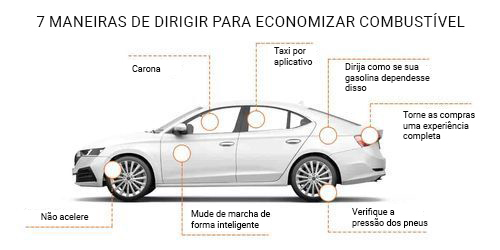
7 ways to drive to save fuel

With the general rise in the cost of living, whether for fresh produce or monthly rent, the recent increase in the petrol price is starting to feel like too much for many. Although we cannot bring petrol prices down, we can give you some fuel-saving advice that could help keep your wallet a little fuller every month.

For many of us, saving money and drawing up a budget does not come naturally. More often than not, we end up spending the money we saved in the first place. Well, don’t worry, we are going to unpack a few ways to burn less fuel and save more money.

We know that millions of Mozambicans are feeling the pinch at the petrol pumps. That is why Cartrack is giving drivers something to smile about.

And here are some tips for managing your fuel better

1. Drive like your petrol depends on it

Keeping the engine running while the vehicle is not moving is not recommended, and here is why: idling while driving burns an unnecessary amount of fuel and puts strain on some parts of the vehicle, which can be damaged over time.

Contrary to popular belief, continually switching your car on and off while stuck in traffic does not burn more fuel than leaving it idling; in fact, idling burns more. We go into this in more detail in another article that explains how switching off the engine when you are not moving for more than 10 seconds can be a simple fuel-saving solution that also saves business costs.

2. Don’t speed

Sure, it may feel as though you are getting from A to B faster, but speed is one of the biggest contributors to rapid fuel consumption. Simply put, vehicles naturally use more energy when accelerating.

If you are serious about getting the most kilometres out of every litre, we recommend that you leave bad driving habits such as speeding, harsh acceleration and harsh braking for the race track and follow the rules of the road. Practising safe driving and keeping within the recommended speed limit, especially on long-distance roads, will dramatically improve your vehicle’s fuel economy.

3. Change gear smartly

If you have a manual gearbox, changing gear too early may be another reason why you find the fuel light coming on much sooner than expected.

Not giving your vehicle enough time when changing down from a higher gear to a lower one will increase fuel consumption and engine strain, as the engine keeps running at higher revs while shifting into a lower gear, making the engine work harder than it should.

To help reduce the load on the engine, keep the revolutions per minute low when driving, preferably between 1.500 and 2.000 rpm, and below 3.000 revs when accelerating on a motorway. This will give you the ideal fuel efficiency for your engine.

4. Check your tyre pressure

Believe it or not, the condition of your car affects its petrol consumption. Keeping up to date with your car’s services and checking its maintenance often are good habits to have if you want to save fuel.

Underinflated tyres take up more space on the road, causing them to drag while you drive. This increases resistance and fuel consumption as you carry on using them.

Depending on the manufacturer, you can usually find the recommended tyre pressure on the inside of the door or in the manual. For low rolling resistance tyres, you can have the pressure pumped up to 0,3-0,5 bar above the recommended level for a smoother drive.

5. Make shopping a one-stop experience

Another smart way to make every drop in your tank count is to make shopping a “one-stop shop”. Picture this: you have finally finished your long day at work and are about to head home. You get home, open the fridge and realise you are out of ingredients. Before you have even put your feet up, you are already out of the house again, heading to the shops.

Next time, stop at the local shops on your way home and buy what you need. Simply planning your trips or routes before you set off can help you avoid burning unnecessary fuel.

6. Carpooling

“Carpooling” or, more commonly, “giving a lift” is the next big idea when it comes to saving your own fuel. According to Business Tech, carpools and lift clubs are South Africans’ preferred options for beating record petrol prices.

As well as saving money on fuel costs, taking turns to give lifts lets you sit back, relax and listen to music while you ride through town. If more people started sharing lifts, fewer cars would be on the streets, traffic would be greatly reduced and air pollution would slowly decrease.

Carpooling also helps to extend the life of your own vehicle, as your monthly mileage will be significantly reduced. Although this fuel-saving method is very popular, it can have an impact on insurance premiums.

For example, if you are the designated driver and receive payments that exceed just the petrol and parking costs, your insurer may see this as a business transaction and require you to switch to commercial insurance or obtain special permission for carpooling.

7. App-based taxis

If you don’t have a group to drive with, or simply don’t enjoy the company of local strangers, e-hailing services may be for you. With e-hailing, you don’t need to worry about how much petrol is left or about extra wear and tear on your own car. Just open an app, request a car, wait for the driver and enjoy the ride.

These days, there are several taxi apps to choose from. All of these services offer different prices on rides and offer their own special discounts on their respective mobile apps from time to time.

A helpful fuel assistant

There is also technology that can help you monitor your vehicle’s fuel use. You can keep track of how much fuel your fleet or vehicle uses every day with Cartrack’s smart dashboard. By analysing the data provided by the devices installed in your fleet or everyday vehicles, you can find out where the most fuel is being used and why.

Cartrack can also work out the safest and fastest route for you to take when driving, so that you don’t have to burn unnecessary extra fuel to reach your destination. Visit us today to start saving fuel.
The real hidden costs of owning a car

The real hidden costs of owning a car

Owning a car is about more than monthly payments. You see an advert for 10 thousand or 15 thousand rand a month and think: “I can afford that”. The truth is that you could probably get your first car before the end of the month – subject to all the checks and balances – but before you drive off, you will have to pay out more than that monthly instalment.

Yes, there is a catch. The additional costs of insurance, licensing and registration, annual licence disc fees and tyre replacement are not part of the annual service – did you know that?

Knowing what the hidden costs of owning a car are, beyond the obvious, helps you plan how to deal with them. It will stop you from overstretching yourself every month, trying to keep up with the cost of running your car.

Keep car ownership the exciting – and convenient – experience it should be with these tips to help you make a wise car decision

1. The once-off costs of car ownership

For the average-income Mozambican, buying a car outright in cash is not an option, although it is the best way to eliminate the biggest monthly cost of repayments – plus interest. The advertised price may be, for example, 900.000,00 meticais, but by the end of the term (usually 72 months) you have paid almost double that amount. So you have spent around 1.800.000,00 meticais on a car whose market value has dropped significantly in the five years since you bought it.that you can really afford.

Deposit

Financing the purchase through a bank is the most popular way to become a car owner, but without a decent deposit this option is expensive in the long run, thanks to the interest on the credit granted.

If you are saving up, you know that the bigger the deposit, the smaller the instalments, but more importantly, the better the interest rate the bank charges you.

on-the-road costs

When buying a car, you may find a line item for “on-the-road (OTR) fees/costs” on your invoice. Also known as a “dealer fee” or “service and delivery fee”, take a closer look and you will see that even the little things count. Typical OTR fees include the following items:

• Pre-delivery inspection/safety check

• Roadworthy Certificate

• Delivery fuel

• Initial fuel

• HPI clearance

• Administration

• FSB fees

• Cleaning or valet costs

OTR costs are common once-off expenses, but your ability to negotiate the final cost comes into play here, because the amount can add up to an additional 20.000,00, affecting your monthly premiums.

Service and maintenance plans

You know that annual physical check-up you are supposed to have? Your car needs one too. And unlike yours, ignoring it can affect your car’s future value. If you have ever tried to sell a car with no service history, you know how important it is to prospective buyers to have proof that it has been well looked after.

Although you need to make an upfront payment, which can be financed, having a service plan and a maintenance plan will pay off in the long run. Your services are guaranteed to be covered and, depending on your plan, you will not be held liable for faulty parts in the car.

Remember that your service and maintenance plan may not cover everything, for example a new car battery, so you may have to add a few thousand rand to the car’s emergency fund.

2. The monthly expenses of owning a car

You are still getting used to the beep of locking your car and to cruising through traffic with your daily commute playlist keeping you going when you realise that the vehicle finance debit order is not all you will be spending on the car this month.

Fuel

Your biggest expense, after the monthly car payment, is fuel. Whether it is petrol or diesel, keeping your car running will account for most of the money you spend on mobility. That is why it is important to work out a car’s fuel consumption before making your choice.

How much fuel efficiency matters will depend on the distance you drive every day, among other considerations such as fluctuations in the fuel price.

Remember to take into account the class of vehicle you plan to buy, as this also affects your fuel budget. Most brands publish fuel consumption figures based on urban and rural terrain, so think about the routes you drive most often and use them to work out what your expected fuel costs will be.

Insurance

It is a grudge purchase, but come theft, hijacking or accidents, you will be glad you had insurance before driving off in your new set of wheels. Besides, the dealership (and the bank, if you have financed the car) will not allow you to leave the lot without insuring the car.

The bank’s main concern is to make sure its investment is safe until it is repaid, so having active comprehensive insurance is a contractual requirement of vehicle finance.

But insurance means you are covered even after you have paid off the car, saving you huge replacement or repair costs in the event of damage or loss, even if you are at fault. If your car is written off, the insurer will settle the remaining balance of the loan with the bank.

Remember that insurance premiums can go up every year, so take into account what you can afford over the next five or six years when choosing an insurer. Also, take a look at the excess amount. There is no point in paying a low premium when claiming means making a large upfront payment just to fix, repair or replace your car.

3. The annual costs of owning a car

If you decide to skip the service and maintenance plans, you will still have to pay out some money to cover your car’s annual service and general maintenance. Ask your dealer or service agent how much a service costs and the cost of essential parts, and then work out an amount to save every month to put towards the service when it is due.

A useful tip for cutting costs, especially if you buy a used car that is out of warranty, is to find a trusted mechanic who can carry out all the maintenance and repair work.

Another annual cost is the car’s licence disc fee, which goes up with every month it is overdue. You get a 21-day grace period if you do not renew the expired motor vehicle licence. The grace period is calculated from the expiry date of the current licence disc. Every time you renew your vehicle licence, you are paying the local registering authority a fee for permission to drive on its roads.

4. The periodic costs

Services and parts account for 34,97% of the typical maintenance of an entry-level vehicle. As a new owner, this is the cost you will need to cover for services – once your plan has expired and you have chosen not to reinstate it – and replacement parts over the life of your car.

Replacement parts

Research what replacement parts for your new car are likely to cost. Locally manufactured cars generally cost less to maintain because the parts do not need to be imported. It is best to compare replacement parts across makes and models before deciding which car to buy.

Try asking whether the dealership you are buying from keeps replacement parts in stock or whether they have to be ordered on demand. The answer to that could be the difference between a quick repair and a longer wait to get back on the road.

tyres

Those tyres that come with the car of your dreams? They are very expensive. More than 10.000,00 meticais each. They may have attracted you as part of the package (who doesn’t like bigger wheels and tyres?), but replacing them will not be cheap – especially when you need to buy a new set at least every 50.000 km.

If you are thinking of buying a regular hatchback or sedan, you may not need to worry as much about standard-size tyres, as they tend to cost less. It is the unusual sizes that are likely to squeeze your pocket, especially if all four need replacing at the same time.

It is unlikely that only one tyre at a time will need replacing, as wear generally occurs in pairs. Avoid replacing a single tyre, to ensure equal traction at the front or rear of the vehicle.

Driving licence renewal

So, this expense applies as soon as you are a legal driver – whether you are driving a car or not. A driving licence has a limited lifespan, usually five years, before it needs to be renewed. The renewal application has a cost and is compulsory. Being caught driving with an expired licence is the same as not having one at all.

On the subject of breaking the law, speeding fines and being fined for other traffic offences can be expensive, so try to obey the rules of the road to avoid additional expenses.

5. Find the right fit

Once you have considered the amount you can spend on the car repayments and the additional running costs of owning a vehicle, use a car finance calculator to work out the loan amount that suits your budget.

The result is only an indication of the price range you can afford, not a guarantee that you will qualify for that amount. Once you have established your affordability range, start shopping for a car that meets your needs but also ticks the right boxes. Ask yourself practical questions in this process, including:

Which is the best option for me, new or used?

-Do I have a preference between a 2-door car and a 4-door car?

-Is this car fuel-efficient?

 -Which car safety features are important to have?

– Do I have a preference between a 2-door car and a 4-door car?

 -Does the car have a service or maintenance plan?

 -Am I using the car for work purposes?

 -Do I want to be able to carry passengers comfortably?

– Do I want to have children and will I need more seats?

 -Is a large boot or load compartment necessary?

 -Are its off-road capabilities important to my lifestyle?

 -Do I drive mainly in the city or will I be travelling long distances?

– What are my preferred colours and could any of them increase my insurance premium?

-What are my preferred colours and could any of them increase my insurance premium?

Ready to ride?

Working out the real costs of owning that car you have your eye on before you buy is important. The purchase price is only the beginning. Keeping the car roadworthy and looking as good as it did on day one requires more line items in your car budget.

Sure, the bank may approve your finance application, but working out the possible additional costs helps to make sure you can afford the whole package. If you think the costs are too high or could stretch your budget too far, opt for a cheaper car model or look for a good used car on a platform such as Be Forward. With hundreds of cars to choose from, you will find one that fits your pocket and your style.

Peace of mind is priceless After everything you have spent on your car, do you really think you could replace it at its full value if it were stolen or hijacked? Get in touch with Cartrack today and let us help you stay safe on the road with our world-leading car tracking and telematics solutions.