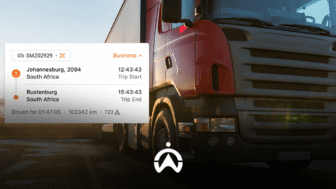
Fleet drivers represent the business world and provide much-needed services to the public. Safety measures would benefit not only them but also the company they work for, in terms of maximising profits, reducing costs and improving delivery systems. Discover actionable fleet safety tips for drivers.
From the moment they leave the business premises and hit the road, fleet drivers are responsible for the vehicle, the cargo and their own well-being. They must consider how they handle the vehicle, how they avoid potholes and any objects that could compromise their safety, and much more.
Driver safety is the most critical aspect of a successful fleet management system. By putting driver safety and empowerment at the centre of training programmes, fleet managers can focus on their most valuable assets – drivers who can recognise their own risky behaviour on the road and strive to correct their actions. Taking the initiative puts fleet drivers in the best position to help keep their fleet on track during difficult times and gives their managers one less thing to worry about.
Managing your fleet on the road
Although fleet systems receive new technical updates every year, it is important not to forget to use technological innovations to have a positive impact on fleet drivers’ daily workload as well. Fleet managers should start using fleet management software not only to optimise the delivery workflow, but also to improve driver skills, awareness and behaviour on the road.
Fleet drivers face many challenges when driving; one that affects the supply chain is problems on the road, which can disrupt or delay a delivery. These problems can range from dealing with vehicle maintenance issues, such as a tyre bursting while driving, which can put the driver and other motorists at risk, to unforeseen situations involving criminal activity that put the driver’s life in danger.
Fleet safety comes first
According to the International Traffic Safety Data and Analysis Group’s Road Safety Annual Report for 2020, issues such as heavy loads and unroadworthy cross-border vehicles contribute significantly to road accidents and casualties, as do vehicles travelling inappropriately on rural roads.
Speed, together with a lack of lanes, unmarked intersections and unsafe surfaces, also contributes to the high accident rate on our roads.
The same report highlights that in all countries:
Speed is a contributing factor in 15% to 35% of fatal accidents
Driving under the influence of alcohol is a factor in 10% to 30% of fatal accidents
The truth is that your drivers are on these same roads, but that is where a technologically advanced fleet management system comes in. It will allow you to implement a speed management and monitoring strategy that helps you enforce safer driving behaviour through regular reports, as well as keep track of where your drivers and vehicles are so that, if they run into any kind of problem, you can act fast.
Get insights from your fleet
A good way to instil safer driver behaviour in your fleet is to hold safety meetings with your drivers. Here they can take an active part in discussions with the management team about where improvements need to be made to individual vehicles and to the fleet as a whole. This can be as simple as avoiding a route under construction, or the need to change a route completely because of dangerous situations such as potholes, illegal activity and more.
Take the time to draw up a fleet safety policy that revolves around your drivers. Put yourself in the driver’s seat. Keep it simple but as specific as possible, and review it regularly with your drivers. These meetings can include discussions about wearing seat belts, using breathalysers and focused driving, all of which can be monitored by a fleet management system.
Fleet monitoring to benefit transporters
Roadside situations are many, and it is the fleet manager’s responsibility to try to be as present as possible in each of their fleets, to sort out any minor or major problems and to quickly find the right long-term solutions.
While managers do their part to keep drivers safe, with the help of fleet management software they can also:
Provide accurate vehicle tracking
Through wireless GPS connectivity, the fleet system ensures that your drivers can always be found, whichever route they take.
Provide live reports 24 hours a day
To keep the fleet manager as informed as possible, fleet management systems will automatically send reports of every event that occurs in transit, even if the driver forgets to update it on the mobile app.
Have digital platforms that are always on
A live programme gives the manager and the driver the benefit of continuous, instant communication.
Instant access to customised dashboards
Have your important or most-used tools to hand as soon as you open your mobile app. Reducing the time spent searching for certain features.
These kinds of features help managers keep track of their fleet and implement instant and long-term strategies to improve driving habits, reduce operating costs and increase the longevity of the fleet.
Take safety into your own hands
There are also a few ways in which drivers can take the initiative and build safety into their daily schedules.
Training programmes are available to help manage driving risks, improve skills behind the wheel and also reduce the impact of accidents and breakdowns.
Sometimes, something as simple as rewarding drivers who practise safe behaviour on the road is all the motivation needed to encourage self-awareness and improvement.
Finding solutions to the neglect of fleet vehicles
Before we start digging into the solutions, we first need to know the reason behind destructive driving behaviour and the neglect of company vehicles.
One of them is drivers who have not been properly trained, who are unhappy or unmotivated at work, and who are reluctant or have not properly settled into the working environment or culture.
This negligent behaviour can result in higher operating costs on the road, including frequent tyre and brake replacements, future maintenance expenses and, worse still, accidents.
- To help correct this behaviour, fleet managers can look at:
- Engaging the workforce by sharing relevant information with them
- Hold regular meetings with your fleet drivers to keep them informed and engaged
- Show them their performance reports, pointing out where they are doing well or need to improve and which factors affect their results
- Gather as much data as possible, both electronic and verbal, to help you form a holistic picture of your fleet that allows you to make informed changes quickly and efficiently
The cost of fleet accidents
An accident can have a major impact and cost your company anywhere between US$ 16.000 and US$ 75.000, even if it is minor and nobody is hurt. Where there are fatalities, the cost can soar even if your employees are not at fault. The fact that fleet accidents are among the most expensive injury claims for a company is one of the main reasons why safety is a high priority for fleet business owners.
Here is a list of the kind of cost implications accidents can have for your fleet:
- Vehicle repair/replacement
- Fines for traffic offences
- Legal representation
- Court fines
- Lost revenue due to damaged fleet vehicles
- The cost of insurance premiums and excesses
- Replacement driver training
- Lost productivity due to avoidable downtime
Although this list may be enough to dent any company’s profit margin, there may still be additional costs depending on the circumstances, but rest assured that, with fleet safety programmes and training in place, there will be significant reductions in incidents on the road
What are the 5 key elements of effective fleet management
To avoid losing money through accidents or low productivity in general, companies should invest in fleet management systems and a fleet safety programme, as this long-term investment pays off with better accountability and greater fleet safety, leads to fewer collisions and reduces costs.
There are a few key elements that contribute to an effective fleet safety programme:
1. Hiring responsible drivers
An effective fleet safety programme starts with the driver recruitment process. Begin by finding the right drivers who meet the company’s standards for fleet drivers. Having a qualified driver with experience of driving fleet trucks would be beneficial.
The idea is to build a safe, reliable team of qualified drivers who understand the importance of fleet safety and prioritise it as much as possible. Hiring drivers who are like-minded in terms of work ethic, attitude and driving skills can result in a low fleet driver turnover rate.
2. Having a comprehensive driver training programme
Once you have put together a team of safe, reliable drivers, the next step is to train them.
Cartrack has a fleet management training course for fleet managers looking to maximise productivity, and also offers training facilities for drivers to improve their driving skills and behaviour.
Driver training not only reduces the likelihood of road accidents, it also sets a standard for safe fleet driving, ensuring a smooth operation.
3. Monitoring driver performance and behaviour
An effective fleet safety programme requires the use of cutting-edge fleet management software that allows fleet managers to monitor all fleet activity efficiently. Regular monitoring of driver performance and behaviour ensures that all drivers follow the fleet safety guidelines and drive safely.
As a Cartrack customer, you would have the benefit of an artificial intelligence camera system that monitors drivers while they are on the road. With it, you can have a complete view of your drivers, vehicles and cargo in transit, and receive alerts about any risky driving behaviour or possible collisions.
You can also use driver scorecards to review their performance, which makes it easier for fleet managers to identify the drivers who need additional training.
4. Vehicle maintenance
Routine inspections of fleet vehicles are also an essential part of proper fleet management. Now that you have trained your drivers to practise safe driving behaviour, you need to equip them with vehicles in perfect condition.
This will help to avoid unforeseen breakdowns and accidents resulting from faulty equipment or poorly maintained parts. In addition, regular vehicle monitoring will reduce maintenance costs.
5. Keep a continuous focus on fleet safety
The importance of overall fleet safety needs to be repeated regularly. With the constant use of safety procedures, this idea will become the norm and part of the culture of the business.
It is also advisable to share important fleet safety metrics with your drivers, fleet managers and safety officers. Seeing the benefits the safety programme brings will validate the effectiveness of the fleet safety programme. The habit will continue and will be properly built into the training programmes for new drivers.
With Cartrack’s end-to-end SaaS solutions, you can improve the safety of your fleet:
Real-time monitoring of vehicle and driver behaviour with Artificial Intelligence (AI) technology can help identify and correct the bad driving habits that lead to accidents, and prevent them.
Monitoring driver performance through scoring and providing targeted training opportunities for drivers improves driving efficiency and reduces fleet operating costs. Provide end-to-end driving analytics on your drivers’ dashboards so that you can identify the most-used routes and step in to prevent unsafe driving.
Creating customised driver safety policies to ensure they can operate safely while delivering items. It also helps to reduce the costs associated with poor driving behaviour.
Maintaining and repairing vehicles properly to keep them safe to operate and to reduce the risk to drivers and other road users. Proper maintenance can help prevent problems from occurring.
Creating a rewards programme to encourage drivers to drive safely and to increase engagement. It is important to be able to attract and retain motivated, engaged drivers, as well as to offer incentives or bonus payments to those who go above and beyond.
Customised fleet management systems from Cartrack
Put driver safety and empowerment at the centre of fleet management with Cartrack’s easy-to-use fleet management tools. Fleet managers can get more out of Cartrack by taking part in its fleet management training, as well as by empowering their drivers to take part in the driver training programmes available. To see other ways in which Cartrack can help you optimise your business, visit cartrack.co.mz
 South Africa
 Botswana
 Kenya
 Malawi
 Namibia
 Nigeria
 Swaziland
 Tanzania
 Zimbabwe
 Hong Kong
 Indonesia
 Singapore
 Malaysia
 Philippines
 Thailand
 New Zealand
 Vietnam
 Poland
 Portugal
 Spain
 United Arab Emirates

 PT