When transporting various materials, certain safety measures must be taken to keep the cargo as secure as possible. Read on to discover top-level security features used by the freight industry.
The freight industry transports hundreds of different materials, from food and fabrics to coal and fertiliser. Most of these materials are valuable, which encourages criminals to do whatever it takes to steal the cargo in transit. But rest assured, there are several ways to keep your cargo safe with the help of good fleet management software and its advanced features.
Security measures for cargo
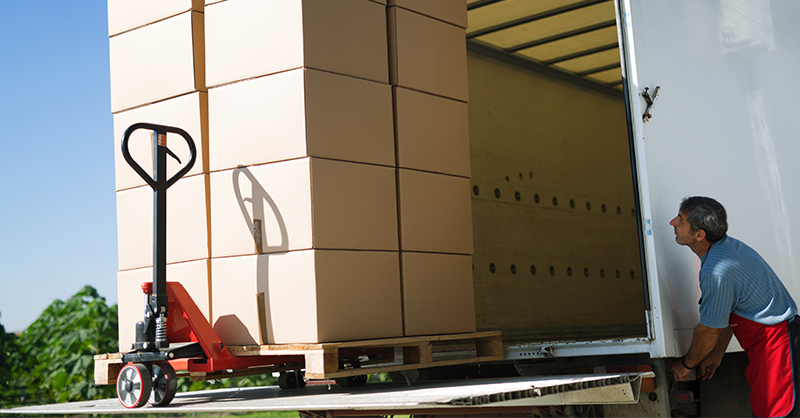
Cargo is transported through different types of freight channels, such as land, air or water. Whatever the type of cargo, special care is taken so that it is not damaged in transit. Packing the cargo in containers and wrapping them in foam, bubble wrap or any other material is just one way of keeping the cargo safe and preventing it from moving or being tampered with.
Shipping companies are responsible for packing and labelling the cargo before departure and are responsible for protecting the contents against damage or theft.
Here are some tips that shippers can follow to ensure the cargo is handled safely:
Use suitable shipping supplies, such as cushioning materials, appropriate lashing and labelling
To prevent shifting on the road, the cargo must be secured on all sides
Fill open spaces with various materials such as boards, airbags, empty packaging and foam to minimise weak points
Secure cargo with special lashing on the upper and lower side rails, as well as at the corners
Use nets to secure the cargo in place
high-risk cargo
Living in certain countries where crime is prevalent and attacks on fleets are common can be stressful for fleet managers and hauliers alike.
Although cargo theft can happen at any time, criminals usually target goods in transit. This is mainly because of the many unsafe parking spots and dubious streets along the way. That is when the cargo is most vulnerable.
The distance between one point and another can also be a factor in an attempted theft. The longer the driver is on the road, the more tired and less alert they become, making them an easy target for hijackers. As a result, crime syndicates may try to steal the goods at stop signs, under bridges, in unsafe parking spots or on quiet, deserted streets when the driver least expects it.
There are some preferred features often used by fleet managers to avoid these situations, geofencing being one of them. It is a feature that allows you to set perimeters around any area, or danger zones, that fleet vehicles may pass through on their way.
When the vehicle reaches these locations, an alert will be sent and, if for some reason the vehicle does not leave them, the fleet manager will know immediately that something is wrong and can act quickly by sending emergency personnel to the exact location, hopefully arriving just in time to stop the attempted hijacking.
The impact of technology on the road.
With security measures becoming ever more sophisticated and technically advanced, it seems that crime syndicates have also moved with the times and started implementing technology in their operations.
Truck hijackings in South Africa have been increasing over the years and do not look likely to slow down any time soon. Last year, the Minister of Police, Bheki Cele, reported a considerable 31.7% increase in truck hijackings across the country.
“Criminals are now so sophisticated that they are using signal jammers, diversion tactics, infiltration teams, blackmail and even planted employees to get to products or assets,” says tactical transport risk specialist Stan Bezuidenhout, as he shares some insights with Arrive Alive.
Although all of this may sound negative, hope is not lost. While criminals become more complex and “professional” in their craft, technology will always be one step ahead. Fleet management security systems have certain features, such as CarWatch, Protector, AI surveillance cameras and many others, that can add another layer of monitoring and security to protect your assets.
Keeping track of your cargo
Monitoring drivers' arrival times is one of the most effective ways for fleet managers to keep their trucks and cargo safe. To ensure optimal security in transit, tracking companies such as Cartrack provide fleet management solutions to help with day-to-day operations.
While fleet managers do their part to keep their fleet safe, hauliers also have the tools to protect the cargo manually with certain features provided.
Benefits of geofencing:
Geofence provides a location-based service that sets a virtual perimeter around any area via GPS, such as a warehouse or even an entire city.
With this feature, fleet managers can:
Track their vehicles live
Identify certain events while on the road, such as travelling in an undesignated area
Deliver automatic notifications for predefined geofenced areas and receive alerts when drivers enter or leave high-risk or unassigned areas
Enable an immediate reaction if cargo theft or a hijacking occurs
Although geofencing is a great asset in terms of fleet security, it also contributes to the business's bottom line. By using this solution, fleet managers will save money that would otherwise be spent on replacing or repairing stolen or damaged vehicles.
AI camera technology and live streaming:
It is more important than ever for fleet managers to have an extra pair of eyes on the road and to “be” present in each of their fleet's vehicles. Managing risk for large fleets can be an arduous task, but LiveVision is the dream tool that gives fleet managers the visibility they need to ensure driver, vehicle and cargo safety.
LiveVision is Cartrack's AI video surveillance solution that can be used to protect, monitor and record the activities of your drivers and fleet. This solution can be used for fleet management, fleet tracking and fleet security.
Fleet managers can get full visibility of the cargo by live streaming the journey from their laptops or phones, or by instantly downloading footage to review events or respond to alerts of possible cargo tampering.
International road safety rules
Although ensuring that the cargo arrives safe and sound is a top priority, the aim of certain security measures is to reduce the chances of attempted theft or road accidents.
A Monash study on fleet management and safety provides insight into how three different countries approach the issue of road safety:
In Germany, the German Road Safety Council has advocated the formation of voluntary safety circles, in which the company's fleet staff meet to discuss important safety issues and find solutions under the guidance of a specialist moderator. They also offer one-day “Safe, economical and ecological driving” courses.
In the United Kingdom, several strategies have been implemented in the United Kingdom to improve road safety in organisations. These strategies are as follows: driver training programmes, reward schemes, punishments, accident investigations, driver monitoring systems and driver feedback procedures are among the long list.
In South Africa, we take a hands-on approach with our road and cargo safety protocols. We have fleet management and vehicle recovery companies, such as Cartrack, that offer training facilities for drivers to improve their driving skills and driving behaviour, as well as fleet management training, helping fleet managers reach a higher level of operations management.
We also have a wide range of security features, made specially for each individual driver, as well as for companies with fleets of any size. These features include Carwatch, Protector, fuel monitoring, Geofence, AI-powered cameras and more than 40 reporting features that constantly monitor the state of your vehicles, as well as your drivers. With all these insights and tools at your fingertips, your company's productivity and efficiency levels will only improve.
The ultimate goal for driver and fleet safety
Although countries around the world take different approaches to their cargo security protocols, the ultimate goal is for all of them to improve road safety for the cargo, vehicle fleets and hauliers involved in transit.
The cargo security protocols implemented are necessary measures to achieve:
Fewer attempted thefts and hijackings
Prevention of vehicle accidents
Improved driver education, alertness and behaviour
Readily available accident analysis reports
Reduced running costs for damaged or stolen goods.
Improve and implement security with Cartrack Cartrack offers security features specially designed to protect your drivers, fleet and cargo against theft, hijacking or any other emergency that may occur on the road. Place your trust in us and we will protect your assets. Visit our website today for a free quote.
Other articles for you
What Are the 5 Cameras Cartrack Offers for Business and Personal Use?
Blogs
11 minute read •
The 5 cameras (dashcams) that Cartrack Mozambique offers for business and personal use are Road Vision, Dual Vision, MultiVision, AI Dash Pro and AI MultiVision. These solutions meet a wide range of needs and keep you protected on the road at all times. Whether you run a complex fleet or simply want to protect your personal vehicle, Cartrack has the […]
How to Move from Reactive to Proactive Fleet Management
Blogs
11 minute read •
To move from reactive to proactive safety in your fleet, you need to invest in an advanced telematics system with artificial intelligence cameras. An advanced telematics system uses predictive maintenance to keep you informed about the mechanical condition of your vehicles, while AI cameras show you how your drivers behave behind the […]
Short-haul trucking is the transport of goods by truck over comparatively shorter distances than long-haul transport. It generally refers to road transport over distances of between 100 km and 250 km, normally within a single province or between neighbouring provinces of Mozambique. Data from Mozambique’s road […]
 South Africa
 Botswana
 Kenya
 Malawi
 Namibia
 Nigeria
 Swaziland
 Tanzania
 Zimbabwe
 Hong Kong
 Indonesia
 Singapore
 Malaysia
 Philippines
 Thailand
 New Zealand
 Vietnam
 Poland
 Portugal
 Spain
 United Arab Emirates

 PT