With rising demand from the consumer sector, the pressure on business fleets in the logistics or supply chain industry has also intensified. This is simply because consumers expect more of retailers, and the result is that retailers have even higher expectations of their fleet’s delivery performance.
We will show you how to improve your fleet management with Cartrack Delivery to make sure deliveries are always on time.
In this article, you will:
- Understand the challenge of always ensuring on-time deliveries
- Learn 5 ways to improve on-time delivery rates and OTIF
- Discover the benefits of using Cartrack’s fleet management system and delivery tool to ensure OTIF deliveries
- Get sector-specific guidance on how to improve delivery punctuality.
On-time delivery rates and OTIF explained
On-time delivery rates and On-Time in Full (OTIF) are popular metrics that manufacturers and retailers use to measure delivery performance in their supply chain and to assess their logistics partners and suppliers.
With consumer demand rising because of e-commerce companies, online food and grocery delivery, or even just the variety of products consumers expect from retailers; transport and logistics companies cannot afford any more delivery delays. Nor can businesses with in-house fleets that transport goods from production or the farm to storage.
Here are some global statistics on consumer demand from Meteor Space that paint a clear picture of consumers’ changing behaviour:
- 76% of customers confirmed that fast shipping positively influences their shopping experience
- 88% of consumers are more willing to buy from a shop that offers free shipping
- 83% of online shoppers want regular customer support and communication about the status of their orders
- 95% of online shoppers expect all shipping problems to be resolved during transit
- 62% of US online customers believe that fast delivery is the most important aspect of the customer experience.
The online commerce industry in South Africa has also seen a rapid increase since the COVID-19 pandemic and lockdown. It is estimated that, by 2027, this market will be valued at 7.9 billion dollars, as online delivery of food, clothing and other retail purchases has increased dramatically.
According to Statista and other sources:
- More than 70% of South African shoppers want home delivery for their purchases.
- More than 22% of online consumers consider clear communication about the expected delivery time to be a key factor in the quality (or lack of it) of a digital shopping experience.
- 17% of customers will abandon a brand because of long delivery waiting times.
Meeting consumers’ new delivery demands means more business in transport and logistics, and companies with a complete in-house supply chain must adjust and focus on the demands of delivery time. That is why on-time delivery rates and OTIF are essential; let us tell you more about how they work.
On-time delivery rate
The on-time delivery rate, first of all, calculates a business’s ability to meet customer expectations of delivery time. It is used by e-commerce companies and retailers in last-mile delivery to determine how quickly they fulfil customer orders.
38% of online retailers are concerned about meeting customers’ fast delivery expectations with the low shipping costs their customers expect. Businesses can also use the on-time delivery rate to calculate and assess their transport and delivery service partners when they outsource this service.
On-time in-full delivery
OTIF generally refers to a supplier’s ability to deliver all the quantities ordered within the prescribed or agreed delivery time. Suppliers and distributors often face challenges that disrupt timely delivery, such as vehicle breakdowns, traffic congestion or, in South Africa, protests and public demonstrations. Our unique challenge with load shedding can also cause delays and interrupt deliveries.
There are no standard OTIF expectations; so the methods for improving your business’s delivery rate or quality depend more than anything on the steps you take to improve your fleet’s delivery performance.
More businesses are looking for customer-level experience from their logistics service partners. This means they expect better communication from suppliers and distributors, delivery visibility for customers and accurate communication of the delivery time.
Focusing on improving OTIF can help secure customers and improve the reputation of your transport and logistics business.
The stakes are high for your delivery fleet’s performance and, unfortunately, improving your on-time delivery rate and OTIF is not always an easy task, because it depends on effective collaboration between fleet managers and drivers. Other external factors, such as product stock shortages, problems with warehouses and carriers, fuel price increases, protests, demonstrations and staff shortages, disrupt the process. Ultimately, problems at any stage of the delivery chain can cause delays.
5 ways to improve on-time delivery rates and OTIF
On-Time In-Full (OTIF) is the standard that all logistics providers should strive for. Here are some smart, strategic ways to improve your fleet’s delivery performance. We will guide you through how to apply these steps with real Cartrack case studies based on a courier company we worked with and helped to achieve better delivery rates.
- Get real-time fleet and driver visibility with GPS tracking
Fleet tracking and driver monitoring are critical parts of fleet delivery performance and can help you achieve and improve your on-time deliveries. When fleet managers have no visibility of their fleet, they struggle to monitor driver productivity, see which drivers are available for a delivery task, identify the causes of delivery delays and calculate the on-time delivery rate.
Consider a company like The Courier Guy – a leading South African courier services company that started in 2000. It has more than 2,200 fleet vehicles and, with growing consumer demand, is set to expand its fleet even further over time. With the growing number of drivers, customers and vehicles, it can be a challenge for any delivery company to manage every part of its fleet.
Whether you have a fleet of 20 vehicles or more than 2,000 vehicles like The Courier Guy, having real-time fleet and driver visibility is one of the best ways to improve your deliveries.
Cartrack’s telematics and easy-to-use fleet management platform give The Courier Guy real-time fleet visibility and driver monitoring that help them eliminate wasted time and make sure parcels arrive safely and correctly at their customers’ doors.
By addressing the lack of fleet visibility, fleet managers can:
- Accurately track the location of every vehicle: get a complete map overview of all the vehicles and drivers in your fleet to understand their activities.
- Monitor driver productivity: improve driver accountability and productivity by monitoring their activity on the road. Reduce route deviations and unnecessary stops.
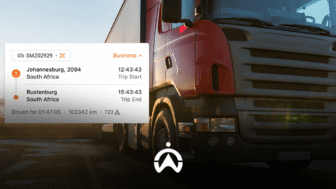
- Receive vehicle trip history reports: calculate your on-time delivery rate: by understanding your current delivery performance, you can easily implement these strategies to improve your delivery rate.
Real-time visibility makes it easier for fleet managers to step in whenever necessary and proactively prevent delivery delays, ensuring a high on-time delivery rate. Addressing and communicating the causes of delivery delays immediately can help improve customer satisfaction and the reputation of your business services, but to do that, you need to make real-time visibility your new best friend.
- Improve scheduling with delivery fleet management tools
The current driver shortage and the lack of delivery capacity in your fleet make it hard to improve on-time delivery rates. Alongside tracking fleet vehicles and drivers, planning and scheduling the two adds to the difficulty of making sure you meet the delivery date. Without the right delivery tools, fleet managers can face scheduling challenges such as:
- Poor matching of special delivery loads with unqualified drivers or unequipped vehicles.
- Recording and scheduling deliveries manually, including recurring orders.
- Unclear estimated time of arrival (ETA).
- Inability to make changes to a delivery or communicate changes.
Whether your fleet is inbound, moving deliveries between your facilities and individual stores, or outbound, delivering to customers at their homes, you need to keep control of your delivery scheduling and planning to make sure your parcels arrive on time. The good news is that Cartrack’s delivery tool helps fleet businesses like yours optimise scheduling.
- Easily assign tasks and jobs: with a complete view of driver and vehicle availability, managers can see the progress of a driver’s delivery schedule, easily assign new jobs and make sure the right vehicle and driver are allocated to the job.
- Prioritise and make changes: your managers can track drivers quickly without interrupting their deliveries and tasks. If a task changes, managers can also adjust the delivery schedule instantly.
- Automate recurring deliveries/tasks: avoid repeatedly uploading customer information by hand or re-entering the delivery location by automating recurring deliveries.
For The Courier Guy, Cartrack’s delivery software has been an essential part of its fleet operations, simplifying task management and helping to ensure customer satisfaction with on-time deliveries. The software automatically fills in customer details for recurring orders, helping them reduce manual processes and improve communication between manager and driver, which has resulted in faster delivery times.
Customers also receive convenient delivery updates with automated emails and SMS notifications.
- Ensure cargo safety and quality with technology
To secure the “in-full” part of OTIF, businesses can adopt the latest technology, such as AI cameras to detect and resolve any cargo theft and sensor technology to make sure products arrive complete and undamaged.
The Courier Guy, for example, has improved safety, security and accountability within its fleet thanks to Cartrack’s AI-powered live-stream camera technology. These digital eyes track your cargo and your drivers live, monitoring driver behaviour and alerting drivers audibly in real time so they can quickly correct dangerous behaviour, such as fatigue or mobile phone use. These automatic detection and alert capabilities help result in fewer damaged goods and speeding fines, as well as supporting a stronger brand reputation.
Cargo theft and damage to products in transit are major risks for businesses and can affect the delivery rate, customer retention and OTIF delivery performance. To avoid these risks, Cartrack’s AI camera technology is ideal for raising your fleet’s level of security.
Cargo theft and damage to products in transit are major risks for businesses and can affect the delivery rate, customer retention and OTIF delivery performance. To avoid these risks, Cartrack’s AI camera technology is ideal for raising your fleet’s level of security.
- Cargo details and specifications: Managers can upload parcel information with specifications, and drivers can scan the barcode of the goods they load and unload, so that every load is accounted for, transported and delivered safely.
- Cargo monitoring using sensors: With sensors on the cargo doors, managers receive live alerts about unauthorised access to the cargo. Temperature sensors allow managers to deal with unwanted temperature changes that could damage the products.
- AI cameras for security: businesses can live-stream or download camera footage when they receive alerts of possible cargo tampering and respond proactively.
- Improve driver productivity and efficiency
Driver inefficiencies are a major obstacle for logistics and transport companies, making it hard for businesses to achieve faster deliveries. Empower your drivers with better safety training and better communication with fleet controllers.
To improve driver productivity and efficiency, fleet managers need to focus on driver management and set standards for assessing their performance. A good driver management strategy involves the following:
- Focusing on driver safety.
- Improving driver performance with work optimisation tools, such as timesheets.
- Implementing regular vehicle maintenance and inspection routines.
- Equipping drivers with the right vehicle and tools to complete a delivery.
- Hiring and retaining good drivers.
- Introducing policies to ensure legal compliance.
Training and incentives: use driver behaviour reports to coach drivers on safer driving practices or to reward responsible driving based on our driver scorecard, which rates your drivers’ performance. Drivers can complete deliveries in good time while staying committed to safety.
Improve communication with drivers: Reduce driver stress with the Cartrack Delivery app, where drivers can access their daily schedule, accept new jobs when available and receive instant alerts for new delivery tasks or changes to existing ones.
Route planning or route optimisation: easily plan your driver’s delivery route with route planning, and make sure deliveries are completed promptly by automatically getting the best order in which to complete deliveries with route optimisation.
A good delivery time can only be achieved through the skilled efforts of your driver. Encourage and look after your delivery drivers so that they have a more positive attitude towards their work.
- Reduce transport costs and time
Reducing fleet costs is the number one goal of most fleet businesses, but it is actually another way of securing repeat business. Retailers and other companies looking for logistics and transport service providers also want to reduce their transport costs to increase their profits.
According to a 2023 survey, profits can almost double if supply chain expenses fall from 9% to 4%, which is why most businesses aim to cut their expenses. To do this, most retailers will place one large order in a single delivery. That is your fleet business’s time to shine. If you can make sure your fleet delivers what it promises in a timely and cost-effective way, you can improve your on-time delivery rate.
Load consolidation is a tactical way to reduce fleet costs while improving delivery time and efficiency for the customer, but it requires effective route planning and scheduling.
If your business faces the challenge of balancing cost reduction with on-time deliveries to meet customer demands, then it may be time to consider making changes to your fleet management that will improve your delivery performance in future and win new business from customers. Using Cartrack’s fleet management and delivery tool can enable you to achieve this.
Here are some steps you can take to set yourself apart from your competitors:
- Invest in your vehicles: consider buying more reliable, fuel-efficient vehicles to help you avoid any vehicle downtime in your fleet that could cause delivery delays. Alternatively, using preventive maintenance in your fleet’s scheduling is another way to keep your fleet running smoothly.
- Tackle fuel consumption and expenses: you never want your fleet’s operating costs to be higher than your profits. Reducing fuel costs can help you secure an ROI on your delivery.
These five strategies are smart ways to improve your on-time delivery rate or OTIF. Although these measures are based on the customer’s experience of your services and there is no standard for measuring this, these strategies aim to help you improve your service delivery and, ultimately, your on-time delivery rate.

Always deliver on time and in full with Cartrack
Our fleet management system, equipped with Cartrack Delivery, helps fleet businesses and companies with their own fleets keep up with ever-growing demand and always exceed customer expectations.
Book a demo with us to see how we make the delivery magic happen.
On-time delivery rates and OTIF: frequently asked questions
On-time delivery keeps the supply chain turning. Our handy FAQ section answers the most common questions about OTD and OTIF.
How can I improve my OTIF performance?
Here are some quick steps to start improving OTIF performance.
Step 1: Increase fleet visibility with GPS tracking and telematics fleet management.
Step 2: Improve driver management and productivity.
Step 3: Use delivery fleet management software and tools.
Step 4: Protect your fleet’s cargo against theft, loss and damage.
Step 5: Improve the manager’s communication with the driver, and directly with the customer, with updates on delivery progress.
For more information, get in touch with us!
How do you improve on-time delivery in the last mile?
To improve delivery time in the last mile, you can:
- Set up delivery methods and time slots that are convenient for customers.
- Give the customer updates on delivery progress.
- Use an all-in-one platform to manage deliveries, such as Cartrack delivery.
- Explore alternative delivery vehicles, such as bicycles for smaller parcels.
- Use GPS tracking and telematics to understand what is causing delivery delays and make data-driven decisions.
What is the difference between OTIF and on-time delivery?
The on-time delivery rate is used by businesses (especially e-commerce companies) to measure how many customer orders they have fulfilled by the expected delivery date. OTIF, on the other hand, is a measure used by retailers and manufacturers to assess the ability of transport and logistics service providers to deliver supplies or stock within the agreed delivery time. It also assesses the state of the delivery, for example, whether the order was only partly fulfilled, whether some products were damaged in transit and whether any items were missing.
What is a good OTIF score?
OTIF depends on the expectations and satisfaction defined by the customer, but there are different standards for delivery rates and therefore different ideas about what counts as a good score.
A good OTIF score would be:
- 95-99% for A-line products (these are your customer’s best sellers and account for 50-80% of their sales)
- 85-99% for B-line products (mid-range products that account for 30% of their income)
- 99-100% for C-line products (the last 60-70% of products, which account for only 10-30% of revenue)
How do you make sure every delivery is made on time?
Various challenges can get in the way of delivery progress, but that doesn’t mean you should take a back seat when it comes to improving your fleet’s delivery performance. Here are some ways to help you keep your delivery promise:
- Effective planning with an allowance for common delays, such as traffic or weather conditions
- Using Cartrack’s reliable GPS tracking, fleet management software and delivery tools
- Improve your whole fleet’s operations by reducing costs, focusing on improving driver performance and productivity, automating tasks such as route planning for managers and using preventive maintenance to avoid vehicle breakdowns.
This is what our partner companies love about us:
“Cartrack’s technology allows us to focus on our drivers, customers, cargo and fleet, all from one platform. It puts us in control from dispatch to delivery.”
Jeffrey Wheeler, assistant fleet manager, Courier Guy, South Africa.
Contact us for more information on advanced, time-tested fleet management solutions
 South Africa
 Botswana
 Kenya
 Malawi
 Namibia
 Nigeria
 Swaziland
 Tanzania
 Zimbabwe
 Hong Kong
 Indonesia
 Singapore
 Malaysia
 Philippines
 Thailand
 New Zealand
 Vietnam
 Poland
 Portugal
 Spain
 United Arab Emirates

 PT