These days, with business developing rapidly and competition fierce, the working condition of your fleet or machinery is a vital factor to consider. For most companies, unplanned downtime is costly, bringing challenges such as lost productivity and repairs.
Predictive maintenance is the most important way to reduce unplanned downtime, optimise fleet management and improve overall operational performance. This innovative approach relies on advanced technology, together with data-driven insights, to predict incidents early and keep assets running in their best condition with minimal disruption.
In this blog, we look at how predictive maintenance can help you get real-time vehicle diagnostics and set up effective maintenance schedules for your fleet.
In this article, you will:
- Learn about predictive maintenance
- Discover the impact predictive maintenance has on fleet operations
- Find out why Cartrack is the ideal partner for predictive maintenance solutions
What is predictive maintenance and how does it work?
Predictive maintenance uses data analysis to identify operational problems and possible equipment defects, allowing timely repairs before failures occur. The aim is to minimise how often maintenance is needed, avoiding unplanned breakdowns and unnecessary preventive maintenance costs.
The basics of predictive maintenance
Predictive maintenance depends on several technologies to work effectively, including:
- The Internet of Things (IoT)
- Predictive analytics
- Artificial intelligence (AI)
- Connected sensors
These components collect data from assets such as machines and equipment. Here is how the components of predictive maintenance work:
Data collection:
- The components collect data from assets (machines, equipment).
- The data is gathered in the cloud within an AI-enabled EAM or CMMS.
AI analysis:
- AI and machine learning analyse data in real time.
- This analysis provides an understanding of the equipment's current condition.
Defect detection and alerting:
- Alerts are triggered for possible defects.
- The alerts are delivered to the maintenance team.
Predictive capabilities:
- Machine learning algorithms predict the equipment's future condition.
- This enables efficient maintenance workflows (scheduling, labour, parts).
Continuous Improvement:
- More data collection leads to more insights and better predictions.
- It gives confidence that equipment is performing at its best.

Data sources in predictive fleet maintenance
In predictive maintenance, it is only through rich, accurate data that problems can be predicted before they cause unexpected stoppages. With advanced and effective fleet management solutions from Cartrack, we draw on different sources to give a complete picture of a vehicle's performance. This data is captured in real time through telematics devices, sensors and on-board diagnostics, allowing fleet managers to monitor critical metrics and receive alerts about possible problems. Below are some of the data sources that are critical for effective predictive maintenance:
- Engine health
The heart of any vehicle is its engine, and its components need to be monitored to avoid any chance of failure. Keeping track of engine temperature, oil pressure, fuel consumption and engine load makes it possible to flag early signs of trouble. Take rising engine temperature or abnormal oil pressure, for example, which can point to possible faults in the cooling system or an oil leak, respectively. All of these parameters are monitored continuously by Cartrack's telematics systems, giving fleet managers real-time information on when engine health starts to decline and enabling timely action before more serious damage occurs.
- Braking patterns
Brakes are the most important safety feature on a vehicle. Worn or inefficient brakes often cause fatal accidents and very costly repairs. Monitoring braking behaviour, including braking force, frequency and response time, will help identify possible problems at an early stage. For example, excessive braking, especially harsh or sudden braking, can lead to faulty brake pads or adversely affect the systems linked to the brake fluid. With the help of Cartrack's telematics system, fleet managers can monitor and analyse braking behaviour, providing analysis that can lead to action being taken.
- Fuel efficiency
A drastic drop in fuel efficiency can be a sign of engine-related problems, under-inflated tyres or a faulty fuel system. Constantly monitoring average fuel consumption over time can help identify and resolve inefficiencies, which can add up to significant costs. Cartrack tracks a vehicle's fuel usage in real time so that fleet managers can study fuel consumption patterns. This is used in route planning, in optimising driver behaviour and in picking up any mechanical problem that affects fuel efficiency.
- Tyre wear
Tyres have a great deal to do with a vehicle's safety and performance. The factors to consider include various forms of wear, such as excessive and uneven wear. This can point to misalignment, incorrect inflation or some other mechanical fault. Monitoring tyre pressure, as well as tread depth, tells you when the tyres will reach the point of needing replacement. Cartrack has sensors that continuously monitor tyre health and notify the fleet monitoring team when the pressure falls below ideal levels or when physical wear patterns show that replacement is needed. By putting early preventive measures in place, you will minimise blowouts and increase safety.
Why predictive maintenance matters for fleet businesses
Predictive maintenance matters most to fleet businesses because of the cost savings it delivers. Another key reason is that efficiency increases, since vehicles are rarely off the road for repairs. Most importantly, it makes driver safety far more achievable, since vehicles will almost always be in excellent condition.
The Impact of Predictive Maintenance on Fleet Operations
Predictive maintenance has had a huge impact on the fleet management sector. Fleet managers can now foresee many problems that would otherwise affect fleet performance. Many benefits have come from this way of planning maintenance. Let's take a look at some of them.
Key benefits of predictive maintenance
Minimising downtime and repair costs is the biggest benefit of predictive maintenance. Servicing vehicles early means repairs are reduced and, in some cases, eliminated altogether.
Another benefit is extending the life of vehicles and improving asset utilisation. When vehicles are repaired early, they have significantly less downtime and are not prone to breaking down at random, maximising operating time.
Reduced fuel wastage is a by-product of vehicles running at their best. An engine that is running well and in good condition is more fuel-efficient than one that is not. This means you can expect fuel costs to come down overall. An added benefit is the reduced environmental impact thanks to lower fuel use.
Operational Efficiency
Operational efficiency is the greatest advantage of predictive maintenance, as it allows better planning of vehicle availability. Managing vehicles becomes very easy when few of them are in for maintenance or being serviced. Smarter resource allocation with accurate maintenance scheduling will be the norm from here on.
Cartrack: A game changer in predictive maintenance
Cartrack is a provider of advanced telematics solutions for fleet management. Its services include GPS tracking, vehicle diagnostics and vehicle data analysis. All of this is provided in real time and in scheduled reports. All of these features support predictive maintenance. Here is how.
How Cartrack improves predictive maintenance
Cartrack's telematics technology detects performance anomalies and warns you well in advance of possible critical problems. The management software then gives operators actionable information on how to resolve each vehicle's problems, reducing unplanned downtime and ensuring vehicles stay operational.
Fleet managers using a Cartrack platform are able to:
- Monitor KPIs across the entire fleet.
- Receive predictive alerts about components that are close to failing.
- Assess historical data to anticipate future maintenance activities.
- Schedule maintenance activities based on data-driven insights.
- Avoid unnecessary fuel consumption.
- Improve driver behaviour and route optimisation.
Features of Cartrack's Solutions
At Cartrack, we pride ourselves on offering a comprehensive set of features designed to make predictive maintenance more effective, improve fleet management and, ultimately, reduce unplanned downtime. Our solutions are built with flexibility, reliability and real-time data at their core, ensuring fleet managers have all the tools they need to keep their vehicles operating at their best. Here are some of the standout features that set Cartrack apart:
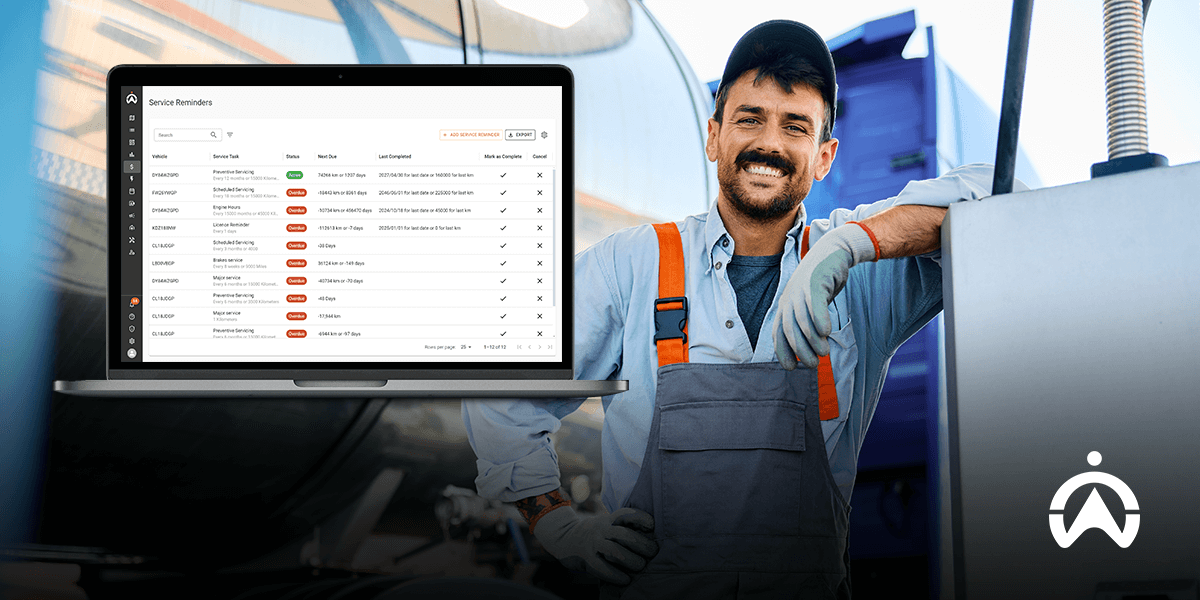
- Customisable maintenance schedules and automated reminders
Cartrack understands that every fleet has unique needs, which is why we offer customisable maintenance plans tailored to your fleet's specific profile. Our system takes into account the type of vehicle you operate, its usage patterns and the manufacturer's recommendations, ensuring maintenance is scheduled at the ideal time for each asset. In addition, we provide automated reminders for scheduled maintenance tasks, such as oil changes, tyre rotation or filter changes. These reminders are sent by email or through the Cartrack mobile app, ensuring no important maintenance task is forgotten
- Proven results in reducing downtime and cutting costs
Cartrack's predictive maintenance technology has consistently delivered tangible results in reducing unplanned downtime and cutting maintenance costs for fleets of all sizes. By providing accurate, real-time data on vehicle health, we enable businesses to move from reactive maintenance strategies to a more proactive, data-driven approach. Our predictive insights allow fleet managers to resolve small problems before they escalate, avoiding costly breakdowns and repairs.
Our customers have reported significant improvements in both vehicle uptime and cost reduction through Cartrack's predictive maintenance solutions. By avoiding unexpected repairs and optimising maintenance schedules, businesses can reduce repair costs, extend the life of their assets and improve fleet performance.
- Real-time alerts and predictive insights
Cartrack's advanced alert system provides immediate notifications when a vehicle needs attention. This helps ensure problems are resolved before they result in a breakdown. Whether it is an engine anomaly, a critical component failure or unusual driving behaviour, fleet managers receive predictive alerts through the Cartrack app or other communication channels. These insights allow a proactive approach, enabling quick fixes or adjustments to maintenance schedules to avoid disruption.
With Cartrack's real-time alerts and insights, you can stay ahead of potential problems and significantly reduce the risk of unplanned downtime.
- Data-driven performance optimisation
Cartrack's system also provides performance analytics that go beyond predictive maintenance. By monitoring trends in fuel efficiency, driving patterns and vehicle health, fleet managers can identify inefficiencies and make data-driven decisions to improve overall fleet performance. Optimising routes, adjusting driver behaviour and managing fuel consumption not only contribute to vehicle longevity, but also increase operational efficiency and reduce costs across the fleet.
- Comprehensive reporting and fleet insights
Our Cartrack's platform offers comprehensive reporting tools that allow fleet managers to track and analyse data on every aspect of fleet performance, from maintenance schedules to fuel consumption. These reports can be customised to your specific needs, offering detailed information on the health and status of each vehicle. With Cartrack, you can monitor the progress of maintenance tasks, compare fleet performance over time and gain a deeper understanding of which vehicles or components are most likely to need attention.
- Vehicle monitoring 24 hours a day, 7 days a week
One of the main advantages of using Cartrack's telematics system is round-the-clock vehicle monitoring. Our platform continuously collects and analyses data from every vehicle in the fleet, providing real-time information on its performance, status and location. This 24-hours-a-day, 7-days-a-week watch ensures fleet managers are always informed, whether they are on the move or managing their fleets from the office. With Cartrack, fleet operators can detect problems as soon as they arise, allowing immediate action to prevent failures and keep operations running smoothly.
The future of predictive maintenance
The evolution of technology will continue to open more doors for predictive maintenance. Future advances promise ever smarter machine learning algorithms, closer integration of Internet of Things (IoT) devices and more instant monitoring capabilities. This will allow businesses to get more accurate predictions of failures and improved operational efficiency.
Predictive maintenance, in short, is a dramatic shift in strategy for an organisation with a fleet of vehicles or heavy equipment. For organisations trying to stay competitive, predictive maintenance is no longer optional but a strategic necessity. To optimise fleets, reduce unplanned downtime and increase productivity, Cartrack's advanced telematics solutions are the best option.
Cartrack is at the forefront of this technological evolution, helping businesses shine with smarter, safer and more cost-effective fleet management practices.
Contact us today to find out more about how Cartrack can help you and your fleet stay ahead.
Frequently asked questions
What is the ROI of predictive maintenance?
ROI depends on factors such as the sector, the complexity of the equipment and the scale of implementation. However, businesses generally see significant savings through reduced downtime, lower repair costs and greater operational efficiency.
Can small businesses implement predictive maintenance?
Yes, with the growing affordability of IoT devices and scalable cloud-based platforms, even small businesses can take advantage of predictive maintenance to improve efficiency and reduce costs.
What is the difference between predictive maintenance and preventive maintenance?
Yes, with the growing affordability of IoT devices and scalable cloud-based platforms, even small businesses can take advantage of predictive maintenance to improve efficiency and reduce costs.
Which sectors benefit most from predictive maintenance?
Predictive maintenance is widely used in sectors such as manufacturing, transport, energy, healthcare and utilities, where equipment reliability and uptime are essential.
 South Africa
 Botswana
 Kenya
 Malawi
 Namibia
 Nigeria
 Swaziland
 Tanzania
 Zimbabwe
 Hong Kong
 Indonesia
 Singapore
 Malaysia
 Philippines
 Thailand
 New Zealand
 Vietnam
 Poland
 Portugal
 Spain
 United Arab Emirates

 PT