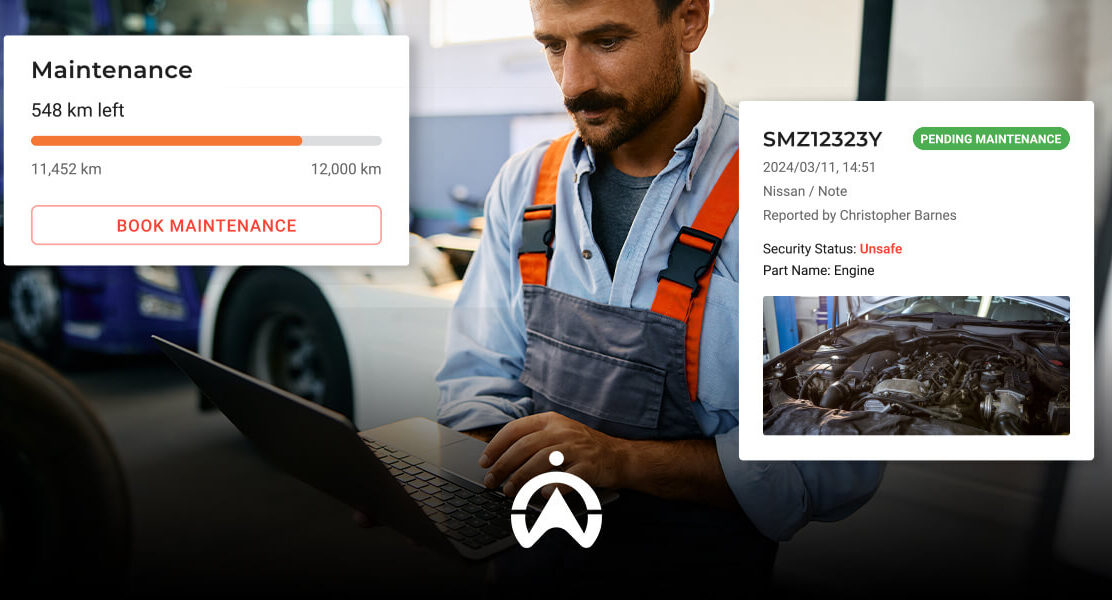
Gone are the days of waiting for your truck to act up to know there was a problem. Remote vehicle diagnostics can be a game changer, helping you save time and money. Early diagnosis means timely repairs, helping you avoid costly downtime.
Imagine your driver is delivering goods when, suddenly, the brakes fail. This could lead to serious injuries or even the loss of your vehicle. Fortunately, this will not happen to you because, with Cartrack's solutions, potential problems like this can be detected early, preventing accidents before they happen.
Remote vehicle diagnostics has many other benefits, which we will explore in more detail in this blog.
In this article, you will:
- Learn what remote vehicle diagnostics is
- Understand how remote vehicle diagnostics works
- Learn the benefits of remote vehicle diagnostics
- Understand how Cartrack manages fleets
- Discover how Cartrack helped a company with remote vehicle diagnostics needs
What is remote vehicle diagnostics
Remote vehicle diagnostics is a system built into a vehicle's engine. It monitors the vehicle's health and performance from a distance and identifies and tracks any problems in the vehicle. This system uses telematics and data communication technologies to provide insights into the vehicle's condition without needing physical access.
How does Remote Vehicle Diagnostics work for fleets?
Remote diagnostics is important for commercial fleets to maintain vehicle health and optimise operations. It allows fleet managers to track performance metrics across the whole fleet and respond quickly to maintenance alerts.
Here is how remote diagnostics works:
- Data Collection: Modern vehicles have several sensors and on-board computers that continuously collect data from various systems, including the engine, transmission, brakes and advanced driver assistance systems (ADAS). This data, including fault codes, performance metrics and operational alerts, is stored in the vehicle's on-board computer systems.
- Remote Access: Technicians can access this data through specialised diagnostic tools or applications. A technician can send a request to the vehicle for specific records or fault codes. The vehicle responds by transmitting the requested data to the technician, allowing real-time diagnosis.
- Analysis and Reporting: Once received, this data is analysed using telematics to identify potential problems, generate diagnostic reports and recommend the necessary actions. This significantly reduces vehicle downtime.
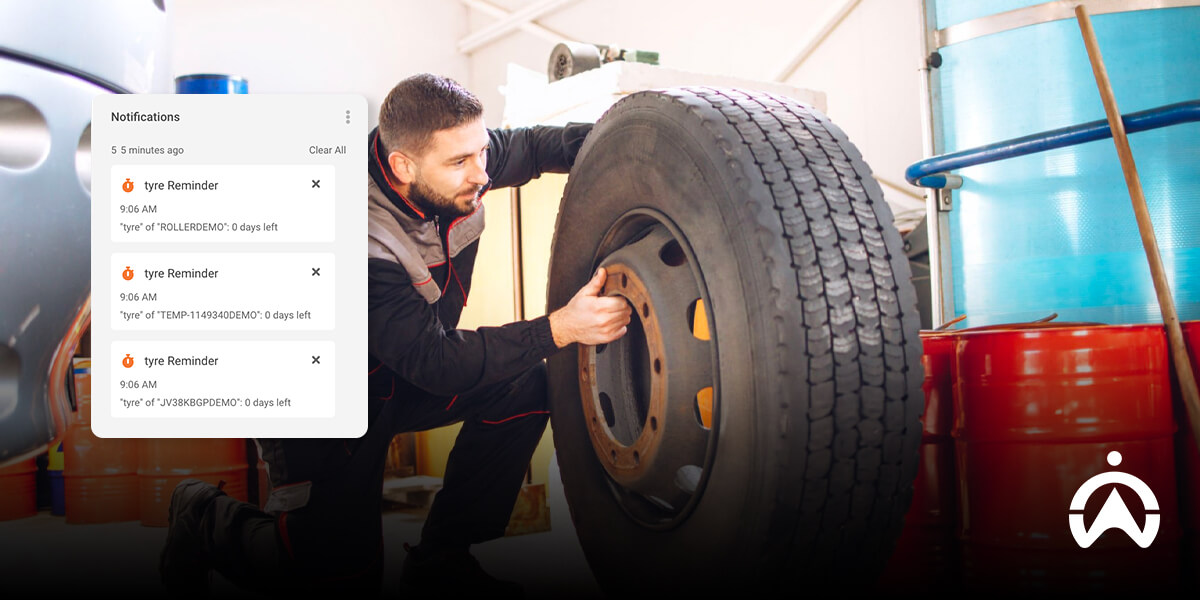
7 Benefits of Remote Vehicle Diagnostics for Fleet Operators
Now that you understand how remote vehicle diagnostics works, let's explore its benefits for fleet operators in increasing efficiency, safety and cost-effectiveness.
With real-time insights, operators can optimise vehicle performance, reduce downtime and make informed maintenance decisions, all while ensuring safer driving conditions and reducing overall costs.
Here are 7 benefits of Remote Vehicle Diagnostics for fleet operators:
- Real-Time Monitoring:
In the past, fleet operators had to wait for the vehicle to break down before discovering the problem, often resulting in expensive towing and repairs. With real-time monitoring, operators can identify problems before a breakdown occurs, allowing proactive maintenance.
This approach not only saves money but also improves the fleet's overall efficiency. By addressing problems early, operators can schedule repairs during quieter periods, minimising disruption to operations. Access to real-time data improves decision-making on vehicle use and resource allocation. This ultimately leads to a more reliable fleet and better customer service.
- Reduce downtime:
Taking the vehicle in for repairs means it will be off the road for some time, which is called unplanned downtime.
Downtime affects a fleet in several ways, including:
- Reduced productivity: your business will inevitably fall behind if some of your vehicles are not operational. For example, if your business is a cargo delivery service and one of your delivery trucks is not operational, this will inconvenience not only you and your business, but also your customers (other businesses) and their customers.
- Overuse of other vehicles: when one car is out of use, other vehicles will be overused to catch up. Although this seems like a solution, overusing vehicles beyond their scheduled hours can lead to wear and tear, compromising the condition and lifespan of the fleet.
- Lost revenue: failing to deliver goods and services results in lost revenue for the business. Because of the inconvenience caused, customers may take their business elsewhere or, worse, may leave bad reviews about your company, influencing others not to work with you.
- Increased costs: an unexpected vehicle breakdown will require funds to cover the repair costs. As these expenses are not normally planned, fleet managers may need to draw on other parts of the business's finances to make sure the repairs are dealt with quickly.
Discover how to reduce vehicle downtime in your fleet and keep your business running.
- Proactive maintenance:
Proactive maintenance, also called preventive maintenance, aims to recognise the cause of vehicle faults and fix them before the vehicle breaks down.
The benefits of proactive maintenance are:
- Cost savings
- Fewer repairs
- Greater safety and reliability
- Longer vehicle lifespan
Unlike reactive maintenance, where repairs are carried out after the vehicle breaks down. Proactive maintenance is scheduled after Remote Vehicle Diagnostics detects the problem earlier.
- Fuel efficiency:
Monitoring vehicle performance is important for identifying inefficiencies that contribute to excessive fuel consumption. By prioritising fuel efficiency through remote diagnostics, fleet operators can improve overall performance, reduce environmental impact and save costs.
- Data-driven decision-making:
The insights gained from remote diagnostics allow fleet operators to make informed decisions based on historical data and predictive analytics. This feature helps identify trends and recurring problems, allowing more strategic planning for fleet operations.
- Improved safety and compliance:
Ensuring vehicles are in optimal condition helps improve the safety of the driver and the public, reducing the likelihood of accidents caused by mechanical failures. Regular monitoring through remote vehicle diagnostics allows fleet operators to identify possible mechanical failures, such as brake failure, to reduce the likelihood of accidents caused by unexpected breakdowns or equipment malfunction.
Regular fault checks can help identify and fix problems that could lead to traffic law violations, such as failures of safety equipment like lights and brakes, or emissions problems. By ensuring the vehicle is in good working order, fleet operators can stay compliant with regulations, reduce the risk of fines and increase overall road safety.
- Improved communication with service providers:
Remote vehicle diagnostics enables better communication between fleet operators, drivers, service providers and customers.
With real-time insights into vehicle status, operators can easily schedule maintenance and repairs, keeping everyone informed. This approach allows quick updates on the schedule and any potential delays, ensuring customers are notified in advance and minimising inconvenience.
Overall, Remote Vehicle Diagnostics helps fleet operators run a successful business. With a healthy fleet, operations run smoothly, services are delivered on time, communication within the business improves and customers are satisfied.
Cartrack offers a fleet management service that helps you manage and run a successful fleet. We also connect to a vehicle's existing CANbus. Short for Controller Area Network Bus. It is a communication platform for different parts of a vehicle.
This communication allows your vehicle's components, such as engines, transmissions and sensors, to share information in real time.
So, what do we do with CANbus? Cartrack accesses the CANbus in the vehicle, which allows customers to see vehicle information, such as mileage, fuel-related information and RPMs, on the fleet website.
The type of data the CANbus collects depends on the make, model and year of each vehicle.
Benefits of CANbus:
- Vehicle diagnostics: CANbus enables remote diagnostics, resulting in less maintenance time and lower costs.
- Fast data transfer: data can be transferred at speeds of up to 1 Mbps (megabit per second).
- Communication between different devices: CANbus allows different devices to communicate with each other.
- Vehicle networking: it is the backbone of modern vehicle networks, which can connect up to 70 devices.
- Provides real-time data: CANBus provides real-time data monitoring and analysis.
- Fuel efficiency: the data can help optimise fuel efficiency, reducing emissions and fuel-related costs.
- Driver behaviour analysis: CANbus data can be used to analyse and guide driver behaviour.
- Industry standard: CANbus is an industry standard that ensures compatibility across various vehicle manufacturers and models.
You need a reliable way to manage your fleet efficiently, and Cartrack's use of the CANbus system offers exactly that. With real-time access to key vehicle data, you can improve maintenance, optimise fuel use and analyse driver behaviour, ensuring your fleet operates smoothly and effectively.
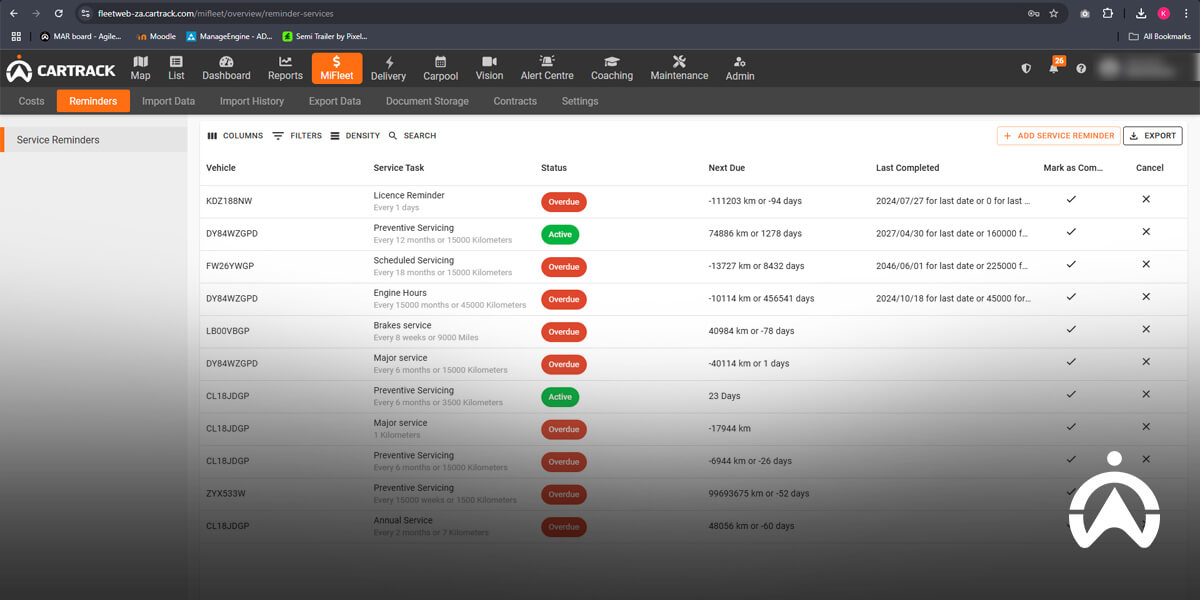
Case study: A remote diagnostics success story
Cartrack has helped many customers with fleet management, particularly in remote diagnostics. We have managed to reduce fuel costs, downtime, delays and so on. We made sure their services ran smoothly so that their customers were satisfied.
One company we helped was a Burial Society based in Limpopo. They approached Cartrack with the challenges of sudden breakdowns, hot weather conditions and traffic delays. Given the sensitive nature of the items they transport, there must be no delays.
Here is how Cartrack helped them:
- With Cartrack's real-time vehicle diagnostics and scheduled maintenance, their routine and emergency maintenance can be handled more efficiently. By knowing which vehicles need maintenance and when, the company can optimise vehicle use and reduce downtime and unnecessary breakdowns.
- The Burial Society has area managers in different locations, who use the Cartrack mobile app from anywhere at any time to see exactly where the drivers in that area are and determine whether drivers have arrived at a funeral or are running late. With this information, area managers can call and communicate seamlessly with drivers and customers about job changes or delays.
- At peak times, the Burial Society can monitor the movement of more than 300 vehicles simultaneously from its control room using Cartrack's web platform. This gives them full visibility of their fleet, so controllers know the exact whereabouts of each vehicle at all times to track productivity and job completion, and can dispatch assistance instantly in the event of a breakdown to avoid delays.
- In addition, burial societies often transport temperature-sensitive items, such as flowers, embalming fluids or other perishable products. By installing up to four temperature sensors in their transport vehicle, they can remotely monitor the temperature of their cargo. This system allows real-time tracking of temperature variations, letting burial societies set up alerts that notify them of any fluctuations. By ensuring these sensitive items are kept in the right conditions during transport, the burial society can arrive in the condition expected by the families it serves.
Our solutions have improved the quality of the service the Burial Society offers. We have also helped the company build trust with its customers, ensuring that their loved ones and associated items are treated with the utmost care and respect.
Transform your fleet operations with Cartrack's advanced remote vehicle diagnostics using CANbus technology. Monitor vehicle performance in real time, identify problems early and keep your fleet running perfectly, all from your device.
Don't let breakdowns and rising costs hold you back. Partner with Cartrack to increase efficiency and safety.
Get in touch with us today to optimise your fleet!
Frequently asked questions
Q: How long does vehicle diagnostics take?
A: The duration of a remote vehicle diagnosis varies according to the complexity of the vehicle and the tools used. Initial results can usually be available within minutes, while a full analysis can take from a few hours to a day.
Q: What should I do if an alert is triggered?
A: Have the vehicle inspected by a qualified technician as soon as possible to avoid further complications.
Q: Is remote diagnostics only for large fleets?
A: No, remote diagnostics can benefit fleets of all sizes, as well as individual vehicle owners who want to monitor the health of their vehicles proactively.
 South Africa
 Botswana
 Kenya
 Malawi
 Namibia
 Nigeria
 Swaziland
 Tanzania
 Zimbabwe
 Hong Kong
 Indonesia
 Singapore
 Malaysia
 Philippines
 Thailand
 New Zealand
 Vietnam
 Poland
 Portugal
 Spain
 United Arab Emirates

 PT