Scams have become one of the easiest ways for criminals to take people's money, from fake shopping websites to fake police officers trying to cash in on a dire situation.
Criminals are now using the trusting nature of ordinary travellers like you and me to extort money by creating fake recovery stories. The upside, though, is that families and car owners can protect their vehicles with GPS tracking solutions.
This blog explains how police impersonation scams work and the steps you can take to avoid them and protect your journey.
In this article, you will:
- Find out what police impersonation is and how to spot it
- Unpack the psychological factors that contribute to police impersonation and crime
- Learn tips to help you avoid extortion by fake police officers
- See how a tracking device can help you recover your vehicle
- Protect yourself with Cartrack GPS tracking units
Police impersonation and extortion 101
Remember playing cops and robbers as a child? Robbers now pretend to be police officers to extort money from vehicle owners in exchange for releasing their vehicles. Impersonating a law enforcement officer is a crime, and extortion is another, one that can be used to trick victims into handing over information and giving away their hard-earned money.
Fake police officers with fake stories date back to the 18th century, when criminals pretended to be police officers so that they could attack and extort innocent civilians. In our technologically advanced age, unfortunately, little has changed; criminals still deceive people by disguising themselves as police officers, often using the anonymity of the internet and smartphones to their advantage. These crimes appear to be centred on Johannesburg and the surrounding area, so if you live in this area, be extremely alert when you receive a call from a police officer.
Police impersonation: wolves in sheep's clothing?
Most people love a fancy dress party where they can dress up as whatever they have always wanted to be, but when this turns into criminal activity, it leads to chaos. The legal term for this is impersonation – the act of pretending to be someone else for entertainment or fraud – which goes beyond a costume for a party.
Many people have fallen victim to this act mainly because they do not want to get into trouble by arguing with police officers or refusing to cooperate with them. Historically, police officers have always been seen as individuals the general public can trust because their job is to enforce the law, so robbing an innocent victim while pretending to be a law enforcement officer is one of the greatest betrayals and can seriously damage the relationship of trust between the victim and the police, as well as other law enforcement authorities.
Extortion through police impersonation
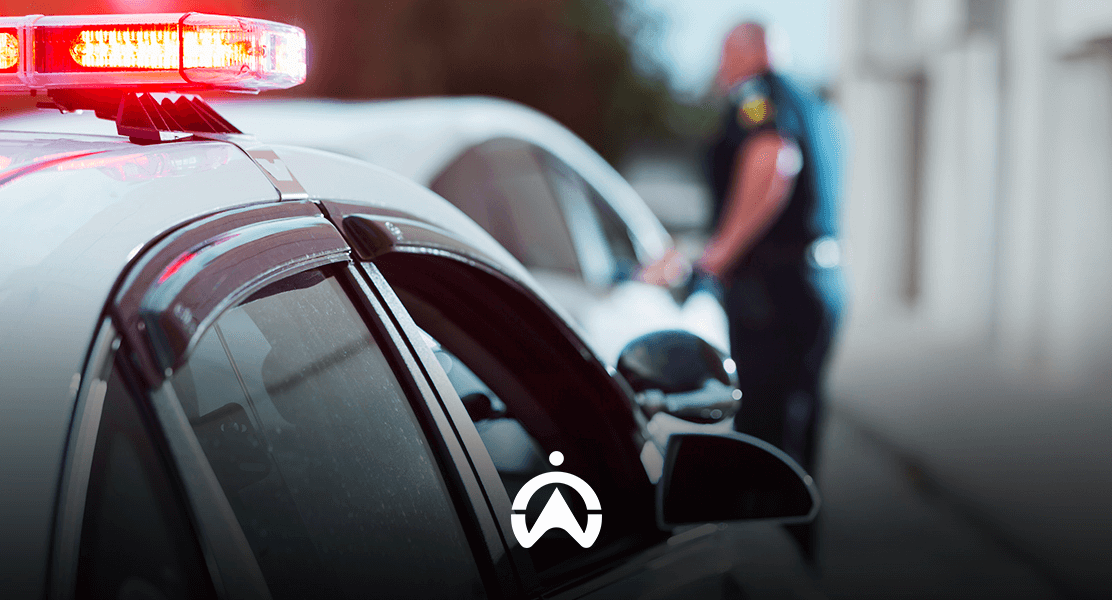
Extortion is the practice of obtaining something, such as money, through force or threats. In recent trends, criminals are posing as police officers to hijack people and force them to empty their bank accounts for the criminals' own benefit. This extortion can be carried out in two different ways: a hijacking takes place, and a fake police officer pretends to have found your vehicle and calls demanding money for the vehicle's release. Another way these fake police officers get away with deceiving you is by setting up fake roadblocks. They pretend to be police officers and use that authority to try to steal your vehicle.
Imagine leaving friends after a great braai and catch-up session and suddenly being pulled over by a vehicle with blue lights that looks like a police van. If the person getting out of the vehicle is not a real police officer, your car and even your life could be in danger.
These criminals take you hostage and drive your vehicle to the nearest ATM. That is where the extortion comes in: they force you to enter your bank PIN to access your account and withdraw all your money. That is essentially what extortion is, a way for criminals to get a vehicle and money at the same time.
Impersonation here, impersonation everywhere
This phenomenon is not popular only in Mozambique; police impersonation and extortion have gone global. India, for example, reports criminals posing as police officers in an attempt to extort money, obtaining victims' details and calling them to warn that a parcel containing illegal substances has arrived at a police station and that a police case would be opened against the victim. Honduras also has problems with criminals who pose as law enforcement officers and commit crimes. The security authorities in Honduras have introduced uniforms with chips that hold the officer's information. These chips are hard to duplicate and make it easier to identify fake police officers.
Why is police impersonation a popular crime?
The motives behind different crimes can vary, even if the main aim is still some kind of monetary or material gain. For example, some individuals are driven to crime by poverty, while others may simply be looking for the thrill of the chase and the gains they get from it. Some of the main psychological reasons for extortion are:
- Power and control: Criminals enjoy the power they have in these situations because they not only feel in control but can also get what they want by taking advantage of their victim's fear.
- Greed: Greed can, in a way, lead criminals to want more out of a situation. They know the victim may have a lot of money, so they extort larger amounts.
- Intimidation: Some criminals enjoy instilling fear in people by intimidating them. This is a personal psychological problem that can only be treated by professionals.
Although these reasons may not apply to every perpetrator, they shed much-needed light on why these criminals tend to act the way they do at a deeper level. Whatever the reason behind these criminals' actions, there is no doubt that they always cause their victims pain and trauma.
Conquering covert deception: how Sam lost his SUV and got it back
If you are wondering what the day of a victim of police impersonation and extortion looked like, it may not be so different from yours.
For example, a typical day for Sam starts with him stopping at the shopping centre to run a few errands and buy a cappuccino for his wife. One fateful day, however, he noticed he was being followed by a suspicious vehicle just after leaving the shopping centre car park, and the attackers took his vehicle. Sam rushes to the nearest police station with the help of a Good Samaritan, who picks him up outside the shopping centre car park and gives him a lift.
After opening a vehicle theft case at the police station, Sam receives a call from another, fake police officer claiming to have found his vehicle, telling Sam that he needs to meet the officer to pay for his car's release. Sam was starting to feel uneasy about the situation and, smelling a rat, informed Cartrack of the incident. Cartrack used its GPS tracking to locate Sam's vehicle, and he was able to recover his car safely and expose the police impersonators with the help of Cartrack's recovery team and the police.
Cartrack's advanced GPS tracking to the rescue
Sam's story is one of smart moves and quick responses from Cartrack. The GPS tracking device Sam had installed was the main hero in locating his vehicle and avoiding extortion by fake police officers. Using Global Positioning Systems (GPS) allows Cartrack to locate your vehicle through satellites that calculate where your vehicle has travelled and where it has stopped. This can save you from having to pay criminals who pose as police officers to extort money from you. Contact Cartrack to install a GPS tracking device in your vehicle and stop criminals from using it as a meal ticket.
Cartrack: Security for your vehicle and your wallet
Our state-of-the-art vehicle tracking features are designed to help you fight theft in a country where it poses a very real threat. Whether your car is stolen, hijacked or goes missing in an attempted fraudulent police encounter, Cartrack has the tools to increase your vehicle's security.
CarWatch is essentially the watchful eyes you need when you are not near your vehicle. The CarWatch feature detects unauthorised movement, informing you of any suspicious vehicle activity. You can easily access CarWatch in the Cartrack app, and Cartrack's 24-hour control room will contact you immediately after receiving an unauthorised movement alert. For your vehicle's overall security, CarWatch is a feature you cannot do without.
The geofence feature uses GPS to trigger alerts when your vehicle leaves the geographical boundary you have created to keep track of your vehicle's movements. For example, if you want to take extra security measures to know your car's movements, you can use geofencing to create specific zones and receive an alert when your vehicle enters or leaves those areas. Cartrack's GPS tracking device works with geofencing to help you receive alerts about your vehicle's movements, strengthening our control room's proactive response to suspicious activity.
Locating and recovering stolen vehicles is one of our areas of expertise. Our GPS tracking system allows our vehicle recovery team to locate your vehicle even when it has crossed South Africa's borders. Our tracking device is also tamper-proof and discreetly installed to make sure thieves and hijackers do not find it while they are being pursued by one of our dedicated recovery teams.
Cartrack is your superhero when it comes to vehicle tracking and recovery. A Cartrack GPS tracking device, together with CarWatch and Geofence, can help you recover your vehicle when you are at risk of being extorted by police impersonators.
Get maximum protection with Cartrack
Contact Cartrack for a free quote and to find the best package for your vehicle and your needs.
Tips to avoid being extorted by a criminal posing as a police officer
Let's be realistic: crime is an ever-present phenomenon in South Africa and it is almost impossible to escape it. Knowing your rights as a driver when stopped by the police – fake police in this case – can help you judge how dangerous the situation is. Here are some tips that can help you get away from fake police:
- Assess the situation: Check the officer's uniform to see whether it looks professional. There may be telltale signs, such as not wearing full uniform and having no identification. For your safety, you can ask for their identification to establish whether they are in fact employed by the South African Police Service.
- Don't stop in deserted areas to make a call: This may not seem like a problem, but thieves may see a deserted area as an opportunity to steal your vehicle and extort money from you because there would be no witnesses.
- Drive to the nearest police station if you are stopped or followed by a suspicious vehicle. This will allow you to get to safety quickly if the criminals chase you. These guys are unlikely to follow you to a police station!
- Press that button: Cartrack's panic button allows the emergency control room to contact you when you are in danger and to communicate directly with Cartrack's response teams and the local police to ensure a rapid response.
Save your vehicle and yourself from extortion with a Cartrack GPS tracking device. Contact a Cartrack to have this device installed in your car and always know where your car is.
 South Africa
 Botswana
 Kenya
 Malawi
 Namibia
 Nigeria
 Swaziland
 Tanzania
 Zimbabwe
 Hong Kong
 Indonesia
 Singapore
 Malaysia
 Philippines
 Thailand
 New Zealand
 Vietnam
 Poland
 Portugal
 Spain
 United Arab Emirates

 PT