How to improve your fleet's environmental sustainability with vehicle maintenance
Published
Reading time
11 minutes
Blogs
Improving the environment, becoming a more sustainable business and reducing your fleet's fuel use and CO2 emissions sounds great, especially when it means cutting your fleet costs and attracting more customers.
In this article:
Learn how to make the transition to a cleaner, greener business with fleet management systems and telematics
Get useful tips on how to reduce your fleet's carbon footprint
Put healthy habits in place that promote fleet sustainability, such as keeping up with vehicle maintenance and improving driver behaviour
Discover how Cartrack's complete fleet management solution can reduce fuel costs, monitor fuel consumption and create a fleet that iscleaner
Implementing green initiatives is becoming an increasingly attractive business approach for many fleets. Green fleet practices don't just generate a positive public attitude. They also take advantage of “green” government laws and incentives that reduce fuel spend and increase your fleet's profitability. Doesn't sound like a bad deal, does it?
Like most things worth having, the transition to a cleaner fleet isn't easy. Fleet managers need to research, plan and, finally, implement the many changes that come with achieving fleet sustainability.
The manager's role in sustainable fleet management
Fleet management is simply a manager's day-to-day. They oversee every movement and activity of the fleet's vehicles and drivers, to make sure that deliveries are made and jobs are completed on time. In addition, they make sure that drivers are kept safe, practise good driving behaviour and comply with regulations.
Overseeing all fleet operations is sometimes a stressful and overwhelming task. To stay on top of everything efficiently, fleet managers use fleet management systems to increase visibility and manage their assets better.
With fleet management systems, fleet managers can achieve:
Reduced overall fleet costs
Track vehicle movement
Streamline deliveries
Improve fleet safety
Increase driver retention
Keep vehicles up to date with scheduled maintenance
Comply with regulations
What is the most important aspect of fleet management?
With all the responsibilities that fall on fleet managers, the most important part of their job is being able to see the bigger picture and make informed decisions that bring the business closer to reaching its goals.
With the help of technological innovation in the fleet sector, fleet managers can now do far more than in the early 2000s. Technology has paved the way for fleet managers to optimise operations and coordinate their systems and staff.
Fleet management systems do their part by automating all the administrative tasks, to equip fleet managers with the insights they need to run their fleets efficiently.
Almost every decision managers make, they make in the business's favour. Striking a balance between tight capacity and rising demand, dealing with driver shortages and fluctuating fuel prices, and keeping up to date with industry regulations all contribute to improving the business.
Fleet sustainability
Many companies are now prioritising sustainability, putting pressure on managers to add one more thing to prioritise – fleet sustainability.
Reducing the fleet's carbon footprint goes hand in hand with reducing fuel use and costs. So, to achieve favourable, reduced fleet costs, the first thing to do is work out how much carbon a fleet contributes.
How do you calculate your fleet's carbon footprint?
The amount of COI2 emissions your fleet produces depends only on how much fuel is burnt, so how much CO2 does your company actually burn? This calculation will help you find an answer.
There are two ways to calculate our fleet's environmental impact efficiently.
1. Mathematical estimation.
Find out how many litres of fuel your company buys every month. If you don't have this information, you can take the number of miles your fleet travels in a month and its average miles per gallon (MPG).
With the miles and MPG, you can calculate the number of litres of fuel your fleet has burnt.
Alternatively, a litre of diesel is 2,68 kg, while petrol is 2,32 kg. You can multiply your litres by 2,68 or 2,32 and get your kilos of CO2.
2. Accurate measurement.
This is a more accurate method that involves telematics. Telematics is used together with fleet management systems to monitor and track all your vehicles, gathering information from their location and speed to their idling and fuel use.
Instead of estimating, you can see each vehicle's actual MPG at any time, with live fuel consumption rates and reports that highlight options for improving fleet health, and easily get the fleet's monthly emissions.
Creating a sustainable fleet management strategy
Once you decide to ‘go green’, a sustainable fleet management strategy is created. This is a method that aims to have a positive impact on the environment and reduce the environmental damage your fleet is causing.
Ultimately, this method promotes efficient driving and minimises a fleet's carbon footprint through healthy driving practices, such as optimised routes, proactive vehicle maintenance and looking to integrate electric vehicles (EVs) into a fleet.
All the activities a fleet can take part in to reduce its environmental, social and economic impact fall within these six main areas:
Prioritise cleaner vehicles
Use electric vehicles
Improve team behaviour
Practise effective and timely maintenance
Use route optimisation
Get Cartrack's fleet management solutions
Electric vehicles for fleets
Electric vehicles have been a trending topic in recent years and still seem highly relevant. These vehicles can be useful in light-duty, medium/heavy-duty and even off-road applications. EVs can match or exceed the performance of their petrol-powered equivalents, as well as being much quieter.
There is a variety of plug-in vehicles you can choose from.
Standard electric vehicles (EVs) are fully equipped with a battery instead of a tank and are powered by rechargeable batteries that feed several motors.
Hybrid vehicles are the best of both. Hybrid vehicles are powered by two engines, one petrol and one electric. They can use petrol and electricity to run.
Electric vehicles produce 0% gas emissions, while hybrids produce very low emissions and increase fuel efficiency.
Paint your fleet green
With the sustainable fleet management strategy in hand, it's time to turn your intentions into action. A “green fleet” isn't that different from a normal one. It can simply be defined as a fleet with sustainable goals for reducing its greenhouse gas emissions and plastic waste.
Every stage of the supply chain, from manufacturing to distribution, can gain technological improvements by going green. Creating win-win situations for business, the environment and residents.
Step 1: Reduce your fleet's fuel consumption
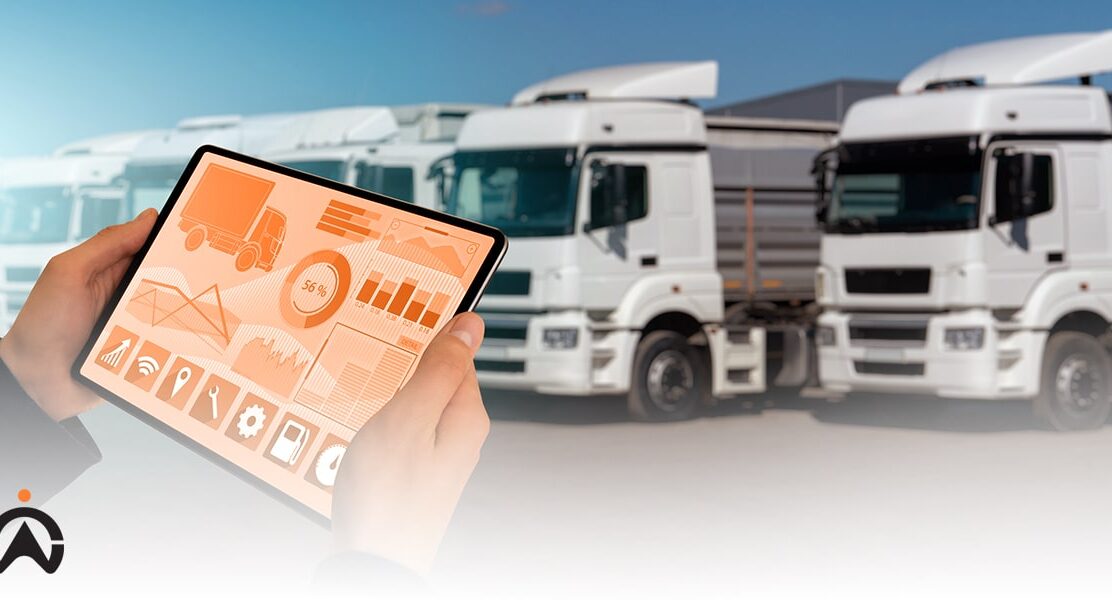
Fleet management systems and telematics play an important role in studying a fleet and compiling all the good and bad information. A report can be sent to a manager detailing not only problematic information about their fleet, but also solutions you can implement to improve fleet operations.
Both speeding and idling use more fuel than most people realise. To combat this, a few things are recommended.
Positive driving behaviour
AI camera technology
Driver scorecard
Driver training programme
These features can be beneficial not only in reducing the cost of speeding and idling, but also in encouraging drivers and ensuring driver safety.
Step 2: improve vehicle maintenance
Fleet platforms can track the mileage your vehicle has covered since its last service and create maintenance schedules to keep up to date with vehicle maintenance. Maintenance notifications help managers stay informed about their fleet's maintenance checks.
The benefits of a healthy vehicle go beyond having a longer life cycle, burning less fuel and reducing overall fleet costs. Avoiding unforeseen breakdowns saves the company more money than having a vehicle out of service and paying more to repair what is damaged.
Tips for easily turning your fleet green
It all starts with reducing fuel consumption and the associated emissions. The large amount of carbon waste produced does more harm to the environment than most. Depending on the size of your business, you may find that the number of vehicles in your fleet makes a difference to how long you will need to completely change your business for the better.
Go electric
One of the easiest ways to dramatically boost your fleet's sustainability efforts is to use electric or plug-in hybrid vehicles. Even if you choose hybrid vehicles rather than fully electric ones, hybrids will still make a significant change to your monthly fuel consumption and fuel costs.
Vehicle selection
Choosing the right vehicles for your business makes a difference. Bigger isn't always better: it all depends on which products are being transported and which vehicles are making the deliveries.
If your fleet consists only of 18-wheelers, but they deliver small furniture, it may be wise to use a smaller vehicle that uses less fuel. Selecting eco-friendly vehicles not only supports your sustainability goals, but also reduces your fleet's overall operating cost.
Track fuel consumption
With vehicle telematics, you can automatically see fuel consumption information on your fleet platform. Telematics is considered a benchmark in green fleet technology, and it can provide some much-needed information about your fleet and drivers.
Sometimes it can be difficult to improve the driving behaviour of all your drivers, as they may not all be facing the same problems. The best option here may be to train your drivers and teach them useful habits, such as how heavy acceleration uses more fuel than gradual acceleration.
Record and report everything
To create a green fleet system, you must keep track of everything that happens in your fleet. Use fleet technology to track emissions, idling and other metrics as part of your green fleet operations. Only through tracking data will you be able to assess how successfully your green fleet goals are being met.
These are the building blocks for creating a more sustainable fleet.
How does a green fleet help environmental sustainability?
The main goal of a green fleet should be to improve environmental sustainability and reduce the fleet's carbon footprint. This can be done in several ways:
Improving driver behaviour – From rapid acceleration to harsh braking and vehicle idling, driver conduct influences your fleet's green activities, which can be both good and bad.
Reduce your carbon footprint – By partnering with companies like Cartrack, you can have all your fleet's activities on one platform and reduce carbon emissions. Using Cartrack will not only benefit the environment, but could also have positive tax implications for your business.
Electric vehicles – Although not every fleet can replace all its petrol vehicles with electric ones, it doesn't hurt to start considering the option and perhaps implementing it in small ways, such as having a few electric vehicles that drivers can use every once in a while.
Reward your drivers – Rewards aren't practised in many companies, but they have been proven to work, especially for boosting driver behaviour and encouraging safer driving.
Use telemetry data – Your telematics already gathers and compiles all the data you need to understand your fleet. This is a treasure trove of actionable information on how to increase your fleet's sustainability.
Promote fleet sustainability
We are the no. 1 telematics solution that can help monitor and improve your fleet's operations on the ground.
Reduce unnecessary fuel emissions
Understand your fleet's fuel consumption
Achieve fleet sustainability with healthy vehicles
Our technology can be used for much more than just tracking your fleet. Interested? Contact us today.
Other articles for you
What Are the 5 Cameras Cartrack Offers for Business and Personal Use?
Blogs
11 minute read •
The 5 cameras (dashcams) that Cartrack Mozambique offers for business and personal use are Road Vision, Dual Vision, MultiVision, AI Dash Pro and AI MultiVision. These solutions meet a wide range of needs and keep you protected on the road at all times. Whether you run a complex fleet or simply want to protect your personal vehicle, Cartrack has the […]
How to Move from Reactive to Proactive Fleet Management
Blogs
11 minute read •
To move from reactive to proactive safety in your fleet, you need to invest in an advanced telematics system with artificial intelligence cameras. An advanced telematics system uses predictive maintenance to keep you informed about the mechanical condition of your vehicles, while AI cameras show you how your drivers behave behind the […]
Short-haul trucking is the transport of goods by truck over comparatively shorter distances than long-haul transport. It generally refers to road transport over distances of between 100 km and 250 km, normally within a single province or between neighbouring provinces of Mozambique. Data from Mozambique’s road […]
 South Africa
 Botswana
 Kenya
 Malawi
 Namibia
 Nigeria
 Swaziland
 Tanzania
 Zimbabwe
 Hong Kong
 Indonesia
 Singapore
 Malaysia
 Philippines
 Thailand
 New Zealand
 Vietnam
 Poland
 Portugal
 Spain
 United Arab Emirates

 PT