6 ways to improve driver behaviour and driving skills with fleet telematics software
Published
Reading time
10 minutes
Blogs
6 ways to improve driver behaviour and driving skills with fleet telematics software
Do you need data insights to coach your drivers on the dos and don'ts? Are your fuel costs sky-high because of poor driving behaviour?
Whatever your challenge as a fleet manager, there are ways to monitor driver behaviour with the help of telematics software.
In this article:
Understand exactly what driver behaviour is
Identify the factors that affect driver behaviour
Discover various driver assessments to help you hire the right drivers
Discover six ways to improve driver behaviour and safety
Learn how to shape driver behaviour through a fleet telematics management platform
Get to know the benefits of a driver behaviour monitoring system
This article is about what you can do to empower your drivers and improve driving behaviour in your fleet – all of which offers countless business benefits you can't ignore.
In addition, you'll discover some factors that affect driver behaviour and the driver assessments that can help you make sure you hire the right drivers.
What is driver behaviour?
Driver behaviour can be defined as the actions a driver performs while driving a motor vehicle. It is essentially the driver's driving methods and characteristics, intentional or not. Driver behaviour is usually characterised on a spectrum from normal to risky and aggressive.
If you are a fleet manager, it helps to understand the factors that can influence a driver's driving methods, as they can affect the driver's ability to assess risks and make decisions on the road.
Here are a few pointers:
Factors that affect driver behaviour
Distractions: any action that takes the driver's eyes off the road is considered a distraction. A common distraction is using smartphones for texting and calls while driving.
Reckless driving: Actions such as speeding, jumping a traffic light, changing lanes without indicating or driving too fast can endanger other road users, which is considered reckless driving.
Fatigue: Apart from the real dangers of falling asleep on the road, even a tired driver may have slower reaction times than an alert driver, making it harder to respond to sudden hazards on the road.
Age and experience: There is a weight of evidence proving that age and experience have an effect on accident risk. For example, studies have consistently concluded that teenage drivers had dramatically higher accident rates than older drivers, particularly drivers over 25.
Drink-driving: Drunk driving causes almost half of all fatal accidents and numerous collision injuries every year. In South Africa, 50% of all accidents that happen on the roads involve someone who is over the legal alcohol limit. However, alcohol isn't the only substance that can impair a driver's ability to drive a vehicle. Prescription medication, illegal narcotics and over-the-counter medicines can cause confusion, drowsiness and poor decision-making.
Now that you understand the factors that influence driver behaviour, there is more you can do to make sure you hire the right drivers for your fleet.
Assessing a driver's skills and attitudes to driving can significantly help both employee and employer. The qualities of a good driver come from attitude, skills and knowledge.
You may want to consider carrying out driver assessments to analyse behaviour and attitude together; after all, they are interlinked.
Here are a few, so that you can understand your drivers before they hit the road.
Types of driver behaviour assessments
The driver behaviour questionnaire (DBQ)
Drivers answer questions about how they drive day to day and can indicate on a scale (0 = never and 5 = nearly always) how often they have carried out each driving behaviour on the list.
Attitudes towards traffic safety scale (ATTS)
Here they are asked questions about their views on traffic safety, which will give the fleet manager an idea of their behaviour and how they approach traffic laws.
Transactional analysis of driver behaviour (TA)
This test will help you understand how your drivers react under pressure and their working styles. This model will help you uncover information about how they organise their work and time and communicate with one another.
6 ways to improve driver behaviour and safety
1. Establish safety policies
Companies should create safety policies, procedures and expectations for drivers to follow. These should be signed by managers and drivers and reviewed regularly to show how committed your company is to reducing traffic-related accidents, injuries and deaths. And these policies can be shown to drivers during training sessions, for example, your no-distraction policy.
2. Check driver records
Check driving records and history before bringing new drivers on board. You can filter out those with a poor driving history, to avoid future incidents.
3. Train drivers
The best way to instil safe driving methods is to educate your drivers on safety protocol. Show them the consequences of risky driving behaviour, speeding, distracted driving and more. You can also send them on a driver behaviour course to equip them better.
4. Motivate your drivers
Training your drivers will motivate and encourage them to perform better, as it creates room for them to grow and develop their skills. Empower your employees with the right set of values for success by creating positive practices.
You can also create incentive programmes where they are rewarded for driving well, to reinforce their good driving habits.
Actionable data from a fleet management platform can be used to show your drivers the best way to drive. For example, you can spot whether one driver is idling more than others, and can then let those drivers know. If others are following safe driving procedures, this can help motivate other drivers to reach that level too.
5. Maintain vehicles
If your vehicles are well maintained, you'll have a safer fleet overall. They will run better, so you can avoid road accidents and protect your drivers. You can receive real-time alerts if there are any engine faults, worn brake pads, oil and water fluctuations and other diagnostics, so that you know when you need to service your vehicles.
Use vehicle telematics software
Use the smart data from a fleet management platform to get the information you need on driving behaviours and methods. You'll be able to detect events such as speeding and harsh braking and put systems in place to stop these incidents.
See more on how telematics software can help you monitor the drivers in your fleet.
How to improve driver behaviour through a fleet telematics management platform
As we know, there is a benefit in identifying unsafe driving methods. Insurers are always looking for ways to reduce insurance payouts and road accidents by monitoring safe driving habits on South African roads.
We also know that safe driving affects a fleet's longevity and can help reduce costs.
Here's how a fleet platform can help you improve driver behaviour:
Driver behaviour reports
Get driver scorecard data reports from a fleet platform and get the driver information you need to catch idling, aggressive driving, speeding and much more – all of which are costly for a fleet.
Get detailed reports for each behaviour too. Say, for example, that speeding is an ongoing trend with one of your drivers: then get a detailed speeding analysis. It can include detailed locations, duration and distance travelled at maximum speed limits, so that you can get the full picture of a speeding incident. Or perhaps your fuel costs have gone up: get an excessive idling report to see whether that is the cause.
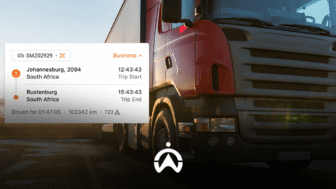
On-demand trip reports can also be pulled if you want to analyse and compare all your vehicles and the drivers who use them.
These reports will help fleet managers take action in real time to mitigate problems
Driver behaviour alerts and reminders
With all the daily tasks a fleet manager faces, a fleet platform will help with its alert and reminder features. Managers can customise driver behaviour alerts and receive the information they consider necessary. So they can create a trigger alert for when the ignition is switched on and off and choose where they want the alert to go, i.e. email. Or receive real-time alerts when safety rules aren't followed and put that right immediately.
Drivers can also receive preventive in-cab alerts in real time, so that they know when they are breaking the rules of the road or committing safety violations. For example, if they aren't keeping their distance from the vehicle in front. Create reminders for certain events too: for example, you may want to be reminded to check a particular route a driver is taking, to see whether the speeding persists.
AI cameras
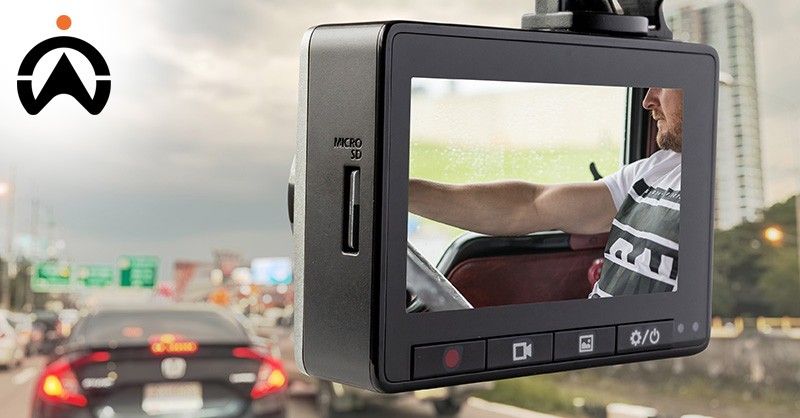
Get up to eight interior or exterior cameras to help keep your drivers, fleet and cargo safe. These cameras can pick up all kinds of detections, including forward collision warnings, smoking detection, distracted driving, yawning and much more. Smart in-cab screens keep your drivers safe and give them visibility of their blind spots, and the cameras alert them in real time to any dangers or problems. With the footage, you'll also be able to protect drivers from false accident claims. In the event of poor driving, fleet managers can also use the footage to raise the incident with the driver concerned.
Benefits of improving your driver behaviour monitoring system
Choose Cartrack's software and GPS tracking system and you'll get the following benefits:
Reduce costs, as poor driver behaviour will be detected and accidents can be avoided
Ensure compliance with legislation in your company
Identify aggressive driving methods to ensure road safety compliance and protect your fleet
Protect your drivers, as they will be notified in real time if they aren't driving properly
Provide accountability with driver ID tags or identification
Save on running costs, such as fuel and maintenance, and increase your vehicle's longevity
Make your fleet and driver behaviour as safe as possible, with fleet management software from Cartrack. Contact us today.
Other articles for you
What Are the 5 Cameras Cartrack Offers for Business and Personal Use?
Blogs
11 minute read •
The 5 cameras (dashcams) that Cartrack Mozambique offers for business and personal use are Road Vision, Dual Vision, MultiVision, AI Dash Pro and AI MultiVision. These solutions meet a wide range of needs and keep you protected on the road at all times. Whether you run a complex fleet or simply want to protect your personal vehicle, Cartrack has the […]
How to Move from Reactive to Proactive Fleet Management
Blogs
11 minute read •
To move from reactive to proactive safety in your fleet, you need to invest in an advanced telematics system with artificial intelligence cameras. An advanced telematics system uses predictive maintenance to keep you informed about the mechanical condition of your vehicles, while AI cameras show you how your drivers behave behind the […]
Short-haul trucking is the transport of goods by truck over comparatively shorter distances than long-haul transport. It generally refers to road transport over distances of between 100 km and 250 km, normally within a single province or between neighbouring provinces of Mozambique. Data from Mozambique’s road […]
 South Africa
 Botswana
 Kenya
 Malawi
 Namibia
 Nigeria
 Swaziland
 Tanzania
 Zimbabwe
 Hong Kong
 Indonesia
 Singapore
 Malaysia
 Philippines
 Thailand
 New Zealand
 Vietnam
 Poland
 Portugal
 Spain
 United Arab Emirates

 PT