What is ADAS? Never worry about devastating collisions again
Published
Reading time
12 minutes
Blogs
Imagine a world where driving becomes not only safer, but smarter too. A world where accidents are significantly reduced, thanks to cutting-edge technology that anticipates potential hazards and provides timely warnings.
In this article, you will:
Develop an understanding of what ADAS is and how it works
Uncover the importance of ADAS
Discover the top 5 benefits of ADAS for your fleet
ADAS stands for Advanced Driver Assistance Systems. These systems are a collection of advanced digital technologies and features built into modern vehicles. These advanced technologies and features improve driver safety , enhancing their ability to react to hazards on the road to reduce both minor and devastating accidents.
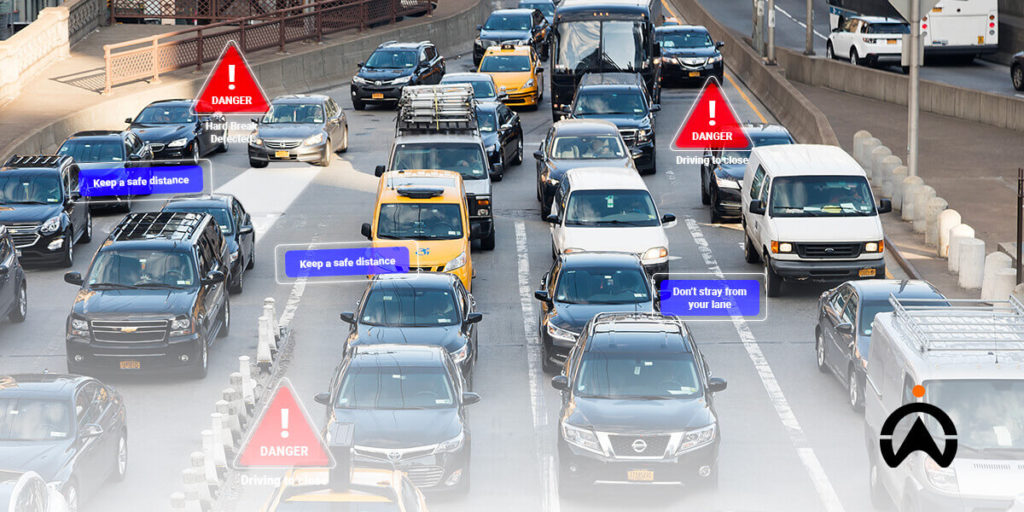
From the humble seat belt to the familiar traffic lights and road lanes, the quest for safer roads has been relentless. Today, almost all car collisions are caused by human error; fortunately, we can prevent this with ADAS through early warning and automated systems such as:
adaptive cruise control
lane departure warning
automatic emergency braking
blind spot monitoring
pedestrian detection
parking assistance and much more
Evidently, the main purpose of ADAS is to prevent accidents, reduce the severity of collisions and improve overall road safety by alerting the driver to potential hazards, helping to maintain safe distances from other vehicles, monitoring lane positions, detecting and responding to obstacles, and providing assistance during parking manoeuvres.
According to the Insurance Institute for Highway Safety, forward collision warning systems reduce front-to-rear collisions by 27%, rear-view cameras reduce reversing accidents by 17%, while automated rear braking cuts them by 78% – all thanks to ADAS.
Let's find out how it works.
What is ADAS? Never worry about devastating collisions again
How ADAS works: a simple explanation
ADAS works by using camera-based sensors, intelligent algorithms, and artificial intelligence and machine learning to increase drivers' awareness of their surroundings and improve vehicle safety . These cutting-edge solutions consist of multiple chips known as systems on a chip (SoCs) that analyse data from the surrounding environment, such as road conditions and other vehicles, to provide real-time warnings and assistance.
Put simply, here is how ADAS works:
Sensors and Cameras: ADAS systems are equipped with sensors and cameras strategically positioned around the vehicle. These sensors detect and collect data about the vehicle's surroundings, including other vehicles, pedestrians, road markings and obstacles. For optimal visibility, these ADAS cameras are usually mounted inside the vehicle, near the front windscreen, behind the central rear-view mirror.
Data Processing: The data collected by the cameras and sensors is processed in real time by the on-board computer systems. These systems analyse the data using predefined patterns and algorithms to identify potential risks or hazards.
Driver assistance features: Based on the analysed data, ADAS provides driver assistance features to enhance safety. These features include:
– Forward collision warning: alerts the driver if the vehicle approaches another vehicle or obstacle too quickly, helping to avoid rear-end collisions.
– Lane departure warning: detects when the vehicle leaves its lane without indicating and alerts the driver to take corrective action.
– Adaptive Cruise Control: Automatically adjusts the vehicle's speed to keep a safe distance from the vehicle in front, providing a more comfortable and controlled driving experience.
– Blind Spot Detection: Alerts the driver to vehicles in blind spots, reducing the risk of lane-change accidents.
– Automatic Emergency Braking: Detects possible collisions and automatically applies the brakes to reduce the impact or avoid a collision altogether.
Audible and visual alerts: ADAS systems also provide audible or visual alerts to the driver through beeps, dashboard displays or head-up displays. These alerts draw the driver's attention to potential hazards and prompt them to take appropriate action to avoid collisions.
How ADAS works: a simple explanation ADAS works by using camera-based sensors, intelligent algorithms, and artificial intelligence and machine learning to increase drivers' awareness of their surroundings and improve vehicle safety. These cutting-edge solutions consist of multiple chips known as systems on a chip (SoCs) that analyse data from the surrounding environment, such as road conditions and other vehicles, to provide real-time warnings and assistance.
How important is ADAS
In today's fast-paced, technology-driven world, the motor industry has seen remarkable advances, transforming the way we drive and ensuring greater safety on the roads. As a result, ADAS systems have become crucial for mitigating human error, improving road safety and shaping the future of vehicle and driver safety.
Let's take a closer look at the significant importance of ADAS:
Accident prevention: With human error being one of the main causes of road accidents, ADAS technologies such as forward collision warning, lane departure warning and automatic emergency braking act as a safety net that prevents devastating collisions.
Risk mitigation: ADAS features play a crucial role in reducing or eliminating potential safety risks and their severity. By incorporating elements such as blind spot detection, rear-view cameras and parking assistance systems, drivers can overcome blind spots and handle challenging manoeuvres with improved visibility. This reduces the likelihood of accidents caused by errors of judgement or inadequate visibility.
Informed decision-making: By giving drivers real-time alerts about potential hazards, speed limits and traffic conditions, ADAS becomes a valuable tool that empowers drivers to make road safety decisions with confidence. This reduces the chances of errors resulting from a lack of awareness or misreading the road.
Driver assistance: In adverse weather conditions or low-visibility scenarios, ADAS features such as adaptive headlights, rain-sensing wipers and traction control help drivers stay in control and make the appropriate adjustments to minimise devastating collisions related to adverse weather.
Safety redundancy: Even the most attentive and experienced drivers can make mistakes or be momentarily distracted. As such, ADAS acts as a crucial backup system to compensate for human limitations and serves as an additional layer of safety, detecting and responding to potential hazards when human attention or reaction time falls short.
Overall, by mitigating human error and providing critical assistance, ADAS technologies contribute significantly to reducing accidents, injuries and deaths on the road. They improve the overall safety of your fleet, complementing human capabilities and making driving safer for everyone.
The top 5 benefits of ADAS for your fleet
Integrating ADAS has become increasingly vital in the fleet industry. This is due to its critical role in various other sectors, such as cold chain logistics, construction, rental and leasing, taxi services, and transport and logistics. With accident statistics so high, ADAS is a necessary component for improving safety and efficiency in fleet operations.
Let's unpack the top 5 benefits of ADAS for your fleet:
Improved safety: ADAS plays a crucial role in improving fleet safety, providing features that help drivers avoid potential hazards and maintain safe driving practices. This proactive approach significantly reduces the risk of accidents and promotes a culture of safety among drivers.
Fewer accidents: By giving drivers timely warnings and assistance, alerting them to potential road hazards, ADAS reduces the number of collisions. This results in lower costs associated with repairs to your fleet vehicles, insurance claims and possible injuries suffered by drivers as a result of accidents.
Driver training and monitoring: Advanced ADAS features, such as fatigue detection, identify risky driving behaviour in your fleet and help you deal with it, promoting safer practices and reducing the chances of accidents caused by driver error. This ensures continuous improvement in driver performance and safety of the fleet overall.
Greater fleet efficiency: with ADAS features such as route optimisation, real-time vehicle tracking and a predictive maintenance system, fleet operations can be simplified and optimised, downtime can be reduced and overall fleet performance can improve. This can result in greater productivity and profitability for fleet businesses.
Cost savings: Integrating ADAS into fleet operations translates into substantial cost savings. Fewer accidents thanks to ADAS mean lower spending on vehicle repairs, insurance premiums and liability claims. In addition, ADAS features such as adaptive cruise control help improve fuel efficiency, reducing fuel consumption and expenses over time
Although this is an impressive list of benefits, there is just one catch: only top-tier ADAS can make them a reality.
Cartrack ADAS for fleet efficiency, safety and cost savings
Introducing ADAS from Cartrack Mozambique, a cutting-edge solution that prioritises driver and fleet safety . Our ADAS analyses internal (in-cab) and external (road) driving environments to offer unrivalled protection by:
Detecting and informing drivers of any potential threats.
Sending real-time audible alerts when high-risk behaviour is detected, capturing footage of the event and uploading it to the cloud.
Alerting fleet managers and administrators to any risky events and giving them access to the footage for effective training.
With our cutting-edge features, Cartrack ADAS cameras help fleets become more efficient, safer and more cost-effective:
AI and live-stream technology:
Use our AI-powered, live-streaming in-cab or external cameras to protect your drivers, fleet and precious cargo in real time. By providing a comprehensive view of your fleet operations, these cameras increase efficiency, enabling proactive decision-making, optimising routes and reducing downtime due to possible collisions. This technology keeps your fleet safe by detecting potential risks and allowing immediate intervention. In addition, by minimising accidents and damage, they lead to significant cost savings on vehicle repairs, insurance premiums and legal liabilities.
Forward collision warning:
Our ADAS cameras diligently monitor the distance between vehicles, giving your fleet's drivers timely alerts to avoid rear-end collisions and bumper bashes. This proactive safety measure not only protects drivers' lives, but also prevents costly accidents, vehicle downtime and the repair bills that follow. By avoiding such incidents, your fleet's efficiency improves through uninterrupted operations and reduced downtime, resulting in significant savings.
Smoking detection
Say goodbye to smoking while driving. Our DMS (driver monitoring system) camera instantly identifies smoking incidents, triggering immediate alerts. By addressing this risky behaviour, it ensures a focused and attentive driving environment, increasing safety for both the driver and other road users. By eliminating this distraction, you can improve fleet efficiency and reduce the likelihood of accidents, vehicle damage and the associated costs. It also promotes a positive image of your fleet and reduces potential legal and reputational risks.
Case study: A Cartrack ADAS success story
Namdeb is a diamond mining company that carries out land-based prospecting (exploration), mining and rehabilitation operations and services for (its subsidiary) Namdeb Holdings. Today, Namdeb monitors the use and ensures the safety of more than 416 vehicles (LDVs, crawlers and buses), thanks to ADAS cameras from Cartrack Mozambique.
Challenge: Given the nature of the mining industry and the high potential for safety risks that lead to accidents, injuries and worker deaths, Namdeb needed advanced driver assistance systems (ADAS) to help them manage driver behaviour and safety and monitor the use of all fleet assets.
Solutions: To mitigate risks to the driver and safety, Namdeb implemented a comprehensive Cartrack solution. ADAS cameras were installed in its fleet vehicles, enabling effective monitoring and detection of risky driving behaviours such as smoking, mobile phone use and fatigue. These cameras instantly send audible alerts to drivers in real time, allowing them to correct their actions and avoid collisions. To further enhance safety measures, driver identification tags from Cartrack Mozambique were implemented to monitor driver identities and prevent the unauthorised use of vehicles and machinery. In addition, a portable in-cab breathalyser detects alcohol and prevents drivers from starting their vehicles if they are under the influence.
Results: As a result of Cartrack ADAS cameras, Namdeb’s fleet now has alert and focused drivers, ensuring peak performance 24 hours a day, 7 days a week. With the ability to enforce authorised and sober drivers only, fleet and driver safety has soared. In addition, the company maintains a well-tuned fleet, avoiding both under-utilisation and over-utilisation, and operating seamlessly in designated mines with top-level safety measures in place.
Don’t miss the opportunity to revolutionise your fleet with greater safety, efficiency and savings. Click here and get a free demo today.
Other articles for you
Food Transport Facts and What You Need to Know When Managing Your Fleet
Blogs
11 minute read •
Important facts about food transport in fleet management: keeping perishable goods fresh in transit directly affects your profits — and mixing food loads is a serious mistake. Other facts include the food distribution regulations in force in Mozambique, the challenges of electricity supply and the […]
7 Ways to Increase the Efficiency of Your Construction Fleet
Blogs
12 minute read •
The seven main ways to increase the efficiency of your construction fleet are: Use telematics and GPS tracking to keep everything under control. Keep vehicle maintenance up to date.. Implement a fuel monitoring solution. Offer your drivers ongoing training. Plan better routes between sites. Match the size of the fleet to […]
How to Manage Your Light Commercial Vehicles (LCVs) Effectively with Fleet Management Software
Blogs
12 minute read •
To manage your light commercial vehicles effectively with fleet software, you should invest in a platform that directly addresses the biggest challenges LCVs face. LCV fleets deal with unique vulnerabilities because of their frequent trips. Wear and tear, wasted fuel, unexpected downtime and more are some of the main concerns. LCVs are […]
 South Africa
 Botswana
 Kenya
 Malawi
 Namibia
 Nigeria
 Swaziland
 Tanzania
 Zimbabwe
 Hong Kong
 Indonesia
 Singapore
 Malaysia
 Philippines
 Thailand
 New Zealand
 Vietnam
 Poland
 Portugal
 Spain
 United Arab Emirates

 PT