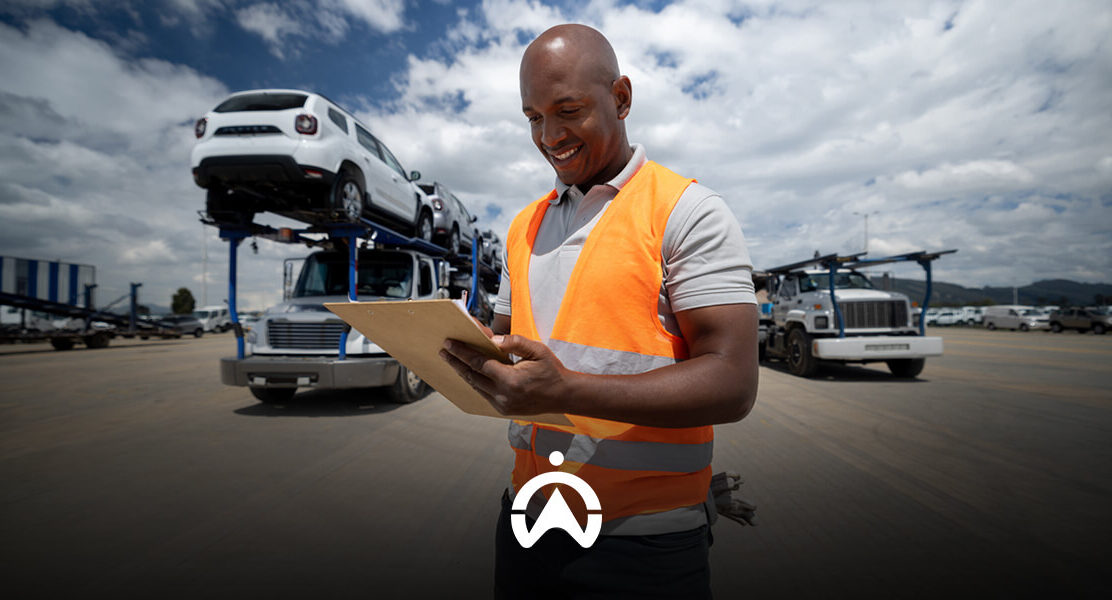
Those who really know will tell you that fleet management is no child's play.
Fleet managers are crucial to a fleet's success, playing a vital role in its operation, safety and profitability. If you are trying to do it alone, it can be a major challenge. But with a fleet management system, your stormy day-to-day can turn into a calm stream.
Sound like music to a fleet manager's ears? Well, let us inform and equip you.
In this article, you will:
- Learn what a fleet manager is
- Discover what a fleet manager's responsibilities are
- Dive into what makes a fleet manager effective
- Explore the benefits of investing in your fleet
- Find out the main challenges fleet managers face
- Get insight into how Cartrack Mozambique's solutions will improve your fleet management
What is a fleet manager?
Every fleet has its own set of tasks and challenges, and that is where fleet managers come in. The fleet manager is the person responsible for managing a company's fleet, along with all its aspects. Their main goal is to ensure the fleet remains safe, reliable and efficient, and this is done through a range of responsibilities.
What are a fleet manager's responsibilities?
Fleet managers are responsible for the overall running of the fleet. That may not sound like much, but when you dig into these responsibilities, you start to see that it involves several tasks:
1. Vehicle acquisition:
Vehicle acquisition is a crucial responsibility of a fleet manager. It involves the process of obtaining, managing and maintaining a fleet of vehicles. This responsibility includes multiple steps, including vehicle selection, procurement and oversight of the vehicles essential to the company's operations. Fleet managers must create a clear, well-thought-out acquisition plan to ensure the fleet saves time, money and possible frustration. This crucial process also involves considering factors such as financing options and total cost of ownership.
The benefits of fleet vehicle acquisition include:
- Cost savings
- Environmental sustainability
- Better brand reputation
- Higher productivity
2. Overseeing fuel consumption and expenses:
Fuel is one of the most essential expenses in fleet management, with most fleets spending around 24% of their budget on fuel. Fleet managers need to manage and identify effective ways to reduce fuel expenses. They should always be monitoring fuel consumption and looking for ways to cut fuel costs. This means they need to keep an eye on each vehicle's fuel consumption.
The benefits of overseeing fuel consumption and expenses include:
- Reduced fuel consumption
- Greater fleet efficiency
- Increased profitability
3. Managing fleet maintenance schedules:
Managing fleet management schedules involves developing a maintenance plan that sets out when each vehicle needs servicing. This is based on several factors, including vehicle age, mileage and usage patterns. This means fleet managers need to assess the fleet's vehicles closely and often to determine their individual maintenance needs, identify the maintenance tasks each vehicle requires and develop a maintenance calendar that clearly sets out when each of these maintenance activities needs to be carried out.
The benefits of managing fleet maintenance schedules include:
- Fleet and vehicle longevity
- Greater vehicle safety
- Better driver retention
- Minimised downtime
- Reduced operating expenses
- Increased productivity
4. Fleet tracking:
Tracking an entire fleet of vehicles is no easy task. Vehicle tracking, which is crucial for fleet visibility, uses advanced technologies such as telematics and GPS to provide real-time monitoring and data collection on a vehicle's location and performance.
The benefits of tracking your fleet include:
- Full and accurate fleet visibility
- Better route planning
- Better vehicle utilisation
- Greater driver safety
- Increasing operational efficiency
The benefits of tracking your fleet include:
- Full and accurate fleet visibility
- Better route planning
- Better vehicle utilisation
- Greater driver safety
- Increasing operational efficiency
5. Benchmarking fleet performance:
Fleet managers should regularly compare their fleet's performance against industry benchmarks to help identify areas for improvement, from fuel efficiency, maintenance costs and safety records to driver productivity and uptime.
The benefits of benchmarking your fleet's performance include:
- Identifying areas for improvement
- Better goal setting
- Simplifying progress tracking
- Staying competitive
6. Networking with other fleet managers:
Fleet managers should be able to share best practice, learn from others' experiences and stay up to date on industry trends by networking with other fleet professionals. This can be done through industry associations, online forums, trade shows and networking events.
The benefits of networking with other fleet managers:
- Learn from the successes and failures of others
- Stay up to date on industry trends
- Finding new solutions to existing problems
- Building relationships with potential partners
7. Partnering with industry experts:
As a fleet manager, partnering with consultants and technology providers who can offer specialist knowledge and support can be very useful for implementing new technologies, improving efficiency, reducing costs and complying with regulations on road use and safety.
The benefits of partnering with industry experts:
- Gaining access to specialist expertise
- Reduced fleet costs
- Greater fleet efficiency

What makes a fleet manager highly effective?
Now that we have covered the responsibilities, what really sets a fleet manager apart from the crowd? The answer is their effectiveness, and that is achieved by doing the following:
- They embrace technological advances:
As a fleet manager, it is important to understand that the aim of technological advances is to simplify and streamline your processes. Embracing technological advances makes fleet managers more effective. It gives them the tools and resources to reduce costs and adapt to the industry's evolving trends. By leveraging advanced technology such as telematics, GPS technology and fleet management software, fleet managers can get real-time information on how their fleet is running, gain a competitive edge, improve overall fleet performance and drive business success.
- They focus on fleet safety:
Prioritising safety ensures the wellbeing of your drivers, passengers and other road users, fostering a culture of safety and accountability within the organisation. This can be done by implementing a comprehensive fleet safety programme covering several elements, including vehicle maintenance, fleet monitoring systems and driver training programmes designed to increase your drivers' safety and efficiency. When these measures are integrated with technology, fleet managers can gain data-driven insights, helping them build safety into every facet of their fleet operations. By placing a strong emphasis on fleet safety, fleet managers can minimise accidents and protect drivers. According to the National Safety Council, drivers who have undergone training can reduce accidents by an impressive 50%.
- They simplify vehicle maintenance
Simplifying vehicle maintenance is a hallmark of effective fleet management, as it leads to greater operational efficiency, cost savings and improved safety. This process covers a range of crucial aspects that help fleet managers ensure their fleet runs as well as it possibly can. By leveraging technology solutions such as cloud-based fleet management software, fleet managers can streamline the entire vehicle maintenance process, making it more efficient. In turn, this improves the fleet's fuel economy, reduces downtime and extends vehicle life. This means fleet managers can now focus on strategic planning and vehicle optimisation, rather than dealing with constant vehicle problems.
- They work to improve and simplify communication
We have all heard that “communication is key”, and this statement applies to the fleet industries too. Clear communication not only ensures that team members understand their roles, responsibilities and objectives, but also helps resolve problems promptly, whether that means scheduling maintenance or dispatching a second vehicle to make sure deliveries are not delayed. By keeping lines of communication open and convenient, fleet managers can tackle challenges quickly, provide support and get valuable feedback to make informed decisions and drive continuous improvement. Not only that, but effective communication within a fleet ensures the fleet can adapt easily to new technologies. The by-product of effective communication is streamlined operations, reduced costs and fleet sustainability
- They are focused on data and insights
A focus on data and insights allows fleet managers to make informed decisions about vehicle use, maintenance and optimisation, improve operational efficiency and prioritise safety. By analysing data on various fleet metrics, including fuel consumption, mileage and driver behaviour, fleet managers can quickly identify inefficiencies and implement strategies to improve overall fleet performance. The insights drawn from this data enable proactive decision-making, such as implementing predictive maintenance strategies that can help reduce unplanned downtime and avoid costly breakdowns.
What are the benefits of investing in your fleet?
These responsibilities may seem like a lot for a fleet manager, but when taken seriously, they can have a huge and direct impact on your fleet's success. Here are some of the rewards you can reap:
- Reduced fleet costs
Reduce fuel consumption and maintenance expenses by investing in technologies that optimise vehicle use (such as telematics and route optimisation software) and lower overall fleet costs. By training and coaching drivers in safe driving techniques, you can reduce the risk of car accidents. This also means you can eliminate driving behaviours that waste fuel, reducing the amount of money your fleet has to spend on fuel. It has been found that drivers who receive training in fuel-efficient driving techniques can save their company up to 20% in fuel costs.
- Increased productivity
Increase fleet productivity by investing in technologies that help reduce idle time, improve dispatch, optimise routes and improve dispatch. This higher productivity leads to better response times, better customer service and increased profits. By making use of the data from this technology, you can make informed decisions, with a positive impact on fleet productivity.
- Reduced turnover
Investing in your fleet by implementing fleet management solutions can significantly reduce drivers' stress levels and improve job satisfaction. When employees see that their managers are investing in their safety, productivity and mental wellbeing, loyalty to the company is fostered, resulting in driver retention.
Cartrack: The ideal investment for your fleet
Cartrack Mozambique brings you a wide range of solutions designed to simplify fleet management. Let's explore these solutions and how they can help make you a better fleet manager:
- Cost management system (MiFleet)
No more guessing games when it comes to fleet costs. Know exactly how much money your fleet needs to run with Cartrack's MiFleet software. This vehicle cost management software helps fleet managers keep track of all fleet expenses, including
- Fuel monitoring
Track accurately how much fuel your fleet's vehicles are using with Cartrack's fuel monitoring system. Using a fuel sensor installed in your vehicle's tank, you can keep a close eye on your vehicle's fuel consumption. However, our fuel monitoring system goes beyond real-time visibility of fuel use and also compares fuel transactions, which is crucial in helping you detect potential fuel theft.
- AI cameras:
Always keep an eye on driver behaviour with Cartrack's Live Vision AI cameras. We offer cloud-connected video management software that gives you access to real-time driver behaviour alerts, making use of in-cab cameras and AI analysis. This next-level technology can identify dangerous driving behaviours such as mobile phone use, yawning, speeding and smoking. When these behaviours are detected, audible in-cab alerts notify your drivers immediately, allowing them to correct their behaviour in real time.
- GPS tracking:
Always know exactly where your entire fleet is with Cartrack's live GPS tracking. By providing real-time location updates, our solution gives you full control of the fleet, telling you exactly when, where and how your vehicles were used. It also provides important performance metrics, such as total idle time and distance travelled, giving you a complete view of your fleet's trips. This helps improve fleet efficiency, promote driver safety and optimise vehicle performance.
- Preventive vehicle maintenance:
Say goodbye to unplanned downtime and costly breakdowns with Cartrack's preventive vehicle maintenance. Our preventive maintenance software uses a combination of artificial intelligence and advanced analytics to detect possible vehicle maintenance problems before they become expensive and dangerous. By analysing vehicle performance, our software can send alerts about maintenance-related issues such as low water and oil levels, engine faults and worn brake pads. This helps you avoid costly future repairs, keep your vehicles in good condition for longer and save money.
- Delivery app
Improve the efficiency of your fleet's delivery tasks with Cartrack Delivery. This feature-rich solution is designed to optimise and streamline delivery operations for managers and drivers. This app gives access to a wide range of fleet benefits, including delivery route optimisation, a real-time view of all deliveries and the elimination of excess paperwork. This leads to faster completion of tasks and deliveries, higher productivity and happier customers.
Fleet manager's tip corner

8 tips to help you be the best fleet manager
Here are our top 8 tips you can implement to take your fleet management to the next level:
- Use a telematics system: simplify the monitoring of your vehicle's location, performance and driver behaviour in real time and provide real-time alerts for vehicle diagnostics.
- Use a telematics system: simplify the monitoring of your vehicle's location, performance and driver behaviour in real time and provide real-time alerts for vehicle diagnostics.
- Optimise your routes: Keep your routes as short and free of detours as possible, which minimises fuel consumption and ensures on-time deliveries. Use a system that takes account of factors such as real-time traffic and weather conditions.
- Keep your vehicles well maintained: implement an effective maintenance plan that helps you anticipate repairs and provides real-time alerts about any faults in the
- Keep your vehicles well maintained: implement an effective maintenance plan that helps you anticipate repairs and provides real-time alerts about any faults in the
- Keep team morale and stability high: Maintaining a stable team is important for effective fleet management, as it improves job satisfaction, overall productivity and efficiency. Putting your drivers' safety and wellbeing first will improve your fleet's driver retention.
- Think about your whole business when making decisions: The decisions you make can affect your drivers, customers and people outside your company. For example, choosing to keep your vehicles maintained, safe and roadworthy can protect your drivers, other motorists and your company's brand image.
- Always communicate with your team: Good communication puts every team member on the same page. Keeping your team informed about new schedules, route updates and job changes, all in real time, can help you improve productivity dramatically and avoid delays.
Who better to help you implement these tips than Cartrack Mozambique?
Master your fleet management duties and responsibilities with Cartrack Mozambique's solutions
Although being a fleet manager is no child's play, it doesn't have to be a struggle. As seen above, our solutions are exactly the trick you need up your sleeve to turn your fleet management expectations into experience.
Contact Cartrack today for a free quote.
 South Africa
 Botswana
 Kenya
 Malawi
 Namibia
 Nigeria
 Swaziland
 Tanzania
 Zimbabwe
 Hong Kong
 Indonesia
 Singapore
 Malaysia
 Philippines
 Thailand
 New Zealand
 Vietnam
 Poland
 Portugal
 Spain
 United Arab Emirates

 PT