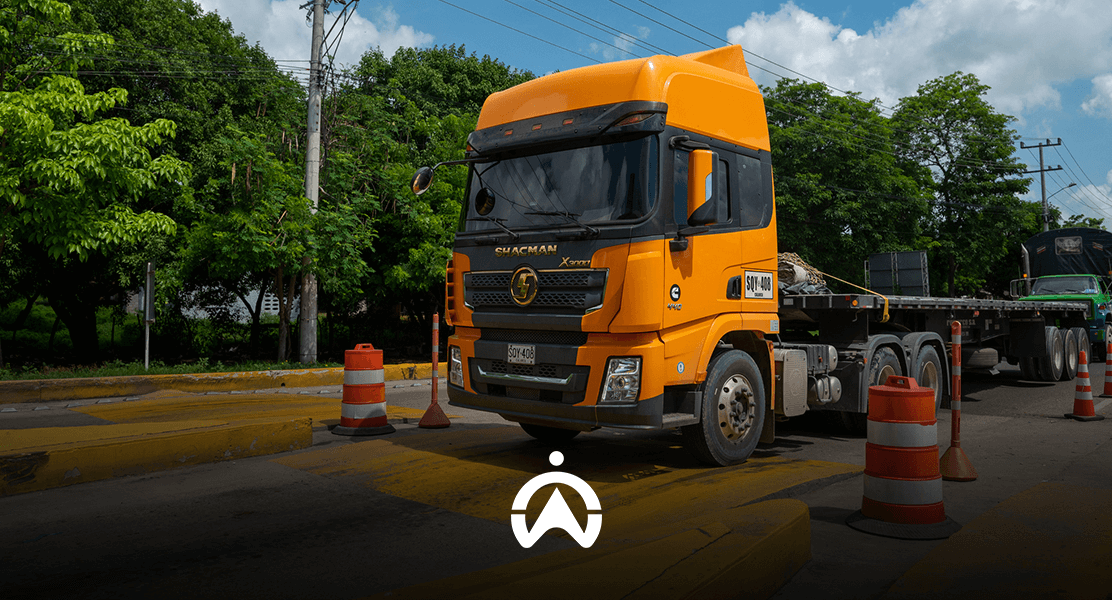
Overloaded vehicles go beyond “getting more done in less time”, as overloading can harm your fleet's entire operation.
Are you ready to empower your fleet management? Then keep reading to find out exactly what these terms mean and what the difference is between tare weight and gross weight.
In this article, you will:
- Learn what vehicle weight is
- Find out what the two types of vehicle weight are
- Dig into the downsides of overloaded vehicles
- Explore how fleet management is crucial for identifying overloaded vehicles
- Discover how technology from Cartrack Mozambique can help detect potentially overloaded vehicles
What is tare weight?
Tare weight, also known as dry weight, is essentially the weight of the car's skeleton when fully operational but completely empty, that is, with no passengers, cargo or even your favourite travel mug.
Here is a closer look at the components and importance of tare weight:
What is included in tare weight?
- The core: This includes all the parts that make it a vehicle, including the engine, the wheels, the body panels and the transmission parts.
- Standard vehicle equipment: this is everything that comes pre-installed in your vehicle and is essential for everyday driving, such as air conditioning, safety equipment such as airbags and belts for safety and even the audio system.
- The vehicle's essential fluids: This is the weight of important liquids that are crucial to the running of the car and include engine oil, coolant and brake fluid.
Why is tare weight so important?
- Effective comparison with similar vehicle models: By comparing the tare weights of similar models, you can get a better idea of how they might perform when loaded with passengers and cargo.
- Simpler performance prediction: knowing your vehicle's tare weight helps predict how it will perform under various conditions, including acceleration, braking and fuel efficiency.
- Help in choosing the right vehicle: When considering tasks such as towing or carrying heavy loads, understanding tare weight becomes crucial for selecting a vehicle with the necessary capacity and power.
Now that we have explored tare weight, let's learn more about gross vehicle weight.
What is gross vehicle weight?
John is on his way to deliver a washing machine to a customer using one of his fleet's vehicles. The car is loaded with the machine, some equipment to install it and a few other tools. This is an excellent example of gross vehicle weight (GVW), which describes the total weight of your loaded vehicle when it is ready for operation.
Let's dig into the components and importance of gross vehicle weight:
What is included in gross vehicle weight?
- Tare weight: As explained, this refers to the weight of the car when empty, but with all the standard equipment, fluids and a full tank of petrol.
- Cargo weight: All the goods, tools or anything else you have put in the vehicle.
- Passenger weight: The combined weight of all the passengers in the vehicle.
Why is gross vehicle weight so important?
- Improves adherence to the rules of the road: Being aware of gross vehicle weight helps you comply with weight limits on roads and bridges, which keeps your drivers and other road users safe.
- Improves the safety of vehicles: Maintaining proper weight distribution when operating vehicles and delivering goods significantly reduces the likelihood of accidents caused by poor vehicle control, excessive idling and increased wear and tear.
- Optimises fuel efficiency for trips: Vehicles with excessive gross weight have been shown to consume more fuel.
- Simplifies forward planning: Knowing the GVW helps you effectively calculate how much cargo your vehicle can carry in safety without being overloaded.
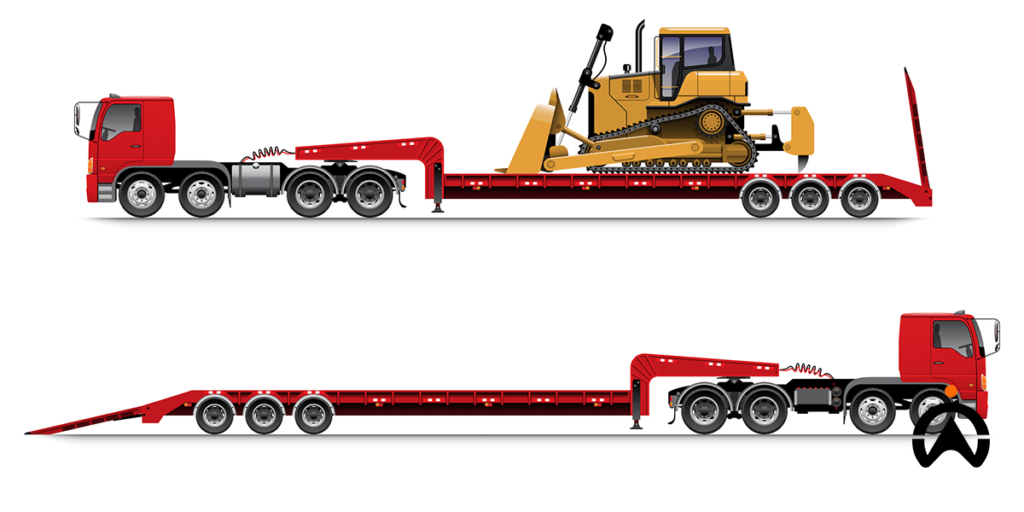
Tare weight vs. gross weight
Let's take a look at the differences listed above in table form:
| Characteristics |
Kerb weight |
Gross Vehicle Weight (GVW) |
|
Definition
|
Weight of an empty vehicle
|
Weight of a fully loaded vehicle
|
|
Components
|
Vehicle structure, standard features and operating fluids
|
Everything in the kerb weight, plus passengers and cargo
|
|
Variation
|
Remains static unless the vehicle is modified |
Dynamic, as it changes with the load |
How does vehicle weight affect fleet performance?
Neither measurement of vehicle weight is more important than the other, as both are crucial and benefit fleets in several ways. The information gained helps fleet managers make informed decisions about how to reduce a vehicle's weight, which is important for the following reasons:
- Vehicle performance: A lower kerb weight means a lighter vehicle and leads to:
– Improved acceleration: Lighter vehicles need less engine power to reach the desired speeds, resulting in faster acceleration. This improves response time and the overall driving experience.
– Enhanced handling: A lighter weight makes the vehicle easier to handle. Drivers can respond more readily to steering inputs, making it easier to control and navigate in challenging road conditions.
– Shorter braking distance: Lighter vehicles need less force to stop, resulting in shorter braking distances and greater safety, reducing the risk of rear-end collisions.
John, for example, overloads the vehicles in his fleet, causing his drivers to show signs of irresponsible driving behaviour, such as harsh braking. This, in turn, negatively affects the safety of the drivers and the longevity of the fleet.
- Fuel efficiency: There is a direct correlation between weight and fuel consumption. Vehicles with a lower kerb weight:
– Reduced energy use: Lighter vehicles need less engine power to keep moving, leading to better fuel economy. This means fewer refuelling stops.
Let's look at John again, who has now started overloading his vehicles so he can get more done in fewer trips. Although this may seem like a smart way to make the most of his resources, his vehicles are burning more fuel than they should, which means higher operating costs and more frequent refuelling.
- Security: Keeping to proper weight limits is crucial for safe vehicle operation. Exceeding the gross vehicle weight can compromise safety:
– Impact on handling: Overloading can adversely affect handling, making the vehicle unstable and prone to accidents.
– Increased braking distances: Heavier vehicles need a longer distance to stop, increasing the risk of collisions.
– Putting strain on components: Overloading can overwork the vehicle's suspension, brakes and tyres, potentially leading to breakdowns and risks to safety.
Let's go back to João once more. His tendency to overload his vehicles also seems to be having an impact on the safety of the fleet. As a result, John is seeing an increase in harsh driving behaviour, such as harsh braking, which not only puts his drivers at risk but also means his vehicles need more unscheduled maintenance.
These reasons and examples show how important it is that vehicles are not overloaded, as this affects the running and efficiency of the entire fleet. But how do you make sure your vehicles don't exceed the maximum weight? The answer is to measure their weight.
How can you measure your vehicle's weight?
Now that we've seen the importance of knowing your vehicle's weight and why keeping it low is so crucial, let's see how you can actually measure it:
- Weighbridges:
Weighbridges, also known as truck scales, are large, specialised scales designed to weigh an entire vehicle, including its contents. The vehicle is driven onto the weighbridge and weighed empty to establish its kerb weight. The vehicle can then be loaded and weighed again on the scale. These two figures are used to work out the weight of the load being carried.
- On-board scales:
On-board scales are devices that can be used to estimate a vehicle's approximate loaded weight. They help determine the weight distribution and total weight of the vehicle by installing sensors and electronic components directly on the vehicle itself. Unlike weighbridges, which are fixed and found only in specific areas, on-board scales can measure the vehicle's weight anywhere and at any time, even when the vehicle is moving.
- Weigh-in-motion systems:
Weigh-in-motion (WIM) systems are technological tools designed to measure the weight of a moving vehicle. As a vehicle passes over sensors that are “embedded” in the road or mounted above it, the system captures its weight data at normal traffic speeds.
If you don't have access to these sensors, your next best bet is a fleet management system. But before we get into this all-in-one solution, let's look at fleet management in general.
What is fleet management?
Our fleet management is the complete oversight of a company's vehicle fleet, from maintenance to monitoring fuel consumption and tracking each vehicle's location to ensure that drivers drive in safety. All of this is crucial for streamlining operations and ensuring that the fleet runs smoothly, cost-effectively and in line with regulations.
How fleet management helps identify heavy vehicle weight
In the world of fleet management, it is crucial to ensure that your vehicles operate within their designated weight limits, and a few key indicators can help with this. These indicators can be identified with a fleet management system:
- Fuel consumption:
There is a direct correlation between vehicle weight and fuel consumption. Lighter vehicles need less engine power to keep going, which results in better fuel economy. Heavier vehicles, however, need more power to move the extra weight, increasing fuel consumption. When a vehicle's engine has to work harder to maintain speed and overcome additional resistance, it burns more fuel to generate power. If your fleet has been using more fuel because of increased loads, your vehicles may be overloaded
- Maintenance:
Exceeding a vehicle's maximum weight puts excessive strain on various components, including the tyres, suspension components, brakes and engine. This leads to premature wear, which means vehicles need more frequent maintenance and have a shorter service life.
This also increases the risk of unplanned breakdowns, to which overloaded vehicles are more susceptible. An increase in general maintenance may suggest that the vehicle is overloaded. Some telltale signs include:
– Brake system problems
– Engine problems, including frequent overheating
– Frequent tyre replacements and uneven tyre wear
– Suspension and steering problems
- Driver behaviour:
Although harsh driver behaviour is not a clear indicator of an overloaded vehicle, certain driver behaviours can raise a red flag, indicating that the vehicle may be exceeding its weight limits. These include:
– Excessive swerving: An overloaded vehicle is harder to control, leading to dangerous swerving, which can get worse when a driver tries to turn or is driving on uneven roads.
– Harsh braking: An overloaded vehicle can have a longer braking distance and be unstable because of its weight, leading drivers to brake harshly to avoid collisions or obstacles.
– Increased idling: an overloaded vehicle puts more strain on the engine, which has to overwork to maintain speed and overcome the extra weight. This increased demand reduces engine power, making drivers change gear more often and increasing engine idling.
While Cartrack Mozambique may not directly weigh your vehicle in real time, you don't always have a scale to hand when you need one. We offer a range of solutions to help you spot the signs of an overloaded vehicle. These include:
- Fuel monitoring:
Keep an eye on your vehicle's fuel consumption with Cartrack Mozambique's fuel monitoring system. Our advanced fuel sensors, installed inside the fuel tanks, let you monitor fuel levels in real time, helping to identify and explain sudden fuel drops or increases in fuel consumption. With access to these detailed fuel metrics for each vehicle, you can identify which vehicles may be operating above their gross weight.
- Driver behaviour monitoring:
Quickly detect and correct aggressive driving behaviour associated with overloaded vehicles with Cartrack Mozambique's driver behaviour monitoring system. Our driver scorecards help monitor high-risk behaviours associated with overloaded vehicles, such as harsh braking, excessive idling and speeding. Combine this with our AI LiveVision cameras and get 24-hour live-stream access to your vehicles. Your drivers are alerted immediately through audible in-cab alerts when dangerous driving is detected. For example, a forward collision warning alerts drivers to increase their following distance when they get too close to the vehicle in front.
- Preventive maintenance:
Quickly identify damage caused by overloaded vehicles with preventive maintenance from Cartrack Mozambique. Our system provides real-time vehicle maintenance alerts related to overloading, such as engine damage, worn tyres and worn brake pads. With this information, you can identify which of your vehicles may be overloaded and quickly resolve these problems before they turn into costly unplanned downtime.
Tired of seeing overloaded vehicles affect your fleet's performance, efficiency and bottom line? Then Cartrack Mozambique's solutions are exactly what you need, helping you identify weight problems, promote safe driving and optimise your operations.
Contact us today and find out how.
 South Africa
 Botswana
 Kenya
 Malawi
 Namibia
 Nigeria
 Swaziland
 Tanzania
 Zimbabwe
 Hong Kong
 Indonesia
 Singapore
 Malaysia
 Philippines
 Thailand
 New Zealand
 Vietnam
 Poland
 Portugal
 Spain
 United Arab Emirates

 PT