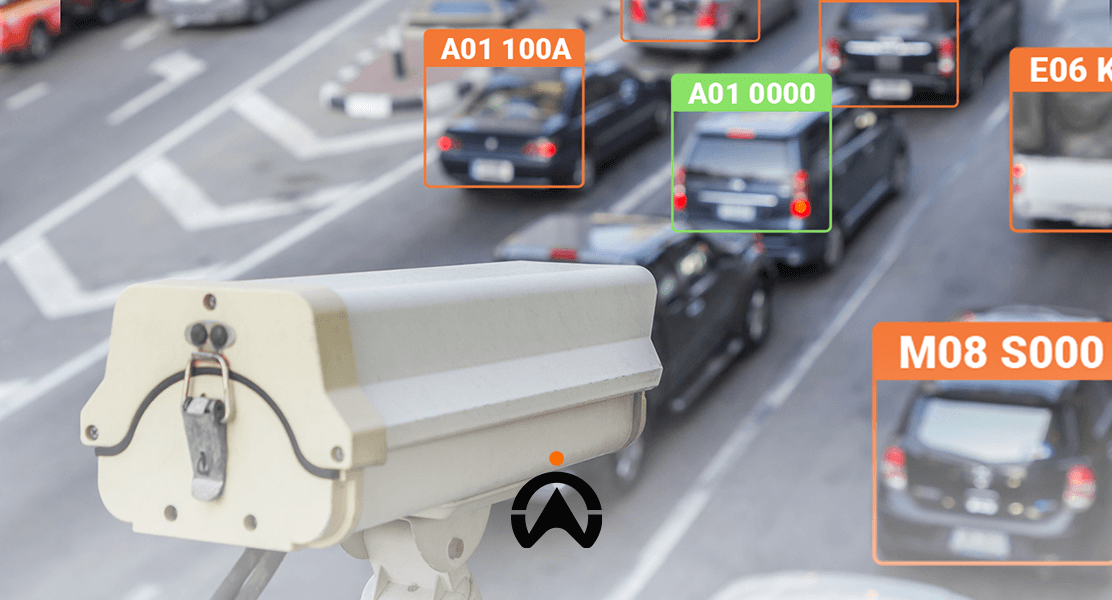
Picture this: you pull up to the boom gate at a car park and, seconds later, the boom magically opens. You don’t even need to press a button on the machine to get a ticket. And the same happens when you leave: just pull up and drive through.
That’s the power of number plate recognition (NPR) technology.
This is just one example of how NPR can make your life much easier. In this blog, we’ll explore how this advanced technology works with other software, such as vehicle tracking, to assist with fleet management.
Buckle up, let’s go.
In this article, you will:
- Explore what number plate recognition is and what makes it work
- Discover different types of NPR systems and how they benefit different businesses
- Learn about the main technologies that drive NPR
- Understand how NPR technology is used by businesses across all industries
- Learn about the NPR-integrated SVR solution from Cartrack Mozambique and its benefits
What is number plate recognition (NPR)?
There are some technological advances used in today’s world that not only benefit businesses but can also be useful for everyday drivers – number plate technology is one of them.
Number plate recognition, also known as automatic number plate recognition (ANPR), is a sophisticated system that uses cameras and advanced software to automatically capture, read and store a vehicle’s number plate information for future use.
Decoding NPR technology: how does it work?
Number plate recognition works through a combination of cameras, optical character recognition (OCR) software and database technology.
Let’s use the car park example mentioned above. NPR reads and processes your vehicle’s number plate information through cameras. It automatically records entry and exit times, calculates parking fees and improves car park management, all without the hassle of physical tickets or social interaction.
Here are the main technologies that make NPR work:
- Vehicle number plate detection
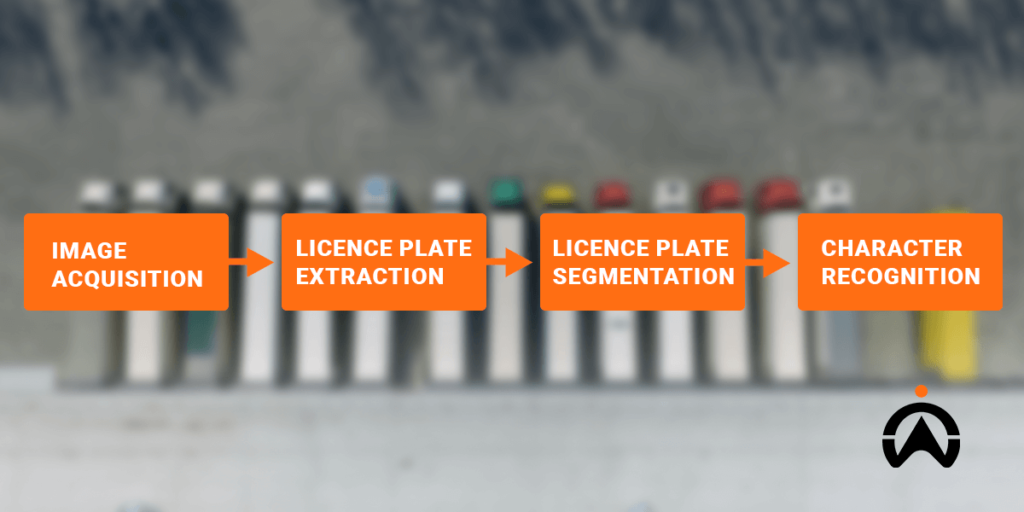
This is one of the main technologies that power NPR. It essentially involves identifying, recognising and extracting the information from number plates captured by cameras.
– Image screening. Specialised cameras capture images of vehicle number plates, which are processed to improve quality and legibility.
– Camera capture: specialised cameras equipped with infrared or visible light take pictures of number plates as vehicles drive past or through a specific area, such as toll gates, car parks or intersections.
– Camera capture: specialised cameras equipped with infrared or visible light take pictures of number plates as vehicles drive past or through a specific area, such as toll gates, car parks or intersections.
– Optical character recognition (OCR): This software analyses the images to identify and extract the alphanumeric characters on the number plate. It works by detecting the plate within the image, breaking it down into individual characters and understanding their shapes and patterns.
– Character recognition: Once the characters have been extracted, the OCR software interprets them to determine the number plate number. This step can involve pattern-matching algorithms and machine learning techniques to improve accuracy, especially for distorted or obscured characters.
– Database comparison: The recognised plate number is then compared with a database of known or registered number plates, containing information such as ownership, registration status, violations or other relevant data.
– Alerts and actions: Whether it’s an expired registration or outstanding violations, the system triggers actions such as alerts, generates tickets, opens gates or records entry/exit times. The exact response depends on how the NPR technology is used.
- Recognition system:
After OCR processing uses algorithms to analyse character formats, fonts and spacing to find individual characters, the data goes through verification.
– After OCR processing uses algorithms to analyse character formats, fonts and spacing to find individual characters, the data goes through verification.
- Joint Information System Platform:
While NPR is the process of capturing, recognising and processing vehicle number plates, JIS acts as a central platform for sharing NPR data from various sources. This helps connect the data to the end users who need it, such as law enforcement authorities.
Here’s how different entities use it.
– Law enforcement: vehicle number plate data can be compared with stolen vehicle databases, traffic offence records or access control systems.
– Fleet management: The information can be linked to specific vehicles, drivers and route optimisation software.
– Transport: Authorities could use JISP data from NPR systems to monitor traffic flow and identify potential congestion points.
– Parking management: number plate data can be checked against lists of authorised users or payment systems.
NPR helps automate the work of monitoring cars on the road, identifying important information on number plates and storing the data to send to a manager or use later to make sure everything is running smoothly.
Different types of NPR systems
Number plate recognition (NPR) technology has become a versatile tool across all industries, offering valuable information and automating processes. With different types of NPR systems available, choosing the right one can be a little overwhelming. Here are examples of a few different NPR systems:
Fixed camera system: These are stationary cameras installed at specific locations, such as the entry/exit points of facilities like toll gantries or along highways. They are designed to capture and recognise vehicle number plates for various purposes, such as toll collection, traffic management and surveillance for safety.
Mobile camera system: these consist of cameras mounted on vehicles, such as police cars or enforcement vehicles, for number plate recognition on the move. This allows authorities to patrol areas and identify vehicles of interest, enforce traffic laws or track stolen vehicles.
Cloud-based NPR system: Ideal for managing extensive camera networks or where advanced analytics are required. When dealing with vast networks and complex data analysis, cloud-based NPR systems use the power of cloud servers for processing and recognition, offering unmatched scalability and flexibility.
Edge-based NPR systems: In contrast to cloud-based systems, edge-based NPR systems carry out number plate processing and recognition at the “edge” of the network, meaning they scan the plates directly on the cameras themselves. This can offer advantages in terms of real-time processing and data privacy.
When choosing the right system for your business, consider your application, the industry you operate in and your budget.
How accurate is number plate recognition for fleet and vehicle tracking?
The accuracy of number plate recognition (NPR) for fleet and vehicle tracking is generally high, ranging from 95% to 99% in ideal conditions.
However, a few factors can affect the system’s accuracy.
Image quality: High-resolution cameras with good lighting provide sharper images, resulting in greater accuracy. So if the image is blurred, low resolution or taken in poor lighting conditions, the system’s accuracy drops.
Plate condition: Dirty, damaged or obscured plates can make it difficult for the system to read the characters correctly. Weather conditions; rain, snow, fog or extreme temperatures can also negatively affect image accuracy.
Camera angles: Ideally, cameras should capture plates head-on or at a slight angle. Extreme angles can distort the characters and reduce accuracy.
Software technology: Advanced algorithms and machine learning play an important role in character recognition. Newer, more sophisticated software generally offers greater accuracy.
How do businesses use NPR technology and how does it benefit them?
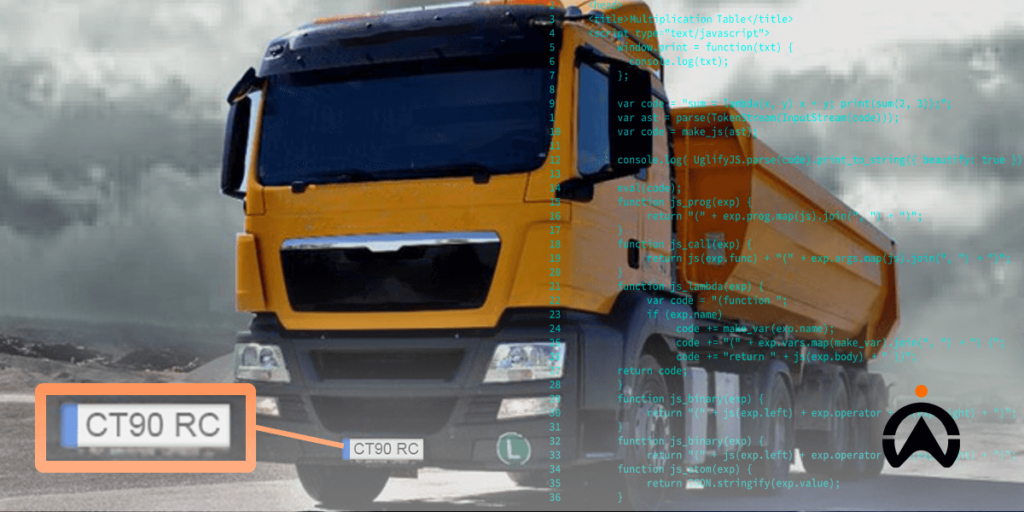
Picture this: your delivery truck passes through a checkpoint and, in a fraction of a second, its number plate is instantly captured and recognised. No more handwritten logs, no more time-consuming manual entries. NPR tracks your fleet accurately and continuously, streamlining operations and saving precious time and money.
This sounds like a technology every business should have, in one form or another.
Businesses across all industries, from logistics and delivery to transport and rental companies, can take advantage of the benefits this system can offer and improve their fleet management.
Here’s how NPR can transform fleet management in your business:
Easy tracking: say goodbye to manual logs. NPR automatically tracks your entire fleet, giving you instant access to vehicle locations and detailed historical data. No more guesswork – you’ll always know where your vehicles are, ensuring smooth operations and informed decisions.
Smooth toll gantries: No more waiting at toll booths. NPR identifies your vehicles, ensuring automatic payments and reducing delays. This means smoother trips, happier drivers and lower fuel consumption, saving you time and resources.
Better security: Worried about vehicle theft? NPR keeps watch, alerting you to unauthorised access or theft attempts. With real-time monitoring, you can step in quickly, protecting your assets and avoiding costly losses.
Stolen vehicle recovery: use advanced number plate recognition (ANPR) to locate your stolen vehicles quickly. ANPR cameras capture and interpret the number plates of passing cars; when your stolen vehicle’s plate is detected, it triggers an alert, allowing the vehicle to be tracked and recovered in real time.
Simplified compliance: keeping up with regulations can be difficult. NPR helps by monitoring speed limits and access rules, ensuring your fleet stays compliant. This proactive approach minimises fines and keeps your operations running smoothly.
Informed decisions: NPR provides valuable information on driver behaviour, route efficiency and fuel use. Use this data to optimise routes, reduce idling and implement targeted training – all leading to cost savings Why SVR and NPR technology from Cartrack Mozambique are the perfect recipe for maximum safety for the fleet
In a landscape where vehicle theft is on the rise, especially in South Africa, protecting your assets has never been more critical.
In response to this growing challenge, Cartrack Mozambique offers a range of features for safety, such as 24/7 vehicle tracking, geofencing, smart cameras and stolen vehicle recovery (SVR) paired with NPR technology. This is our way of protecting vehicles, with rapid recovery in the unfortunate event of theft.
Cartrack Mozambique takes NPR technology to new heights, integrating it seamlessly with our own GPS tracking and fleet management software and using it to maintain our high stolen vehicle recovery rate.
How? If you report your vehicle as stolen, our 24/7 control room and recovery teams use live vehicle tracking from our installed unit and NPR technology to show where the vehicle’s number plate was last seen by cameras, so that we can track the stolen vehicle in real time and try to recover it quickly.
“NPR technology is one of the solutions Cartrack uses to achieve an industry-leading stolen vehicle recovery rate of over 90%!” — Agent Diederiks, Recovery Department, Cartrack
Use Cartrack Mozambique and NPR technology for accurate vehicle tracking
Tired of monitoring fleets inaccurately and relying on outdated information? Upgrade your business to the complete solutions for fleet management from Cartrack, together with NPR technology, for precision at every step.
Ready to experience the power of NPR-integrated fleet management?
Contact Cartrack Mozambique today to learn more and start optimising your fleet operations.
 South Africa
 Botswana
 Kenya
 Malawi
 Namibia
 Nigeria
 Swaziland
 Tanzania
 Zimbabwe
 Hong Kong
 Indonesia
 Singapore
 Malaysia
 Philippines
 Thailand
 New Zealand
 Vietnam
 Poland
 Portugal
 Spain
 United Arab Emirates

 PT