Food Transport Facts and What You Need to Know When Managing Your Fleet
Published
Reading time
11 minutes
Blogs
Important facts about food transport in fleet management: keeping perishable goods fresh in transit directly affects your profits — and mixing food loads is a serious mistake. Other facts include the food distribution regulations in force in Mozambique, the challenges of electricity supply and the condition of the country’s transport infrastructure.
That is a lot of information. But Cartrack is here to guide you through the requirements of food transport and show you the most effective ways to comply with regulations, protect your profits and keep operations running smoothly. But first, the bad news: according to data from the FAO and Mozambique’s Ministry of Agriculture and Rural Development, significant food losses occur along the entire value chain, and a large share of those losses happens during transport and distribution, before the products reach the end consumer. This is a clear warning: food logistics MUST be taken more seriously.
You must comply with the food regulations in force, as major retailers and insurers demand compliance
Power cuts still affect warehouses and depots in Mozambique — you need your own power sources to keep food refrigerated during stoppages
Road transport is the main option in Mozambique, given the state of the rail and port infrastructure
Technology such as door sensors and GPS protects your profits by preventing food from spoiling in transit
What are 4 important facts about food transport that you should know?
4 important facts about food transport in Mozambique are:
GPS tracking in food trucks is becoming an increasingly expected market standard
Food transport in Mozambique is subject to the food safety standards of the Ministry of Health (MISAU) and the Ministry of Agriculture (MADER)
Food logistics companies that do not tackle the challenges of electricity supply risk losing business
Road logistics will continue to grow in view of the problems with rail and port infrastructure
Is GPS tracking mandatory for food transport in Mozambique?
GPS tracking is not yet formally required by law for all food transport companies in Mozambique, but in practice those who do not adopt this technology will find it increasingly difficult to work with major retailers, distributors and insurers. Insurers and the main customers in the food sector increasingly demand proof of compliance, temperature control and fleet monitoring.
Regular analysis of fleet data helps identify inefficiencies, and it is easy when you have fleet management software, as it provides a detailed analysis of the various aspects of the operation.
What are the standards that regulate food transport in Mozambique?
In Mozambique, food transport and food safety are regulated by the Ministry of Health (MISAU) and the Ministry of Agriculture and Rural Development (MADER), in line with the standards of the FAO/WHO Codex Alimentarius. These standards impose requirements for hygiene, temperature control and proper handling on all vehicles involved in the transport of bulk food.
NOTE: If you have not yet implemented GPS tracking and cold chain management in your trucks, don’t panic. A Cartrack consultant can guide you on what you need and how to get it in a short space of time.
Are power cuts still a problem for food logistics in Mozambique?
Yes. Power interruptions (load shedding) remain a real challenge in Mozambique, in both urban and rural areas. Warehouses and depots that rely exclusively on the public electricity grid are exposed to losses of perishable goods during unscheduled stoppages.
That is why many logistics companies in Mozambique are investing in independent cooling units, solar power systems and diesel generators — especially for the stationary part of logistics, which is where much of the food is lost when no power is available.
Why is road transport so prominent compared with rail and ports?
In Mozambique, road transport is the predominant option for food distribution, especially for destinations away from the main rail or port routes. The country’s rail and port infrastructure — although important for exports — has limitations in terms of reliability, capacity and coverage for domestic distribution.
Mozambican distributors and farmers choose road transport because it gives them more control over their products. But this mode of transport is not without its challenges:
Risk of road accidents, especially on national roads in rural areas
Excessive opening of the cargo doors
Constantly rising fuel costs
Vehicle theft and hijacking
Vehicle wear and tear and maintenance costs
Risk of vehicle downtime with no replacement plan
Cargo theft
Insurance costs
Can technology save companies from these challenges? Let’s take a look.
How is technology shaping the future of food logistics?
Technology is shaping the future of food logistics through telematics, artificial intelligence (AI) and IoT (Internet of Things) devices. The aim of fleet management companies is to protect the profits of transport companies by eliminating food waste through fleet management strategies geared towards efficiency.
How do we do it? It’s simple. Here is how Cartrack solves each of the challenges above:
Cartrack helps reduce truck accidents as far as possible by offering:
Driver coaching solutions
AI security cameras for vehicles
Predictive vehicle maintenance solutions
Excessive opening of the cargo doors
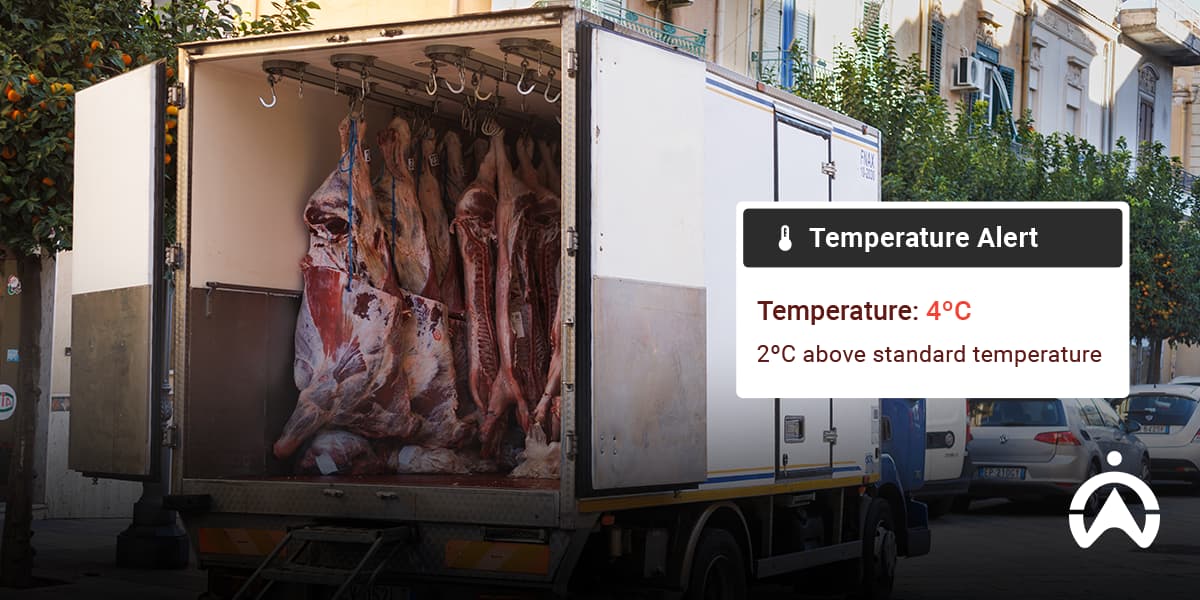
This is one of the biggest culprits of food waste. Perishable food must be kept at a set temperature in transit, but even the best cooling units cannot cope with too much warm air getting in. If drivers and staff are constantly opening the unit’s door, the food may be rejected by the receiving retailer because it has spoiled.
Cartrack helps prevent this with IoT door sensors and cargo unit cameras. These sensors alert you to frequent openings so that you can act in real time. The cargo cameras switch on automatically whenever the cargo door is opened, so you can always see what is happening to your food load.
Constantly rising fuel costs
Fuel is an often underestimated cost that food transporters in Mozambique have to face. Cartrack helps companies like yours save on fuel costs by:
Installing IoT fuel sensors to detect theft or fraud
Optimising truck routes to reduce fuel consumption
Vehicle theft and hijacking
If your food transport truck is stolen, you do not just lose the vehicle, you lose everything it was carrying! In Mozambique, vehicle theft and truck hijacking are real risks, especially on certain roads and in peri-urban areas. Having a Cartrack GPS tracker in every truck is a powerful layer of security, as Cartrack has a very high vehicle recovery rate.
Vehicle wear and tear and maintenance costs
One of the latest additions to Cartrack’s offering is the ability to PREDICT vehicle maintenance and schedule it based on those predictions. We do this by always keeping track of important factors about your food distribution vehicles:
How old is the vehicle?
How long ago was the last service?
What is the current condition of the brakes, engine, lights, tyres, etc.?
Risk of vehicle downtime with no replacement plan
Our predictive vehicle maintenance has another benefit: it lets you plan stoppages in advance and anticipate the need for a replacement vehicle. This also protects the food load, because a truck standing still is probably wasting the food on board.
Cargo theft
Some thieves are not interested in the vehicles, only in the food they carry. In the past, cargo theft left fleet managers with many unanswered questions. Today we have security cameras in the vehicles that show us exactly what happened.
Insurance costs
Insurers assess your fleet’s risk based on how you manage it. By reducing the risk of theft and accidents for every food delivery vehicle, you can negotiate lower insurance rates.
That is why investing in Cartrack software pays off, as you end up saving in many areas.
What are some unexpected ways food is wasted in transit?
Unexpected ways in which food is wasted during the transport process include:
Vehicle accidents
Cargo theft
Broken-down vehicles
Irresponsible stops by drivers
Frequent opening of the cargo doors (also called “thermal shock”)
Poor packaging (air circulation problems or collapsed pallets/containers)
Poor route management or slow driving
How can food waste be prevented in Mozambique?
Food waste can be prevented in Mozambique by intervening at the point in the logistics chain where most waste occurs: final distribution. This is the point at which food trucks travel from warehouses to shops to deliver products for sale. Through cold chain management, route efficiency and temperature monitoring in transit, more food will reach its destination without spoiling.
What is the best fleet management software for food logistics companies?
The best fleet management software for food logistics companies is a package that includes GPS tracking, route optimisation, cold management in transit, vehicle cameras and door sensors. Logistics companies can also benefit from fuel management software, vehicle recovery services and driver coaching to protect their profits even further.
Fleet management software has a direct impact on the food logistics sector. At Cartrack, you can create your OWN package and build a comprehensive service that fits your fleet perfectly.
FAQs
What are the 4 types of logistics?
The four types of logistics are:
Inbound logistics: Receiving raw materials for processing.
Outbound logistics: Shipping finished products to customers.
Reverse logistics: Managing product returns or recycling.
Third-party logistics (3PL): Outsourcing the supply chain to specialists.
What is the correct method for transporting food in Mozambique?
The correct way to transport food must comply with the MISAU and MADER regulations, which set standards for hygiene, temperature control and handling. Food must NOT come into contact with the floor, and it must be stacked in a way that preserves its quality, whether by ensuring air circulation, sealing or correct stacking.
What are the 3 types of food safety?
The 3 types of food safety refer to preventing the 3 main hazards that can compromise food products before they reach retailers: (1) keeping wood and glass out of food, (2) ensuring that chemicals do not contaminate food, and (3) protecting food from fungi and/or mould.
What is the ideal temperature for transporting food in Mozambique?
The ideal temperature for transporting food depends on the type of product, but here is a quick guide:
For frozen products: the unit must maintain -18 degrees Celsius.
For fresh products: between 1 and 7 degrees Celsius.
In Mozambique, given the hot climate, maintaining these temperatures during transport is especially critical and requires quality refrigeration equipment.
Other articles for you
7 Ways to Increase the Efficiency of Your Construction Fleet
Blogs
12 minute read •
The seven main ways to increase the efficiency of your construction fleet are: Use telematics and GPS tracking to keep everything under control. Keep vehicle maintenance up to date.. Implement a fuel monitoring solution. Offer your drivers ongoing training. Plan better routes between sites. Match the size of the fleet to […]
How to Manage Your Light Commercial Vehicles (LCVs) Effectively with Fleet Management Software
Blogs
12 minute read •
To manage your light commercial vehicles effectively with fleet software, you should invest in a platform that directly addresses the biggest challenges LCVs face. LCV fleets deal with unique vulnerabilities because of their frequent trips. Wear and tear, wasted fuel, unexpected downtime and more are some of the main concerns. LCVs are […]
Advanced Vehicle Tracking System with Cartrack: What Sets Us Apart
Blogs
8 minute read •
An advanced vehicle tracking system goes far beyond showing your vehicle's position on a map. What really sets an advanced platform apart are the extra security, response and control features. Cartrack combines GPS tracking, telematics and round-the-clock support to offer real protection and not just location. In the Mozambican […]
 South Africa
 Botswana
 Kenya
 Malawi
 Namibia
 Nigeria
 Swaziland
 Tanzania
 Zimbabwe
 Hong Kong
 Indonesia
 Singapore
 Malaysia
 Philippines
 Thailand
 New Zealand
 Vietnam
 Poland
 Portugal
 Spain
 United Arab Emirates

 PT