Route deviation adds extra time, fuel and frustration to your operations, making it one of the biggest enemies of efficient fleet management.
So, is it possible to fight route rebellion and save on fleet costs? You bet.
Discover how smart telematics and tracking technology can efficiently solve route deviation and the cost-draining headaches that come with it.
In this article, you will:
- Learn the definition of route deviation
- Differentiate between two types of route deviation
- Understand the effect of route deviation on efficient fleet management
- Get answers to burning questions about route deviation and fleet management
- Discover five ways to combat route deviation
- Find out how the fleet management solutions from Cartrack Mozambique optimise fleet operations
Route deviation defined
Imagine mapping out the ideal route for your delivery driver: avoiding traffic jams and unnecessary stops and taking the shortest route possible.
Then, for some reason, your driver goes off course, adding miles, minutes and fuel consumption to the trip. Something you didn’t necessarily budget for. That’s a classic example of route deviation – a detour that throws a carefully planned schedule and budget out of the window.
While there are some legitimate reasons for route deviation, it usually happens because drivers simply don’t follow the planned routes as instructed.
Types of route deviation and possible reasons for it
Fleet managers know that even the most meticulously planned routes can hit unforeseen obstacles, with detours and unplanned stops. These “route deviations” can be caused by a number of factors, sometimes down to driver choices such as unplanned breaks or shortcuts that are meant to save time but end up having the opposite effect on fuel costs and efficiency.
However, not all deviations are created equal; there are two types of route deviation, and here is what they mean in a fleet context:
- Path deviations are like taking a wrong turn on the highway – the driver leaves the planned route, adding extra kilometres and minutes. This can happen for various reasons, from missing an exit to following incorrect GPS advice, and they are considered accidental.
- Sequence violations, on the other hand, are more like stopping at your grandmother’s before your aunt’s, even though you planned it the other way round. The driver may visit the stops in a different order from the one planned and instructed, potentially affecting delivery times, disrupting workflows and affecting fuel use.
Understanding the two types of route deviation helps fleet managers identify the root cause of the problem and take appropriate action. Was it a genuine mistake, a navigation error or something else entirely? By addressing the “why” behind the deviation, fleet managers can ensure efficient routes, reducing fleet costs. Advanced route deviation and optimisation technology makes it even easier to ensure drivers stick to their allocated routes, optimising savings.
The relevance of route deviation technology in fleet management
The software for fleet management offers route deviation systems because they help with:
- Productivity: while sticking to traditional routes provides an element of predictability that helps manage expectations, using route deviation detection technology can increase productivity without losing that predictability. Time is money, they say, and if your fleet can work more efficiently, you can put an end to unnecessary cost drains.
- Cost and drain management: If you expect your fleet to travel on pre-planned routes, you probably have a good reason for it and, from a fleet management point of view, it is mainly to increase productivity and reduce fuel costs. Identifying and pinpointing where drivers deviate from their assigned routes helps you address the problem early and proactively avoid extensive cost drains.
Here’s why you want route deviation technology for your fleet
- Maximising visibility
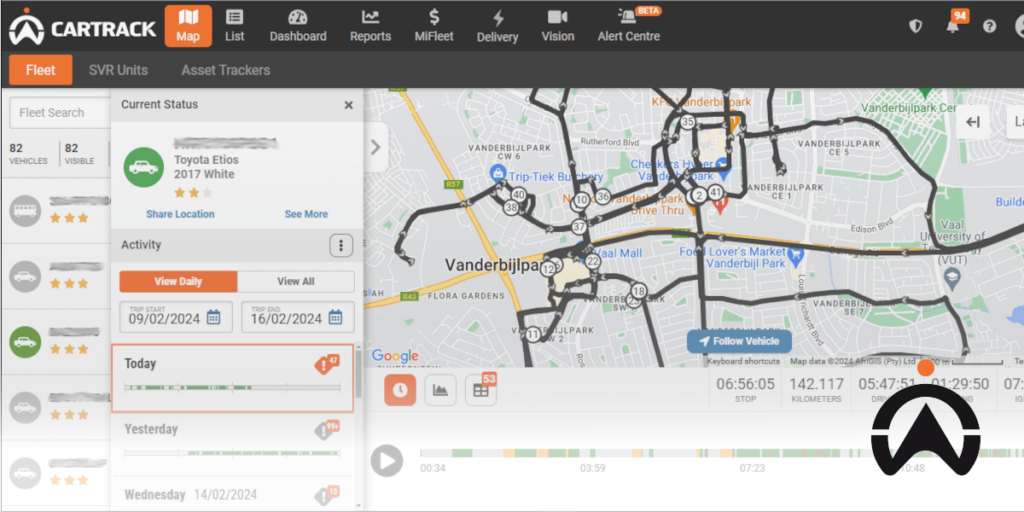
Route deviation software acts as a watchful eye, constantly monitoring driver behaviour and vehicle location. Any deviation from the planned route is visible to the fleet manager, allowing them to investigate potential problems such as unauthorised stops, inefficient detours or even potential concerns about safety.
- Optimising resource utilisation
This technology also plays a crucial role in unlocking your fleet’s full potential, optimising resource utilisation and helping to ensure that every vehicle, driver and delivery is used as efficiently as possible. Imagine the chaos without it: you would face unplanned detours, causing delays and wasting fuel in avoidable traffic jams.
- Improving fleet analytics
In the world of fleet management, data is key, and route deviation software, together with other telematics tools such as driver behaviour monitoring, can help identify problem areas such as excessive idling and harsh cornering and braking, which can lead to unplanned maintenance and costly repairs.
- Satisfied customers
In the cold chain industry, route deviation can lead to spoiled products, unhappy customers and piles of wasted money. Following the assigned routes is crucial in these types of industries to ensure the integrity of products in transit, customer satisfaction and no wasted money.
The benefits of detecting route deviation in your fleet’s daily activities are wide-ranging, but what about the questions you may still have about this unique, cost-saving technology?
Here are some of the most popular frequently asked questions about route deviation.
The benefits of detecting route deviation in your fleet’s daily activities are wide-ranging, but what about the questions you may still have about this unique, cost-saving technology?
Here are some of the most popular frequently asked questions about route deviation.
- What are some of the costs associated with fleet management?
Running a fleet involves more than just keeping the wheels turning. Fleet managers juggle a range of expenses, including:- Fuel costs: Keeping the tanks full is a major cost drain, influenced by vehicle choice, driving habits, route efficiency and fluctuating prices.
– Insurance: Protecting your vehicles and drivers is crucial, but premiums vary depending on factors such as cover, claims history and vehicle type.
– Depreciation: The value of your vehicles naturally decreases over time, affecting your overall budget.
– Fixed costs: Rent, salaries, utilities and maintenance form a constant backdrop of expenses.
– Acquisition: Buying or leasing new vehicles requires careful budgeting and consideration of long-term costs.
– Licences and permits: Keeping your vehicles legally compliant involves ongoing fees.
– Administration: managing paperwork, payroll and logistics can add another layer of costs if you don’t have the software to automate these processes.
Optimising each of these components is key to controlling costs and ensuring your fleet operates efficiently and profitably.
- Which part of the fleet management system carries high-cost expenses?
When it comes to fleet costs, there is no single answer. However, it all comes down to how problems and obstacles are handled and how quickly issues such as route deviation and poor driver behaviour are resolved. By implementing smart, proactive solutions such as driver training and fuel monitoring, you can save significant amounts through early detection and smart problem-solving.
- Which fleet cost drains are caused by route deviation?
While deviating from planned routes may seem like a minor inconvenience, the financial impact on fleet operations can be significant. The most immediate cost drain is caused by excessive fuel consumption. Every unnecessary km travelled means more fuel eating into your budget.Route deviation also increases wear and tear on vehicles, resulting in more frequent maintenance needs. This raises your operating costs and increases the risk of unexpected breakdowns and repairs, which can cause further delays and disruption.
Ultimately, these added strains shorten the lifespan of your fleet, forcing you to replace vehicles sooner than planned. So remember: staying on course isn’t just about efficiency; it’s about protecting your bottom line.
- How can you reduce fleet costs?
To keep fleet costs under control, you can use a simple but smart two-pronged approach of proactive planning and real-time monitoring.Replacing vehicles before frequent repairs and premature breakdowns turn them into financial liabilities is crucial.
Then, telematics and fuel tracking technology become another powerful tool for monitoring your daily expenses, enabling proactive decision-making that drives short- and long-term savings.
By combining strategic vehicle replacement with information from telematics data, fleet managers can achieve significant cost reductions, ensuring fleet vehicles operate at maximum efficiency and profitability.
5 foolproof ways to reduce route deviation in your fleet
Route deviation software is a great tool, and it works even better when combined with other telematics and vehicle tracking solutions. Consider these five tools in combination with route deviation detection to start seeing real results in fleet savings.
- Route planning
Although a route first needs to be planned and set before route deviation can occur, route planning still plays a crucial role in minimising this cost-draining problem in fleet management, especially for delivery and field service businesses. Fleet managers can optimise routes by meticulously monitoring route deviation patterns and the reasons why these deviations occur, leading to greater efficiency and less route deviation.
- Vehicle tracking
Tracking technology acts as a digital guardian for fleet management, not just for drivers but also by ensuring greater route efficiency. By using GPS tracking devices, managers can identify and resolve route deviations before they become regular, costly detours. In addition, analysing trip history data provides valuable information about past deviations. By identifying recurring problems and understanding the “why” behind them, managers can implement specific solutions, such as route adjustments or driver coaching, ultimately minimising future deviations and the associated costs.
- Geofence
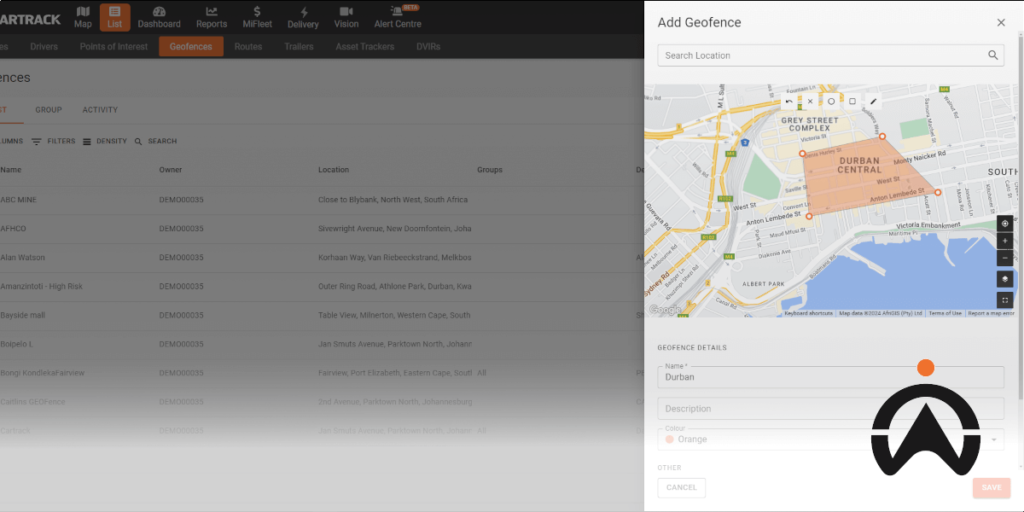
By creating virtual boundaries around designated routes and delivery zones, geofencing acts as a digital safety barrier that automatically alerts dispatchers or fleet managers when a driver enters or leaves a geofenced area. This allows for timely intervention and helps avoid costly detours and potential problems with safety. What’s more, geofencing goes beyond location tracking. By using it with time-tracking software and driver identification tags, you can gain valuable information about employee activity in designated or marked zones, ensuring efficient operations and optimised schedules. You’ll always know which driver entered a designated area, at what time, how long they stayed there and when they left.
- Regular driver performance reviews
The key to carrying out regular driver performance reviews is monitoring driver behaviour daily. This allows you to spot possible trends in risky driver behaviour, such as speeding, harsh cornering and braking and even excessive idling, helping you to carry out reviews and create accurate corrective training programmes that will give you the results you need to run a profitable fleet while keeping drivers accountable every time they turn the ignition.
- Live driver monitoring
While route deviation software can help you detect these problems and give you a bird’s-eye view of which routes drivers are taking (or not), live driver monitoring using AI-powered or live-stream cameras provides more information about what is happening inside the cab and reveals driver behaviour that may contribute to route deviations that might otherwise go undetected. In addition, live driver monitoring helps provide information about accidents and any emergencies drivers may be facing, whether they are following the designated route or deviating from it.
We have the cost-cutting tools to eliminate route deviation and optimise fleet management
If you’re looking for a product that offers a complete solution for fleet management, look no further. Cartrack Mozambique has an all-in-one platform designed to tackle cost-draining fleet management concerns such as route deviation.
- Route planning and optimisation: cut costly kilometres from your routes and say goodbye to route deviations with advanced route planning software. Choose the most efficient routes, reducing travel times and improving routes based on traffic and historical data.
- Geofencing: Know when your drivers enter or leave designated zones with geofencing from Cartrack Mozambique. Create virtual boundaries around important areas, danger zones and work sites to optimise fuel spend and reduce route deviation.
- Delivery: Cut costs with faster, more efficient deliveries using the Cartrack Delivery app. With live tracking, driver performance metrics, route optimisation and easy, automated task assignment, you can say goodbye to unnecessary detours and off-route deviations.
- Driver behaviour monitoring: Increase route compliance and improve fuel efficiency by keeping drivers accountable for harsh braking, speeding and harsh cornering. In turn, you save significantly on fuel and vehicle maintenance in the long run.
Eliminate route deviation by making Cartrack Mozambique your partner for cost-effective fleet management
Contact us today and start benefiting from telematics and vehicle tracking technology that helps eliminate route deviation, resulting in significant savings.
 South Africa
 Botswana
 Kenya
 Malawi
 Namibia
 Nigeria
 Swaziland
 Tanzania
 Zimbabwe
 Hong Kong
 Indonesia
 Singapore
 Malaysia
 Philippines
 Thailand
 New Zealand
 Vietnam
 Poland
 Portugal
 Spain
 United Arab Emirates

 PT