Every minute counts when it comes to fleet operations. Tracking time-based fleet metrics is crucial to success. One of these metrics is engine hours.
Your engine hours can tell a dozen stories; when vehicle maintenance is needed, when the perfect time is to upgrade the fleet and when drivers are not being as efficient as they should be.
How can you calculate this, and how can these insights improve your fleet?
Let’s find out.
In this article, you will:
- Learn what engine hours are
- Discover how engine hours are calculated
- Find out how engine hours can affect your fleet's efficiency
- Explore how a fleet management system can simplify measuring engine hours
- Dive into the advanced solutions from Cartrack Mozambique for measuring engine hours
What are engine hours?
Engine hours refer to how long an engine has run over its lifetime or during a specific operation. It is a crucial metric used in various sectors that rely on heavy machinery and equipment. This metric is important in helping you determine accurately how much your vehicle or equipment is used.
How are engine hours calculated?
Engine hours are calculated based on the number of hours an engine has been running, whether the vehicle is moving or not. This usage time is normally measured using an engine hour meter. This meter connects to the engine's ignition system and starts counting the hours as soon as the driver starts the engine.
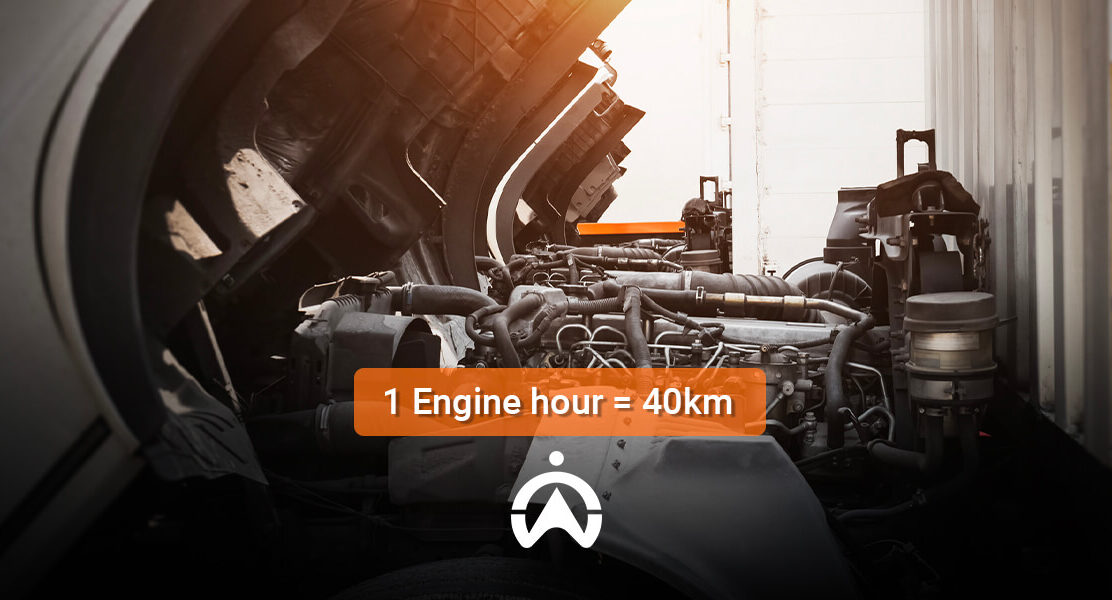
However, it is important to know that when it comes to engine hours, one hour does not necessarily equal 60 minutes. The engine hour is determined by counting the revolutions of the engine's crankshaft, known as tachometer time. This means that, depending on the engine's RPM (revolutions per minute), an engine hour can last longer or shorter than a clock hour.
Let's look at how total engine hours are calculated with an hour meter:
- Record the starting reading:
Record the hour meter reading at the start of your vehicle's most recent operating period. For example, if the starting reading is 3,421 hours, this will be the number used as the starting number of engine hours at the beginning of the monitoring period.
- Record the final reading:
Record the hour meter reading at the end of your vehicle's operating period. For example, if the reading at the end of your trip is 3,524 hours, this is the number used as the final number of engine hours at the end of the monitoring period.
- Calculate the engine hours for the last trip:
Use the data recorded in the starting and final readings to calculate the total engine hours for that specific trip or period. With the examples above, the calculation would be 3,524 hours – 3,421 hours = 103 hours for that specific period.
Are engine hours similar or related to idle hours?
Engine hours and idle hours may seem a little alike and, although these two metrics are both very important for understanding how a vehicle is used, they have important differences.
Engine hours are used to indicate how long a vehicle's engine has been running, whether the vehicle is moving or not. This means engine hours are a measure of the engine's total running time, while idle hours represent only the number of hours a vehicle's engine has been running while the vehicle itself was not moving.
It is important to note that, depending on how drivers operate, along with road conditions, a vehicle's idle hours will normally be higher than its engine hours.
Why is measuring engine hours so important?
Monitoring engine hours is not just one more administrative task to add to your list of fleet management responsibilities. These measurements play a significant role in the following:
- Maintenance planning:
Vehicles with higher engine hours are more prone to unexpected failures because of reduced efficiency. This makes measuring engine hours crucial for vehicle maintenance planning, as it provides valuable information about the engine's actual use and condition. Unlike traditional time-based maintenance schedules, which may not account for different levels of engine stress, tracking engine hours allows a more accurate assessment of vehicle wear. By measuring engine hours, you can be more proactive in planning vehicle maintenance, which extends your vehicle's life. This feeds into the next benefit of measuring engine hours; cost savings.
- Cost savings:
Vehicle maintenance is a huge expense for the fleet, so when vehicle maintenance is prioritised, costly breakdowns are avoided and unplanned downtime is eliminated. This means the fleet's vehicles can run at their optimum level for longer, translating directly into cost savings. Alongside this, monitoring engine hours helps assess fuel consumption patterns. The more an engine is used, the more fuel it consumes, which leads to lower fuel efficiency. Fuel has been identified as a fleet's biggest expense, accounting for around 60% of a fleet's total operating budget, so they must be able to identify quickly the source of any fuel wastage which, in this case, would be an overused engine. By helping fleets not to spend too much money on fuel, monitoring engine hours plays an important role in cost savings, leading to greater efficiency and profitability in operations.
- Optimising vehicle use:
Measuring engine hours provides accurate information about how long your vehicle has been used. This helps determine which of your vehicles are being used more than others. Overusing fleet vehicles can lead to accelerated wear, which reduces efficiency, safety and reliability. This means you risk missing customer appointments, delaying deliveries and suffering unplanned vehicle stoppages. By tracking which vehicles are being used the most, fleet managers can optimise vehicle dispatch, ensuring that none of their vehicles is at risk of overuse.
- Making informed decisions about fleet upgrades:
By keeping an eye on how your engine is being used, you no longer need to play the guessing game when it comes to vehicle upgrades. Monitoring engine hours helps you know exactly when your vehicles need to be upgraded, rather than just serviced. By knowing a vehicle's exact engine hours, fleet managers can gain a better understanding of its real condition, making it easier to identify potential problems. This helps you make faster, data-driven decisions about replacing an old fleet vehicle, which leads to improved safety, reliability and profitability.
- Providing accurate engine records:
engine because they provide an accurate record of the engine's operating time. Inaccurate engine records can lead to incorrect maintenance schedules, which leads to incorrect maintenance schedules. This can result in higher maintenance costs and a shorter vehicle life. For example, if a vehicle's engine hours are not recorded accurately, the vehicle may not be serviced at the right time, leading to greater wear and unexpected breakdowns. By keeping accurate engine records, fleet managers can provide accurate records of how the fleet's vehicles have been used, which is important for warranty claims and resale value.
- Resale value:
Keeping track of engine hours can help improve the fleet's resale value by indicating a vehicle's real condition and its wear. By monitoring engine hours, fleet managers can set up preventive maintenance, optimise vehicle dispatch and monitor downtime, which play a crucial role in maintaining the vehicle's condition. This means that when the time comes to sell a fleet vehicle, fleet managers do not need to undervalue it, since it is still running at its optimum level.
Four different types of engine hour meter
There is no single way to calculate engine hours. Here are four of the most common engine hour meters used for this:
- GPS management:
GPS management can be used as a type of engine hour meter, integrating GPS tracking systems with the vehicle's engine to provide accurate information on engine hours and location data. This integration gives fleet managers access to automated tracking of running time and operating modes, providing an accurate measure of vehicle use.
- Hour meter:
The hour meter displays the number of hours the engine has run and requires you to record the hours before and at the end of the trip, as this data is essential for calculating engine hours.
- Electronic logging devices:
Electronic logging devices, also known as ELDs, are used mainly to record a driver's hours of service and duty status. They can also be used to record a vehicle's engine hours, along with its movements.
- Odometers:
As the least common method because of their inaccuracy, odometers are used to measure the distance a vehicle has travelled, providing only a rough estimate of engine use to determine the equivalent distance the vehicle has covered.
What affects engine hours?
There are a number of factors that can affect your vehicle's engine hours. These include:
- Engine use:
The more an engine is used, the more engine hours it accumulates. It is important to remember that both driving and idling times can generate RPMs, which contribute to the engine's running time. The higher the number of revolutions per minute and a vehicle's engine hours, the more wear it may suffer.
- Cargo load:
The weight of the load being carried can affect how the engine runs. The weight of the load inside a vehicle affects how hard the engine works, how fast the crankshaft turns and how quickly engine hours can build up. Heavier loads demand more engine power, which contributes to higher engine hours. Fuel efficiency is affected too, which can also influence engine hours.
- Maintenance
Regular maintenance and inspections are one of the best ways to keep engines running at their ideal levels and to keep RPMs and engine hours aligned. Failing to take your vehicles for servicing at the scheduled time can cause greater wear and tear, which contributes to.
- Engine age:
Like anything else, engines start to wear out and become less efficient over time. As engines age, they have to work harder to do the same job, leading to an increase in engine hours. These older engines are also more prone to breakdowns, leading to more frequent maintenance.
- Environment:
Extreme temperatures, dust and other factors can affect how hard an engine works and how quickly it builds up hours. For example, engines can accumulate more running hours in extreme, dusty areas because of the extra workload needed to operate in these conditions.
- Vehicle type:
It is important to note that the type of vehicle used can have a significant impact on the lifespan of its engine. For example, the engine of a heavy-duty truck may not last as long as those of smaller cars because of the greater stress and workload it faces.
How long should an engine normally last?
The average lifespan of a vehicle engine has increased in recent years thanks to better technology, improved designs and improved maintenance practices. However, the following insights give an overview of the typical longevity of vehicle engines:
In the past, the average lifespan of a car engine was around eight years or about 241.401 km. However, with advances in maintenance standards, the average lifespan has risen to around 10 years or 321.868 km. On average, a well-maintained petrol truck engine can last around 10 to 15 years, covering between 321.868,8 km and 482.803,2 km.
Things to take into account with engine hours
When trying to calculate your vehicle's engine hours, it is important to take the following two factors into account:
- Mileage:
Engine hours and mileage are interlinked, and each of these metrics provides valuable information about a vehicle's wear and tear, maintenance needs and overall efficiency. Vehicle mileage refers to the distance a vehicle has travelled and is normally measured in kilometres. By telling us how the vehicle has been used in terms of distance, mileage readings are crucial for assessing vehicle efficiency, which helps fleet managers prioritise maintenance and achieve cost savings.
- Idle time:
Considering idling time when looking at engine hours is important for several reasons. Firstly, idling burns fuel without adding to the mileage, leading to higher fuel costs. Secondly, excessive idling can contribute to increased engine wear and maintenance costs. Engines accumulate hours and wear while idling, which can lead to more frequent maintenance and repairs.
All of this may sound like a lot of work, but it doesn't have to be. The solution for getting accurate engine hour records for your fleet is a fleet management system.
What is a fleet management system?
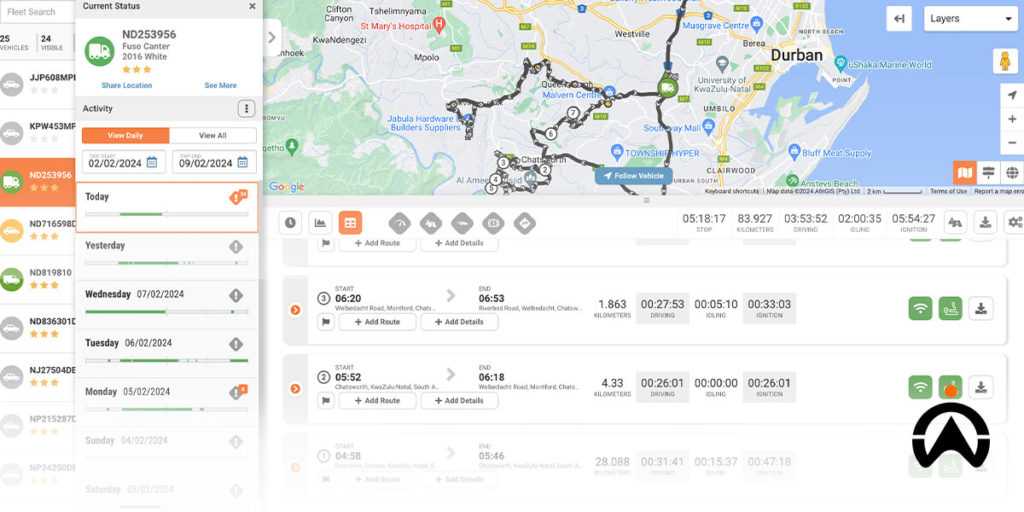
Our fleet management is a general term for all the tasks that are crucial to the smooth running of a fleet. These activities include keeping vehicles well maintained, keeping an eye on drivers and vehicles at all times and controlling fleet costs. That may sound like a lot of admin, but this is where a fleet management system comes in. This system is designed to streamline all of these processes, making managing a fleet as simple as tapping on your laptop keyboard
Benefits of a fleet management system
Some of the benefits of a fleet management system include:
- Improved vehicle health: vehicle health is important to the success and longevity of the fleet, whether you have 1 or 100 vehicles. A fleet management system helps you keep an eye on the health of all your vehicles, helping you identify when they need servicing before unplanned breakdowns occur.
- Reduced operating costs: by providing real-time data and analytics, a fleet management system enables efficient cost analysis, which allows for data-driven decision-making
- Greater profitability: Fleet management systems help ensure your fleet runs like a well-oiled machine. This translates directly into a better bottom line.
- Better service delivery: A fleet management system ensures that your fleet delivers orders and services on time, giving your customers a positive experience that leaves a lasting impact on your business.
- Improved driver safety: A fleet management system lets you monitor driver behaviour. By alerting you and them to any dangerous or distracted driving, the likelihood of accidents is reduced and driver behaviour is significantly improved.
- Fuel consumption monitoring: A fleet management system lets you closely monitor how much fuel your vehicles are consuming, which helps you detect possible fuel theft and waste in real time.
Get accurate information on your fleet's engine hours with solutions from Cartrack Mozambique
Cartrack Mozambique is an industry leader when it comes to fleet management and our solutions are the key you need to get a complete view of engine hours. Equip yourself and your business with:
- GPS tracking: Know exactly how your vehicles have been used with GPS tracking from Cartrack Mozambique. Real-time GPS tracking can help you monitor vehicle use by providing up-to-date location updates. Our solution gives you real-time visibility and full control of your fleet, letting you know exactly how long your vehicle was used and how effectively it was used. Our GPS tracking also provides important performance metrics, such as kilometres travelled and idle time. By knowing how much time your vehicles spend standing still, you can determine engine hours accurately.
- Preventive maintenance: Keep track of your vehicle's engine hours with preventive maintenance from Cartrack Mozambique. Our platform automates vehicle maintenance schedules, drawing on hours of use, engine hours and the time of the last service. Receive real-time alerts for all engine faults, which helps you anticipate when your vehicle will need servicing. This means you can track engine hours and use these accurate measurements to set preventive maintenance schedules, helping to extend the life of your fleet and keep it running at its best.
- Fuel monitoring: monitor how much fuel your fleet's vehicles are consuming with fuel monitoring software from Cartrack Mozambique. It has been shown that an overworked engine consumes more fuel. A fuel monitoring system can help you identify any sudden spikes in fuel consumption. Overworking an engine can have several impacts on fuel efficiency, including higher fuel consumption, lower mileage and unnecessary fuel waste. Our system provides real-time data on fuel consumption, which lets you closely monitor fuel use and identify inefficiencies. It also provides contextualised metrics on fuel consumption per kilometre travelled and per job completed, which helps to correct any inefficiencies.
- Driver scorecards: Make sure your drivers are operating as safely as possible with driver scorecards from Cartrack Mozambique. Studies have shown that harsh driving behaviour not only wastes fuel but also increases wear and tear on engine components. Some examples of driver behaviour that has a negative impact on engine use include harsh acceleration and cornering, harsh braking, speeding and prolonged idling. These behaviours put premature strain on the engine, causing it to wear out sooner than expected. With our driver scorecards, you can determine the level of safety with which your drivers drive while behind the wheel. This is done by monitoring any high-risk behaviour, such as excessive idling and speeding and harsh braking and acceleration.
Solutions backed by evidence
Cartrack's solutions go beyond vehicle tracking, and an excellent example of this is how we helped Concord Cranes, a company specialising in crane hire solutions.
With more than 180 cranes across its 15 branches, Concord Cranes struggled to accurately record the hours of use of each crane, which made maintenance and on-time delivery to customers a challenge. But with our IoT tracking device, preventive maintenance and fleet management system, we were able to help them gain full visibility of how their equipment is used.
Concord Cranes' operations manager, Gareth Langley, had this to say:
“By using Cartrack's advanced fleet management, we have been able to increase our operational efficiency to offer our customers a better service, as well as effortlessly establish a maintenance cycle that reduces our costs and increases the longevity of our fleet.”
Unlock accurate engine hour records with Cartrack Mozambique
Knowing exactly how long your engines have been running is crucial to the longevity and success of your entire fleet. Get the most accurate readings with Cartrack Mozambique and unlock a new level of engine visibility.
 South Africa
 Botswana
 Kenya
 Malawi
 Namibia
 Nigeria
 Swaziland
 Tanzania
 Zimbabwe
 Hong Kong
 Indonesia
 Singapore
 Malaysia
 Philippines
 Thailand
 New Zealand
 Vietnam
 Poland
 Portugal
 Spain
 United Arab Emirates

 PT