So, you’re a small business owner. Maybe you have an army of drivers on your payroll or just one very respectable company car. Either way, you have a fleet that is a business investment and you want to make sure it succeeds.
While profit-draining issues such as fuel costs and driver safety may be at the top of your list of worries, fleet management software is sure to make business run more smoothly. But how do you know which system is best for your small business?
Let’s find out.
In this article, you will:
- Learn what small businesses are
- Discover what the current small business climate looks like
- Dig into the challenges small businesses face
- Explore how fleet management can be the solution to these challenges
- Get insights into why Cartrack Mozambique is the perfect software for all your small business fleet needs
What is the best fleet management solution for small businesses?
Are you a small business looking for the best way to manage your fleet? Maybe you have everything under control and don’t yet feel the need for a solution to your fleet management problem. But here’s the thing about small businesses: they think big.
So, how can your small business think big? By trusting the industry leaders in fleet management for small businesses. That leader is Cartrack Mozambique.
But before we unpack everything our fleet management system has to offer you and your small business, let’s first cover the business side of things
What is a small business?
A small business is typically a privately owned corporation, partnership or sole proprietorship with a small number of employees and less revenue than a regular-sized business. Small businesses can take different forms and operate in various industries, whether a restaurant, a bakery, a plumbing service, construction, online retail or boutiques.
Mozambique is home to a large number of small businesses in different industries. But what is the climate like for these unique businesses in the country, and what will their future look like?
What is the current climate for small businesses in Mozambique?
According to the latest SME Confidence Index from Business Partners Limited, the impact of load shedding, a low-growth economic trajectory and high lending rates on the confidence of small and medium-sized businesses is clear, causing the confidence of small and medium-sized enterprises (SMEs) that their businesses will grow this year to fall by five percentage points.
However, there seems to be hope, with the document’s author, David Morobe, sharing that small businesses are “gaining some confidence in initiatives implemented by the public and private sectors… to create a more favourable business environment”.
While these initiatives are not guaranteed, small businesses still face several challenges that can prevent their fleet from achieving optimal success. Let’s explore that.
What is fleet management?
Fleet management is an umbrella term for all the activities and processes essential to the efficient running of a fleet.
A fleet can be made up of buses, trucks or commercial vehicles used for business functions. The main purpose of fleet management is not only to streamline the driver’s work, but also to simplify the fleet manager’s responsibilities.
What are the responsibilities of a fleet manager in a small business?
Fleet managers have several fleet responsibilities on their shoulders, including:
- Driver management: Fleet managers are responsible for overseeing driver behaviour and operations, as well as providing them with the necessary training.
- Documentation and record keeping: Fleet managers are responsible for keeping accurate fleet records and documentation, including maintenance and inspection documents.
- Fuel management: Fleet managers are responsible for ensuring their fleet remains fuel-efficient by monitoring fuel consumption and identifying fuel waste.
- Maintenance and repairs: Fleet managers are responsible for keeping vehicles well maintained by scheduling regular vehicle management and maintenance checks.
- Cost management: Fleet managers are responsible for monitoring and optimising all fleet-related expenses, from fuel consumption to vehicle utilisation, to increase return on investment.
As a fleet manager, this can be a lot of work for you, especially when you also have to deal with the fleet challenges small businesses face. Let’s take a look at these challenges.
What fleet challenges do small businesses typically face?
Because of their size, small businesses face a unique set of challenges that can significantly impact their growth and success. The most common include:
- Limited resources: As small businesses don’t have a large fleet of vehicles, completing all their tasks effectively, especially when demand is high, can be quite challenging. This increases the chances of consistent wear and tear on equipment due to overuse, leading to higher maintenance costs.
- Unforeseen repair and maintenance costs: Because of limited financial resources, small businesses cannot cope with unforeseen repair and maintenance costs, which strains their financial resources. These unexpected, unbudgeted costs can also lead to vehicle downtime.
- Unplanned vehicle downtime: Unplanned vehicle downtime is a problem for all businesses, but it is more damaging for small businesses. Small businesses generally don’t have a large fleet of vehicles, so unplanned vehicle downtime can seriously affect the business’s productivity, revenue and reputation with customers.
- Effective vehicle and driver tracking and management: Small businesses may not have access to the time and the same level of knowledge and resources as large businesses, making it difficult for fleet managers to know at all times where their drivers and vehicles are and how they are being operated.
- Driver safety concerns: Ensuring drivers operate safely is a major concern for all businesses, but as small businesses typically don’t have the resources to invest in a robust driver monitoring system, this can pose an even greater challenge for them and for the overall safety of their fleet and drivers. This also increases the risk of negatively impacting their fleet’s fuel efficiency.
- Fuel costs: Fuel costs can be a significant expense for small businesses, especially when they are not closely monitored. Consistently high levels of fuel consumption can negatively impact a small business’s bottom line and profitability.
- High driver turnover rate: As small businesses don’t have big budgets, they may struggle to compete with the competitive packages large-scale companies offer. This means managers need to find ways to keep their drivers happy and loyal to the business, which can be quite a challenging task.
These challenges may seem daunting, but there may be just one simple, easily accessible and cost-effective solution that can help you tackle them all. That software is a fleet management system.
What are the benefits of using fleet management software?
At its core, fleet management plays a very important role in the successful and convenient running of a fleet. Fleet management software works to streamline all the tasks that fall under fleet management, bringing you the following benefits:
- Improving route planning: Route planning is crucial to the success of a fleet operation because it has a substantial impact on operational efficiency, cost savings and customer satisfaction. Fleet management software can help fleet managers create efficient, cost-effective routes, taking into account factors such as the shortest possible route, traffic conditions and vehicle capabilities. Efficient route planning reduces fuel consumption and vehicle wear and tear, leading to lower operating expenses. A poorly defined route means covering unnecessary kilometres to carry out the simplest tasks, which increases fuel consumption and vehicle wear and tear. By optimising routes, reducing mileage and cutting costs, businesses can save time and money.
- Helping to reduce fleet costs: One of the main benefits of fleet management software is the unmatched fleet visibility it helps unlock. With greater visibility of drivers, vehicle conditions, fuel consumption and cargo security, fleet managers can gain better control of their fleet’s costs. By providing features such as fuel monitoring, route optimisation and preventive maintenance, software for fleet management is important in helping fleets reduce their operating costs.
- Improving customer satisfaction: Customer satisfaction is crucial to success, especially for small businesses. Studies show that 67% of customers have stopped doing business with a company because of poor customer service. In addition, 39% of customers who received poor service said they would never use the company again. By providing real-time tracking and visibility of their entire fleet, fleet managers can keep their customers informed about the progress of their deliveries with accurate estimated time of arrival (ETA) predictions. Drivers are a crucial aspect of fleets, so by improving safety and compliance through driver behaviour monitoring, managers can not only make sure their drivers aren’t doing anything that could compromise the fleet’s success, but also ensure goods are delivered without any damage. With maintenance schedules, they can ensure their products or services are delivered with little or no delay.
- Improving and extending vehicle health: Vehicle health and longevity are crucial to success, especially for small businesses that have a limited number of vehicles and can’t afford to replace them often. Fleet management software gives access to preventive maintenance, which helps quickly detect vehicle damage before it gets worse and affects fleet efficiency and driver safety. This helps fleets avoid unplanned vehicle downtime, which can lead to costly delays and lower customer satisfaction. Asset utilisation helps fleet managers know which of their vehicles or equipment are being overused, helping them spread workloads evenly and avoid putting unnecessary strain on specific vehicles/equipment.
- Encouraging data-driven decision-making: Managers need to make sure all fleet decisions are backed by data. Fleet management software gives you access to actionable insights through data and analytics, which help you make decisions specific to your fleet and can help take its effectiveness to the next level. By providing real-time visibility of each vehicle’s location, status and performance analytics, fleet management software makes it easy for small businesses to compile data quickly and thoroughly, helping them generate reports and statistics that help streamline operations and make informed decisions.
- Simplifying fleet scalability: Fleet scalability for small businesses refers to a fleet management system’s ability to accommodate and support the growth and increased demands of a fleet operation. It involves the system’s ability to accommodate the growing demands of a growing fleet. A fleet management system simplifies growing your fleet by streamlining these operations. So, whether you’re adding more vehicles or employing more drivers, fleet management software is the key to ensuring your business stays efficient with little or no growing pains.
- Simplifying remote management: small businesses need to make the most of the limited resources they have. By giving an efficient overview of vehicles and drivers from anywhere and at any time, remote management helps fleet managers stay connected with their drivers and provide support through driver and job analytics 24 hours a day, 7 days a week, 365 days a year, which increases operational efficiency and overall safety.

How can fleet management software help tackle the challenges small businesses face?
The purpose of software for fleet management is to streamline the various tasks that are crucial to effective fleet management. Here are four ways this software can make that possible:
- GPS tracking: Real-time vehicle tracking in fleet management involves using GPS and telematics technology to monitor the location, movement and behaviour of vehicles in real time. This allows fleet managers to improve operational efficiency, ensure driver safety, optimise vehicle performance and reduce operating costs. By implementing real-time fleet tracking, fleet managers can make data-driven decisions. This technology offers the following benefits:
– Real-time, on-demand visibility of your vehicles: by providing continuous live updates, GPS tracking makes it easier for fleet managers to know exactly where each of their fleet’s vehicles is at any time.
– Preventing unauthorised vehicle use: by providing information on how your vehicle is being operated, fleet managers can quickly identify whether their drivers are using fleet vehicles for personal use instead of their assigned work.
- Maintenance scheduling and alerts: Maintenance scheduling and alerts in fleets involve using technology to track and manage all activities related to the maintenance of vehicles and equipment. By using real-time alerts and reminders, fleet managers take a proactive approach to maintenance scheduling, allowing them to stay up to date with the maintenance of their fleet’s vehicles, which offers the following benefits:
– Lower repair costs: By sending alerts the moment a problem is detected, this technology helps you quickly resolve maintenance issues before they escalate and become more costly to repair.
– Extend the lifespan of your fleet’s vehicles: By automating the scheduling of routine checks and vehicle maintenance, this technology helps extend the life of a fleet, keeping vehicles running at their best and avoiding costly repairs and replacements.
– Keep fleets compliant: By keeping track of maintenance records and making sure every issue is resolved quickly, this technology helps you ensure that fleet vehicles always meet legal and regulatory standards and that the fleet operates within compliance parameters.
- Fuel management: Fuel management in a fleet context refers to the process of monitoring and controlling the fleet's fuel consumption. A fuel management system uses telematics to measure a vehicle's fleet usage and, by offering automated software for monitoring, controlling and optimising fuel use, the system automates what used to be time-consuming, manual fuel tracking. A fuel management system is important because it helps fleets:
– Prevent fuel theft: By equipping fleet managers with real-time fuel level monitoring, a fuel management system helps managers quickly detect possible fuel theft, from siphoning and fuel card fraud to fuel card cloning
– Reduce human error: By automating fuel monitoring, errors caused by human action are eliminated, which ensures accurate vehicle and driver data. As a fleet manager, you can now say goodbye to manual data logging, which would typically lead to inaccuracies that hurt the fleet's overall efficiency.
– Improve driver behaviour: By identifying and eliminating fuel-wasting driver behaviour, fleet managers can ensure their fleet remains fuel-efficient.
- Driver monitoring: Driver behaviour monitoring works by continuously assessing and analysing a driver's behaviour and actions while behind the wheel. This is done using a combination of cameras, sensors and GPS vehicle tracking. The system uses a set baseline of normal driver behaviour and can issue real-time warnings when deviations from this behaviour are detected. Whether it's drowsiness, signs of fatigue or distracted driving, this technology helps drivers correct that behaviour in real time, which brings the following benefits:
– Reduced distracted driving: By detecting signs of distracted driving, such as constantly looking away from the road, this software alerts drivers to focus, which ultimately reduces the chances of a road accident caused by distracted driving.
– Reduced fatigue: by detecting signs of tired driving, such as constant yawning, this software alerts your drivers that it may be time to take a break, which ultimately lowers the chances of a road accident caused by driving tired.
So, how do you find the perfect fleet management system for your business?
All these benefits tell us how valuable fleet management software can be for your small business, but how do you choose the right software for your fleet? Finding a fleet management system isn't a one-size-fits-all approach, because businesses face different challenges depending on the industry they operate in and the product or service they provide. However, there are four key questions you should ask to find the perfect fit for your business:
- Is it compatible with your fleet?
As a small business, you need fleet management software that can be tailored to the specific needs and challenges you face. The challenges large businesses face are not the same as those small businesses face, so you need to make sure the fleet management software you choose supports the size of your fleet and caters to your industry and specific requirements.
- Does it simplify fleet scalability?
Your business may be small now, but it may not stay that way forever. Let's say you want to buy another vehicle or hire more drivers, but you're not sure whether your current system is efficient enough to keep your fleet running effectively. Fleet management software should work to simplify this and make transitions as smooth as possible.
- Does it help you keep track of your drivers?
Whether you have one driver or a large team, you need software that makes it simple to keep track of their behaviour. A monthly report isn't enough; you need real-time visibility of their behaviour, as this can help you quickly address any behaviour that could compromise the success and efficient running of your fleet.
- Is it affordable?
Affordability is a very important part of finding the perfect fleet management software, especially for small businesses. Your business may face financial constraints that large businesses don't, so you need fleet management software that understands this and can provide solutions tailored to your means and needs.
It may seem like a lot to figure out, but you don't need to worry, because we have the answer to all these questions and bring you a fleet management system that is perfectly suited to your fleet. That software is Cartrack Mozambique.
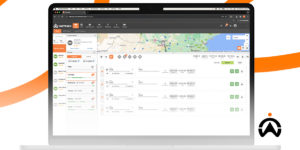
Cartrack Mozambique's fleet management system gives you access to a wide range of software that caters to all your fleet's needs and helps you navigate the obstacles you may face along the way. Here are 9 ways we can help you boost your small business:
- GPS tracking:
Accurately track the location of your fleet vehicles in real time with Cartrack Mozambique's live GPS tracking. As a small business, you can use the data collected from your GPS tracking to monitor and improve overall fleet performance by identifying any inefficiencies. Real-time GPS tracking also gives you access to greater safety and protection. Stolen vehicle recovery goes hand in hand with real-time GPS tracking, as the data recorded and monitored in real time helps our highly skilled recovery team, 23 hours a day, to track and recover your vehicle as quickly as possible.
- Geofencing:
Keep an eye on where your vehicles or equipment are being operated with Cartrack Mozambique's geofencing feature. This software lets you set virtual boundaries around specific areas to monitor the movement of your drivers, vehicles and equipment. Once a geofence is set up, you can receive alerts the moment a vehicle enters or leaves that specific area, which gives you real-time visibility of your fleet's activities.
- Cargo Monitoring:
Keep your fleet's cargo safe with Cartrack Mozambique's cargo monitoring solutions. Working as part of our AI-powered SmartCabin system, our cargo cameras help you gain unmatched visibility of the cargo your vehicles carry. This software helps you easily monitor your cargo by live-streaming up to four cameras and lets you download the recorded footage if possible cargo tampering is detected. Use it together with our specialised cargo door sensors, which send you real-time alerts the moment the cargo door is opened. If you're moving heavy cargo, you can use our rear door sensors, which work to monitor the safety of heavy cargo, sending live alerts the moment your trailer's rear doors are activated.
- Regulatory compliance:
Keep your fleet compliant with the SARS-compliant logbook from Cartrack Mozambique. Easily accessible in our app, this feature helps you log your trips and differentiate between business and personal trips. You can download your SARS-ready reports and send them to your tax consultant or the SARS eFiling online platform, making logging business trips much quicker. No more lost paper trails or missed tax deadlines.
- Vehicle maintenance:
Keep your fleet vehicles running at their best with Cartrack Mozambique's preventative vehicle maintenance. Powered by artificial intelligence and advanced analytics, our preventative maintenance software analyses vehicle performance and identifies potential maintenance issues before they become dangerous and costly. Receive alerts about issues such as damaged brake pads, low water and oil levels, service interval reminders and more, so you can anticipate and avoid costly breakdowns, road accidents and further damage to your vehicles, and create effective maintenance plans.
- Fuel monitoring:
Keep an eye on every litre of fuel with Cartrack Mozambique's fuel monitoring system and make every cent count. Our fuel cost monitoring software works to review your fuel transactions, match fuel receipts with a vehicle's advanced telemetry and provide real-time visibility of fuel use. By using a fuel sensor installed in your vehicle's tank, you can closely monitor how much fuel your vehicle is consuming. This makes the system essential for reducing fuel waste, identifying fuel theft and improving your fleet's fuel efficiency.
- Route optimisation:
Determine the fastest and safest routes for your fleet drivers with Cartrack Mozambique's route optimisation. Accessible through our Delivery app, this feature gives you access to real-time alerts about route deviations and delays, which helps ensure fast delivery times and improve customer service. You can also conveniently view driver status, which lets you quickly assign tasks to the nearest available driver.
- MiFleet:
Know the exact cost of running your fleet with Cartrack Mozambique's MiFleet software. Whether you have one vehicle or a hundred, you need to manage your fleet-related finances effectively, and our software acts as your assistant. MiFleet is vehicle cost management software that helps fleet managers keep track of their fleet's expenses, from vehicle taxes and licences to finance and fuel costs. By giving you an in-depth view of your fleet's expenses, it lets you achieve greater fuel and cost savings and reduce admin time and fees.
Make big moves in your small business with Cartrack Mozambique's solutions
The truth is that small businesses need to think big if they want to stay relevant and succeed. No matter the size of your business, let's get the most out of your fleet and take your company to the next level.
Talk to us here today.
 South Africa
 Botswana
 Kenya
 Malawi
 Namibia
 Nigeria
 Swaziland
 Tanzania
 Zimbabwe
 Hong Kong
 Indonesia
 Singapore
 Malaysia
 Philippines
 Thailand
 New Zealand
 Vietnam
 Poland
 Portugal
 Spain
 United Arab Emirates

 PT