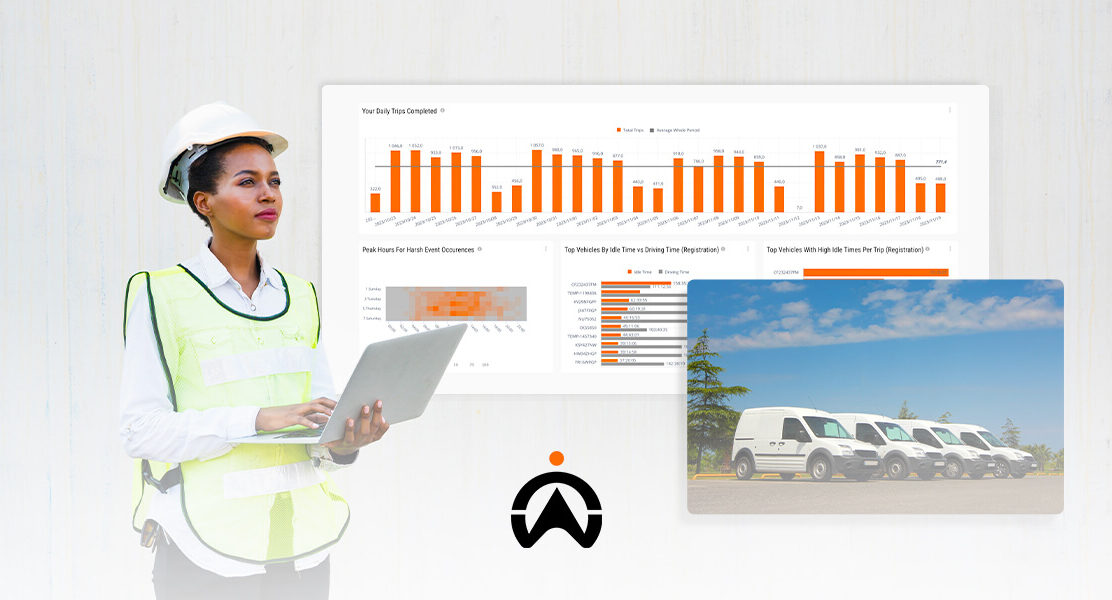
Right now, there are hundreds, if not thousands, of things happening in your fleet business at once. Tons of crucial, profit-affecting decisions need to be made every day. You don’t want to make any of those decisions based on a hunch, intuition or gut feeling.
Well, with good fleet management software designed to collect detailed data and insights, you won’t have to any more – you’ll be equipped to make data-driven decisions with complete confidence.
Ready to find out how?
In this article, you will:
- Learn what data-driven decision-making is and why it matters for fleet efficiency
- Find out what types of fleet data you can receive
- Discover the role telematics plays in collecting fleet data
- See how Cartrack Mozambique’s data-driven solutions can simplify your fleet management
What is data-driven decision-making?
Data-driven decision-making is the use of data and analytics to inform and guide decisions. When used in fleet management, it involves collecting, analysing and interpreting data from different sources, including vehicle performance records, driver behaviour reports and maintenance logs. This information helps identify trends, patterns and insights that support your company’s decision-making processes going forward.
The different types of fleet data
Fleet metrics are made up of a wide range of information collected from fleet vehicles. Some of these include:
- Location data: By using IoT devices and GPS coordinates, fleet managers can view the historical movement of their fleet vehicles and monitor their movements in real time.
- Driver behaviour data: this data gives fleet managers information on how their drivers are operating their vehicles. This includes adherence to speed limits, harsh driving, acceleration, braking habits and overall behaviour behind the wheel.
- Telemetry data: This data gives fleet managers information on various vehicle metrics, including speed, fuel consumption, engine performance and mileage, among many others.
- Maintenance data: this data gives fleet managers information on the condition of their vehicles and provides them with the full service history.
- Safety data: this data gives fleet managers information on safety incidents involving vehicles, including accident reports.
Recording and storing this data automatically requires innovative, real-time technology. That technology is powered by telematics.
The role telematics plays in collecting fleet data
Telematics is a highly intelligent computer made up of a GPS tracking unit and built-in sensors. These technologies work together to monitor and report on the overall condition and activities of fleet drivers.
Telematics is essential to fleet data collection, merging telecommunications and computing technologies to collect, transmit and analyse data from multiple vehicles.
For an effective telematics system, the following parts need to be included:
- Global Positioning System (GPS) satellite technology: GPS is built into telematics to establish and accurately track a vehicle’s location in real time.
- Wireless networks: Wi-Fi and different cellular networks (for example, 4G LTE or 5G) make it possible to transfer and store data from vehicle GPS tracking devices via internet or satellite connectivity.
- Sensor-based monitoring: Combining sensors with telematics in fleet management software gives fleet managers in-depth insight into their fleets’ operations. One example is the use of temperature sensors in cold chain logistics. These provide real-time temperature monitoring and can alert fleet managers the moment temperature fluctuations are detected, allowing them to contact drivers immediately to resolve problems or send a replacement trailer if needed, avoiding massive losses in profit.
How does telematics work to collect fleet data?
Telematics works by:
- Capturing data based on the vehicle’s location and movement through a GPS tracking device installed in the vehicle
- Transferring the captured data over secure cellular networks
- Displaying vehicle data and information, such as vehicle location, engine status (for example, ignition on/off or idling time) and driver behaviour, on a fleet management software platform (web-based or app-based)
Why is data-driven decision-making vital for fleet management?
Here are three ways data-driven decision-making helps fleet managers raise their fleet’s efficiency:
- It helps maximise fleet safetyData-driven decision-making plays an important role in maximising safety, using real-time data to inform and improve safety practices among drivers and across fleet operations. This is done through:- Identifying risky driving behaviour: telematics gives fleet managers a wide range of data that can be analysed to identify risky driving behaviour. By monitoring these behaviours and spotting patterns, managers can put measures in place to address these safety issues.
– Preventive maintenance: data analysis helps fleet managers proactively identify potential maintenance problems before they become safety risks, leading to cost savings and a longer fleet lifespan. This significantly reduces the chance of breakdowns and accidents caused by mechanical failure, keeping drivers safe.
- It promotes cost savings:Saving costs means keeping track of your fleet data and using it to make informed, data-driven decisions.- Fuel monitoring: A fuel monitoring system is a fleet cost management system that gives you real-time information on all your fleet’s fuel costs and consumption, helping you identify where your cost drains are (such as fuel theft). Accurate data allows fleet managers to step in proactively and resolve any problems that arise, eliminating fuel wastage.
– Asset tracking: using asset tracking software helps you gain insight into the condition of your fleet vehicles. Know which assets are making money and which are costing more than they should, helping you use the right vehicles for the right job. These insights can help you make informed decisions about which assets should be sold and which you need more of, helping you run your fleet more efficiently, safely and cost-effectively.
- Greater customer satisfaction:The quality of service you offer your customers can make or break your business. Data-driven decision-making aims to improve it through:- Route optimisation: route optimisation can have a positive impact on your business and customer service. By helping you optimise the fastest routes for your drivers, it lets you make more on-time deliveries and save fuel.
– Proactive communication: By using data insights, fleets can anticipate possible delays or challenges. Streamlining communication between drivers and fleet managers provides real-time job updates. This encourages proactive delivery communication with customers, which builds trust and manages customer expectations effectively.
Data is just numbers unless it can be turned into something actionable that you can use to solve your fleet’s challenges. With the insights listed above, a fleet can get real-time monitoring and performance assessments, helping it make informed business decisions to achieve operational efficiency.
The dangers of not making data-driven decisions in fleet management
Our fleet management covers the oversight of a company’s vehicles as a way of ensuring safety, profitability and overall efficiency.
If a fleet doesn’t make informed, data-driven decisions, it may face the following challenges:
- Inefficient operations: without data-driven information on routes, vehicle use or maintenance schedules, a fleet will have higher operating expenses.
- Safety risks: Without an effective monitoring system, dangerous driver behaviour gets overlooked, which increases the risk of accidents and safety violations in the fleet.
- Poor fuel efficiency: Being unable to optimise drivers’ routes and monitor fuel use leads to more unnecessary expenses and wasted fuel.
- Customer dissatisfaction: By not looking at past delivery data and not using it to optimise future deliveries, fleets experience delivery delays, which hurts customer satisfaction.
Making well-informed decisions is what separates success from uncertainty in the field of fleet management. Cartrack Mozambique understands this and brings you data-driven solutions that let you steer your fleet towards unrivalled success. Here are 5 ways to do it:
- Preventive maintenance: Keep your vehicles running like a well-oiled machine with Cartrack Mozambique’s preventive maintenance. Our platform helps you automate your fleet’s maintenance schedules by monitoring the usage hours and last service times of each of your fleet vehicles. Using this data, the system can generate timely alerts, which act as proactive reminders to take preventive measures that keep your vehicles serviced and compliant. These alerts are crucial for avoiding unnecessary expenses, minimising downtime and keeping your fleet healthy and economical for longer.
- Route optimisation: Get ahead of delays with route optimisation. This feature in our Delivery app makes it easier to determine the safest and fastest routes for your drivers to follow. Using GPS tracking and real-time positioning, the app provides real-time alerts on delays or route deviations. With this data, you can make informed rerouting decisions, helping to ensure faster delivery times and therefore better customer service. Our Delivery app also ensures that drivers and jobs are managed effectively so that more timely deliveries can be made. This increases customer satisfaction, as customers can stay up to date throughout the delivery process.
- Asset tracking software: End the guessing game when it comes to your fleet’s health with our asset tracking software. It helps you quickly spot signs that your fleet needs an upgrade. Having access to this data helps you make an informed decision when you need to replace vehicles. Cost-draining vehicles affect your entire fleet operation and, with at least 7% of vehicle expenses going towards maintenance and servicing, you need to know for certain whether a car needs maintenance or replacing.
- Driver behaviour monitoring: Prioritise driver safety with AI-powered camera technology and live streaming. This technology helps you detect distracted driving habits (such as smoking), detect yawning (which can indicate extreme fatigue) and track the position of the driver’s head and eyes to detect when they are looking away from the road. As soon as any of these is detected, drivers are immediately alerted audibly and an event is generated. This video-recorded event data can be used to coach drivers, making them aware of their dangerous driving behaviour and promoting safer driving habits. This comprehensive approach helps you proactively address concerns about safety, mitigate risks and ensure a safer driving environment for your whole fleet.
- Fleet cost management system: Cartrack Mozambique’s fleet cost management system gives you full visibility of all your fleet costs, such as tolls, maintenance and fuel expenses. A key feature of this system is fuel monitoring, which provides automated, real-time tracking and data collection on fuel consumption, mileage and engine operating hours. This gives detailed information on exactly how fuel is being consumed and helps identify driver behaviour that causes unnecessary fuel use, such as excessive idling, cornering and speeding, so you can improve driver behaviour and fleet efficiency.
Turn your data into cost-saving action with Cartrack Mozambique
In a world shaped by data, being equipped with valuable information to make informed decisions that benefit the business is the cornerstone of effective fleet management.
Turn your insights and data into cost-saving action today with the comprehensive solution from Cartrack Mozambique.
Contact us today and let’s drive your fleet operations forward together.
 South Africa
 Botswana
 Kenya
 Malawi
 Namibia
 Nigeria
 Swaziland
 Tanzania
 Zimbabwe
 Hong Kong
 Indonesia
 Singapore
 Malaysia
 Philippines
 Thailand
 New Zealand
 Vietnam
 Poland
 Portugal
 Spain
 United Arab Emirates

 PT