Revolutionary technological innovations in fleet management services
Published
Reading time
13 minutes
Blogs
In a world where innovation is the key to success, what will the future of fleet management look like?
From telematics to automation, innovations in fleet management are what make good fleets great.
Let’s find out how and learn more about the revolutionary innovations that are empowering fleet excellence.
In this article, you will:
• Learn what fleet management is
• Get a deeper understanding of a fleet manager’s duties
• Discover how fleet management services can simplify a fleet manager’s work
• Discover the revolutionary innovations in fleet management
• Discover how Cartrack gives you access to these innovations
What is fleet management?
Before we explore the world of innovations in fleet management services, let’s quickly unpack the basics of fleet management.
Our fleet management is a complex, multifaceted set of processes, systems and tools covering a wide range of activities aimed at optimising the efficiency, cost-effectiveness and safety of a company’s vehicle fleet. This process is used to monitor fleet activities, helping to ensure the fleet stays productive and profitable.
What are fleet management services?
Fleet management services include a wide range of activities and technologies that help businesses optimise their fleet operations. They are a combination of tools, technologies and solutions used to manage a fleet of vehicles.
Some examples of fleet management services include:
Vehicle tracking
• Telematics
• Driver Management and Training
• Fuel Management
•Maintenance management
• Fleet Analytics
Fleet management services use the following advanced technologies:
Telematics
• Internet of Things (IoT)
•Augmented reality
• Blockchain
• Autonomous Vehicles
• Fuel management systems
• Artificial Intelligence (AI) and Machine Learning (ML)
What are the benefits of fleet management services?
Greater efficiency and productivity: simplify administrative tasks, provide real-time data analysis, vehicle tracking and driver behaviour monitoring, and streamline documentation.
Greater fleet safety: monitor and record driving behaviour, helping fleets prioritise safety.
Better vehicle condition: monitor fleet utilisation, helping you identify which vehicles are under- or overused. Combine this with preventive maintenance to keep your fleet healthy and say goodbye to unexpected breakdowns.
Reduced operating costs: with features such as route optimisation, fuel management and driver behaviour monitoring, you can reduce fuel consumption.
Improved safety and compliance: Provides real-time vehicle tracking and driver behaviour monitoring software, and makes regular, scheduled maintenance easier.
Better decision-making through data analysis: Provides valuable information on driver behaviour, routes, fuel consumption and more, helping fleet managers make informed decisions that benefit their fleet.
Remote management: provides real-time insights into vehicle location, status and performance, all on one platform
The importance of fleet management in South Africa
Fleet management is crucial in South Africa for several reasons, including:
Safety and security: South Africa faces high rates of vehicle theft and hijacking. The South African Police Service (SAPS) reported that 5,488 cars were hijacked from 1 April to 30 June, up from the 5,119 cars hijacked from 1 January to 31 March. fleet management systems play a crucial role in increasing the safety of fleet vehicles, using real-time tracking and anti-theft features.
Driver behaviour and road safety: South Africa has extremely high accident rates, which are generally caused by human error. In 2022, 77% of all light motor vehicle accidents and 85% of all truck accidents on the N3 were caused by human error. Fleet management systems help fleet managers monitor and improve driver behaviour, which helps reduce the likelihood of accidents.
Fuel prices: South Africa sees constant increases in fuel prices. Fuel can take up a large part of your fleet budget, but with fleet management systems you can reduce fuel consumption through better routes, maintenance planning and advanced fuel theft detection.
Who uses fleet management services?
Our fleet management is important for any organisation that relies on commercial vehicles to operate. It helps increase productivity, reduce costs and improve safety.
Examples of organisations that need fleet management include:
Construction companies
• Transport and logistics companies
• Delivery companies
• Healthcare organisations • Retail companies
We have established which types of business benefit from using fleet management services. Now, let’s understand why fleet managers are the people in these businesses who cannot function without this software.
Fleet manager roles and duties:
A fleet manager is responsible for managing a company’s vehicle fleet and ensuring it operates efficiently, safely and cost-effectively.
Their main responsibilities include:
Driver management
•Maintenance management
• Cost Management
•Safety management
•And more
What are the revolutionary innovations in fleet management?
Telematics:
Telematics technology is an integration of telecommunications and computing technologies used to collect, transmit and analyse data from multiple vehicles. This brings huge benefits for fleet managers, as it helps them track and monitor vehicles, improve safety and increase productivity. As a crucial part of fleet management systems, this technology can help fleet managers:
– Receive real-time updates: telematics offers real-time information on vehicle location, driver behaviour and vehicle performance. This gives you unrivalled knowledge of where every vehicle in your fleet is at all times. This real-time awareness improves decision-making (thanks to up-to-date information on vehicle location, driver behaviour and vehicle performance) and increases efficiency. (Helping fleet managers see which areas need immediate attention, reducing downtime and promoting productivity).
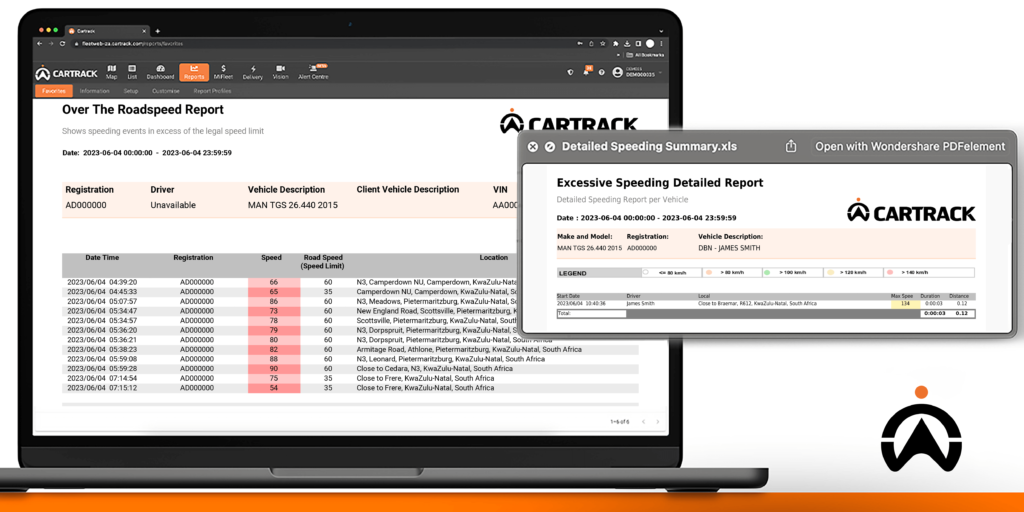
– Improve fleet safety: By monitoring driver behaviour (telematics can monitor fleet speed, acceleration rates and harsh braking) and vehicle performance, telematics can help you monitor and address unsafe driving habits, helping to prevent vehicle damage and reducing the chances of accidents happening in the future.
Automation:
Fleet automation is the use of technology to streamline various aspects of fleet management. A fleet automation solution offers cutting-edge technology that gives fleet managers practical insights into the status and performance of their fleet by combining software, hardware and data analysis.
This process can help fleet managers:
– Improving efficiency: By automating functions such as route planning, dispatch and fuel management, fleet managers can give more time to other tasks, innovating and streamlining their processes.
– Improve fleet safety: Automation systems can help monitor driver behaviour and vehicle health, which helps fleet managers prevent accidents and unexpected breakdowns.
– Promote fleet visibility: Fleet visibility is the ability to track and monitor the location, performance and behaviour of vehicles in real time. Automation ensures that fleet managers always have an eye on their fleet, which helps them improve driver behaviour, reduce downtime and adjust routes as needed.
– Improving customer service: by providing real-time visibility of fleet operations, automation can help improve customer service, ensuring timely deliveries and providing accurate ETAs.
– Increase data visibility and analysis: fleet automation software compiles and analyses a wide range of data on vehicles, drivers, customers, routes, schedules, fuel consumption and maintenance records. Using advanced analytics and reporting tools, this data is turned into actionable insights that can help fleet managers make better-informed decisions about their fleet operations.
Remote Fleet Management
This involves using advanced software systems and innovative technologies to enable the remote monitoring and management of fleet assets, including fleet vehicles, while staying connected with drivers. This process can help fleet managers:
– Track their vehicles in real time: Remote fleet management lets fleet managers track their vehicles and assets in real time, from anywhere, at any time.
– Improve communication: Remote fleet management solutions let fleet managers communicate with their drivers from anywhere, at any time, making it easier to delegate tasks and job orders and to discuss potential delays.
– Improve fleet safety: Remote fleet management helps fleet managers monitor driver behaviour in real time and proactively identify safety risks anywhere, at any time, allowing you to increase the safety of your drivers wherever you are.
IoT (Internet of Things)
This technology revolutionises fleet management by providing real-time data and insights to increase fleet efficiency. It connects devices and sensors to the internet, making it easier to share and communicate data. In fleet management, IoT is used to provide real-time information on the location and condition of vehicles and to tackle your fuel usage challenges.
This information can be used to optimise schedules, select the perfect routes, monitor driving habits, reduce fuel consumption and improve fleet safety. This is done through:
– Route optimisation: IoT data can be used to optimise fleet routes, which has a positive impact on fleet efficiency and fuel consumption.
– Cargo tracking: IoT sensors can be used to track the location and condition of cargo. This can help prevent cargo theft and ensure that these goods are delivered safely and on time.
– GPS tracking: GPS (Global Positioning System) is a satellite-based navigation system that provides real-time location information about your vehicles. With this real-time knowledge of your whole fleet, you can reduce fuel costs, improve fleet safety and improve route planning.
– Monitoring driver behaviour: IoT-enabled sensors can monitor driver behaviour in real time, including speeding, harsh braking and acceleration. This helps fleet managers identify areas for improvement, give feedback to their drivers and increase driver safety.
3 Steps to Innovate Your Fleet with Cartrack
Managing a fleet can be extremely stressful, from monitoring drivers to keeping an eye on fuel consumption. Cartrack understands this and aims to simplify your entire fleet operation, bringing you a wide range of solutions that help ensure your fleet makes innovation its standard.
Here’s how:
Supporting data-driven decision-making with actionable insights
Not knowing what is happening with your fleet’s vehicles and drivers is a risky game, as it leads to a lack of visibility, inefficient routes, poor driving behaviour and high maintenance costs. But with us, you get this data at the touch of a button.
Actionable insights, defined as data and information about a business, can be used to make strategic decisions to achieve business goals, leading to better employee productivity and business growth, which makes them a crucial part of fleet success.
With actionable insights designed to help optimise fleet operations, reduce costs and improve fleet efficiency, fleet managers are equipped to make accurate decisions about cost-cutting strategies. These strategies can reduce idle time, optimise routes and improve the fleet’s fuel consumption.
Simplifying preventive maintenance
Vehicles can break down at any moment, and that unpredictability can lead to operational disruption and financial stress. But with us, breakdowns will never catch you by surprise.
Preventive maintenance helps fleets schedule and track vehicle maintenance, reducing downtime and extending the life of vehicles. Using the vehicle’s hours of use and the time of its last service, it provides predictive analytics that help you plan maintenance, resulting in cost savings, less downtime and a longer vehicle life.
It also helps businesses that use electric vehicles avoid low-battery surprises with real-time battery monitoring. In addition, it can help you know when your electric vehicle is charging, how long it will take to charge fully and how much mileage you will get from a full charge.
Enabling real-time fleet tracking
Keeping track of your entire fleet manually can be a hassle for fleet managers. Having to call drivers constantly to ask where they are adds to their workload. This makes the task inconvenient and time-consuming. But with Cartrack, real-time tracking can happen from any smart device.
Cartrack provides fleets with live GPS tracking technology and real-time alerts for complete control and visibility of their fleets through our easy-to-use platform. Fleet operators can streamline their whole operation using real-time vehicle location information. This simplifies route optimisation, which limits delays and reduces the cost of wasted fuel. It also helps improve customer service and satisfaction, as you can give customers accurate ETAs.
Make innovation your business standard
Discover the fleet management system trusted by global businesses and elevate your entire fleet operation with our revolutionary technological innovations.
Contact us today and take your fleet to new heights of efficiency.
Other articles for you
Food Transport Facts and What You Need to Know When Managing Your Fleet
Blogs
11 minute read •
Important facts about food transport in fleet management: keeping perishable goods fresh in transit directly affects your profits — and mixing food loads is a serious mistake. Other facts include the food distribution regulations in force in Mozambique, the challenges of electricity supply and the […]
7 Ways to Increase the Efficiency of Your Construction Fleet
Blogs
12 minute read •
The seven main ways to increase the efficiency of your construction fleet are: Use telematics and GPS tracking to keep everything under control. Keep vehicle maintenance up to date.. Implement a fuel monitoring solution. Offer your drivers ongoing training. Plan better routes between sites. Match the size of the fleet to […]
How to Manage Your Light Commercial Vehicles (LCVs) Effectively with Fleet Management Software
Blogs
12 minute read •
To manage your light commercial vehicles effectively with fleet software, you should invest in a platform that directly addresses the biggest challenges LCVs face. LCV fleets deal with unique vulnerabilities because of their frequent trips. Wear and tear, wasted fuel, unexpected downtime and more are some of the main concerns. LCVs are […]
 South Africa
 Botswana
 Kenya
 Malawi
 Namibia
 Nigeria
 Swaziland
 Tanzania
 Zimbabwe
 Hong Kong
 Indonesia
 Singapore
 Malaysia
 Philippines
 Thailand
 New Zealand
 Vietnam
 Poland
 Portugal
 Spain
 United Arab Emirates

 PT