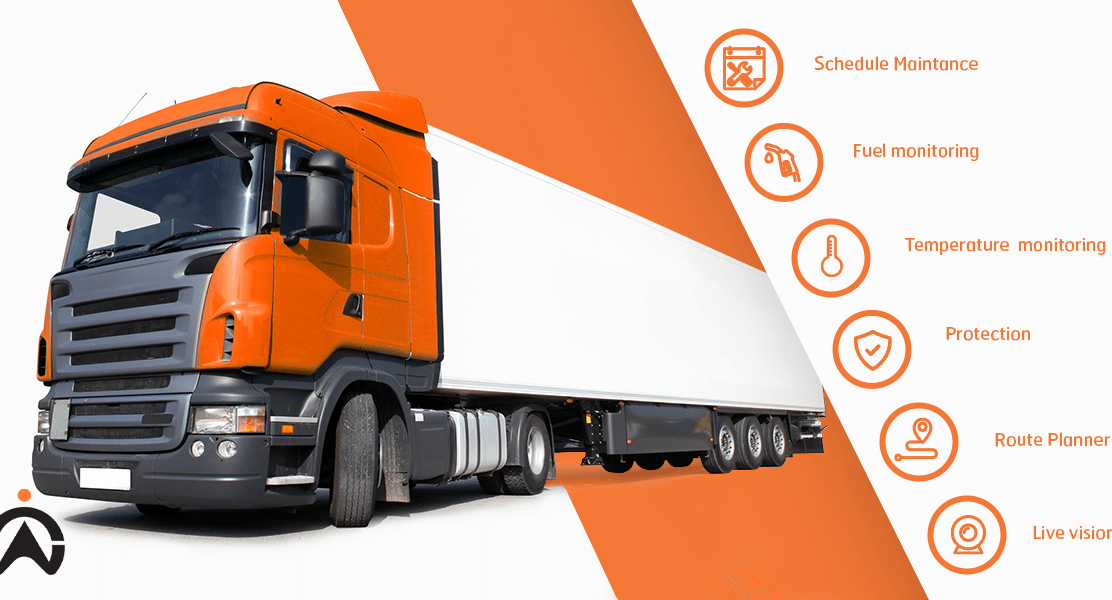
How fleet managers can improve employee productivity and increase efficiency with actionable insights
Published
Reading time
12 minutes
Blogs
Have you ever wondered how fleet businesses keep their operations running smoothly, productively and profitably?
In this article:
Understand what fleet management is and which processes it involves
Find out exactly what a fleet manager does and the day-to-day tasks they face
Learn about fleet management software and how it benefits the management process
Discover how actionable insights from Cartrack's technology can improve employee productivity
From dispatch to delivery, from operating costs to business profits, there is a lot of work involved in fleet management. Behind every productive, successful business is an efficient fleet manager with the best fleet management software.
First of all, what is fleet management?
The term fleet management refers to the management and supervision of vehicles such as cars, trucks or vans used for commercial purposes. Fleet management does not refer to just a single task, but to a process involved in overseeing the entire fleet operation, from employee performance to fleet performance.
Analysing fuel costs and managing fuel consumption
Optimising routes for on-time deliveries
Using actionable insights to make strategic decisions
All these tasks are carried out to increase employee productivity, ensure fleet operations run smoothly, improve the customer experience and increase profits by reducing operating costs and wasted time.
To better understand fleet management platform, let's take Bill as an example. Bill is the fleet manager of a small fleet business in the healthcare sector.
What is a fleet manager and what do they do?
As a fleet manager, Bill is responsible for every aspect of the fleet business, including directing and managing fleet vehicles, resources and costs. This role requires efficient use of time and excellent leadership and decision-making skills to oversee fleet assets effectively and boost fleet performance. Although Bill's daily routine may differ slightly from that of other fleet managers working in different fleet industries, they all share common responsibilities, which include:
Managing, supervising and overseeing fleet operations
Hiring quality drivers and monitoring driver behaviour and performance
Creating and managing driver tasks and schedules to maximise productivity
Ensuring the fleet stays compliant and avoids unnecessary setbacks
Implementing fleet management strategies to reduce fleet costs and increase productivity
Creating and using detailed reports
Organising paperwork and administration
Ensuring regular vehicle maintenance for operational efficiency and minimising downtime
Meeting customer expectations and ensuring a high level of customer satisfaction
It is a challenge for Bill and other fleet managers to manage their fleet's daily tasks efficiently while also increasing profits. So they use fleet management software to help them manage small, medium or large fleets efficiently. This type of system allows them to receive reports, data, information and actionable insights designed to improve fleet operations and productivity.
Let's get a deeper understanding of this fleet management software.
Who uses fleet management software and why?
Fleet management software is computer software that simplifies a fleet manager's job by using GPS tracking so that managers can:
Track fleet vehicles and assets
Monitor driver behaviour and performance
Measure task completion rates
Manage and reduce operating costs
Schedule regular vehicle maintenance
Ensure fleet compliance
Managing all of the above manually can be a challenge, whether for one vehicle or an entire fleet. Businesses use fleet management software to simplify the fleet management process, gaining a bird's-eye view of all fleet operations with one complete platform. In this way, Bill or any other fleet manager can improve safety, reduce fleet costs, extend vehicle lifespan, receive real-time fleet alerts, optimise routes and increase customer satisfaction – all remotely, at their fingertips.
Fleet management software is useful for any business that needs commercial vehicles and drivers to conduct its daily business. This includes businesses in the following sectors:
Food transport
Public or private transport
Construction
Healthcare and emergency services
Courier and parcel delivery services
Using fleet management software, fleet managers in the sectors above can successfully run a fleet business by efficiently overseeing driver behaviour, the internal and external factors that affect fuel prices, customer expectations and vehicle maintenance – to name just a few.
4 benefits of fleet management software
There are several ways in which fleet management software benefits fleet operations. Let's unpack four of them:
1. Fleet management provides fleet visibility: fleet management software integrates vehicle telematics to give fleet managers a complete view of all fleet activity. Fleet managers can use real-time visibility or historical data to make informed, data-driven decisions about deliveries, routes, tasks, costs and safety, as well as to exonerate drivers or speed up insurance claims.
2.Fleet management reduces costs and fuel consumption: Fuel costs alone can amount to around 40% of fleet expenses. With software for fleet management, fuel costs and consumption can be reduced by using the vehicle's GPS location to detect fuel wastage and find solutions, for example:
Idle time: a bus wastes 3.5 litres of fuel per hour of idling, a medium-heavy truck wastes 3 litres and a large sedan wastes 1.5 litres. With fleet management software, fleet managers can detect idling and educate drivers on the need to reduce idle time.
Delivery time: Fast delivery times translate into less mileage and less fuel used. Fleet managers can use fleet management software to optimise the most efficient routes, access driver and vehicle information, and monitor traffic and weather, to ensure that drivers have faster turnaround times.
Driver behaviour: speeding, harsh braking and cornering are some of the driver behaviours that waste fuel. Fleet management software allows fleet managers to monitor driver behaviour and receive real-time alerts in the event of poor driver performance. With Cartrack's easy-to-use Mi-Fleet software, fleet managers can easily manage and control fuel transactions, identify fuel wastage and detect fuel fraud. This saves fuel, money and administration.
3.Fleet management increases employee productivity and safety: managers can ensure that fleet operations are safe and productive by using fleet management software that manages vehicle maintenance, reduces downtime, improves driver behaviour, optimises routes, monitors vehicle and driver safety and increases employee efficiency.
4.Fleet management increases customer satisfaction: in the age of fast internet, online shopping and same-day delivery, customers have become less patient and have high expectations. 61% of shoppers would like their products to be delivered within three hours of purchasing online. With GPS tracking as a fleet management solution, fleet managers can meet higher customer expectations by optimising routes and ensuring that drivers stay on course with delivery schedules. GPS tracking also allows customers to track their deliveries in real time, while fleet managers can keep drivers updated on any emergency or change to deliveries.
Any industry or fleet size can reap these benefits if a fleet operation is managed efficiently. For fleet managers to manage a fleet business effectively, teamwork and well-maintained assets are vital. On the other hand, having a dysfunctional team and poorly maintained assets can lead to an unfulfilling fleet manager role and an unsuccessful business operation.
The four main productivity challenges faced by fleet managers
Productivity is the key to a successful business story. As a fleet manager, Bill's job is to maximise the fleet's productivity. The productivity of a fleet operation depends on a fleet manager's ability to manage the fleet efficiently. However, fleet managers can struggle to fulfil their responsibilities effectively and manage a fleet operation efficiently because their role depends on employee productivity, the condition of the company's assets and resources, and external factors such as inflation rates.
These are the four main productivity challenges that fleet managers face:
Time and energy spent on administration and paperwork: the administrative burden of fleet management tasks, such as invoicing, creating reports, scheduling drivers, booking vehicle maintenance and following up with drivers and customers, can be challenging and time-consuming. Fleet management software provides an efficient, cost-effective and paperless way of handling administration by digitalising and automating daily operations on a cloud-based platform
Unplanned vehicle downtime: The time vehicles spend off the road because of incidents such as breakdowns, collisions or delays in maintenance and service schedules harms the productivity and profits of fleet operations. Instead of waiting for unplanned vehicle downtime, fleet managers can use fleet management software to run vehicle diagnostics and automate maintenance schedules and reports to keep their vehicles on the road, maximising productivity and, ultimately, profits.
Unsafe driving: unsafe driver behaviour, such as speeding, harsh braking, cornering and driving while tired, increases the risk of accidents and damaged goods. This means more time and money spent on vehicle repairs, insurance claims and replacing and returning customers' products. By using real-time alerts about poor driver behaviour and driver scorecards for performance-based feedback and training, fleet managers can improve driver behaviour and increase productivity.
Unclear communication: Another major problem is communication, or the lack of it, especially about tasks, schedules and collection and delivery locations, which can lead to a demotivated, unproductive working environment, as well as time and money wasted on wrong deliveries. Fleet managers must ensure that drivers are well informed, rested and well trained. Fleet management software can automate certain tasks, and managers can use actionable information to improve fleet productivity and efficiency.
Actionable insights to improve fleet management and employee productivity
Actionable insights can be defined as data and information about a business that can be used to make business decisions and achieve business objectives. This refers to data and information that can be translated into action (whether decisions or performance). When used effectively, actionable insights lead to improved employee productivity and business growth.
In this way, Cartrack can help fleet-based businesses get more productivity from their employees, assets and resources.
Cartrack's three main actionable insights to help improve employee productivity:
1. Contextualised metrics for strategic decision-making: Using the fleet's operational, administrative and financial data, Cartrack produces tangible data so that fleet managers gain information about the fleet operation that they can actually use to make accurate strategic decisions.
For example, the fleet's operational, administrative and financial data can be used to determine the cost per job. If the cost per job is too high and exceeds the profit per job, fleet managers can use this information to decide on cost changes and direct actions to reduce fuel consumption, optimise routes or cut idle time.
2. Comparable metrics to identify challenges and solutions: This allows fleet managers to compare metrics across drivers and vehicles to identify leaks, identify challenges and solutions for tackling them, and pinpoint where to optimise time and increase productivity.
For example, fleet managers can compare the differences in cost per task per vehicle based on driver behaviour, vehicle maintenance costs, fuel costs and cost per kilometre. If one vehicle's costs are significantly higher than the others, fleet managers can identify the challenge and tackle it.
This information can be used to empower, educate or coach the driver to use assets, resources and time more productively.
3. Instant insights to spot unproductivity: This helps fleet managers instantly find the information they need and stay informed about any unproductive areas of the fleet operation. Whether it's time per delivery, data on a specific vehicle or driver behaviour – fleet managers can get instant information should they need it urgently.
Cartrack gives fleet managers an overview of fuel consumption, unproductive idling, safety and vehicle utilisation on one dashboard, all with just one click. Fleet managers can use the filters to specify which information is needed – this saves hours that would be spent analysing data.
4. Improve employee productivity with Cartrack today
Get actionable insights to improve employee productivity with Cartrack's easy-to-use platform, which gives you an overview of your fleet operation. Get a quote today and say goodbye to downtime!
Other articles for you
Food Transport Facts and What You Need to Know When Managing Your Fleet
Blogs
11 minute read •
Important facts about food transport in fleet management: keeping perishable goods fresh in transit directly affects your profits — and mixing food loads is a serious mistake. Other facts include the food distribution regulations in force in Mozambique, the challenges of electricity supply and the […]
7 Ways to Increase the Efficiency of Your Construction Fleet
Blogs
12 minute read •
The seven main ways to increase the efficiency of your construction fleet are: Use telematics and GPS tracking to keep everything under control. Keep vehicle maintenance up to date.. Implement a fuel monitoring solution. Offer your drivers ongoing training. Plan better routes between sites. Match the size of the fleet to […]
How to Manage Your Light Commercial Vehicles (LCVs) Effectively with Fleet Management Software
Blogs
12 minute read •
To manage your light commercial vehicles effectively with fleet software, you should invest in a platform that directly addresses the biggest challenges LCVs face. LCV fleets deal with unique vulnerabilities because of their frequent trips. Wear and tear, wasted fuel, unexpected downtime and more are some of the main concerns. LCVs are […]
 South Africa
 Botswana
 Kenya
 Malawi
 Namibia
 Nigeria
 Swaziland
 Tanzania
 Zimbabwe
 Hong Kong
 Indonesia
 Singapore
 Malaysia
 Philippines
 Thailand
 New Zealand
 Vietnam
 Poland
 Portugal
 Spain
 United Arab Emirates

 PT